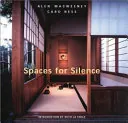
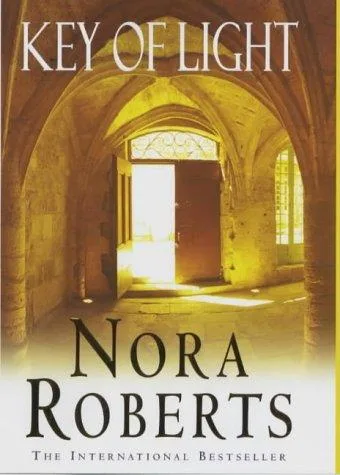
Key of Light
 75
75

Key of Light
Nora Roberts' "Key of Light" presents a peculiar case when viewed through the lens of esoteric literature. Its allegorical framework, while attempting to illuminate spiritual pathways, occasionally strains under the weight of its own symbolism. The narrative's strength lies in its consistent adherence to an internal logic, particularly in the depiction of the protagonist's quest. However, a notable limitation is the infrequent grounding of its abstract concepts in more tangible, relatable imagery, which can leave the reader feeling adrift. The passage detailing the "Chamber of Echoes" effectively illustrates the book's ambition, yet its resolution feels somewhat abrupt. Ultimately, "Key of Light" offers a sincere, if somewhat opaque, exploration of spiritual seeking.
📝 Description
75
Nora Roberts' 2003 novel, 'Key of Light,' uses allegorical narratives for spiritual instruction.
"Key of Light" is a work of esoteric fiction published in 2003. It uses allegorical narratives and symbolic instruction, common in esoteric literature, to convey spiritual or philosophical truths indirectly. The book engages with themes of inner transformation and the search for hidden knowledge. It is written for readers who enjoy allegorical storytelling and symbolic interpretation, appealing to those interested in spiritual philosophies. The novel requires a deeper contemplation beyond a surface reading and connects with early 21st-century esoteric discourse. It invites readers to find personal meaning within its allegorical framework.
Roberts employs archetypal imagery and narrative structures to illustrate concepts. These include the individual's path toward enlightenment, the nature of hidden wisdom, and the symbolic representation of spiritual states. The writing encourages readers to engage actively with the text, seeking layers of meaning and personal resonance.
Published in 2003, 'Key of Light' appeared during a period of heightened interest in esoteric studies. This followed earlier influential figures like Helena Blavatsky and the development of various occult traditions. The early 21st century saw increased access to esoteric texts, partly due to online resources. This made previously private or obscure knowledge more widely available. Roberts' work participates in this broader cultural moment, offering a fictional exploration of spiritual themes in a more accessible format.
💡 Why Read This Book?
• Gain insight into allegorical storytelling as a vehicle for spiritual truths, specifically examining how "Key of Light" uses the metaphor of the 'Sunken City' to represent a state of forgotten wisdom. • Understand the symbolic language employed in early 21st-century esoteric writings, noting the specific allusions to alchemical processes described within the text. • Explore concepts of inner transformation through narrative, particularly the protagonist's journey towards understanding the 'Luminous Gate' as depicted in the latter chapters.
⭐ Reader Reviews
Honest opinions from readers who have explored this book.
❓ Frequently Asked Questions
What is the primary theme of Nora Roberts' "Key of Light"?
The primary theme revolves around the individual's quest for hidden knowledge and spiritual enlightenment, presented through allegorical narratives and symbolic imagery characteristic of esoteric literature.
When was "Key of Light" first published?
The book "Key of Light" was first published in 2003, placing it within the early 21st-century resurgence of interest in esoteric and metaphysical subjects.
Does "Key of Light" contain specific symbols or allegories?
Yes, the work is rich with symbolism. It frequently employs allegorical elements such as journeys, chambers, and light, which are intended to represent stages of spiritual development and hidden truths.
Who might find "Key of Light" most engaging?
Readers interested in allegorical fiction, symbolic interpretation, and the exploration of spiritual philosophies will find "Key of Light" particularly engaging. It suits those who enjoy literature requiring deeper contemplation.
What is the narrative style of "Key of Light"?
The narrative style is allegorical and symbolic, aiming to convey deeper meanings about spiritual journeys and the pursuit of wisdom through veiled language and metaphorical constructs.
Is "Key of Light" related to any specific esoteric traditions?
While not explicitly tied to a single tradition, "Key of Light" draws on general themes found in Hermeticism and Gnosticism, focusing on the inner journey and the revelation of hidden truths.
🔮 Key Themes & Symbolism
The Inner Journey
The core of "Key of Light" is the individual's path towards self-discovery and enlightenment. This is often depicted through a literal journey within the narrative, where characters confront internal obstacles and external challenges that symbolize psychological or spiritual hurdles. The text suggests that true understanding is found not in external acquisition but through internal exploration and transformation.
Symbolism of Light and Darkness
Light serves as a pervasive symbol for knowledge, truth, and spiritual awakening, while darkness represents ignorance, illusion, and the unmanifested. The narrative frequently contrasts these states, illustrating the process of moving from obscurity into clarity. The "Luminous Gate" is a key motif, signifying the ultimate attainment of illuminated consciousness.
Allegory and Veiled Truths
The book employs allegory as its primary mode of communication, presenting spiritual or philosophical concepts through symbolic narratives and characters. This method is common in esoteric traditions, where direct exposition might be seen as insufficient or even dangerous. The reader is invited to decipher these veiled truths, engaging actively with the text's deeper layers.
The Pursuit of Hidden Knowledge
A central theme is the human desire to uncover secrets and attain wisdom that is not readily available. This pursuit often involves overcoming trials and demonstrating worthiness. The narrative implies that such knowledge is not merely intellectual but transformative, fundamentally altering one's perception of reality.
💬 Memorable Quotes
Direct passages from the work, attributed to the author.
“The path inward is rarely straight.”
— This statement captures the book's view of spiritual development. It suggests that personal growth is not a simple, linear progression but a complex and often circuitous process involving detours and challenges.
“The Sunken City held forgotten truths.”
— This refers to a key allegorical location within the narrative, representing a state of lost wisdom or potential. Its 'forgotten' nature underscores the idea that essential knowledge may be buried within or obscured from ordinary perception.
“To find the Gate, one must first embrace the dark.”
— This paradoxical statement points to the necessity of confronting one's own limitations and the unknown before achieving enlightenment. It suggests that true spiritual progress requires acknowledging and integrating all aspects of experience, including difficult ones.
“Wisdom is not given, but revealed.”
— This interpretation emphasizes the active role of the seeker in the process of gaining knowledge. It implies that true wisdom is an internal revelation, prompted by diligent effort and a receptive state of mind, rather than an external bestowal.
💡 Key Ideas
Editorial paraphrase of the work's core concepts — not direct quotes.
Shadows are merely the absence of illumination.
This quote highlights the symbolic contrast between ignorance and knowledge. It implies that negative states or perceived obstacles are not inherent evils but rather a lack of understanding, which can be dispelled by seeking truth.
🌙 Esoteric Significance
Tradition
The work broadly aligns with the Western Esoteric Tradition, drawing heavily from Gnostic and Hermetic currents. It emphasizes the Gnostic concept of *gnosis*—direct, intuitive knowledge of the divine—and the Hermetic principle of "as above, so below," suggesting a correspondence between the inner spiritual world and the outer manifest reality. It departs from strict adherence to any single lineage by focusing on universal allegorical themes.
Symbolism
Key symbols include the "Luminous Gate," representing the threshold of spiritual awakening and divine consciousness. The "Sunken City" symbolizes a state of forgotten wisdom or primordial truth, buried beneath layers of illusion or mundane awareness. Light itself is a paramount symbol, representing knowledge, truth, and the divine presence that dispels ignorance.
Modern Relevance
Contemporary spiritual seekers, particularly those interested in Jungian psychology and archetypal symbolism, find relevance in "Key of Light." Its allegorical structure provides a framework for understanding personal transformation and the integration of the shadow self, concepts explored by modern thinkers in depth psychology and consciousness studies.
👥 Who Should Read This Book
• Students of comparative mythology and symbolism seeking allegorical narratives that explore universal spiritual themes. • Individuals interested in Gnostic and Hermetic philosophies who appreciate literature that conveys esoteric concepts through veiled language and metaphor. • Readers beginning a personal journey of self-discovery and spiritual inquiry, looking for reflective literature that encourages contemplation on inner transformation.
📜 Historical Context
Published in 2003, "Key of Light" emerged during a period of significant public engagement with esoteric thought, fueled by the internet's accessibility and a post-millennial curiosity. This era saw a diversification of spiritual seeking, moving beyond established religious frameworks. While figures like Manly P. Hall had popularized Hermetic and esoteric lore decades prior, the early 2000s witnessed a new wave of interest, often blending ancient concepts with contemporary psychology. "Key of Light" arrived in a landscape populated by authors like Doreen Virtue, who was popularizing angel communication, and the continued academic interest in Gnosticism, notably from scholars like Elaine Pagels. The book's allegorical approach resonated with a readership less inclined towards dogmatic systems and more open to symbolic interpretation, reflecting a broader trend of personalized spirituality.
📔 Journal Prompts
Reflect on the symbolic meaning of the "Sunken City" in relation to forgotten aspects of your own inner life.
Consider the challenges presented by the journey towards the "Luminous Gate" and how they might mirror your own spiritual obstacles.
Analyze the concept of "shadows are merely the absence of illumination" and its application to personal understanding.
Explore the idea that "wisdom is not given, but revealed" in the context of your own learning experiences.
Meditate on the statement, "The path inward is rarely straight," and its implications for patience in personal growth.
🗂️ Glossary
Luminous Gate
A central symbolic concept representing the ultimate attainment of spiritual enlightenment, divine consciousness, or profound inner truth. It signifies a threshold of ultimate realization.
Sunken City
An allegorical location within the narrative symbolizing forgotten wisdom, primordial truths, or a state of lost spiritual potential that lies hidden beneath layers of ignorance or the mundane world.
Allegory
A literary device where characters, events, and settings represent abstract ideas or moral qualities. In "Key of Light," allegory is used to convey spiritual and philosophical concepts indirectly.
Gnosis
A Greek term meaning 'knowledge,' particularly intuitive or spiritual insight. In esoteric traditions, gnosis refers to direct, experiential knowledge of the divine or ultimate reality.
Hermeticism
An esoteric tradition based on the writings attributed to Hermes Trismegistus. It emphasizes principles like correspondence, causality, and the pursuit of hidden wisdom for spiritual transformation.
Inner Journey
The process of psychological and spiritual self-exploration and development. The narrative of "Key of Light" frequently uses this as its central framework.
Veiled Language
A form of communication that uses symbols, metaphors, and allegories to express profound or sacred ideas indirectly, requiring interpretation by the reader.
🔮 Readers Also Liked
Browse all →








More by Nora Roberts
All books →





More Free Occult Philosophy Books
View all →