Isis Magic
 78
78

Isis Magic
Isis Magic offers a robust framework for understanding ancient Egyptian religion as a living magical system, a departure from purely academic or historical treatments. Forrest’s strength lies in her ability to synthesize complex mythological narratives with practical magical applications, particularly evident in her discussions of divine names and ritual construction. However, the sheer breadth of material covered can sometimes feel overwhelming, with certain deeper explorations truncated in favor of maintaining momentum across the entire pantheon and its associated practices. The detailed breakdown of the ritual for invoking Heka, for instance, is a high point, showcasing the book’s potential for direct application. Ultimately, Isis Magic is a valuable resource for those seeking to engage with Egyptian magic beyond superficial correspondences, though it rewards patient study.
📝 Description
78
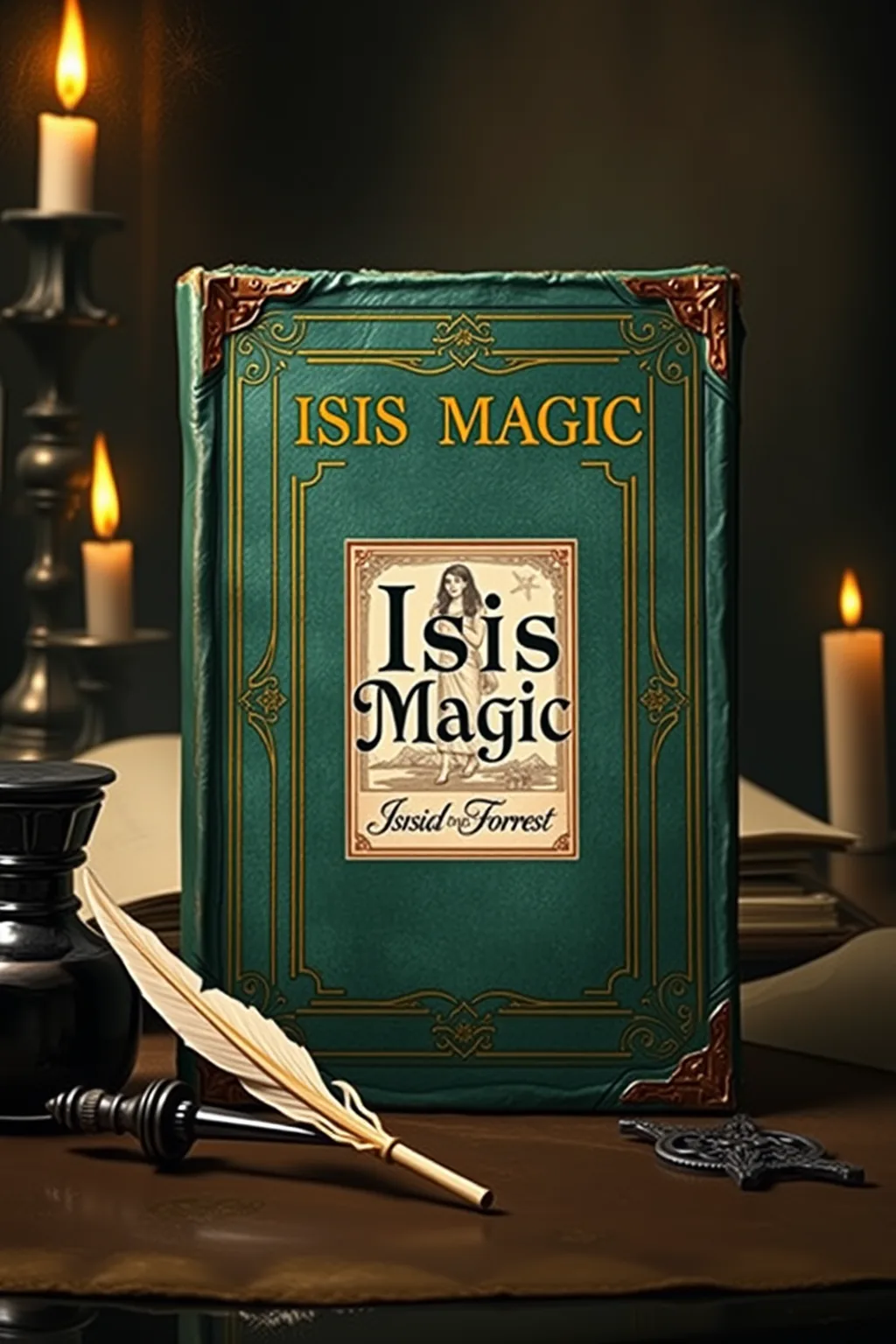
First published in 2001, Isis Magic applies a modern magical interpretation to ancient Egyptian religion.
M. Isidora Forrest's Isis Magic examines the religion and esoteric traditions of ancient Egypt, Kemet, from a contemporary magical viewpoint. The book interprets the Egyptian pantheon, cosmology, and rituals not as relics of the past, but as vital systems that hold relevance today. It is written for individuals seriously studying comparative religion, occultists interested in ancient traditions, and practitioners who wish to incorporate Egyptian principles into their magical work. The author combines scholarly research with a devotional and practical approach.
The work distinguishes itself from earlier Orientalist views by engaging directly with pre-Christian traditions of Egypt. It acknowledges earlier Egyptological scholarship while clearly stating its own modern magical perspective. This approach moves beyond frameworks solely based on Hellenistic or Kabbalistic thought, focusing instead on indigenous Egyptian spiritual concepts. The book seeks to connect readers with these ancient practices in a way that is both intellectually stimulating and experientially applicable.
Isis Magic aligns with a contemporary trend in Western esotericism that looks to indigenous, pre-Christian traditions for spiritual and magical practice. It emerged in 2001, a time of growing interest in ancient Egypt beyond purely academic or colonial interpretations. The book positions itself within this movement by drawing directly from Egyptian sources and understanding their deities, cosmology, and rituals as living forces rather than historical curiosities. It offers a way to engage with these traditions through a magical lens, separate from solely Hellenistic or Kabbalistic systems that have often dominated Western occultism.
💡 Why Read This Book?
• Gain practical techniques for invoking Heka, the Egyptian concept of magic and divine power, as detailed in the ritual sections, offering a direct channel for experiential understanding beyond theoretical knowledge. • Understand the core principles of Ma'at, learning how this ancient Egyptian concept of cosmic order can be applied to personal ethics and magical practice, providing a unique ethical framework. • Explore the Egyptian understanding of the soul's components, such as the Ka and Ba, and their significance in funerary rites and post-mortem journeys, offering insights into ancient Egyptian views on consciousness and immortality.
⭐ Reader Reviews
Honest opinions from readers who have explored this book.
❓ Frequently Asked Questions
What is the significance of Heka in Isis Magic?
Heka is presented as the fundamental force of magic and divine power in ancient Egyptian cosmology. The book explores Heka as the energy that animates the universe and is essential for creation and the maintenance of Ma'at, detailing its use in ritual.
When was Isis Magic first published?
Isis Magic by M. Isidora Forrest was first published in 2001, placing it within a contemporary wave of esoteric literature focusing on ancient traditions.
Does the book cover specific deities?
Yes, the book extensively covers key deities of the ancient Egyptian pantheon, including Isis, Osiris, Horus, Thoth, and others, explaining their mythological roles and their significance within magical practice.
What is Ma'at in the context of this book?
Ma'at represents the ancient Egyptian concept of cosmic order, truth, balance, justice, and harmony. Forrest interprets Ma'at as a fundamental principle that practitioners should strive to uphold in both personal life and magical workings.
Is Isis Magic suitable for beginners in occult studies?
While comprehensive, the book is best suited for those with some existing interest in comparative religion or esotericism. Beginners may find the depth of Egyptian mythology and magical theory challenging without prior grounding.
What is the author's approach to ancient Egyptian religion?
M. Isidora Forrest approaches ancient Egyptian religion as a dynamic, living system with potent magical applications, rather than solely a historical subject. Her work integrates scholarly understanding with practical magical engagement.
🔮 Key Themes & Symbolism
The Power of Heka
Heka is presented not merely as 'magic' but as the divine energy that underpins creation and existence in the ancient Egyptian worldview. Forrest elucidates how Heka manifests through the gods and can be channeled by practitioners. The book details various methods and rituals designed to invoke and work with Heka, emphasizing its role in maintaining cosmic balance and achieving personal transformation. This theme underscores the active, participatory nature of Egyptian spirituality.
Ma'at as Cosmic Law
Ma'at, the principle of truth, justice, and cosmic order, is central to understanding Egyptian ethics and magic. The work explores Ma'at as the equilibrium established at creation, which must be constantly upheld by both the gods and humanity. Practitioners are encouraged to align their actions and intentions with Ma'at, viewing this alignment as a prerequisite for effective magic and spiritual development. This concept provides a moral and philosophical foundation for the magical practices discussed.
The Divine Pantheon as Archetypes
Isis Magic reinterprets the Egyptian gods and goddesses not just as historical figures but as potent archetypal forces and divine intelligences. Forrest studies the mythology and symbolism of key deities like Isis, Osiris, and Horus, explaining their roles in creation, death, rebirth, and the maintenance of cosmic order. The book guides readers on how to establish relationships with these deities for spiritual growth, protection, and magical empowerment, viewing them as accessible divine presences.
The Soul and the Afterlife
The book examines the complex ancient Egyptian understanding of the soul, including its various components like the Ka (life force) and Ba (personality/spirit). Forrest discusses how this understanding shaped funerary practices and beliefs about the afterlife. The rituals and spells presented often relate to ensuring a safe passage and successful transition for the deceased, highlighting the Egyptian focus on the continuation of consciousness and the importance of spiritual preparation for death.
💬 Memorable Quotes
Direct passages from the work, attributed to the author.
“Heka is the power that brought all things into being and that sustains the universe.”
— This statement emphasizes Heka's foundational role in Egyptian cosmology, positioning it as the primordial creative force and the ongoing energy that maintains existence, central to the book's magical framework.
“To live in accordance with Ma'at is to live in harmony with the divine order.”
— This highlights the ethical and spiritual imperative of Ma'at. It suggests that aligning one's life with truth and balance is not just a moral choice but a way to connect with the sacred structure of the cosmos.
“The gods are not distant; they are present forces that can be invoked.”
— This interpretation underscores the book's practical magical approach, asserting that the deities of ancient Egypt are accessible and can be interacted with through ritual and devotion for tangible results.
“Understanding the components of the soul is key to reading through the afterlife.”
— This points to the detailed exploration of Egyptian psychology and afterlife beliefs, suggesting that knowledge of the soul's structure (Ka, Ba, etc.) is vital for spiritual progression beyond physical death.
“Ritual is the language through which we communicate with the divine.”
— This emphasizes the performative aspect of Egyptian magic, framing ritual as the essential medium for establishing connection and exchange with the gods and cosmic forces.
🌙 Esoteric Significance
Tradition
Isis Magic firmly grounds itself within the lineage of Kemetic Paganism and Western Esotericism, particularly its magical and devotional aspects. It draws upon ancient Egyptian religious structures and interprets them through a lens informed by modern magical theory and practice. While acknowledging historical scholarship, it prioritizes the living, experiential dimension of working with Egyptian deities and energies, aligning with contemporary neo-pagan and magical traditions that seek to revive and adapt ancient systems.
Symbolism
Key symbols include the Ankh, representing life and immortality, and the Djed pillar, symbolizing stability and the backbone of Osiris. The Eye of Horus (Udjat) is explored for its protective qualities and association with healing and wholeness. These symbols are not merely decorative but are presented as potent conduits of divine energy and principles that can be activated in magical workings to influence reality and foster spiritual development.
Modern Relevance
Contemporary practitioners of Kemetic Orthodoxy and various neo-pagan traditions frequently reference Isis Magic for its accessible yet thorough approach to Egyptian deities and magic. Its emphasis on Ma'at as an ethical framework also appeals to those seeking holistic spiritual paths. The book's detailed ritual structures and explanations of concepts like Heka continue to inform modern magical curricula and personal practices focused on ancient Egyptian spirituality.
👥 Who Should Read This Book
• Aspiring practitioners of Kemetic magic seeking a foundational text that bridges historical understanding with practical ritual application. • Students of comparative religion interested in the esoteric dimensions of ancient Egyptian beliefs and their influence on later magical systems. • Occultists looking to expand their repertoire by integrating the strong symbolism and divine forces of ancient Egypt into their personal magical paths.
📜 Historical Context
Published in 2001, Isis Magic emerged in an era of revived scholarly and popular interest in ancient Egyptian religion and magic, distinct from earlier Egyptomania. It arrived as Western esotericism increasingly sought direct engagement with pre-Christian indigenous traditions, moving beyond solely Hellenistic or Kabbalistic frameworks. The work acknowledges earlier Egyptological studies while asserting a contemporary magical perspective, positioning itself within a broader trend of Neo-Pagan and occult revivals. Unlike purely academic works, Forrest's book aimed to provide a living magical practice rooted in ancient Kemet. Its reception occurred alongside ongoing academic debates about the nature of religion in ancient Egypt and the continuity of its traditions, contrasting with the more mystical interpretations found in authors like Manly P. Hall.
📔 Journal Prompts
The invocation of Heka: What personal interpretations arise from its description as the primordial creative force?
Reflecting on Ma'at: How can the principles of truth, balance, and cosmic order be applied to a specific challenge in your life?
The divine roles of Isis and Osiris: What archetypal aspects do these deities represent in your own spiritual journey?
The concept of the Ka and Ba: How does the ancient Egyptian view of the soul's components compare to your own understanding of consciousness?
Ritual construction: Based on the book's examples, design a simple ritual to honor a specific Egyptian deity.
🗂️ Glossary
Heka
The ancient Egyptian concept and personification of magic, divine power, and creative energy that animates the universe. It is considered a fundamental force essential for creation and the maintenance of Ma'at.
Ma'at
The ancient Egyptian principle of truth, justice, cosmic order, balance, and harmony. It represents the ideal state of the universe and society, and its maintenance is a central concern of religion and magic.
Ka
One of the components of the soul in ancient Egyptian belief, often interpreted as the life force, vital essence, or spiritual double that resides within a person and continues after death.
Ba
Another component of the soul, typically associated with the personality, character, and individual consciousness. The Ba could travel between the tomb and the world of the living after death.
Udjat
The Wadjet eye, or Eye of Horus, a powerful symbol of protection, royal power, and good health in ancient Egypt. It was frequently used in amulets and protective rituals.
Kemetic
Pertaining to ancient Egypt, its religion, culture, and people. In a modern context, it often refers to practitioners or adherents of ancient Egyptian religious or magical traditions.
Netjer
The ancient Egyptian word for 'god' or 'divine being.' It encompasses a wide range of deities and divine forces within the Egyptian pantheon.
🔮 Readers Also Liked
Browse all →








More by M. Isidora Forrest
All books →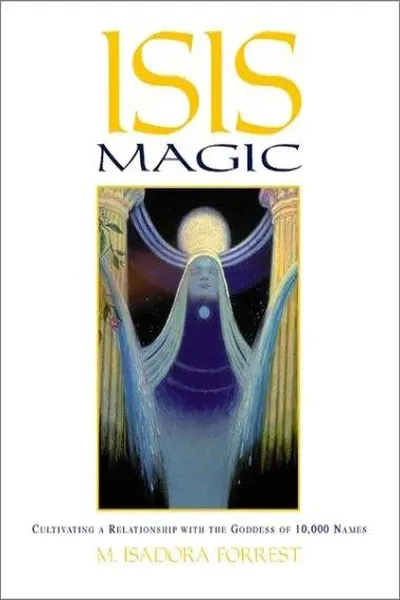
More Free Magic & Ritual Books
View all →