Iran's Troubled Modernity

 82
82

Iran's Troubled Modernity
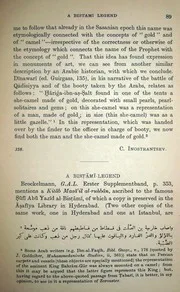
Mirsepassi’s meticulous charting of Iran’s intellectual engagement with modernity offers a crucial counterpoint to simplistic geopolitical narratives. The author excels in dissecting how concepts like "nationalism" were not merely imported but actively forged within specific Iranian debates, particularly during the pivotal years surrounding the 1906 Constitutional Revolution. The strength lies in its granular focus on intellectual lineages, revealing a vibrant internal discourse often overshadowed by external events. However, the dense academic prose, while precise, can occasionally obscure the broader human stakes. A particular passage detailing the reception of European Enlightenment ideals by thinkers like Mirza Malkum Khan provides a potent example of this intellectual wrestling. The work is an essential, if demanding, contribution to understanding Iran’s unique path.
📝 Description
82
Ali Mirsepassi's 2000 book traces Iran's intellectual and political currents from the Qajar era.
Ali Mirsepassi's "Iran's Troubled Modernity" examines the intellectual and political currents that shaped Iran from the late Qajar period through the 20th century. The work functions as an intellectual history, tracing how Western political thought was received and adapted within Iranian discourse. It highlights how concepts like nationalism, democracy, and revolution were debated and reinterpreted by Iranian intellectuals confronting modernization and foreign influence.
The narrative unfolds against significant geopolitical shifts, including the Constitutional Revolution of 1906, the Pahlavi dynasty's rise, and the 1979 Islamic Revolution. Mirsepassi situates his analysis within modernization theory and its critiques, showing how Iranian thinkers responded to internal pressures and external interventions. The book implicitly engages with the legacies of thinkers like Michel Foucault and Edward Said by examining the power dynamics in the transmission of ideas.
This book engages with esoteric traditions not through mystical practices, but by analyzing the complex, often hidden, intellectual and political currents that shape a nation's identity and trajectory. It scrutinizes how abstract concepts of modernity, nationalism, and revolution are internalized and reinterpreted by a society under external and internal pressures. The focus on the "dialogue between civilizations" and the "militant intellectual" reveals a concern with how knowledge and power dynamics operate in less visible, but deeply influential, spheres of thought and action.
💡 Why Read This Book?
• Gain a nuanced understanding of how Western political concepts were reinterpreted in Iran following the 1906 Constitutional Revolution, moving beyond simplistic notions of cultural imposition. • Appreciate the role of "militant intellectualism" in shaping Iranian political discourse, recognizing how intellectuals actively engaged with modernization theories in the mid-20th century. • Grasp the intricate relationship between Iran's internal intellectual debates and the external geopolitical forces, illustrated through the analysis of how concepts like democracy were contested.
⭐ Reader Reviews
Honest opinions from readers who have explored this book.
❓ Frequently Asked Questions
What historical period does "Iran's Troubled Modernity" primarily cover?
The book extensively covers Iran's intellectual and political landscape from the late Qajar era, particularly around the 1906 Constitutional Revolution, through the 20th century, including the Pahlavi period and leading up to the 1979 Islamic Revolution.
Who were some key Iranian intellectuals discussed in relation to modernity?
While not exhaustive, the work engages with the intellectual currents shaped by figures who grappled with Western ideas, such as Mirza Malkum Khan, and explores the broader landscape of 'militant intellectuals' active during critical periods.
How does the book explain the concept of 'dialogue between civilizations' in the Iranian context?
Mirsepassi presents this dialogue not as a conflict but as a dynamic process of mutual influence and contestation, where Iranian thinkers adapted and responded to external ideas within their unique historical and cultural framework.
Does the book focus on political events or intellectual history?
It primarily focuses on intellectual history, using significant political events like the 1906 Constitutional Revolution as crucial junctures for examining how political thought evolved and was debated among Iranian intellectuals.
What is the significance of 'militant intellectualism' in the book?
This term describes intellectuals who actively participate in social and political critique, playing a key role in shaping national discourse and challenging established norms during Iran's periods of modernization and upheaval.
Is this book suitable for someone new to Iranian studies?
While comprehensive, the book assumes some familiarity with political theory. Readers new to Iranian studies might benefit from introductory materials alongside this in-depth intellectual history.
🔮 Key Themes & Symbolism
Reception of Western Thought
The work meticulously details how Western political and philosophical concepts, from Enlightenment ideals to theories of nationalism and democracy, were received, debated, and transformed by Iranian intellectuals. It moves beyond a simple center-periphery model, showing how thinkers engaged critically, adapting ideas to the specific historical circumstances of Iran. This process is exemplified in the intellectual ferment surrounding the 1906 Constitutional Revolution, where concepts of governance and national identity were actively contested and redefined.
The Making of Iranian Modernity
Mirsepassi argues for a distinct Iranian modernity, shaped by unique historical experiences and intellectual responses to colonialism and internal reform movements. The book illustrates how modernization was not a uniform process but a contested terrain, involving significant intellectual labor to reconcile tradition with the demands of the modern state. This involved grappling with issues of secularism, religious authority, and national sovereignty, particularly during the Pahlavi era.
Militant Intellectualism and Political Discourse
A central theme is the role of the 'militant intellectual'—those who saw their role as actively shaping political and social change. The book traces how these intellectuals, through their writings and public engagement, influenced the trajectory of Iranian political thought. Their engagement with concepts like revolution and reform, especially in the lead-up to and aftermath of the 1979 revolution, highlights the profound connection between intellectual currents and historical events.
Dialogue and Contestation
The book reframes the 'clash of civilizations' narrative by focusing on the complex 'dialogue' between Iranian thought and external influences. This dialogue is characterized by both adaptation and resistance, where Iranian intellectuals critically engaged with, rather than passively absorbed, foreign ideas. This process of contestation is vital for understanding the formation of modern Iranian identity and political consciousness.
💬 Memorable Quotes
Direct passages from the work, attributed to the author.
“The Constitutional Revolution of 1906 marked a turning point in the reception of Western political ideas.”
— This highlights how a specific historical event served as a catalyst for Iranian intellectuals to engage more deeply and critically with concepts originating from the West, reshaping their understanding of governance and national identity.
“Modernity in Iran was not simply imposed but actively constructed through intellectual debate.”
— This interpretation emphasizes the agency of Iranian thinkers in shaping their nation's modernization process, suggesting a complex interplay of internal discourse and external influences rather than a one-way imposition of Western models.
“Militant intellectuals saw themselves as agents of political and social transformation.”
— This captures the active, engaged role attributed to intellectuals within the Iranian context, framing their intellectual work as intrinsically linked to the pursuit of societal change and reform.
“The dialogue between civilizations involved both borrowing and resistance.”
— This signifies that the interaction between Iranian culture and external ideas was not a passive absorption but a dynamic process involving critical selection, adaptation, and outright rejection, reflecting a complex negotiation of identity.
“Concepts like democracy were reinterpreted within the specific context of Iran.”
— This points to the localized understanding and application of universal political terms, demonstrating how abstract ideas are given concrete meaning through the lens of a nation's unique historical and cultural circumstances.
🌙 Esoteric Significance
Tradition
While not explicitly esoteric, the work touches upon themes resonant with esoteric traditions by examining the profound shifts in worldview and collective consciousness accompanying Iran's encounter with modernity. The intense intellectual struggle to reconcile tradition with new paradigms can be seen as a form of collective 'gnosis-seeking'—a quest for understanding and meaning in a rapidly changing world. It aligns with traditions that explore the evolution of human consciousness and societal structures.
Symbolism
The concept of "modernity" itself functions as a potent, often ambivalent, symbol. It represents both liberation from traditional constraints and a potential loss of cultural identity, echoing esoteric concerns about the soul's journey through illusionary realms. The struggle over national identity can be viewed through the lens of the esoteric quest for the true Self amidst external influences and societal conditioning.
Modern Relevance
Contemporary thinkers exploring postcolonial identity, cultural hybridity, and the philosophy of science within non-Western contexts draw upon Mirsepassi's analysis. Scholars examining the intersection of politics, religion, and intellectual history in the Middle East find his work indispensable for understanding the deep roots of contemporary debates. The book's focus on intellectual agency continues to inform discussions on how societies forge their own paths in a globalized world.
👥 Who Should Read This Book
• Students of Middle Eastern political history seeking to understand the intellectual underpinnings of Iran's modern trajectory beyond event-driven narratives. • Scholars of comparative political thought interested in how non-Western societies adapt and contest global intellectual currents, particularly concerning modernity and nationalism. • Readers of intellectual history curious about the philosophical debates that shaped a nation, offering insight into the complex process of cultural and political self-definition.
📜 Historical Context
Published in 2018, "Iran's Troubled Modernity" emerges from a rich tradition of scholarship on Iranian intellectual history, engaging with thinkers who grappled with modernization throughout the 20th century. The book’s intellectual milieu is shaped by postcolonial theory and critical analyses of modernity, implicitly responding to earlier, perhaps more triumphalist, accounts of Westernization. It situates itself within ongoing debates about the nature of modernity itself, particularly its diverse manifestations beyond the Western core. The era it analyzes, from the late Qajar period through the Pahlavi dynasty, was one of immense upheaval, marked by the 1906 Constitutional Revolution, the rise of nationalist movements, and increasing foreign intervention. Mirsepassi's work offers a counter-narrative to simplistic views of Iran's engagement with the West, highlighting the agency and intellectual dynamism of Iranian thinkers. His analysis implicitly engages with scholars like Ervand Abrahamian, who have detailed the political history, by focusing on the ideological underpinnings.
📔 Journal Prompts
The reinterpretation of "democracy" within Iran following the 1906 Constitutional Revolution.
The role of "militant intellectualism" in shaping Iran's response to modernization.
Reflecting on the "dialogue between civilizations" as a process of both adaptation and resistance.
The construction of a distinct Iranian "modernity" versus Western models.
How external geopolitical pressures influenced internal intellectual debates concerning national identity.
🗂️ Glossary
Constitutional Revolution of 1906
A period of significant political upheaval in Iran that led to the establishment of a parliament (Majlis) and the drafting of a constitution, marking a key moment in the nation's engagement with modern political ideas.
Militant Intellectualism
A concept referring to intellectuals who actively participate in political and social critique, viewing their role as instrumental in driving societal change and reform.
Qajar Era
The historical period in Iran ruled by the Qajar dynasty, preceding the Pahlavi dynasty, characterized by significant internal reforms and increasing foreign influence.
Pahlavi Dynasty
The ruling house of Iran from 1925 to 1979, known for its efforts at modernization, secularization, and centralization of power.
Nationalism
A political ideology centered on the interests of a particular nation, often involving the aim of gaining and maintaining the nation's sovereignty over its homeland; in Iran, its development was complex and intertwined with anti-colonial sentiments.
Dialogue between Civilizations
A framework for understanding intercultural relations not as inherent conflict, but as a dynamic process of mutual influence, adaptation, and contestation between different cultural and intellectual traditions.
Modernity
A complex social and cultural condition characterized by processes such as industrialization, urbanization, secularization, and the rise of rationalism; in Iran's context, it refers to the nation's specific historical engagement with these processes.
🔮 Readers Also Liked
Browse all →




More Free Mysticism & Contemplation Books
View all →