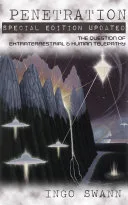
Pentration: Special Edition Updated
 73
73

Pentration: Special Edition Updated
Swann's "Pentration" offers a stark, unvarnished account of alleged interactions with a clandestine organization focused on extraterrestrial matters. The strength of this work lies in its directness; Swann writes as an operative recounting his experiences, eschewing grand theories for granular detail. The addition of Harold Sherman's archival material provides a fascinating, albeit fragmented, corroborative layer, hinting at a broader network of psychic inquiry into anomalous phenomena. However, the book suffers from a lack of structured exposition, often feeling like a series of dispatches rather than a cohesive narrative. A particularly striking passage describes the chilling possibility of telepathic intrusion, a concept Swann handles with a pragmatist's eye. Ultimately, "Pentration" is an intriguing, if sometimes challenging, primary source for those investigating the fringes of psi research and government secrecy.
📝 Description
73
Ingo Swann claimed psychic abilities were used to investigate UFOs for a clandestine agency.
Ingo Swann's "Pentration: Special Edition Updated" details his alleged work with a secret organization focused on UFOs and potential alien influence. The book centers on Swann's personal experiences and observations, recounting covert activities and unexplained events. This updated edition includes new material from Harold Sherman's papers, which offers a more extensive historical background for Swann's assertions.
The work is aimed at readers interested in the overlap of parapsychology, ufology, and government secrecy. Those drawn to firsthand accounts of psi research, purported extraterrestrial encounters, and the difficulties of operating in highly classified settings will find this relevant. It will appeal to individuals who question official explanations and seek different viewpoints on past occurrences.
Initially published in 2020, "Pentration" fits within a tradition of esoteric and parapsychological writings that gained prominence in the latter half of the 20th century. Swann was a significant figure in remote viewing studies, working alongside individuals like Hal Puthoff and Russell Targ. The book's ideas about "deep black" agencies and extraterrestrial matters echo themes found in science fiction and independent research from the Cold War period, especially following events like the Roswell incident.
Published in 2020, "Pentration" draws from a lineage of esoteric and parapsychological literature prominent in the mid-to-late 20th century. Swann, a figure in remote viewing research, was part of a milieu that included Hal Puthoff and Russell Targ. The book's premise of secret agencies and alien concerns resonates with themes explored by science fiction authors and independent researchers during the Cold War, particularly after incidents like Roswell.
💡 Why Read This Book?
• Gain direct insight into Ingo Swann's alleged "deep black" agency experiences, learning about the specific operational protocols and challenges he faced in his work with UFOs and extraterrestrials. • Understand the practical implications of telepathic communication and potential mind control, as described by Swann through his unique psi research background, offering a specific view on these concepts. • Explore the historical context of clandestine government interest in psychic phenomena and extraterrestrial intelligence, as illuminated by the newly discovered Harold Sherman archives, providing a concrete link to 20th-century parapsychology.
⭐ Reader Reviews
Honest opinions from readers who have explored this book.
❓ Frequently Asked Questions
What is the "deep black" agency Ingo Swann discusses in Pentration?
Swann describes a highly secretive agency with no paper trail, whose focus was reportedly UFOs and extraterrestrials. The "deep black" designation implies an extreme level of classification, beyond even top-secret, suggesting its operations were deliberately obscured and unacknowledged.
What new material is included in the Special Edition Updated of Pentration?
The updated edition incorporates newly found material from the archives of Harold Sherman. This addition is presented as enhancing the historical context and potentially offering corroborating details or related research from Sherman's own work in parapsychology.
What are the primary concerns of the agency in Pentration regarding extraterrestrials?
The agency's primary worries, as detailed by Swann, centered on UFOs and extraterrestrials, with a significant emphasis on the potential for ETs to employ telepathic or mind-control powers. This suggests a defensive or analytical posture towards perceived alien capabilities.
How does "Pentration" differ from other books on government secrecy and UFOs?
Unlike many speculative works, "Pentration" is presented as a firsthand account from Ingo Swann, a renowned psi researcher. It focuses on his direct alleged experiences and the specific operational context of a "deep black" agency, emphasizing psi applications.
What is the significance of Harold Sherman's archives in this edition?
The inclusion of Harold Sherman's archives is significant because Sherman was also a notable figure in parapsychology and psychic research. His material is intended to provide additional context or evidence related to the themes of psychic abilities and anomalous phenomena discussed by Swann.
Does Pentration discuss specific extraterrestrial species?
While the book addresses concerns about extraterrestrial telepathic and mind-control powers, it focuses more on the agency's operational charter and Swann's experiences rather than providing detailed descriptions or classifications of specific alien species.
🔮 Key Themes & Symbolism
Clandestine Psi Operations
The work details Swann's alleged involvement with a "deep black" agency, highlighting the extreme secrecy and lack of a paper trail. This theme explores the practicalities and ethical quandaries of using psychic abilities for intelligence purposes. It posits a reality where government agencies operate beyond conventional oversight, focusing on anomalous phenomena like UFOs and potential extraterrestrial threats, particularly concerning telepathic intrusion and mind control capabilities.
Extraterrestrial Telepathic Concerns
A central concern within "Pentration" is the potential for extraterrestrial entities to wield telepathic and mind-control powers. Swann's experiences are framed around understanding and potentially counteracting these abilities. The book suggests that agencies were not merely observing UFOs but actively investigating the psychological and cognitive implications of non-human intelligence, focusing on the vulnerability of human consciousness.
Harold Sherman Archives Integration
The inclusion of Harold Sherman's archival material adds a historical dimension, linking Swann's narrative to broader 20th-century parapsychological research. Sherman, known for his own work in psychic phenomena, provides a context that suggests a more established, albeit hidden, interest in these subjects among certain researchers and potentially governmental bodies. This integration aims to bolster the credibility and historical depth of Swann's claims.
Psi Researcher's Perspective
As a renowned psi researcher, Ingo Swann's perspective is unique. "Pentration" is not a theoretical treatise but a personal account of applying his psychic abilities within a covert operational framework. The book offers insights into how individuals with extraordinary abilities might perceive and interact with classified programs, emphasizing the subjective experience of working with phenomena beyond conventional scientific understanding.
💬 Memorable Quotes
Direct passages from the work, attributed to the author.
“The agency was so secret that it had no paper trail, and hence no written secrecy agreements.”
— This highlights the extreme, almost mythic, level of classification Swann describes. It underscores the reliance on personal trust and verbal agreements, suggesting an operation so sensitive it existed outside official documentation, making verification nearly impossible.
“worries about ET telepathic/mind control powers.”
— This phrase captures a core fear driving the alleged agency's charter. It moves beyond simple observation of UFOs to a deep concern about the potential cognitive and psychological threat posed by extraterrestrial intelligence, focusing on covert influence.
“reveals a long-held secret series of experiences”
— This points to the nature of the book as a disclosure of previously withheld information. The term 'long-held secret' suggests a deliberate suppression of these experiences, adding an element of intrigue and potential conspiracy to the narrative.
“UPDATED WITH NEW MATERIAL FOUND IN HAROLD SHERMAN'S ARCHIVES”
— This annotation signals the significant addition in the special edition. It implies that previously unavailable information from another key figure in parapsychology has been integrated, aiming to provide a more complete or corroborated picture of the subject matter.
“Only the verbal ones, which in Ingo's case expired several years ago.”
— This detail emphasizes the ephemeral nature of the secrecy agreements and the personal risk Swann took. The expiration of verbal contracts suggests a release from obligation, enabling him to share his experiences after a period of silence.
🌙 Esoteric Significance
Tradition
While not strictly aligned with a single esoteric lineage like Hermeticism or Kabbalah, "Pentration" operates within the broader tradition of 20th-century esoteric inquiry into consciousness and unseen realities. It intersects with Theosophical ideas regarding non-human intelligences and Gnostic concerns about hidden knowledge and manipulation. Swann's work can be seen as a modern, secularized manifestation of these older traditions, focusing on empirical (though controversial) investigation of psychic phenomena and extraterrestrial contact.
Symbolism
The primary 'symbol' in "Pentration" is the concept of the 'deep black' agency itself, representing the hidden, unacknowledged aspects of reality and governmental operation. The UFOs and extraterrestrials function as potent symbols of the unknown 'Other,' challenging human understanding of existence and consciousness. Telepathic and mind-control powers symbolize a direct, invasive form of influence that bypasses physical defenses, representing a profound existential threat to individual autonomy and collective reality.
Modern Relevance
Swann's work, particularly his contributions to remote viewing, continues to influence contemporary discussions in consciousness studies, speculative fiction, and ufology. Modern proponents of psi phenomena and researchers into alleged government cover-ups often cite Swann's research as foundational. The book's exploration of potential ET mind control appeals to ongoing anxieties about technological manipulation and information warfare, albeit framed within an extraterrestrial context.
👥 Who Should Read This Book
• Independent ufologists and researchers seeking firsthand accounts of alleged government investigations into anomalous aerial phenomena and extraterrestrial intelligence. • Students of parapsychology interested in the practical applications and operational challenges of psychic abilities within classified contexts, as experienced by Ingo Swann. • Skeptics and critical thinkers examining claims of "deep black" projects and government secrecy regarding non-human intelligence, looking for primary source material.
📜 Historical Context
Ingo Swann's "Pentration" emerges from a rich, often clandestine, history of parapsychological research and its intersection with government interest, particularly during the Cold War era. Following the public fascination with UFOs and psychic phenomena spurred by events like the 1947 Roswell incident, various governmental bodies, notably through programs like the CIA's Project MKUltra, explored the potential applications of parapsychology. Swann himself was a central figure in the development of remote viewing at SRI International, working alongside researchers like Hal Puthoff and Russell Targ in the 1970s. This book revisits themes explored by contemporaries such as Jacques Vallée, who critically examined UFO reports and their potential implications, and Uri Geller, whose psychic abilities garnered significant public and scientific attention. The "deep black" nature of the agency described by Swann reflects a broader trend of highly classified, deniable research programs operating outside public scrutiny.
📔 Journal Prompts
Ingo Swann's alleged "deep black" agency experiences.
The concept of ET telepathic/mind control powers.
Harold Sherman's archives and their relation to psychic research.
The operational challenges of a secret agency without a paper trail.
Swann's personal perspective on psi applications in intelligence.
🗂️ Glossary
Deep Black Agency
A term used to describe a highly classified government or intelligence organization operating at the extreme edges of secrecy, often implying a lack of official acknowledgment or paper trail for its existence and operations.
Psi Researcher
An individual who studies or investigates purported psychic phenomena, such as telepathy, precognition, clairvoyance, or psychokinesis, often employing methodologies from parapsychology.
UFO
Unidentified Flying Object. A term for any aerial phenomenon that cannot be immediately identified or explained by the observer. In popular culture, often associated with extraterrestrial spacecraft.
Extraterrestrial
Originating from or existing outside the planet Earth. Typically refers to hypothetical or alleged beings from other worlds.
Telepathic/Mind Control Powers
The alleged ability to communicate thoughts or influence the mental state of another being directly, without the use of conventional sensory channels. In the context of the book, this refers to potential extraterrestrial capabilities.
Harold Sherman Archives
A collection of documents, notes, and research materials belonging to Harold Sherman, a notable figure in 20th-century parapsychology, whose work focused on psychic phenomena and is integrated into this updated edition.
Paper Trail
The recorded evidence of a sequence of actions or transactions, typically in the form of documents or digital records. Its absence signifies extreme secrecy.