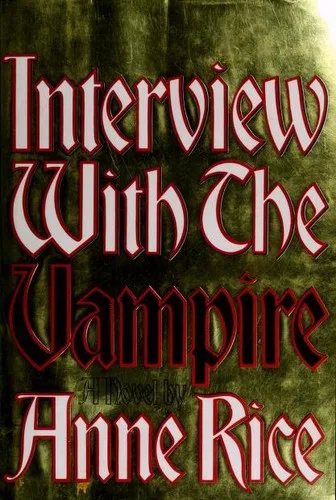
Interview With the Vampire
 77
77

Interview With the Vampire
Anne Rice's *Interview with the Vampire* accomplished something remarkable in 1976: it humanized the monster. By centering the narrative on Louis's profound weariness and moral anguish, Rice transforms the vampire from a mere predator into a figure of tragic, eternal alienation. The novel’s strength lies in its intimate, confessional voice, allowing readers to inhabit Louis’s gilded cage of immortality. The dynamic between Louis and the ancient vampire Lestat, a complex mix of creator, mentor, and tormentor, provides much of the book's dramatic tension. However, the narrative occasionally falters under the weight of its own philosophical musings, sometimes slowing the pacing as Louis dissects his eternal ennui. The introduction of Claudia, a child vampire, while thematically potent, introduces a narrative complexity that can feel ethically unsettling, even within its intended exploration of unnatural existence. Ultimately, *Interview with the Vampire* remains a potent exploration of eternal life’s crushing solitude.
📝 Description
77
Anne Rice's 1976 novel reimagines the vampire as a creature of existential angst.
Louis de Pointe du Lac, a vampire of two centuries, recounts his existence to an unseen interviewer. This narrative structure allows for a deep dive into the psychological and philosophical weight of unending life. Rice moves beyond the traditional monster to present a being grappling with morality, isolation, and the loss of humanity.
The novel arrived in the mid-1970s, a time of renewed interest in gothic and occult themes. It offered a sophisticated introspection that contrasted with simpler horror stories of the era. Rice's approach to the vampire as a complex, often tragic figure challenged contemporary literary norms and opened doors for more nuanced supernatural characters in fiction.
Readers will find Louis's confession a study in the burdens of immortality. The narrative explores the profound loneliness of an eternal being, detached from the human experience of time and mortality. It questions the nature of identity and morality when faced with immense power and endless existence.
Published in 1976, *Interview with the Vampire* emerged during a period when gothic and occult literature saw a revival. It distinguished itself from earlier supernatural fiction by focusing on the internal world of its immortal protagonist. Rather than simply presenting a monstrous entity, Rice framed vampirism as a condition of profound existential suffering and detachment from the natural order. This introspective approach to the vampire mythos resonated with a readership interested in exploring darker psychological and philosophical themes within the supernatural genre.
💡 Why Read This Book?
• Gain insight into the existential burden of immortality by examining Louis de Pointe du Lac's 200-year confession, understanding the psychological cost of eternal life. • Explore the subversion of classic horror tropes by engaging with the vampire as a creature of profound melancholy and moral conflict, rather than simple monstrosity. • Witness the intricate relationship between Louis and Lestat, a dynamic that challenges typical creator-disciple paradigms and explores themes of dependency and rebellion within an unnatural existence.
⭐ Reader Reviews
Honest opinions from readers who have explored this book.
❓ Frequently Asked Questions
When was Anne Rice's Interview with the Vampire first published?
Anne Rice's *Interview with the Vampire* was first published in 1976, marking a significant moment in gothic and supernatural literature.
What is the main theme of Interview with the Vampire?
The central theme is the existential and psychological burden of immortality, exploring loneliness, morality, and the loss of humanity through the vampire's perspective.
Who are the main characters in Interview with the Vampire?
The primary characters are Louis de Pointe du Lac, the confessor vampire, and Lestat de Lioncourt, his creator and companion. Claudia, a child vampire, also plays a crucial role.
How does Interview with the Vampire differ from traditional vampire stories?
It shifts focus from the vampire as a monstrous threat to a complex, introspective being grappling with eternal life, moral dilemmas, and profound loneliness.
What literary movement is Interview with the Vampire associated with?
It is strongly associated with modern gothic literature and has been influential in the development of dark fantasy, emphasizing psychological depth and philosophical exploration.
What is the significance of the interview format in the book?
The interview format allows for a deeply personal and confessional narrative, enabling Louis to articulate his centuries of experience, moral struggles, and existential despair directly to the reader.
🔮 Key Themes & Symbolism
The Burden of Immortality
The novel presents eternal life not as a gift but as an agonizing sentence. Louis de Pointe du Lac grapples with the profound isolation and detachment that centuries of existence bring. He observes the fleeting lives of mortals with a weariness that transcends simple ennui, questioning the value of unending consciousness when stripped of human connection and the natural order. This theme explores the psychological toll of outliving all that one knows, transforming the vampire into a figure of perpetual mourning.
Moral Ambiguity and Predation
Rice forces readers to confront the inherent violence of vampirism. Louis's struggle is not just with his thirst but with the moral implications of his existence – the necessity of taking human life to sustain his own. The narrative probes the justifications vampires create for their predatory nature, examining how power and eternal life can corrupt or warp ethical frameworks. This leads to a complex portrayal where the 'monster' is capable of deep regret and philosophical inquiry.
The Nature of Humanity
By depicting vampires who retain human consciousness, memories, and desires, the book blurs the lines between human and inhuman. Louis's internal conflict stems from his desire to retain some semblance of his former humanity while being irrevocably changed by the "Dark Gift." The narrative questions whether humanity is defined by mortality, by capacity for love and suffering, or by adherence to a moral code, even in the face of eternal damnation.
Family and Codependency
The relationships between vampires, particularly Louis, Lestat, and Claudia, form a twisted, dysfunctional family unit. Their eternal existence forces them into codependent dynamics, marked by love, resentment, and a shared struggle against the loneliness of their condition. This theme explores how unnatural bonds can form under extreme circumstances, creating a unique social structure driven by survival and the need for companionship, however fraught.
💬 Memorable Quotes
Direct passages from the work, attributed to the author.
“The beautiful, the terrible, the divine, the monstrous – all were mine. And I could not touch them.”
— Here, Louis articulates the paradox of his existence: possessing immense power and potential for experience, yet being fundamentally detached from the human world and its simple pleasures or authentic connections. It highlights his eternal outsider status.
“The blood was the life, and it was my life too. And I was a monster.”
— This visceral statement directly confronts the predatory nature of vampirism. Louis acknowledges that his sustenance is derived from the life force of others, a realization that solidifies his self-perception as a creature of unnatural and morally reprehensible being.
“Death alone could not save me from myself. I was beyond salvation.”
— This reflects Louis's deep-seated despair and the existential conclusion that his condition, and the actions it necessitates, place him beyond redemption. The finality of his immortal state offers no escape from his internal torment.
“There was no way for me to be human. But I could try to be human.”
— This represents Louis's enduring struggle for humanity despite his vampiric nature. It highlights his conscious effort to adhere to a moral compass and retain aspects of his former self, even if true humanity remains unattainable.
💡 Key Ideas
Editorial paraphrase of the work's core concepts — not direct quotes.
I was not myself. I was someone else, someone I had never been before, someone I had never even imagined.
This quote captures the profound identity shift experienced by Louis upon his transformation. It signifies the loss of his human self and the unsettling emergence of a new, immortal being whose desires and existence are fundamentally alien to his former life.
🌙 Esoteric Significance
Tradition
While not strictly adhering to a single esoteric lineage, *Interview with the Vampire* draws heavily from Gnostic themes of alienation and the search for forbidden knowledge. The vampire's existence can be seen as a form of Gnostic 'fall' from a natural state, possessing a corrupted form of eternal life. The narrative's exploration of secret societies (vampire covens) and the pursuit of hidden truths about existence also echoes Hermetic traditions, albeit through a dark, modern lens.
Symbolism
The "Dark Gift" itself serves as a potent symbol of corrupted immortality, an unnatural state that grants power but severs connection to the divine or natural order. Blood, central to vampirism, symbolizes life force, sustenance, and the inherent predatory nature required for survival in this corrupted existence. The contrast between the eternal, unchanging vampire and the fleeting, mortal human highlights the Gnostic theme of the material world as a prison and the yearning for a lost, purer state.
Modern Relevance
Contemporary urban fantasy and paranormal romance genres owe a significant debt to Rice's work. Thinkers and practitioners exploring themes of liminality, existentialism within supernatural frameworks, and the psychology of eternal beings often reference *Interview*. Modern vampire fiction, from shows like *The Vampire Diaries* to literary works, continues to engage with the complex, morally ambiguous vampire archetype Rice so powerfully established.
👥 Who Should Read This Book
• Students of Gothic Literature: Engage with a foundational text that redefined the vampire archetype for the late 20th century, moving beyond traditional horror. • Readers Interested in Existential Philosophy: Explore themes of immortality, alienation, and the search for meaning through the introspective narrative of Louis de Pointe du Lac. • Fans of Dark Fantasy: Discover a richly imagined world where supernatural beings grapple with profound moral and psychological dilemmas, offering a sophisticated take on the genre.
📜 Historical Context
Published in 1976, *Interview with the Vampire* emerged during a fertile period for gothic revival and explorations of the supernatural in literature. Anne Rice's novel offered a stark contrast to the more simplistic horror narratives of the era, such as those found in pulp magazines or earlier B-movie vampire portrayals. While writers like Stephen King were beginning to redefine contemporary horror with works like *Carrie* (1974), Rice focused on psychological depth and existential dread. The book’s critical reception was largely positive, with many acknowledging its sophisticated portrayal of the vampire. Its success challenged the perception of vampire fiction as mere schlock, demonstrating its potential for serious literary exploration and influencing a generation of authors who would further develop the modern vampire archetype, moving beyond Bram Stoker's Dracula.
📔 Journal Prompts
Louis's lament over the "beautiful, the terrible, the divine, the monstrous – all were mine. And I could not touch them."
The moral quandary of the "Dark Gift" and its inherent predatory necessity.
Lestat's role as a complex, often tyrannical, mentor figure.
The vampire's perspective on the ephemeral nature of human life and society.
The concept of a "family" formed under unnatural, eternal circumstances.
🗂️ Glossary
The Dark Gift
A euphemism used by vampires for their condition of immortality and vampirism. It signifies a profound, transformative, yet often agonizing existence that separates them from humanity.
Mortal
Refers to human beings, defined by their finite lifespan and susceptibility to death. Vampires view mortals with a mixture of detachment, pity, and predatory desire.
The Blood God
A concept or entity alluded to by Lestat, representing a primal, possibly divine, force associated with vampirism and the taking of life.
The Embrace
The act by which a vampire transforms a human into another vampire, typically by sharing blood.
Parisian Coven
A specific gathering or community of vampires, such as the one Louis and Claudia encounter in Paris, highlighting the existence of vampire societies.
Louis de Pointe du Lac
The narrator and protagonist, a vampire recounting his 200-year existence and moral struggles to an unnamed interviewer.
Lestat de Lioncourt
An ancient and charismatic vampire who transforms Louis and serves as his creator, companion, and sometimes tormentor.
🔮 Readers Also Liked
Browse all →








More by Anne Rice
All books →





More Free Occult Philosophy Books
View all →