Theurgy and the Soul

 81
81

Theurgy and the Soul
Gregory Shaw's *Theurgy and the Soul* offers a rigorous and much-needed scholarly examination of a practice often shrouded in myth. His strength lies in meticulously tracing the lineage of theurgic thought, particularly its deep roots in Neoplatonism, providing a historical bedrock for understanding these complex rituals. The section detailing the philosophical underpinnings of Iamblichus's approach to theurgy is particularly illuminating, highlighting how ritual was integrated into a sophisticated cosmological and ethical system. However, the book's academic density, while a virtue for scholars, can sometimes make the core practical implications feel distant. A more direct engagement with specific ritualistic elements, beyond their philosophical justification, might have provided an even richer experience for practitioners. Despite this, the work remains a foundational text for anyone seeking to understand the intellectual and spiritual history of theurgy.
📝 Description
81
Gregory Shaw's *Theurgy and the Soul* (1971) details ritual magic meant to invoke divine beings and foster spiritual ascent.
Published in 1971, Gregory Shaw's *Theurgy and the Soul* examines the practice and philosophy of theurgy. This ritual magic aimed to invoke divine beings and facilitate spiritual ascent. The book traces the historical development of theurgic traditions, beginning with their Hellenistic roots, continuing through Neoplatonic interpretations, and noting their subsequent influence on later esoteric movements. Shaw's scholarly approach situates theurgic practices within their broader philosophical and religious contexts, avoiding the presentation of these rites as mere arcane techniques.
This work is for serious students of Western esotericism, comparative religion, and the history of philosophy. Readers interested in the practical application of ancient magical rites for spiritual transformation will find substantial material. It appeals to those who approach mystical traditions with academic rigor, seeking to understand the theoretical underpinnings and historical evolution of practices aimed at divine communion. It is not a beginner's guide to spellcasting, but rather a detailed study of a specific spiritual discipline.
In 1971, *Theurgy and the Soul* appeared during a time of growing interest in esoteric subjects, following the countercultural movements of the 1960s. While academic religious studies were expanding, direct examination of ritualistic magical systems remained less common. Shaw's book emerged as scholars like Mircea Eliade were documenting religious histories, and classicists were more open to interpreting religious phenomena beyond purely rationalistic views. The work helps illustrate the continuity of ancient practices into modern esoteric thought, focusing on a specific tradition within Western esotericism.
💡 Why Read This Book?
• Understand the philosophical underpinnings of theurgy, particularly the Neoplatonic concept of the soul's ascent, as detailed in the discussions on Iamblichus. • Gain insight into the historical evolution of theurgy, tracing its origins in Hellenistic religion and its influence through various esoteric traditions since 1971. • Explore the concept of divine intermediaries and their role in ritual magic, as presented in Shaw's analysis of ancient texts and practices.
⭐ Reader Reviews
Honest opinions from readers who have explored this book.
❓ Frequently Asked Questions
What is theurgy according to Gregory Shaw's book?
Shaw defines theurgy as divine work or operation, a system of ritualistic practices aimed at invoking divine beings, purifying the soul, and achieving spiritual ascent towards higher principles.
Which philosophical school heavily influenced theurgy discussed in the book?
The book emphasizes the profound influence of Neoplatonism, particularly the ideas of Iamblichus, on the development and theoretical framework of theurgy.
When was Theurgy and the Soul first published?
Gregory Shaw's *Theurgy and the Soul* was first published in 1971, contributing to scholarly discourse during a period of revived interest in esoteric studies.
Is this book suitable for someone new to esoteric practices?
While informative, the book is more suited for serious students and scholars of Western esotericism due to its academic rigor and historical focus, rather than a practical beginner's guide.
What historical periods does the book cover regarding theurgy?
The work traces the history of theurgy from its Hellenistic origins through its significant development in Neoplatonic thought and its subsequent impact on later esoteric traditions.
What is the primary goal of theurgic practice as presented by Shaw?
The primary goal is the purification of the soul and its alignment with divine realities, facilitating a spiritual journey and communion with higher powers.
🔮 Key Themes & Symbolism
Theurgy as Divine Work
Shaw positions theurgy not as mere sorcery, but as a sacred, divinely inspired operation intended to effect spiritual transformation. This divine work aims to purify the practitioner's soul, lifting it from material entanglements towards contemplation of the divine. The book explores how this concept moved beyond simple petitionary prayer to become a systematic path for achieving union with higher realities, grounded in the philosophical understanding of cosmic hierarchies and the soul's place within them.
Neoplatonic Asceticism and Ritual
Central to the book is the integration of Neoplatonic philosophy with practical ritual. Shaw meticulously details how thinkers like Iamblichus synthesized Platonic metaphysics with established religious traditions, viewing theurgy as a necessary means for the soul's journey back to the One. This involves understanding the soul's descent and its potential for ascent through purification, aided by specific divine operations and the invocation of celestial intelligences.
The Soul's Journey and Purification
The work emphasizes the soul's spiritual trajectory as a core element of theurgic practice. Shaw explains how theurgy serves as a salvific process, designed to cleanse the soul of impurities accumulated through its earthly existence. This purification is not solely an ethical endeavor but a ritualistic one, aimed at restoring the soul's original divine likeness and enabling its reunion with the noetic realm, a concept central to Hellenistic and later esoteric thought.
Divine Intermediaries and Hierarchy
Shaw's analysis highlights the crucial role of divine intermediaries in the theurgic process. These beings, often associated with planetary powers or specific deities, act as conduits between the human realm and the ultimate divine source. The book explores the complex hierarchy of these celestial entities and how ritual practices were designed to interact with them, facilitating the soul's ascent through the various cosmic spheres and receiving divine knowledge.
💬 Memorable Quotes
Direct passages from the work, attributed to the author.
“Theurgy is a divine work.”
— This concise statement captures the essence of the practice as presented by Shaw, distinguishing it from human-centric magic by emphasizing its divine origin and purpose.
“The soul's purification is essential for spiritual ascent.”
— This interpretation reflects a core theme in the book, emphasizing that theurgic practice is intrinsically linked to the process of cleansing the soul from earthly defilements.
“Hellenistic religion provided the context for early theurgy.”
— This highlights the historical setting for the emergence of theurgy, framing it within the religious field of the Hellenistic period before its philosophical elaboration.
💡 Key Ideas
Editorial paraphrase of the work's core concepts — not direct quotes.
Iamblichus saw ritual as a necessary means for the soul's return.
This paraphrased concept underscores the philosophical importance Shaw places on Iamblichus's synthesis of metaphysics and practice, highlighting ritual's salvific role in Neoplatonism.
Hierarchies of divine beings mediate the ascent.
This paraphrased concept points to the structured cosmology within which theurgy operates, detailing the role of intermediary entities in bridging the human and divine realms.
🌙 Esoteric Significance
Tradition
The work is firmly rooted in the Western Esoteric Tradition, specifically the Neoplatonic and Hermetic streams. It elaborates on the philosophical and practical aspects of theurgy as understood by figures like Iamblichus, who synthesized Platonic ideas with earlier religious and magical practices. Shaw's contribution lies in articulating the theurgic path as a method of spiritual ascent and soul purification, directly influencing modern interpretations of ritual magic and its relationship to philosophical cosmology.
Symbolism
Key symbols explored include the invocation of divine names and celestial intelligences, representing the structured hierarchy of the cosmos and the means by which the soul can ascend. Theurgy itself functions as a symbol of divine work, signifying humanity's active participation in its own spiritual salvation and alignment with the divine order. The concept of purification rituals symbolizes the shedding of material attachments and the restoration of the soul's innate spiritual nature.
Modern Relevance
Contemporary practitioners of Western esoteric traditions, particularly those involved in ceremonial magic and Neoplatonic studies, continue to draw upon Shaw's meticulous research. His work provides essential historical and philosophical context for understanding the theoretical basis of many modern magical systems that seek spiritual transformation through ritual. Thinkers and groups focusing on the restoration of ancient religious practices and the integration of philosophy with magic often reference Shaw's analyses of figures like Iamblichus and Proclus.
👥 Who Should Read This Book
• Students of Western Esotericism: Those seeking to understand the historical development and philosophical underpinnings of ritual magic and spiritual traditions originating in the Hellenistic and Roman periods. • Scholars of Religion and Philosophy: Researchers interested in the intersection of ancient philosophy, religious practice, and the concept of divine invocation in the classical world. • Practitioners of Theurgy: Individuals engaged in or studying theurgic practices who require a deep dive into the historical and theoretical foundations laid by Neoplatonic thinkers.
📜 Historical Context
Published in 1971, *Theurgy and the Soul* emerged during a period of burgeoning academic interest in non-Western religions and esoteric traditions, a counterpoint to the more secularized humanities of the mid-20th century. Scholars like Mircea Eliade were popularizing comparative religion, and a growing number of classicists were re-examining the role of religion and magic in the ancient world. Shaw's work engaged with a scholarly discourse increasingly open to interpreting religious phenomena within their own cosmological frameworks, moving beyond purely sociological or historical analyses. It stood apart from purely philosophical examinations of Neoplatonism by focusing on the practical implications of theurgy. While figures like Gershom Scholem were revolutionizing Jewish mysticism studies, Shaw’s work carved out a specific niche exploring the Hellenistic and Neoplatonic roots of ritualistic spiritual ascent, contributing to a more nuanced understanding of ancient religious practices.
📔 Journal Prompts
The Neoplatonic concept of the soul's ascent.
Iamblichus's integration of ritual and philosophy.
The role of divine intermediaries in theurgy.
The meaning of 'divine work' in the context of theurgy.
Historical antecedents of theurgy in Hellenistic religion.
🗂️ Glossary
Theurgy
A system of ritualistic practices aimed at invoking divine beings for the purpose of spiritual purification and ascent, considered a 'divine work'.
Neoplatonism
A philosophical system originating with Plotinus, emphasizing the ascent of the soul towards a transcendent, ineffable One through intellectual and spiritual disciplines.
Iamblichus
A 3rd-4th century CE Neoplatonic philosopher, central to the development of theurgy, who argued for the efficacy of ritual in facilitating divine communion.
Hellenistic Period
The historical era between the death of Alexander the Great (323 BCE) and the rise of the Roman Empire (c. 31 BCE), characterized by the spread of Greek culture.
Soul's Ascent
The Neoplatonic concept of the soul's spiritual journey from the material world back to its divine origin, often facilitated by philosophical contemplation and ritual.
Divine Intermediaries
Celestial beings or intelligences within a hierarchical cosmology that act as links between the human realm and the ultimate divine principle.
Purification
The process of cleansing the soul from material impurities and passions, considered a prerequisite for spiritual attainment in many esoteric traditions.
🔮 Readers Also Liked
Browse all →









More by Gregory Shaw
All books →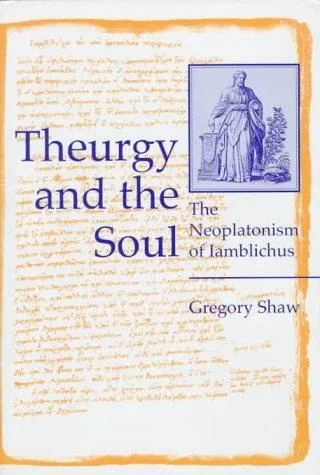

More Free Occult Philosophy Books
View all →