In the house of memory
 79
79

In the house of memory
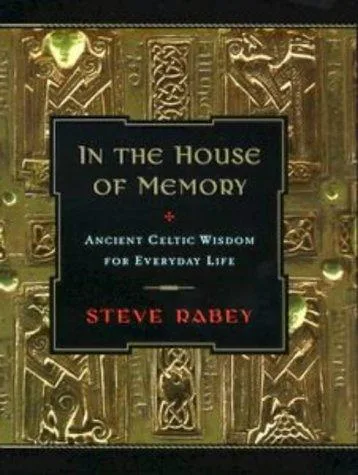
Steve Rabey's "In the House of Memory" attempts to reframe our understanding of memory not as a simple storage system but as a dynamic, living architecture that constructs our reality. The book's central thesis—that conscious engagement with memory can unlock esoteric understanding—is compelling. Rabey's strength lies in his ability to connect psychological introspection with metaphysical inquiry, particularly when discussing how subjective experience shapes objective perception. However, the work occasionally suffers from a lack of concrete examples to fully ground its more abstract philosophical assertions. For instance, the discussion on "anamnesis" is conceptually rich but could benefit from more direct illustrations of how this process might manifest in everyday consciousness. The text is best when it grounds abstract ideas, such as the mind's architecture, in relatable mnemonic experiences. Ultimately, "In the House of Memory" offers a unique perspective on the inner landscape, though its impact is somewhat muted by its theoretical density.
📝 Description
79
Steve Rabey's 1998 book argues memory actively shapes our present reality.
Published in 1998, "In the House of Memory" examines how our past experiences, both personal and collective, influence our current perception and esoteric understanding. Rabey suggests memory is not a passive record but a dynamic force that shapes inner worlds. By consciously interacting with memories, individuals can achieve greater self-awareness and spiritual insight. This book is for readers interested in the philosophical aspects of consciousness and the role memory plays in spiritual growth. It appeals to those who study metaphysics, psychology, and esoteric traditions and question purely materialist views of the mind. Those seeking to grasp the subjective nature of reality and the potential for inner change through deliberate engagement with their histories will find ample material. It is best suited for a curious mind ready to challenge standard views of perception.
The book emerged during a time of renewed interest in consciousness studies and non-materialist approaches to the mind, echoing the influence of figures like Carl Jung and his ideas on the collective unconscious. The late 20th century saw a rise in esoteric thought, moving beyond general New Age ideas toward more structured examinations of ancient traditions. Rabey's work engages with thinkers who began merging psychological theory with mystical concepts, a trend that continued into the 21st century with transpersonal psychology and contemplative science.
💡 Why Read This Book?
• Gain a novel perspective on memory as an active shaper of reality, not just a passive record, as explored through the concept of "anamnesis" and its Platonic roots. • Understand the "architecture of the mind" as a construct influenced by mnemonic landscapes, offering practical insights for self-awareness beyond conventional psychology. • Explore the potential of "eidetic memory" as a tool for spiritual insight, moving beyond mere recall to a phenomenological experience of consciousness itself.
⭐ Reader Reviews
Honest opinions from readers who have explored this book.
❓ Frequently Asked Questions
When was "In the House of Memory" first published?
Steve Rabey's "In the House of Memory" was first published in 1998, a period marked by increasing interest in consciousness studies and the intersection of psychology and spirituality.
What is the main focus of "In the House of Memory"?
The book focuses on memory not just as recollection, but as a fundamental force that constructs our reality and our understanding of esoteric dimensions, exploring concepts like anamnesis and the architecture of the mind.
Who is Steve Rabey?
Steve Rabey is an author who writes on religion, spirituality, and the intersection of faith and culture, often exploring esoteric and metaphysical themes in his work, including "In the House of Memory."
What esoteric traditions does the book draw upon?
While not strictly adhering to one tradition, the book engages with concepts reminiscent of Platonic philosophy (anamnesis) and explores general metaphysical ideas about consciousness and subjective reality, aligning with broader esoteric inquiry.
Does the book offer practical exercises for memory enhancement?
The book focuses more on the philosophical and metaphysical implications of memory and consciousness rather than providing explicit memory-training exercises. Its practical application lies in shifting one's perspective on memory's role.
What is "anamnesis" as discussed in the book?
Anamnesis, a concept borrowed from Platonic philosophy, refers to the idea that learning is a form of remembering knowledge that the soul already possessed prior to birth, suggesting a deeper connection to innate wisdom.
🔮 Key Themes & Symbolism
Memory as Reality Constructor
Rabey posits that memory is not a passive storage unit but an active architect of our perceived reality. The book examines how our recollections, interpretations, and emotional associations with past events fundamentally shape our present experience and worldview. This perspective moves beyond simple cognitive psychology to suggest that our inner mnemonic landscape is a primary determinant of our subjective universe, influencing our spiritual and metaphysical understandings. The work encourages a conscious engagement with this process, treating memory as a living entity rather than a static archive.
The Architecture of the Mind
This theme explores the mind not as a singular entity but as a complex, multi-layered structure. Rabey suggests that our memories form the very foundations and corridors of this inner architecture, influencing how we process information, form beliefs, and experience consciousness. Understanding this structure, the book implies, is key to unlocking deeper self-awareness and potentially accessing esoteric knowledge. It frames the mind as a landscape that can be mapped and understood through careful introspection into one's own mnemonic patterns and experiences.
Anamnesis and Innate Knowledge
Drawing from Platonic philosophy, the concept of anamnesis—the idea that learning is remembering—is central. Rabey applies this to the spiritual and esoteric realms, suggesting that certain truths or insights are not learned but recollected from a prior state of existence or consciousness. This theme implies that the journey of self-discovery is also a journey of remembering, of tapping into a reservoir of innate wisdom that lies dormant within the individual, accessible through focused attention on the patterns of memory.
Eidetic Experience
The book touches upon "eidetic memory" not merely as photographic recall, but as a vivid, sensory experience of past events or mental imagery. Rabey suggests that cultivating or understanding this form of intense mnemonic recall can serve as a gateway to deeper states of consciousness and esoteric perception. It's presented as a way to more fully inhabit past experiences mentally, thereby gaining new insights into their significance and their impact on the present, blurring the lines between recollection and direct experience.
💬 Memorable Quotes
Direct passages from the work, attributed to the author.
“Memory is not an inert record but a living force that builds our world.”
— This captures the book's core argument: memory actively constructs our perceived reality and influences our understanding of existence, rather than passively storing information.
“The mind is an interior landscape, its terrain shaped by memory.”
— This highlights the theme of the "architecture of the mind," portraying consciousness as a navigable space whose features and pathways are determined by our mnemonic experiences.
“Eidetic perception offers a glimpse into the fabric of consciousness.”
— This refers to the potential of vivid mnemonic recall (eidetic memory) to unlock deeper states of awareness and provide insights into the fundamental nature of consciousness.
“Our past experiences are not gone; they are the foundation of our present being.”
— This emphasizes the ongoing influence of memory, asserting that past events and recollections are integral to our current identity and perception of reality.
💡 Key Ideas
Editorial paraphrase of the work's core concepts — not direct quotes.
To remember is to recall forgotten truths within oneself.
This paraphrases the concept of anamnesis, suggesting that self-discovery involves accessing innate knowledge or spiritual understanding that already resides within, rather than acquiring new information.
🌙 Esoteric Significance
Tradition
The work aligns with broader esoteric traditions that emphasize the power of consciousness and subjective experience. While not strictly tied to a single lineage like Hermeticism or Gnosticism, it speaks to the Hermetic principle "As above, so below," by suggesting that the inner range of memory mirrors and constructs the outer experienced world. It shares with contemplative practices across various traditions the idea that disciplined introspection can lead to useful insights and a re-framing of reality.
Symbolism
The "house" in the title functions as a primary symbol, representing the mind or consciousness itself—a structure built and furnished by memory. "Memory" itself is a symbolic motif, representing not just past events but the active, formative principle that shapes present reality. The "architecture" of this house symbolizes the complex, multi-layered nature of the psyche, with different "rooms" or "floors" corresponding to different layers of consciousness or types of mnemonic recall.
Modern Relevance
Rabey's ideas on memory as a constructor of reality find echoes in contemporary discussions within transpersonal psychology, consciousness studies, and even certain branches of neuroscience that explore the plasticity of memory and perception. Thinkers and practitioners interested in lucid dreaming, memory reconsolidation, and the philosophical implications of subjective experience continue to find value in Rabey's foundational exploration of the inner world as a tangible, navigable space.
👥 Who Should Read This Book
• Students of consciousness and metaphysics seeking to understand memory's role beyond simple recall, particularly those interested in philosophical approaches to the mind. • Individuals exploring esoteric psychology and the potential for inner transformation through self-awareness, who are looking for frameworks that bridge psychological introspection with metaphysical concepts. • Readers interested in Platonic philosophy and the concept of anamnesis, seeking to understand how innate knowledge might be accessed through the exploration of one's own mnemonic landscape.
📜 Historical Context
Published in 1998, "In the House of Memory" arrived during a period of burgeoning interest in consciousness studies, fueled by both academic research and popular exploration of spiritual and psychological frontiers. It emerged after the initial wave of the New Age movement and reflected a growing desire for more substantive, less ephemeral explorations of inner experience. The work can be situated alongside contemporaries who were synthesizing Jungian psychology with spiritual inquiry, such as Stanislav Grof, whose work on transpersonal psychology also challenged conventional notions of the mind. While not a direct engagement, Rabey's exploration of memory's role in constructing reality indirectly dialogues with emerging ideas in cognitive science and philosophy of mind that questioned purely materialistic explanations. The reception of such works often found audiences seeking alternative frameworks for understanding consciousness beyond mainstream scientific paradigms.
📔 Journal Prompts
The mnemonic range of your inner house: What rooms feel most dominant?
Anamnesis in practice: What 'forgotten' truths might your memories reveal?
Eidetic recall: Describe a memory with vivid sensory detail.
The architecture of your mind: How do specific memories form its structure?
Memory as a formative force: How has a particular recollection shaped your present reality?
🗂️ Glossary
Anamnesis
A Platonic philosophical concept suggesting that learning is essentially the process of remembering knowledge that the soul already possesses from a prior existence or state of being.
Eidetic Memory
A type of memory characterized by vivid, detailed, and often sensory recall of past experiences or mental images, going beyond simple factual recollection.
Architecture of the Mind
A metaphorical concept describing the complex, structured nature of consciousness and the psyche, emphasizing how memory and experience build its internal framework.
Mnemonic Landscape
The terrain or environment created by an individual's memories, encompassing their patterns, associations, and emotional resonances, which shapes their perception and experience.
Subjective Reality
The reality as perceived and experienced by an individual, heavily influenced by their personal consciousness, memories, beliefs, and interpretations, as opposed to an objective, external reality.
Esoteric Understanding
Knowledge or insight that is hidden, secret, or understood by a select few, typically pertaining to spiritual, mystical, or metaphysical dimensions of existence.
Consciousness
The state or quality of awareness, or of being aware of an external object or something within oneself; the set of mental capacities that includes sensation, perception, thinking, and memory.
🔮 Readers Also Liked
Browse all →









More Free Occult Philosophy Books
View all →