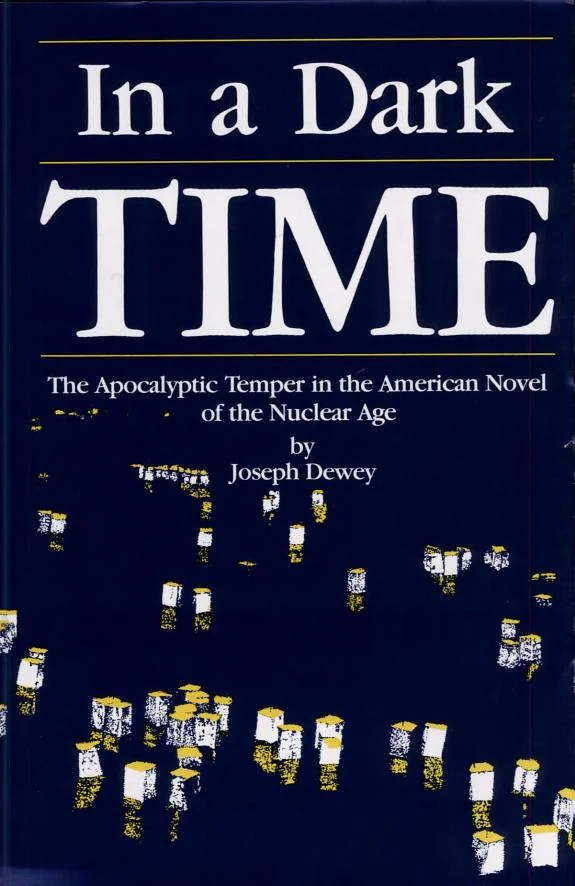
In a Dark Time
 76
76

In a Dark Time
Joseph Dewey’s *In a Dark Time* confronts the chilling specter of nuclear annihilation, a theme that permeated American consciousness from the mid-20th century onward. The novel’s strength lies in its direct engagement with how writers in the 1960s began to process the unthinkable implications of atomic power. Dewey avoids platitudes, instead charting the difficult intellectual and emotional territory required to find any semblance of hope. A particularly striking element is the exploration of how scientific discovery, in this case nuclear physics, could paradoxically birth such profound despair. However, the work occasionally feels overly academic in its dissection of literary movements, sometimes obscuring the raw human fear it seeks to represent. Nevertheless, *In a Dark Time* offers a vital examination of a crucial period in American letters, demonstrating literature's capacity to wrestle with existential threats. It serves as a potent reminder of art's role in confronting societal anxieties.
📝 Description
76
Joseph Dewey's 1988 book, In a Dark Time, examines American literature's response to nuclear anxiety.
In a Dark Time analyzes how American authors responded to the existential dread brought on by the nuclear age, beginning in the 1960s. The book investigates how writers grappled with the consequences of atomic warfare and the possibility of human extinction. Dewey traces the pursuit of meaning and hope under the constant threat of annihilation, charting the philosophical and psychological territory that arose from this unique historical period.
The work is suitable for readers interested in post-World War II American literature, particularly its engagement with existentialism and Cold War anxieties. It will also appeal to those studying the effect of scientific advancements, such as nuclear physics, on culture and art. Scholars of American studies, literature, and graduate students looking to understand how the literary canon addressed societal crises will find this book valuable.
The book's context is the post-1945 era, following the Trinity test and the atomic bombings, which initiated the "atomic age." The 1960s, a decade defined by events like the Cuban Missile Crisis and heightened Cold War tensions, saw American writers directly confront the "Unthinkable." This period also coincided with the broader cultural influence of existentialist philosophy, which shaped narratives of individual agency and the search for meaning in a world perceived as irrational.
While not explicitly an esoteric text in the occult sense, In a Dark Time engages with a form of modern gnosis. The "existential dread" it describes reflects a contemporary spiritual crisis, a feeling of cosmic alienation born from humanity's newfound power of self-destruction. The "search for hope" within this context mirrors a gnostic quest for salvation or meaning in a seemingly fallen or doomed world, mediated through the lens of literary expression rather than traditional religious or mystical frameworks. The book thus situates literary works as vehicles for confronting and potentially transcending a modern 'darkness'.
💡 Why Read This Book?
• Understand how American literature of the 1960s grappled with the existential crisis posed by nuclear weapons, offering insights into the specific anxieties of the Cold War era. • Discover the literary strategies employed by authors to find meaning and hope amidst the threat of global destruction, a concept explored through the "search for hope" theme. • Examine the cultural impact of nuclear physics on societal consciousness and artistic expression, as detailed in the novel's exploration of the "atomic age."
⭐ Reader Reviews
Honest opinions from readers who have explored this book.
❓ Frequently Asked Questions
What is the primary literary movement discussed in relation to the nuclear age in 'In a Dark Time'?
The primary literary movement examined is the American novel's engagement with existentialism and post-war anxieties, particularly how writers in the 1960s processed the threat of nuclear annihilation and the concept of the 'Unthinkable'.
When did American novels begin seriously addressing the 'mushroom cloud'?
American novels began earnestly exploring life in the shadow of the mushroom cloud commencing in the 1960s, a period marked by heightened Cold War tensions and public awareness of nuclear capabilities.
Who was Winston Churchill and what did he say about the atomic bomb?
Winston Churchill was the Prime Minister of the United Kingdom. In July 1945, he described the atomic bomb as the 'Second Coming in wrath,' highlighting its immense destructive power and apocalyptic implications.
What does 'In a Dark Time' suggest about the relationship between science and human hope?
The book suggests that while advancements in nuclear physics created unprecedented potential for destruction, leading to profound existential dread, authors sought difficult avenues to hope by re-examining fundamental human values and meaning.
What specific historical event marked the beginning of the 'atomic age' discussed in the book?
The 'atomic age' discussed in the book effectively began with the 1945 Trinity test and the subsequent atomic bombings, events that fundamentally altered humanity's perception of warfare and its own vulnerability.
What is the significance of the 1960s in the context of 'In a Dark Time'?
The 1960s are presented as a pivotal decade when the American novel began earnestly exploring the psychological and philosophical adjustments required to live under the shadow of the mushroom cloud.
🔮 Key Themes & Symbolism
Existential Dread and the Nuclear Shadow
The work looks at the profound existential dread that permeated American culture following the advent of nuclear weapons. It analyzes how the constant threat of annihilation, symbolized by the 'mushroom cloud,' forced a societal reckoning with mortality and the fragility of human existence. This theme is central to understanding the psychological field of the Cold War, where the 'Unthinkable' became a daily consideration, shaping literary output and philosophical inquiry.
The Search for Hope in Despair
Amidst the darkness of potential nuclear holocaust, the novel illuminates the literary quest for hope. It examines how American writers, beginning in the 1960s, sought to rediscover sources of meaning and resilience. This involved confronting despair head-on and finding difficult avenues towards optimism, often by re-evaluating human values, spiritual beliefs, or communal bonds in the face of overwhelming destructive power.
Literature as a Response to Crisis
This theme highlights the role of the American novel as a critical tool for processing societal trauma and existential threats. The book argues that literature provided a vital space for exploring the implications of nuclear physics and its impact on the human condition. By confronting the age born from atomic science, authors aimed to understand humanity's place in a world capable of self-destruction, thereby offering catharsis and reflection.
The 'Unthinkable' in Post-War Consciousness
The concept of the 'Unthinkable' refers to the previously unimaginable scale of destruction enabled by nuclear weapons. The novel explores how American society and its writers grappled with this new reality, moving beyond traditional notions of warfare and mortality. It analyzes the psychological shift required to contemplate total annihilation and its effect on individual and collective identity in the decades following 1945.
💬 Memorable Quotes
Direct passages from the work, attributed to the author.
“Commencing earnestly in the 1960s, the American novel began its exploration into how mankind could adjust to life in the shadow of the mushroom cloud.”
— This statement identifies the 1960s as a crucial period for American literature's engagement with the nuclear age, highlighting the novel's role in grappling with the psychological and societal adjustments needed to coexist with existential threats.
“American writers faced squarely the age birthed by nuclear physics and found in its very darkness difficult avenues to hope.”
— This highlights the dual nature of the nuclear age as depicted in literature: a source of immense darkness and despair, yet also a catalyst for writers to seek out and articulate challenging pathways toward hope and meaning.
“how we could begin to think about the Unthinkable.”
— This phrase captures the core challenge for writers and society in the nuclear age: the need to conceptualize and process existential threats of unprecedented scale and finality, moving beyond prior human experience.
“rediscovering that most potent [source of hope]”
— This suggests that in confronting the profound despair of the nuclear age, American authors turned to fundamental, perhaps overlooked, human capacities or values as a means to find hope and sustain meaning.
💡 Key Ideas
Editorial paraphrase of the work's core concepts — not direct quotes.
What was gunpowder? Trivial. What was electricity? Meaningless. This atomic bomb is the Second Coming in wrath.
This quote from Winston Churchill (July 1945) starkly frames the atomic bomb not as another weapon, but as an apocalyptic event, marking a definitive, terrifying shift in human history and destructive capability.
🌙 Esoteric Significance
Tradition
While not overtly aligned with a single esoteric lineage, *In a Dark Time* engages with themes resonant with Gnostic and existentialist thought. The Gnostic concern with humanity's alienation in a flawed material world and the search for salvific knowledge finds a parallel in the novel's exploration of despair born from scientific discovery. The existentialist emphasis on confronting meaninglessness and forging individual purpose carries the literary struggle to find hope amidst potential annihilation.
Symbolism
The 'mushroom cloud' serves as a potent symbol of ultimate destruction and the terrifying power unleashed by human ingenuity, representing the nadir of material existence. The 'darkness' itself symbolizes ignorance, despair, and the existential void created by the nuclear threat. The 'difficult avenues to hope' suggest symbolic pathways towards spiritual or psychological resilience, representing the human spirit's capacity to transcend material devastation.
Modern Relevance
In an era still marked by geopolitical instability and discussions of existential risks (including nuclear proliferation and climate change), Dewey's work remains relevant. Contemporary thinkers exploring technological ethics, eco-philosophy, and resilience in the face of global crises can draw parallels. The novel's examination of confronting overwhelming threats and finding meaning appeals to modern schools of thought focused on existential psychology and post-apocalyptic studies.
👥 Who Should Read This Book
• Students of 20th-century American literature seeking to understand the impact of the Cold War and nuclear age on narrative. • Readers interested in existential philosophy and its manifestation in literary works, particularly concerning themes of dread and hope. • Scholars and enthusiasts of cultural studies examining societal responses to scientific advancement and existential threats.
📜 Historical Context
Joseph Dewey's *In a Dark Time* emerges from the profound cultural and psychological shifts initiated by the 1945 Trinity test and the subsequent atomic bombings. The 1960s, a decade characterized by the escalating arms race and the Cuban Missile Crisis, saw American literature confront the "age birthed by nuclear physics." This period was saturated with Cold War anxieties, influencing not only political discourse but also the philosophical underpinnings of artistic expression. Writers grappled with existentialism, a philosophy that gained traction by questioning traditional sources of meaning in a seemingly absurd universe. Contemporary authors like Kurt Vonnegut, in works such as *Cat's Cradle* (1963), also explored the often-absurdist implications of scientific advancement and potential destruction. The novel’s examination of adjusting to life under the 'mushroom cloud' reflects a broader cultural imperative to comprehend the "Unthinkable" and its implications for humanity's future, a dialogue actively taking place in literary circles and public consciousness.
📔 Journal Prompts
The 'Unthinkable' as a literary catalyst.
Finding 'difficult avenues to hope' in contemporary anxieties.
The American novel's confrontation with the 'mushroom cloud'.
Adjusting to life in the 'shadow of the mushroom cloud'.
The 'atomic age' and its birth of existential dread.
🗂️ Glossary
Atomic Age
The historical period characterized by the development and proliferation of nuclear weapons, beginning with the 1945 Trinity test and subsequent bombings. It signifies an era of unprecedented destructive potential and existential threat.
Mushroom Cloud
The distinctive, towering cloud formation created by the shockwave of a nuclear explosion. It became a powerful visual symbol of nuclear warfare and its catastrophic consequences.
Existential Dread
A profound sense of anxiety and unease stemming from the contemplation of human existence, freedom, mortality, and the apparent meaninglessness of life, amplified by the threat of nuclear annihilation.
The Unthinkable
Refers to the scale and nature of destruction possible with nuclear weapons, an event or outcome previously beyond human comprehension or expectation, forcing a confrontation with ultimate catastrophe.
Search for Hope
The literary and philosophical endeavor to identify and articulate sources of optimism, meaning, and resilience in the face of overwhelming despair, particularly as prompted by the existential threats of the nuclear age.
Nuclear Physics
The branch of physics concerned with the atomic nucleus and its properties. Its advancements in the mid-20th century led directly to the development of nuclear weapons, fundamentally altering global politics and human consciousness.
Second Coming in Wrath
A phrase used by Winston Churchill to describe the atomic bomb, likening its power to a divine, apocalyptic judgment, emphasizing its terrifying and world-altering significance.
This book appears in 1 collection
🔮 Readers Also Liked
Browse all →









From the “Apocalyptic Literature” Collection
View all →

More Free Occult Philosophy Books
View all →