I Ching for Writers
 61
61

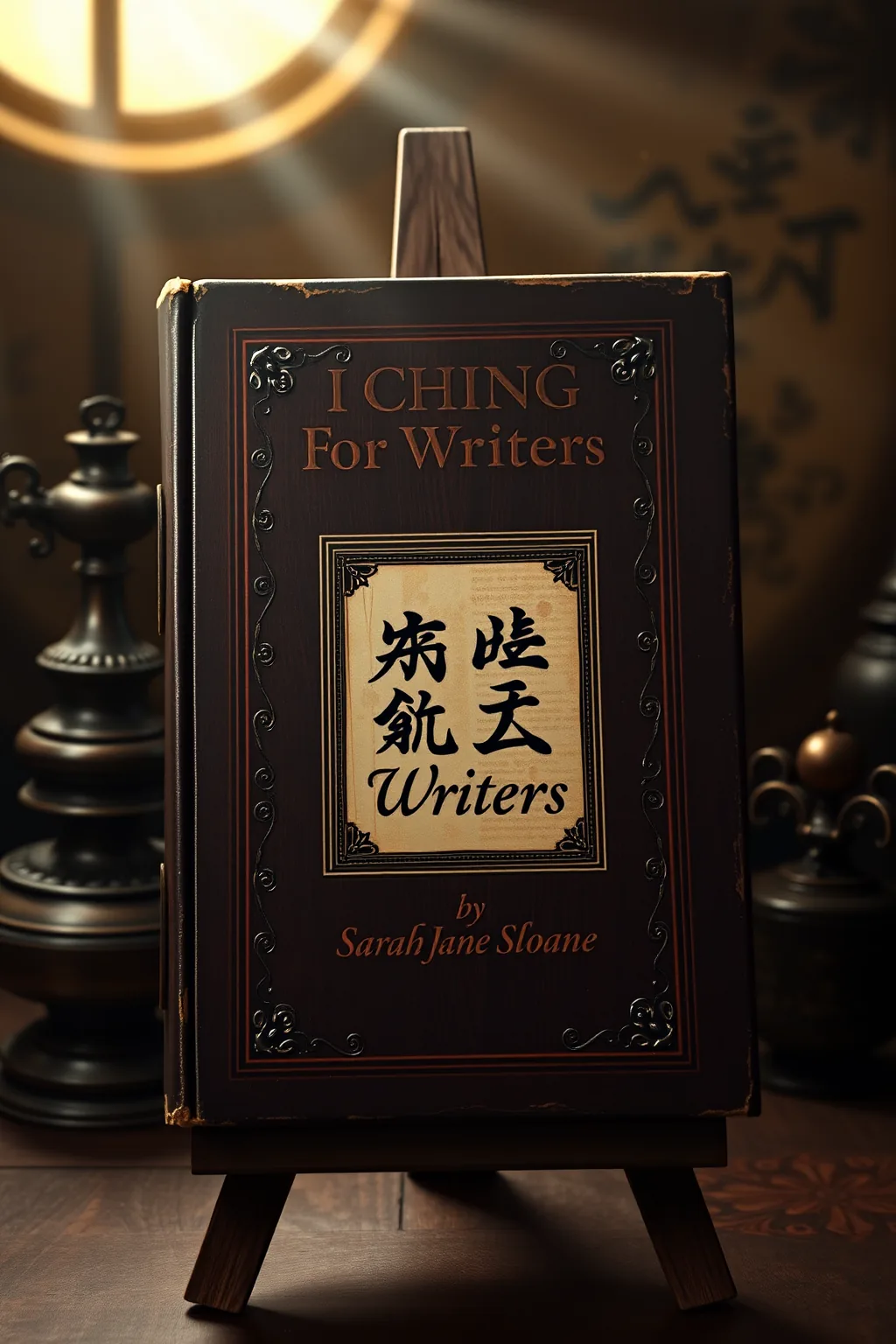
I Ching for Writers



Alaric Kestrel, Metaphysical Studies Reviewer — Sarah Jane Sloane's 'I Ching for Writers' is a masterful fusion of ancient wisdom and contemporary creative practice. Sloane artfully deciphers the enigmatic hexagrams, presenting them not as mere fortune-telling tools, but as profound symbolic keys to the writer's psyche and narrative architecture. This work offers esoteric insights into overcoming creative stagnation and refining one's authorial voice by attuning to the I Ching's cyclical patterns. Its strength lies in its accessible yet deeply resonant exploration of archetypal forces. Ideal for authors seeking a more profound, intuitive approach to their craft, this book acts as a sacred guide.
📝 Description
61
Sarah Jane Sloane's 2020 book connects the I Ching's sixty-four hexagrams to the writer's creative process.
Sarah Jane Sloane's 'I Ching for Writers' demonstrates how the ancient Chinese divination text can inform contemporary authorship. The book examines the sixty-four hexagrams and their changing lines, presenting them as a symbolic framework for understanding narrative development and overcoming creative obstacles. Sloane details specific hexagrams and their interpretations, showing how they relate to common writing challenges such as plot construction, character motivation, and thematic depth. The text encourages a contemplative approach, suggesting that engaging with the I Ching can foster deeper self-awareness and artistic insight. It frames the act of writing not merely as a technical skill but as a process of connecting with broader patterns of meaning. The book aims to equip writers with a unique set of symbolic tools for enhancing their craft and finding inspiration.
This work situates itself within the tradition of applying ancient Chinese philosophical and divinatory systems to modern life and personal development. The I Ching, or 'Book of Changes,' is a foundational text in Chinese culture, used for centuries to understand cosmic patterns and make decisions. Its hexagrams, formed by combinations of yin and yang lines, are interpreted as representations of fundamental situations and transformations. 'I Ching for Writers' reinterprets this ancient oracle, moving beyond its traditional divinatory uses to serve as a symbolic language for the creative mind. It draws on the book's philosophical depth, which explores change, balance, and the interconnectedness of all things, to offer a unique perspective on artistic creation.
💡 Why Read This Book?
Unlock the ancient secrets of storytelling and overcome creative blocks. 'I Ching for Writers' offers a unique, esoteric perspective on narrative development, character arcs, and thematic exploration. Ideal for authors, poets, and screenwriters seeking to tap into deeper wells of inspiration and gain profound self-awareness through the wisdom of the I Ching. Discover a mystical path to literary mastery.
⭐ Reader Reviews
Honest opinions from readers who have explored this book.
❓ Frequently Asked Questions
What is the I Ching and how does it apply to writing?
The I Ching, or 'Book of Changes,' is an ancient Chinese divination text and wisdom book. It offers a symbolic language of 64 hexagrams that represent universal archetypes and situations, providing insights applicable to the creative process, character development, and narrative structure.
Do I need prior knowledge of the I Ching to use this book?
No prior knowledge is required. Sarah Jane Sloane guides beginners through the core concepts and practical applications of the I Ching for writers, making it accessible to all.
How can the I Ching help with writer's block?
The I Ching offers symbolic perspectives on the underlying causes of creative stagnation and suggests approaches for navigating challenges, fostering new perspectives, and reigniting inspiration by understanding the energetic shifts within the creative flow.
Can this book be used for generating story ideas?
Absolutely. By consulting the I Ching's hexagrams, writers can uncover unique plot twists, character motivations, and thematic explorations that might otherwise remain hidden, transforming the oracle into a powerful source of narrative inspiration.
Is this book a traditional writing handbook?
While it provides practical guidance, 'I Ching for Writers' is more than a traditional handbook. It blends esoteric wisdom and divination with writing craft, offering a unique, soul-centered approach to authorship.
🔮 Key Themes & Symbolism
The Oracle as Muse
This theme explores the I Ching not merely as a divination tool, but as a living, breathing muse. Sloane demonstrates how its archetypal imagery and dynamic hexagrams can serve as profound catalysts for narrative generation, character depth, and thematic exploration. It's about understanding the subtle whispers of the universe channeled through ancient symbols to inform and enrich the writer's creative output, transforming the act of writing into a dialogue with cosmic intelligence.
Working through the Creative Labyrinth
The book positions the writing process as a spiritual journey, a labyrinth fraught with challenges and revelations. The I Ching's wisdom is presented as a map and a compass, guiding authors through periods of doubt, creative block, and the often-intimidating task of bringing a story to life. Sloane reveals how the cyclical nature of the I Ching's changes mirrors the ebb and flow of creative energy, offering practical strategies for navigating these shifts with insight and grace.
Symbolic Resonance and Archetypal Power
Central to the book is the exploration of the I Ching's rich symbolic language and its profound connection to universal archetypes. Sloane elucidates how these symbols—the Dragon, the Serpent, the Mountain, the Water—resonate deeply within the human psyche and can be powerfully integrated into storytelling. Understanding this symbolic resonance allows writers to imbue their work with timeless meaning, tapping into the collective unconscious and creating narratives that speak to the soul.
💬 Memorable Quotes
Direct passages from the work, attributed to the author.
“Embrace the stillness before the word takes flight.”
— This highlights the importance of contemplative preparation and inner attunement before beginning the act of writing, drawing on the I Ching's wisdom of patience and opportune moments.
“Every character's struggle is a hexagram in motion.”
— This profound statement links the dynamic nature of the I Ching's changing lines to the internal and external conflicts faced by literary characters, offering a framework for understanding their arcs.
“The oracle does not dictate, it illuminates.”
— This emphasizes the I Ching's role as a guide and source of insight, rather than a prescriptive force, empowering the writer to interpret and integrate its wisdom into their own creative vision.
“Find the dragon's breath in every sentence.”
— This evocative phrase encourages writers to infuse their prose with vitality, power, and a touch of the mystical, drawing on the potent symbolism of the I Ching's dragon imagery.
💡 Key Ideas
Editorial paraphrase of the work's core concepts — not direct quotes.
The hexagrams are cosmic blueprints for the soul's unfolding narrative.
This quote suggests that the I Ching's symbols are not arbitrary but represent fundamental patterns of existence and consciousness that can be mirrored in the structure and themes of a writer's work.
🌙 Esoteric Significance
Tradition
This work draws heavily from the Taoist tradition, specifically the philosophical and divinatory aspects of the I Ching. It aligns with a Taoist understanding of natural cycles, balance, and the interconnectedness of all things. The book acts as a conduit for channeling these ancient principles into the practical, often chaotic, area of creative writing, viewing the author's journey as a microcosm of the larger cosmic dance.
Symbolism
The core symbolism lies in the 64 hexagrams, each composed of six lines representing yin (broken) and yang (solid). These lines and their combinations symbolize fundamental forces, archetypes, and situational dynamics – from the Creative (Heaven) to the Receptive (Earth), and all the transitional states between. Sloane unpacks how these potent symbols can inform character archetypes, plot progression, and thematic depth, transforming abstract concepts into narrative realities.
Modern Relevance
In an age often characterized by digital distraction and creative burnout, the I Ching offers a powerful antidote. Its emphasis on intuition, cyclical understanding, and deep introspection provides a grounding force for modern writers. 'I Ching for Writers' bridges the gap between ancient, holistic wisdom and contemporary creative practice, offering a sustainable, soulful approach to authorship that fosters resilience, depth, and authentic expression in the face of modern challenges.
👥 Who Should Read This Book
This book is a treasure for any individual who perceives writing as more than just a skill, but a spiritual practice. **Beginners** will find a gentle yet profound introduction to the I Ching's wisdom as a guide for their nascent creative journeys. **Scholars** of literature, philosophy, and esotericism will appreciate the nuanced exploration of symbolic systems and their application. **Seekers** looking to deepen their connection to universal patterns and find intuitive guidance will discover a powerful ally. **Practitioners**—established authors, poets, and screenwriters—will find in its pages a means to break through creative plateaus and infuse their work with renewed depth and authenticity.
📜 Historical Context
Penned during an era of renewed interest in Eastern philosophies and esoteric studies, 'I Ching for Writers' emerges from a lineage of thinkers who sought to bridge ancient wisdom with modern pursuits. The I Ching itself boasts a history spanning millennia, evolving from a divinatory tool to a profound philosophical text deeply embedded in Chinese culture and thought. Its rediscovery and reinterpretation in the West, particularly in the mid-to-late 20th century, saw it adopted by artists, psychologists, and spiritual seekers alike. Sloane's work is situated within this contemporary resurgence, offering a fresh, practical application of this venerable oracle specifically tailored to the craft of authorship, reflecting a broader cultural movement towards holistic and intuitive approaches to creativity.
📔 Journal Prompts
Reflect on a current writing challenge. Cast a hexagram and explore its symbolic message for your situation.
Consider your protagonist's core motivation. How might a specific hexagram illuminate their inner journey or external conflict?
If your manuscript were a hexagram, which one would it be and why? What does its changing lines suggest for its evolution?
Meditate on the concept of 'change' as presented by the I Ching. How does this principle manifest in your creative process or your current story?
Explore the 'shadow' aspect of a character or theme through a relevant hexagram. What hidden truths are revealed?
🗂️ Glossary
Hexagram
A symbol composed of six stacked horizontal lines, each either solid (yang) or broken (yin). The I Ching consists of 64 unique hexagrams, representing fundamental archetypes and situations.
Yin
Represents passive, receptive, feminine, dark, and earth principles. In writing, it can symbolize introspection, intuition, or the receptive phase of creativity.
Yang
Represents active, creative, masculine, light, and heaven principles. In writing, it can symbolize action, assertion, or the outward expression of ideas.
Changing Lines
Specific lines within a hexagram that transform into their opposite (yin to yang, or yang to yin), indicating a transition or a shift in the situation's dynamic. They are crucial for understanding the evolving nature of events.
Oracle
In the context of the I Ching, the oracle is the system of divination itself, used here not just for prediction but as a source of wisdom, insight, and creative inspiration for the writer.
This book appears in 3 collections
🔮 Readers Also Liked
Browse all →






More by Sarah Jane Sloane
All books →
From the “Tarot” Collection
View all →









More Free Divination & Tarot Books
View all →