I ching for everyone
 62
62

I ching for everyone



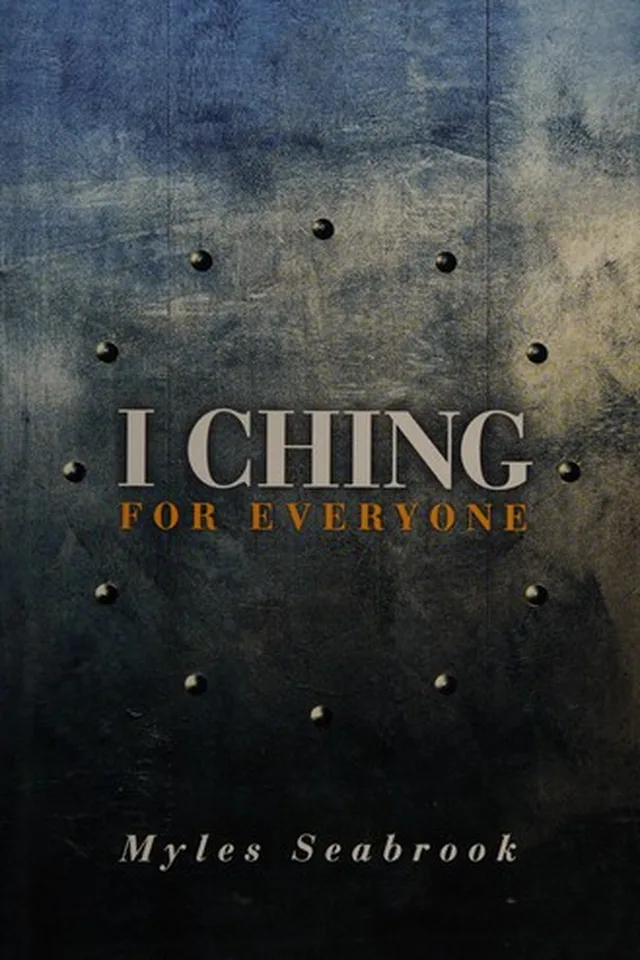
Myles Seabrook's "I Ching for Everyone" is a triumph of accessible scholarship, bringing the profound depths of the Yi Jing within reach of the contemporary seeker. Seabrook meticulously unpacks the sixty-four hexagrams, revealing their intricate symbolic language and prophetic power with clarity and reverence. This is not merely a translation, but an initiation into a system that has guided sages for millennia. For those drawn to the esoteric arts and seeking a potent tool for self-discovery and foresight, this book offers invaluable guidance. It stands as a beacon for practitioners and scholars alike, illuminating the path to understanding life's cyclical nature and our place within it.
📝 Description
62
Myles Seabrook's "I Ching for Everyone" (1997) simplifies the ancient Chinese oracle for a modern audience.
Myles Seabrook's 1997 book, "I Ching for Everyone," aims to make the Chinese Book of Changes accessible. It focuses on the sixty-four hexagrams, explaining them as fundamental patterns relevant to human life and the natural world. The author's goal is to present the I Ching's predictive methods in a clear and understandable way, moving beyond its reputation as obscure lore.
The text guides readers through the symbolic language of the I Ching. It suggests how to use this system to gain insight into daily life and make decisions. Seabrook translates the oracle's complex philosophy into practical advice, intending to bridge the gap between traditional divination and contemporary concerns. The book offers a method for engaging with this ancient text for personal guidance.
The I Ching, or Book of Changes, is one of the oldest Chinese classic texts, dating back over three millennia. It is a foundational work in Chinese philosophy and divination, used by scholars and practitioners to understand cosmic patterns and human events. Its system of sixty-four hexagrams, derived from combinations of yin and yang lines, provides a framework for interpreting change and predicting outcomes. The text has been a central element in Taoism and Confucianism, influencing East Asian thought and spiritual practices for centuries.
💡 Why Read This Book?
Unlock the secrets of one of the world's oldest and most revered oracles. "I Ching for Everyone" provides a clear, insightful guide to the sixty-four hexagrams, enabling you to harness their prophetic wisdom for personal growth and decision-making. Ideal for spiritual seekers, students of divination, and anyone yearning for a deeper connection to life's underlying patterns.
⭐ Reader Reviews
Honest opinions from readers who have explored this book.
❓ Frequently Asked Questions
What is the I Ching?
The I Ching, or Book of Changes, is an ancient Chinese divination text and philosophical classic. It comprises 64 hexagrams, each representing a fundamental state or situation, and provides wisdom for navigating life's challenges through symbolic interpretation.
Is the I Ching purely for predicting the future?
While the I Ching is renowned for its predictive capabilities, its true value lies in offering guidance, revealing hidden dynamics, and fostering self-awareness. It encourages reflection and wise action rather than passive acceptance of fate.
Who is Myles Seabrook and what is his approach?
Myles Seabrook is an author dedicated to making esoteric knowledge accessible. In this work, he meticulously deciphers the I Ching's complex symbolism, presenting its wisdom in a clear and practical manner for a modern audience, bridging the gap between ancient tradition and contemporary understanding.
Do I need prior knowledge of Chinese philosophy to use this book?
No, 'I Ching for Everyone' is designed for readers with no prior background. Seabrook's clear explanations and structured approach make the profound concepts of the I Ching understandable and applicable for beginners.
How can the I Ching be used in daily life?
The I Ching can be consulted for guidance on any question or situation. By casting hexagrams and interpreting their meanings, you gain insights into the underlying forces at play, helping you make more informed decisions and align your actions with the natural flow of events.
🔮 Key Themes & Symbolism
The Cycle of Change
At the heart of the I Ching lies the profound understanding that all things are in constant flux. The sixty-four hexagrams symbolize the myriad ways in which change manifests, from the subtle shifts of seasons to the dramatic transformations of life. Seabrook guides readers to recognize these cyclical patterns, encouraging adaptability and resilience in the face of life's inevitable transitions. Understanding this fundamental principle allows one to align with the Tao, the natural order of the universe, and navigate challenges with grace and foresight.
Symbolic Archetypes and Universal Truths
The I Ching's power stems from its body of symbolic imagery. Each hexagram, composed of six lines, represents an archetypal situation or force, speaking a universal language that transcends cultural boundaries. Seabrook illuminates these potent symbols, revealing how they mirror the deep currents of human experience and the cosmic order. By understanding these archetypes, readers can gain profound self-awareness and a deeper comprehension of the interconnectedness of all things, unlocking hidden truths about their own lives and the world around them.
Divination as a Tool for Wisdom
Far from mere fortune-telling, the I Ching serves as a sophisticated tool for introspection and wise counsel. Seabrook presents divination not as a passive act of receiving predictions, but as an active dialogue with cosmic intelligence. Through the process of casting hexagrams, individuals are prompted to examine their intentions, motivations, and the potential consequences of their actions. This sacred practice fosters a heightened sense of responsibility and empowers seekers to make conscious choices that align with their highest good and the unfolding destiny.
💬 Memorable Quotes
Direct passages from the work, attributed to the author.
“Wisdom lies not in knowing the future, but in understanding the present.”
— This emphasizes the I Ching's role as a guide for present action and awareness, rather than a purely predictive tool. True foresight comes from deep comprehension of current dynamics.
“The lines speak in a language older than words.”
— This poetic statement underscores the profound, intuitive, and symbolic nature of the I Ching's wisdom, suggesting it communicates on a level beyond literal language.
“Within every question lies the answer waiting to unfold.”
— This suggests that the I Ching acts as a catalyst, helping individuals discover the wisdom already present within their own inquiries and situations.
💡 Key Ideas
Editorial paraphrase of the work's core concepts — not direct quotes.
The sixty-four hexagrams are the sixty-four faces of existence.
This quote highlights the comprehensive nature of the I Ching, suggesting that its symbolic framework encompasses the full spectrum of human experience and the universe's vast possibilities.
Embrace the flow, for resistance is the seed of suffering.
This quote expresses a core philosophical tenet of the I Ching: aligning oneself with the natural course of events leads to peace, while struggling against it invites hardship.
🌙 Esoteric Significance
Tradition
The I Ching is a central to Taoist and Chinese esoteric philosophy, deeply rooted in the principles of Yin and Yang, the Five Elements, and the concept of the Tao. It represents a sophisticated cosmological system that views the universe as a dynamic interplay of forces. Esoterically, it's considered a map of universal consciousness and a guide for aligning individual will with the cosmic flow, facilitating spiritual evolution and self-realization through understanding the patterns of change.
Symbolism
The core symbolism of the I Ching lies in its sixty-four hexagrams, each formed by six lines (solid for Yang, broken for Yin). These hexagrams are not merely abstract symbols; they represent archetypal situations, natural phenomena, and stages of development. The trigrams (three-line combinations) that form the hexagrams (e.g., Heaven, Earth, Water, Fire) are themselves potent symbols of primal forces and concepts, providing a rich visual and conceptual language for understanding the universe's intricate workings.
Modern Relevance
In the modern era, the I Ching offers a powerful antidote to the fragmentation and uncertainty of contemporary life. Its emphasis on cyclical change and interconnectedness provides a grounding perspective. For seekers of meaning, it offers a profound system for self-reflection, ethical guidance, and intuitive insight. Its principles can be applied to everything from personal relationships and career decisions to understanding global trends, fostering a sense of agency and harmony in a complex world.
👥 Who Should Read This Book
This informative text is a treasure for a wide spectrum of readers. For the **beginner** starting their spiritual or divinatory journey, "I Ching for Everyone" provides a clear and welcoming entry point into this ancient wisdom tradition. **Students of esotericism and Eastern philosophy** will find Seabrook's insightful interpretations a valuable addition to their studies, offering a nuanced understanding of the I Ching's place within broader philosophical contexts. **Spiritual seekers** yearning for deeper self-knowledge and guidance will discover a powerful tool for introspection and personal growth. **Practitioners of divination** seeking to deepen their practice will appreciate the book's structured approach and accessible explanations of the hexagrams and their application.
📜 Historical Context
The I Ching, or Book of Changes, emerged from the fertile intellectual soil of ancient China, with its origins tracing back over three millennia. Initially a divinatory tool used by shamans and rulers, it evolved into a profound philosophical text deeply intertwined with Taoism and Confucianism. Its development spanned various dynasties, with seminal commentaries by figures like King Wen, Duke of Zhou, and Confucius himself shaping its complex interpretations. During periods of intellectual ferment, such as the Spring and Autumn and Warring States periods, the I Ching served as a crucial guide for understanding cosmic order and human conduct. Its influence permeated Chinese society, impacting governance, ethics, art, and personal spiritual practice. For centuries, it was considered one of the Five Classics of Chinese literature, a evidence of its enduring significance and its role in shaping a civilization's worldview.
📔 Journal Prompts
Reflect on a recent significant change in your life. Which hexagram from the I Ching might best represent this transition, and why?
Consider a current challenge you are facing. How might consulting the I Ching offer a new perspective or course of action?
What does the concept of 'flow' mean to you in your daily life? How can you better align yourself with natural patterns?
Identify a recurring pattern in your life. How might understanding its archetypal representation in the I Ching lead to a breakthrough?
Explore the balance of Yin and Yang in a specific relationship or situation. How does this dynamic influence the outcome?
🗂️ Glossary
Hexagram
A symbol in the I Ching composed of six stacked lines, representing a specific situation or archetype. There are 64 unique hexagrams.
Trigram
A symbol composed of three stacked lines, forming the building blocks of hexagrams. There are eight fundamental trigrams, each representing elemental forces.
Yin
The passive, receptive, feminine principle in Taoist philosophy, often represented by broken lines in the I Ching.
Yang
The active, creative, masculine principle in Taoist philosophy, often represented by solid lines in the I Ching.
Tao
The fundamental principle of the universe in Taoism; the Way or the natural order of things, which the I Ching helps one to understand and align with.
This book appears in 3 collections
🔮 Readers Also Liked
Browse all →









From the “Tarot” Collection
View all →






More Free Divination & Tarot Books
View all →