Hurry Up and Meditate
 73
73

Hurry Up and Meditate
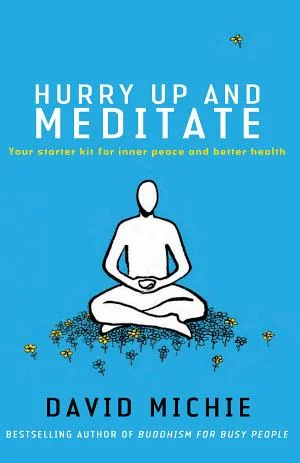
David Michie's "Hurry Up and Meditate" tackles the pervasive modern dilemma: the desire for inner peace versus the reality of a packed schedule. The book's strength lies in its pragmatic, no-nonsense approach, directly addressing the reader's probable excuses for not meditating. Michie expertly reframes the practice, shifting the focus from arduous commitment to accessible integration. His concept of "micro-meditations," or finding moments of stillness amidst chaos, is particularly effective. However, the book occasionally leans into an overly motivational tone, which might feel slightly repetitive for those already familiar with the general benefits of mindfulness. A passage discussing the "monkey mind" offers a relatable description of common mental chatter, illustrating the book's core challenge and its proposed solutions with clarity. Ultimately, "Hurry Up and Meditate" serves as an encouraging, practical primer for the meditation-curious.
📝 Description
73
David Michie's 2008 book, Hurry Up and Meditate, offers practical ways to meditate amidst busy lives.
Hurry Up and Meditate, published in 2008, addresses the common difficulty of fitting meditation into a demanding modern schedule. David Michie presents the practice not as something for monks or the extremely disciplined, but as a tool available to everyone for improving daily life. The book aims to make meditation seem less intimidating and more achievable.
It provides methods for beginners or those who have found it hard to stick with a practice. The advice is for people feeling stressed and seeking more calm, focus, or clarity. Michie's work offers encouragement and concrete steps for anyone interested in meditation but unsure how to start, whether they are skeptical or genuinely want to try.
Published in 2008, this book arrived as interest in secular mindfulness practices grew in the West. It connects to a tradition of adapting Buddhist principles for laypeople, making concepts accessible beyond traditional monastic settings. Michie's work fits within a contemporary movement that translates ancient contemplative techniques into formats suitable for modern life, aiming to address stress and promote well-being through accessible mental training.
💡 Why Read This Book?
• You'll learn to implement "micro-meditations," as detailed in the book's practical exercises, enabling you to find moments of calm even during your busiest days, a strategy distinct from time-intensive practices. • You'll gain specific tools to overcome common psychological barriers, such as the "monkey mind" concept discussed in the text, helping you build a consistent practice where previously there was none. • You'll understand the connection between short, regular mindfulness sessions and tangible health benefits, as outlined by Michie's pragmatic approach, providing a clear rationale that goes beyond generic self-help.
⭐ Reader Reviews
Honest opinions from readers who have explored this book.
❓ Frequently Asked Questions
What is the main philosophy behind 'Hurry Up and Meditate'?
The core philosophy is that meditation doesn't require vast amounts of time. Michie advocates for integrating brief, consistent mindfulness practices into daily life, making it accessible even for the busiest individuals.
Is this book suitable for someone who has never meditated before?
Absolutely. The book is designed for beginners, demystifying the process and providing practical, step-by-step guidance and motivation to overcome initial hurdles.
How does David Michie's approach differ from traditional meditation guides?
Unlike guides demanding long sessions, Michie emphasizes 'micro-meditations' and finding stillness within everyday activities, making the practice less intimidating and more sustainable for modern lifestyles.
What kind of benefits can one expect from following the advice in this book?
Readers can expect to develop greater balance, improve focus, reduce stress, enhance emotional regulation, and gain a more panoramic perspective on life, as discussed throughout the book.
When was 'Hurry Up and Meditate' first published?
The book was first published in 2008, positioning it within the growing popular interest in mindfulness and meditation practices during the early 21st century.
Does the book offer specific techniques for dealing with a busy mind?
Yes, Michie addresses the 'monkey mind' and provides practical strategies and short exercises designed to help practitioners manage distracting thoughts effectively.
🔮 Key Themes & Symbolism
Micro-Meditation
The central tenet of the book is the efficacy of "micro-meditations" – short, intentional moments of mindfulness practiced throughout the day. Michie argues that consistent, brief periods of stillness are more beneficial for the average person than infrequent, lengthy sessions. This theme addresses the common obstacle of perceived lack of time, reframing meditation not as a time commitment but as a time-enhancement tool. The work explores how these brief pauses can be integrated into activities like commuting, waiting in line, or even during brief breaks at work, fostering a pervasive sense of calm and awareness.
Overcoming the 'Busy Mind'
This theme tackles the "monkey mind" – the incessant stream of thoughts, worries, and distractions that plague the untrained consciousness. Michie provides accessible explanations and techniques to acknowledge and gently redirect this mental chatter, rather than fighting it. The book emphasizes that the goal isn't to empty the mind but to develop a non-judgmental awareness of its activity. This approach aims to reduce the frustration beginners often feel when their minds wander, making the practice feel less like a battle and more like an observation.
Practical Application & Motivation
Beyond philosophical discussion, the book is replete with practical advice and motivational encouragement. Michie understands that starting and maintaining a practice requires more than just knowledge; it requires impetus. He offers concrete strategies for setting up a personal practice, discusses common pitfalls, and provides compelling reasons – linking meditation to improved health, better relationships, and increased productivity. This theme ensures the reader feels equipped and inspired to begin and continue their journey, moving from intention to action.
The Panoramic Perspective
A key benefit highlighted throughout the book is the development of a "panoramic perspective" on life. By cultivating mindfulness, individuals are encouraged to step back from immediate reactions and gain a broader view of their circumstances, emotions, and thoughts. This theme suggests that regular practice allows for greater objectivity, enabling better decision-making and a more resilient approach to challenges. It's about seeing the bigger picture, understanding the transient nature of difficulties, and fostering a sense of inner spaciousness amidst life's complexities.
💬 Memorable Quotes
Direct passages from the work, attributed to the author.
“The biggest obstacle to meditation is the belief that you don't have time for it.”
— This highlights Michie's central argument: the perceived lack of time is often a mental construct rather than a practical impossibility. It frames the challenge as one of mindset and prioritization.
“Even thirty seconds of stillness can change your day.”
— This captures the 'micro-meditation' philosophy, emphasizing that small, consistent efforts can yield significant positive effects, making the practice accessible regardless of schedule constraints.
“Your mind is like a busy highway; you don't need to stop the cars, just observe them.”
— This is a powerful metaphor for the 'monkey mind.' It suggests a gentle, observational approach to intrusive thoughts rather than a forceful suppression, aligning with mindfulness principles.
“Meditation isn't about escaping reality, it's about engaging with it more fully.”
— This counters a common misconception that meditation is purely escapist. Michie frames it as a tool for deeper presence and conscious interaction with one's life experiences.
“Find the pause between the breaths, between the thoughts, between the moments.”
— This directs the reader toward cultivating awareness of subtle internal rhythms and spaces, encouraging a deeper exploration of presence beyond the obvious.
🌙 Esoteric Significance
Tradition
While not explicitly tied to a single esoteric lineage like Hermeticism or Kabbalah, "Hurry Up and Meditate" draws heavily from Buddhist contemplative traditions, particularly Vipassanā (insight meditation) and Zen practices emphasizing mindfulness and present-moment awareness. Its secularized presentation makes these core principles accessible to a broad audience, stripping away specific religious dogma. Michie's approach can be seen as a modern, Western adaptation of these ancient techniques, focusing on psychological and physiological benefits rather than solely spiritual liberation, fitting within the broader New Age movement's tendency to synthesize and popularize Eastern philosophies.
Symbolism
The book's primary symbolic motif is the clock or time itself, often juxtaposed with stillness. The title itself plays on the urgency of modern life versus the perceived slowness of meditation. The concept of the "panoramic perspective" functions symbolically, representing a shift from a narrow, reactive viewpoint to a broader, more objective understanding of self and reality. The "pause" or "gap" between thoughts or breaths can be seen as a symbolic gateway to inner space and awareness, a recurring motif in many contemplative traditions representing the potential for insight.
Modern Relevance
The principles articulated in "Hurry Up and Meditate" remain highly relevant today, influencing contemporary mindfulness apps like Calm and Headspace, which heavily promote short, accessible meditation sessions. Thinkers and practitioners in positive psychology and secular mindfulness continue to explore the benefits of brief contemplative practices for mental health and cognitive enhancement. Michie's work provides a foundational, accessible entry point for many who might otherwise be intimidated by the perceived demands of traditional meditation, making its core message a persistent influence in the ongoing popularization of mental wellness techniques.
👥 Who Should Read This Book
• Busy professionals seeking stress reduction techniques that fit into demanding schedules, offering practical methods to find calm amidst chaos. • Beginners curious about meditation but daunted by the prospect of long sitting sessions, providing a gentle, encouraging introduction. • Individuals experiencing anxiety or overwhelm, looking for accessible tools to cultivate greater emotional balance and a clearer perspective on life's challenges.
📜 Historical Context
The publication of "Hurry Up and Meditate" in 2008 occurred amidst a significant cultural shift in the West, characterized by a growing popular embrace of Eastern contemplative practices, particularly mindfulness. Figures like Jon Kabat-Zinn had already popularized secularized meditation through programs like MBSR (Mindfulness-Based Stress Reduction) since the late 1970s, but the early 21st century saw this interest explode into mainstream self-help and wellness. Michie's book emerged within this milieu, directly addressing the common modern complaint of insufficient time. It arrived at a time when books on productivity, stress management, and personal development were ubiquitous. While not engaging directly with academic debates in comparative religion or philosophy of mind, Michie's work stood alongside popularizations by authors like Eckhart Tolle, whose "The Power of Now" (1997) also stressed presence amidst daily life, albeit with a more overtly spiritual framework. The book's reception was largely positive within the self-help sphere, resonating with individuals seeking practical, secular applications of ancient wisdom.
📔 Journal Prompts
The 'panoramic perspective' gained from micro-meditations: How does observing your thoughts rather than reacting to them alter your daily decisions?
Reflecting on the 'monkey mind': Identify one recurring thought pattern this week and describe your observation of it without judgment.
The integration of 'micro-meditations': List three specific activities in your day where you could intentionally insert a 30-second pause.
Motivation for practice: What is the most compelling reason for you to prioritize even brief moments of stillness, based on the book's insights?
The concept of 'busyness': How does the belief that you 'don't have time' for meditation actually impact your overall productivity and well-being?
🗂️ Glossary
Micro-meditation
Short, brief periods of mindfulness practice integrated into daily activities, emphasizing consistency over duration. The core concept of the book, designed for busy individuals.
Monkey Mind
A Buddhist term referring to the unsettled, agitated, and constantly chattering nature of the untrained mind. Michie uses it to describe the common experience of distracting thoughts during meditation.
Panoramic Perspective
A state of awareness achieved through meditation, allowing one to view life circumstances, emotions, and thoughts with greater objectivity and distance, fostering calm and clarity.
The Pause
The brief space or gap found between thoughts, breaths, or moments. Cultivating awareness of this interval is presented as a key technique for accessing inner stillness.
Busyness Complex
The psychological tendency to equate being constantly busy with importance or productivity, often used as an excuse to avoid practices like meditation that require slowing down.
Mindfulness
The practice of paying attention in a particular way: on purpose, in the present moment, and non-judgmentally. A foundational element of the techniques discussed.
Adherence
The act of sticking to a practice or regimen. The book focuses on strategies to improve adherence to meditation, even with limited time.
This book appears in 1 collection
🔮 Readers Also Liked
Browse all →









From the “Meditation” Collection
View all →







More Free Occult Philosophy Books
View all →
![[Circular]](/img/thumb/circular-knights-templar-masonic-order-410291.webp)