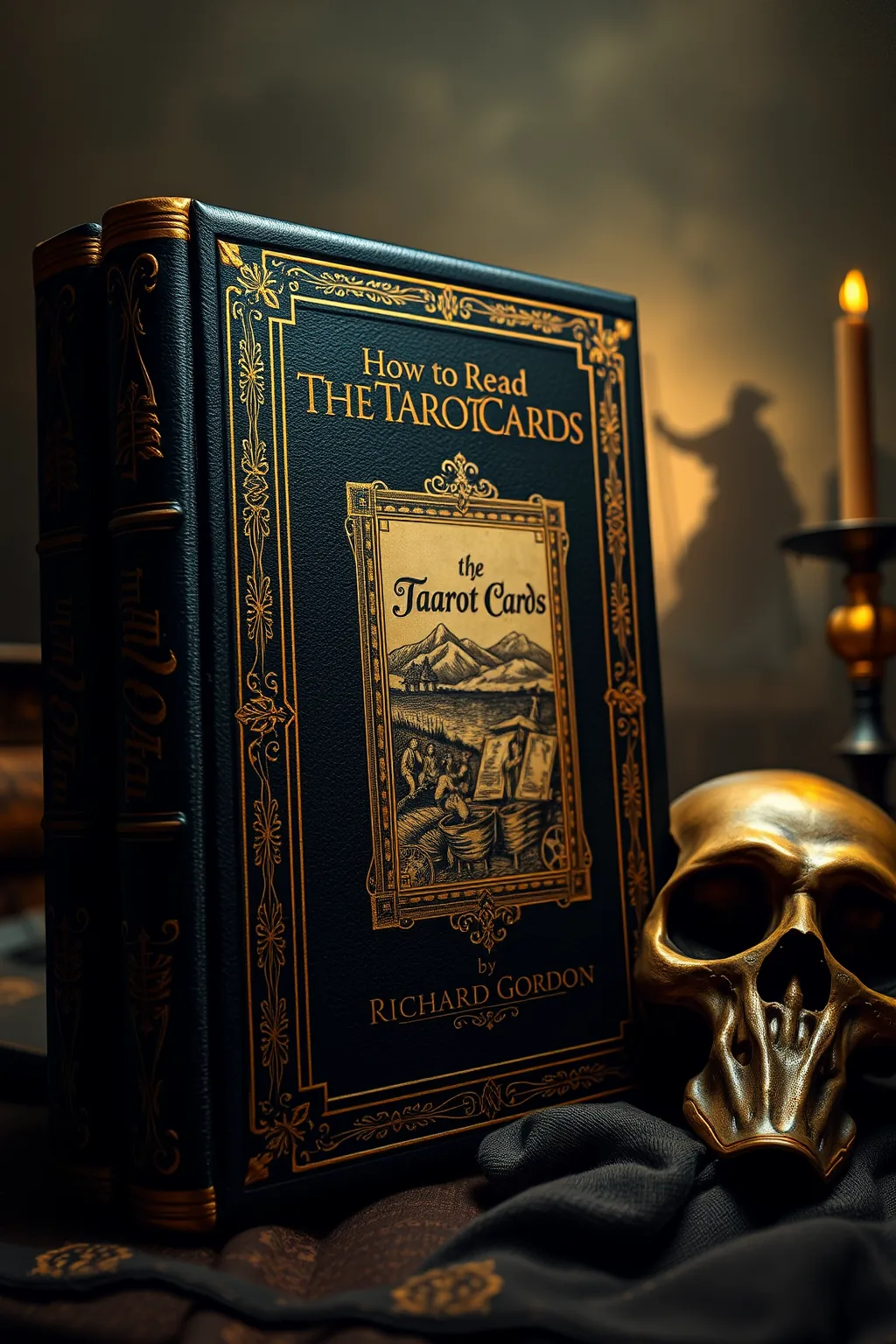
How to Read the Tarot Cards
 61
61

How to Read the Tarot Cards



Richard Gordon's 'How to Read the Tarot Cards' stands as a beacon for those seeking authentic esoteric knowledge. Gordon masterfully navigates the labyrinthine symbolism of the Tarot, offering profound insights into its divinatory and psychological dimensions. His approach is steeped in the rich tradition of Western Esotericism, eschewing superficial interpretations for a deeper understanding of archetypal forces. This text is invaluable for practitioners aiming to elevate their craft beyond mere prediction, fostering instead a dialogue with the soul and the subtle energies of the universe. It is an essential companion for any serious student of the occult arts, promising to unlock layers of meaning previously concealed.
📝 Description
61
Richard Gordon's 'How to Read the Tarot Cards' was published in 1990.
Richard Gordon's 1990 book, 'How to Read the Tarot Cards,' examines the Tarot not as a predictive device but as a tool for self-understanding and spiritual development. Gordon discusses the Tarot's connection to older mystical traditions and its symbolic language. He presents each card as a representation of the subconscious, the universe, and the interaction between destiny and personal choice.
The book aims to help readers grasp the philosophical basis of the Tarot. It focuses on decoding the imagery of the Major and Minor Arcana, understanding elemental influences, and using intuitive perception with the cards. Gordon suggests the Tarot's seventy-eight cards hold universal knowledge that can lead to greater self-awareness and a connection to underlying forces.
This work situates itself within the esoteric tradition of cartomancy, viewing the Tarot as more than a simple divination tool. It draws on the idea of the Tarot as a symbolic language, reflecting deeper psychological and spiritual realities. The book connects this practice to ancient mystical thought, suggesting a hidden order or knowledge accessible through the cards' imagery and arrangement. It aligns with esoteric approaches that emphasize inner transformation and the illumination of subconscious patterns.
💡 Why Read This Book?
This book is your essential guide to unlocking the profound wisdom of the Tarot. It's for the seeker yearning for deeper self-understanding, the practitioner aiming to refine their intuitive connection, and the scholar fascinated by ancient symbolic systems. Gordon offers not just techniques, but a philosophical framework for engaging with the cards as a tool for spiritual evolution and personal empowerment.
⭐ Reader Reviews
Honest opinions from readers who have explored this book.
❓ Frequently Asked Questions
What is the primary purpose of learning to read Tarot cards according to this book?
The book posits that Tarot reading is primarily a tool for self-discovery, spiritual growth, and gaining insight into life's hidden patterns, rather than solely a method of fortune-telling.
Does this book cover both the Major and Minor Arcana?
Yes, Gordon's work comprehensively explores the symbolism and meanings of all seventy-eight cards within both the Major and Minor Arcana.
Is 'How to Read the Tarot Cards' suitable for absolute beginners?
Absolutely. The book is structured to guide newcomers through the foundational principles and symbolism, making the esoteric accessible.
What makes this book different from other Tarot guides?
Gordon's emphasis on the philosophical and psychological depth of the Tarot, rooted in esoteric traditions, sets it apart from purely predictive or superficial guides.
Can I use the Tarot for guidance on practical matters using this book?
While the book focuses on inner wisdom, the insights gained from Tarot readings can certainly be applied to navigating practical challenges and making informed decisions.
🔮 Key Themes & Symbolism
The Archetypal Language of the Tarot
Gordon illuminates the Tarot as a profound system of archetypal imagery, drawing parallels to Jungian psychology and ancient mythologies. He reveals how each card represents universal human experiences, emotions, and spiritual journeys, serving as a cosmic blueprint for the soul's evolution. Understanding these archetypes allows for deeper interpretation, connecting the reader to a collective unconscious and a shared human narrative encoded within the cards.
Tarot as a Mirror to the Soul
This book positions the Tarot not as a deterministic oracle, but as an introspective tool that reflects the querent's inner landscape. Gordon emphasizes that the cards reveal subconscious patterns, hidden desires, and potential pathways, empowering individuals to understand their own psyche. The act of reading becomes a dialogue, fostering self-awareness and facilitating personal transformation by bringing the unseen into conscious light, thus guiding choices and shaping destiny.
The Esoteric Roots of Cartomancy
Gordon traces the lineage of Tarot back to ancient esoteric traditions, exploring its connections to Hermeticism, Kabbalah, and Gnosticism. He clarifies the symbols, revealing their deeper, often hidden meanings that have been preserved through centuries of occult scholarship. This historical and philosophical context elevates Tarot from a simple game to a sacred art, rooted in a profound understanding of the universe and humanity's place within it, offering a gateway to ancient wisdom.
💬 Memorable Quotes
Direct passages from the work, attributed to the author.
“Each card holds a universe of meaning.”
— This emphasizes the profound depth and complexity of individual Tarot cards, suggesting they are not static symbols but contain layers of wisdom waiting to be explored.
“The Fool's journey is our own.”
— This points to the central theme of the Major Arcana, framing the entire Tarot spread as a metaphor for the human life path and its inherent adventures and lessons.
“Intuition is the key that unlocks the Tarot.”
— This stresses the importance of inner knowing and instinctual understanding in interpreting Tarot readings, positioning it as more than just rote memorization of meanings.
“The cards do not predict, they illuminate.”
— This clarifies the book's perspective on Tarot, distinguishing it from deterministic fortune-telling and presenting it as a tool for gaining insight and understanding potential outcomes.
💡 Key Ideas
Editorial paraphrase of the work's core concepts — not direct quotes.
The Tarot is a conversation with the universe.
This quote highlights the interactive and communicative nature of Tarot, suggesting it's a means of receiving guidance and understanding from higher realms or one's own subconscious.
🌙 Esoteric Significance
Tradition
This work is deeply rooted in the Western Esoteric Tradition, particularly drawing upon Hermetic principles, Kabbalistic symbolism, and Jungian archetypal psychology. Gordon presents the Tarot as a microcosm of the universe, reflecting the divine order and the journey of the soul through the planes of existence, echoing ancient mystical cosmologies and alchemical processes.
Symbolism
Gordon meticulously deciphers the strong symbolism embedded within each Tarot card, from the elemental associations of the Minor Arcana to the profound archetypal narratives of the Major Arcana. He explores the esoteric meanings of colors, numbers, figures, and celestial references, revealing how these visual glyphs serve as keys to understanding universal laws and the energetic forces that shape reality.
Modern Relevance
In contemporary times, 'How to Read the Tarot Cards' remains highly relevant as a guide for reading through the complexities of modern life. Gordon's emphasis on self-discovery and psychological insight offers a powerful framework for personal growth, mindfulness, and intuitive development. The book empowers individuals to use the Tarot as a tool for clarity, decision-making, and fostering a deeper connection to their inner wisdom in an often chaotic world.
👥 Who Should Read This Book
This book is an indispensable resource for a diverse audience. Beginners seeking a foundational yet profound understanding of Tarot will find Gordon's clear explanations and systematic approach invaluable. Experienced practitioners looking to deepen their esoteric knowledge and refine their intuitive skills will discover new layers of meaning and philosophical insight. Scholars of mysticism and symbolism will appreciate the historical context and scholarly rigor. Ultimately, anyone on a path of self-discovery, spiritual seeking, or desiring a richer understanding of the symbolic language of the universe will benefit immensely.
📜 Historical Context
Richard Gordon's 'How to Read the Tarot Cards' emerged during a period of renewed interest in occultism and esoteric philosophies in the mid-to-late 20th century. This era saw a significant revival of Hermeticism, Kabbalah, and Jungian psychology, all of which profoundly influenced the way Tarot was studied and practiced. Unlike earlier, more simplistic guides, Gordon's work reflects a sophisticated engagement with the Tarot's historical roots, drawing from mystical traditions that viewed the cards as a symbolic language of the cosmos and the human psyche. His approach aligns with the growing scholarly and practitioner focus on Tarot as a tool for self-exploration and spiritual development, rather than mere predictive fortune-telling, making it a valuable contribution to the evolving field of esoteric literature.
📔 Journal Prompts
Reflect on the Fool's journey: What is your current 'leap of faith' and what lessons do you anticipate?
Choose a card that appeals to you today. How does its symbolism mirror your current emotional or spiritual state?
Consider the interplay of light and shadow in the Tarot. Where do you see this dynamic playing out in your own life?
If the Tarot is a conversation with the universe, what question would you pose to it right now?
How can the archetypal energies of the Tarot be integrated into your daily practices for greater self-awareness?
🗂️ Glossary
Arcana
Referring to the two main divisions of the Tarot deck: the Major Arcana, representing significant life lessons and spiritual journeys, and the Minor Arcana, depicting daily events and circumstances.
Cartomancy
The practice of divination using cards, typically referring to Tarot or playing cards, as a means of gaining insight into the past, present, or future.
Archetype
A universal, primordial image or symbol that represents fundamental human experiences, emotions, or character types, as explored in Jungian psychology and Tarot symbolism.
Hermeticism
An ancient philosophical and religious tradition based on the purported teachings of Hermes Trismegistus, emphasizing esoteric knowledge, alchemy, and the interconnectedness of the microcosm and macrocosm.
Kabbalah
A complex system of Jewish mysticism that explores the nature of God and the universe through symbolic interpretation of scripture and mystical diagrams, often influencing esoteric Tarot interpretations.
This book appears in 3 collections
🔮 Readers Also Liked
Browse all →









More by Richard Gordon
All books →

From the “Tarot” Collection
View all →








More Free Divination & Tarot Books
View all →