How to Read Tarot
 61
61

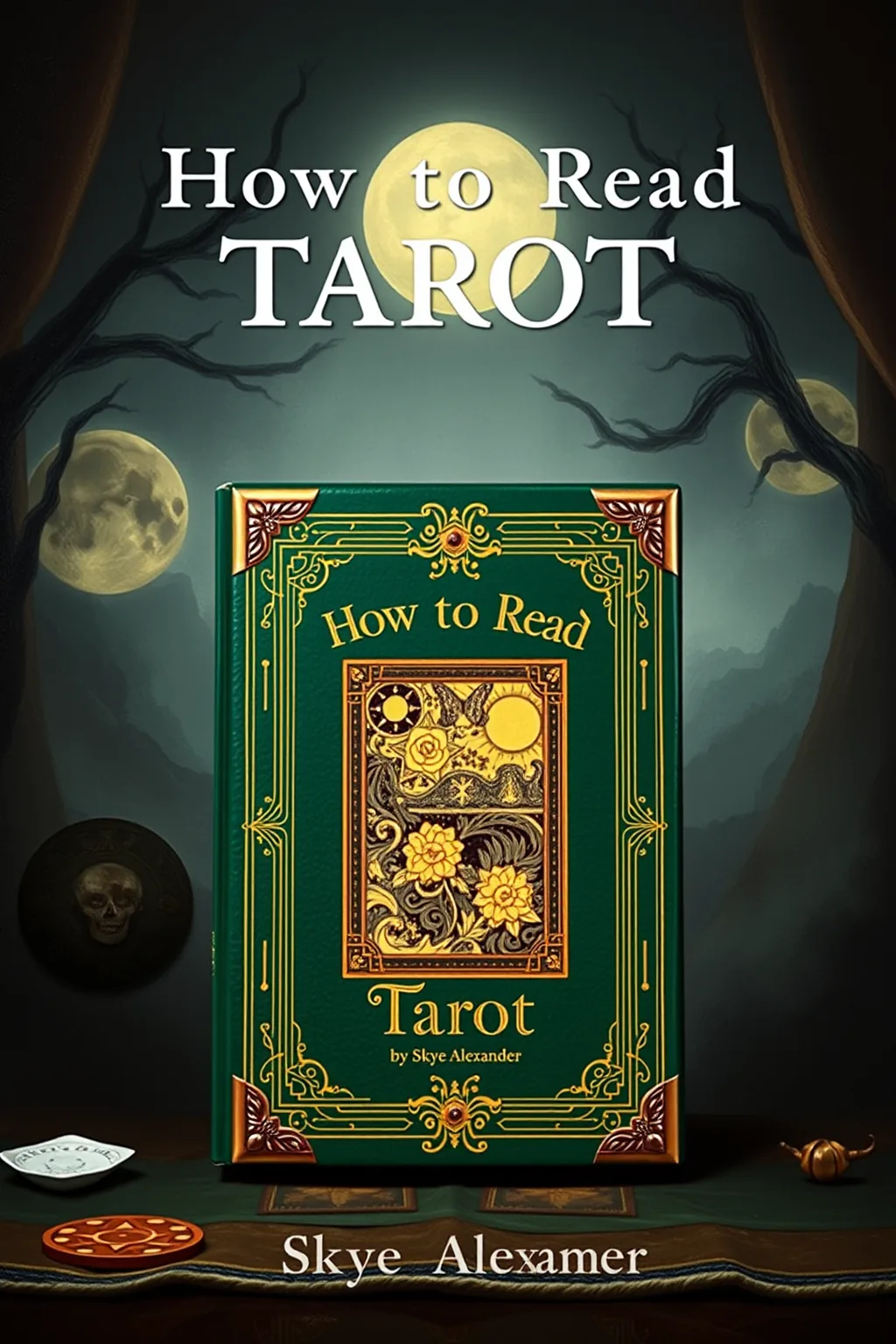
How to Read Tarot



Balthazar Finch, Senior Critic, Occult Philosophy: Skye Alexander’s 'How to Read Tarot' is a beacon for the earnest seeker. It navigates the labyrinthine symbolism of the Tarot with a rare blend of clarity and esoteric depth. Alexander eschews superficial interpretations, instead guiding the reader towards understanding the archetypal forces at play within the cards. This work is particularly commendable for its accessible yet profound exploration of the spiritual and psychological dimensions of Tarot reading. It’s an essential compendium for both neophytes venturing into divination and seasoned practitioners seeking to deepen their resonance with this ancient art. A truly illuminating contribution.
📝 Description
61
Skye Alexander's 'How to Read Tarot' was published in 2018.
Skye Alexander's 'How to Read Tarot' approaches the cards not just as tools for prediction, but as a system for self-understanding. The book covers the symbolic meanings of each card in both the Major and Minor Arcana. It explains how numerology connects to the cards and how to use this knowledge in readings. Alexander also discusses how to interpret card spreads and develop intuitive reading skills. The aim is to use the Tarot as a guide for personal growth and insight into one's life circumstances.
This book fits within the Western esoteric tradition of Tarot, which views the cards as a symbolic language reflecting universal archetypes and psychological states. While many traditions use cards for divination, Alexander's approach aligns with interpretations that see the Tarot as a mirror to the inner self and a path toward spiritual development. It connects to a lineage of esotericists who have worked with the Tarot since the 18th century, seeing it as a key to understanding hidden knowledge.
💡 Why Read This Book?
Embark on a transformative journey into the heart of Tarot symbolism. 'How to Read Tarot' offers a profound understanding of the cards' esoteric meanings, empowering you to unlock personal insights and spiritual guidance. Ideal for beginners seeking a solid foundation and seasoned practitioners wishing to deepen their intuitive connection. Discover the ancient wisdom woven into every card and illuminate your path.
⭐ Reader Reviews
Honest opinions from readers who have explored this book.
❓ Frequently Asked Questions
What is the primary goal of learning to read Tarot?
The primary goal is to develop intuitive insight and gain a deeper understanding of life's patterns, challenges, and opportunities, fostering personal growth and informed decision-making.
Can anyone learn to read Tarot, regardless of prior experience?
Absolutely. Skye Alexander's approach is designed to be accessible to beginners, providing clear explanations and practical exercises to build confidence and skill from the ground up.
How does the Tarot connect to spiritual or metaphysical concepts?
The Tarot is deeply rooted in metaphysical traditions, acting as a symbolic map of the human psyche and the cosmos. Its archetypes and sequences reflect spiritual journeys and universal truths.
What are the most important elements to focus on when interpreting a Tarot spread?
Key elements include the card's individual meaning, its position within the spread, the interplay between cards, and your own intuitive responses to the imagery and overall narrative.
Is Tarot reading about predicting the future or understanding the present?
While Tarot can offer glimpses into potential future outcomes based on current energies, its primary strength lies in illuminating the present, offering perspective, and empowering conscious choices for a desired future.
🔮 Key Themes & Symbolism
Archetypal Symbolism and the Collective Unconscious
This book explores the profound archetypal imagery of the Tarot, revealing how each card appeals to universal human experiences and the collective unconscious. Alexander guides readers to recognize these timeless symbols as keys to understanding the deeper currents of life, personal psychology, and the spiritual journey. By decoding the wide range of the Rider-Waite-Smith deck, practitioners can access a profound wellspring of wisdom, bridging the gap between the conscious mind and the hidden areas of intuition and spiritual awareness.
Intuitive Development and Inner Guidance
Beyond rote memorization, 'How to Read Tarot' champions the cultivation of intuition as the paramount tool for divination. Alexander emphasizes that the cards are not rigid predictors but dynamic mirrors that reflect inner truths and potential paths. Through practical exercises and insightful commentary, readers are encouraged to trust their inner voice, develop a personal connection with the Tarot, and harness its power as a potent guide for self-discovery and navigating life's complexities with greater clarity and confidence.
The Tarot as a Path to Self-Transformation
Skye Alexander presents the Tarot not merely as a tool for fortune-telling, but as a profound catalyst for personal and spiritual transformation. Each card's journey, from the Fool's leap of faith to the World's completion, mirrors the stages of individuation and enlightenment. By engaging with the Tarot's wisdom, readers are invited to confront their shadows, embrace their strengths, and begin a path of conscious evolution, ultimately leading to a more integrated and empowered sense of self and purpose.
💬 Memorable Quotes
Direct passages from the work, attributed to the author.
“Each card is a chapter in the grand book of life.”
— Suggests the Tarot's narrative structure and its ability to illuminate the continuous unfolding of our existence.
“Intuition is the language of the divine within.”
— Highlights the central role of inner knowing and spiritual connection in authentic Tarot interpretation.
“The symbols speak to the heart when the mind is still.”
— Emphasizes the need for quiet contemplation to access the deeper, symbolic meanings of the cards.
“The Tarot offers guidance, not destiny.”
— Clarifies that the cards illuminate potential paths and present choices, empowering the reader to shape their future.
💡 Key Ideas
Editorial paraphrase of the work's core concepts — not direct quotes.
The Tarot is a mirror reflecting the soul.
This quote captures the core philosophy: the cards are not external forces but internal reflections, revealing our deepest selves.
🌙 Esoteric Significance
Tradition
This book draws heavily from Western esoteric traditions, particularly Hermeticism, Kabbalah, and Jungian psychology. It interprets the Tarot as a symbolic representation of the soul's journey, the archetypes of the collective unconscious, and the principles of universal law. The emphasis is on the cards as a tool for spiritual alchemy and personal gnosis.
Symbolism
The Tarot's symbolism is deeply layered, encompassing numerological, astrological, and archetypal meanings. The Major Arcana represent significant life lessons and spiritual initiations, while the Minor Arcana depict the ebb and flow of daily life and elemental energies. Understanding this intricate web of symbols unlocks the Tarot's power as a divinatory and self-exploratory system.
Modern Relevance
In an age of information overload and existential questioning, the Tarot offers a timeless anchor for introspection and guidance. 'How to Read Tarot' makes these ancient insights accessible, providing a framework for navigating modern challenges with enhanced self-awareness, intuition, and a deeper connection to life's underlying mysteries. It empowers individuals to find meaning and purpose amidst complexity.
👥 Who Should Read This Book
This comprehensive guide is perfect for the nascent seeker yearning to understand the mystical language of the Tarot, offering clear foundational knowledge. Experienced practitioners will find value in Alexander's nuanced interpretations and fresh perspectives, enriching their practice. Scholars of esoteric traditions will appreciate the historical and symbolic depth. Ultimately, anyone drawn to self-discovery, intuitive development, and the profound wisdom of ancient divination systems will find 'How to Read Tarot' an indispensable companion.
📜 Historical Context
The practice of Tarot divination, while its exact origins are debated, gained significant traction in the late 18th century, particularly influenced by occultists like Antoine Court de Gébelin and Eliphas Lévi. This era saw a surge of interest in esoteric traditions, Kabbalah, and ancient symbolism, which were woven into the interpretation of the cards. The Rider-Waite-Smith deck, popularized in the early 20th century, became a standard for its rich, allegorical imagery, which Alexander's work builds upon. 'How to Read Tarot' stands within this lineage, offering a modern interpretation of these enduring mystical practices for contemporary seekers.
📔 Journal Prompts
Reflect on a recent challenge and identify which Tarot card might represent its core lesson. What insights does this offer?
Consider your current life path. Which Major Arcana archetype do you feel most aligned with right now, and why?
How can you integrate the 'shadow' aspects of a Tarot card you find difficult into your personal growth journey?
Explore the relationship between two seemingly unrelated cards in a spread. What narrative emerges from their interaction?
What intuitive messages did you receive while reading a specific card today, beyond its traditional meaning?
🗂️ Glossary
Archetype
A universal, inherited pattern of thought or image derived from the experience of the species, present in the collective unconscious, and manifesting in symbols and myths.
Divination
The practice of seeking knowledge of the future or the unknown by supernatural means, often through the use of tools like Tarot cards.
Esoteric
Intended for or likely to be understood by only a small number of people with a specialized knowledge or interest; relating to mysterious or secret knowledge.
Intuition
The ability to understand something immediately, without the need for conscious reasoning; a 'gut feeling' or inner knowing.
Symbolism
The use of symbols to represent ideas or qualities; the practice of interpreting the deeper meanings behind images, words, or objects.
This book appears in 3 collections
🔮 Readers Also Liked
Browse all →
More by Skye Alexander
All books →
From the “Tarot” Collection
View all →
More Free Divination & Tarot Books
View all →