The Power of Positive Thinking
 82
82

The Power of Positive Thinking
Norman Vincent Peale's 'The Power of Positive Thinking' remains a cultural touchstone for its accessible approach to mental and spiritual well-being. Its enduring appeal lies in its directness; Peale doesn't equivocate. He offers a clear framework for confronting personal obstacles, rooted in a blend of faith and psychological principles. The chapter detailing how to eliminate self-doubt is particularly effective, providing actionable advice that feels achievable for the average reader. However, the book’s singular focus on positive affirmation, while potent, can sometimes oversimplify the complexities of severe mental health conditions, potentially leading to a sense of personal failure if positive thinking alone doesn't yield desired results. Despite this limitation, the work's strength is its unwavering encouragement and its emphasis on harnessing inner resources. It serves as a potent reminder of the mind-body connection, advocating for a proactive stance against negativity.
📝 Description
82
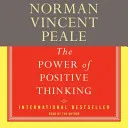
Norman Vincent Peale's 1952 book, 'The Power of Positive Thinking,' proposed practical methods for overcoming difficulties through faith.
Published in 1952, 'The Power of Positive Thinking' by Norman Vincent Peale offers a systematic approach to managing life's obstacles. Peale draws on Christian teachings and principles of psychology to equip readers with tools for building inner fortitude and resilience. The book is directed at individuals experiencing self-doubt, worry, and a sense of inadequacy. It aims to provide spiritual and psychological resources that can enhance daily life, boost confidence, and cultivate a greater sense of peace and contentment. The author addresses widespread human anxieties and adversities.
Peale's central idea is that faith, especially in God, coupled with a consciously positive mindset, can bring about real changes in a person's life. He details the use of visualization, prayer, and positive affirmations to retrain the subconscious mind and counteract negative thinking. The book also acknowledges the role of emotional well-being in reaching personal objectives. It emerged in the post-World War II era, a time when many sought stability and personal improvement, tapping into a rising interest in applied psychology and spiritual encouragement.
While often categorized as self-help, Peale's work taps into traditions of practical spirituality and mind-body connection that predate modern psychology. It echoes earlier movements emphasizing the power of belief and focused intention to influence material reality. The emphasis on transforming one's inner state to affect outer circumstances aligns with certain strains of New Thought philosophy and Christian Science, though Peale grounds his methods explicitly within a more mainstream Protestant framework. The book's popular reception positioned it as an accessible entry point to ideas about mental discipline and spiritual agency for a broad audience.
💡 Why Read This Book?
• Learn to dismantle self-doubt using Peale's specific 'faith-practice' method, as detailed in the early chapters, to build genuine self-assurance. • Discover techniques for stress reduction by implementing the visualization and prayer exercises outlined in the section on overcoming worry, which can foster a sense of calm. • Gain practical steps to reframe personal challenges through the concept of 'imaging,' a method described to cultivate a more optimistic outlook on daily life.
⭐ Reader Reviews
Honest opinions from readers who have explored this book.
❓ Frequently Asked Questions
When was 'The Power of Positive Thinking' originally published?
The original publication date for 'The Power of Positive Thinking' by Norman Vincent Peale was 1952. This edition has sold over 7 million copies worldwide and has been translated into numerous languages.
What is the core message of Norman Vincent Peale's book?
The core message is that a positive mental attitude, reinforced by faith and spiritual principles, can significantly improve one's life, enabling the overcoming of difficulties and the achievement of personal goals.
What are some practical techniques taught in 'The Power of Positive Thinking'?
Practical techniques include eliminating self-doubt through affirmative self-talk, freeing oneself from worry via prayer and visualization, and overcoming problems by maintaining an optimistic perspective and faith in a higher power.
Who is Norman Vincent Peale?
Norman Vincent Peale was an American Protestant clergyman and author, best known for his work in the field of self-help and positive thinking. He was the minister of the Marble Collegiate Church in New York City for over 50 years.
How has 'The Power of Positive Thinking' impacted readers?
The book has been credited with restoring faith and providing coping mechanisms for millions of readers worldwide, helping them to manage stress, build confidence, and achieve greater personal satisfaction.
Is 'The Power of Positive Thinking' based on religious principles?
Yes, the book is deeply rooted in Christian principles, particularly Protestant theology. Peale integrates psychological concepts with his interpretation of faith and prayer to offer a spiritual approach to self-improvement.
🔮 Key Themes & Symbolism
Faith as a Foundation
Peale posits faith, particularly in God, as the bedrock upon which a positive mindset is built. This isn't mere optimism; it's an active trust that fuels resilience and provides a spiritual anchor. The work emphasizes that this faith allows individuals to tap into a power beyond their own limitations, enabling them to face adversities with courage and conviction. It's presented as a dynamic force capable of transforming one's outlook and circumstances.
Mind Over Matter
A central tenet is the profound influence of one's thoughts on their reality. Peale advocates for conscious cultivation of positive mental imagery and affirmations to reprogram the subconscious mind. This internal shift, he argues, directly impacts external experiences, leading to improved health, relationships, and success. The concept suggests that by controlling one's thoughts, one can exert a significant degree of control over life's outcomes.
The Practice of Prayer
Prayer is presented not just as supplication but as a powerful tool for mental and spiritual renewal. Peale details how regular, faithful prayer can dissipate worry, instill confidence, and foster a connection with divine guidance. This practice serves to quiet the mind, align intentions, and reinforce the belief in positive outcomes. It is depicted as a direct line to a source of strength and clarity.
Overcoming Worry and Self-Doubt
The book directly addresses common psychological burdens like chronic worry and debilitating self-doubt. Peale offers strategies, including affirmations and focusing on one's inherent worth through faith, to dismantle these negative patterns. The aim is to replace anxieties with a sense of inner peace and self-efficacy, thereby liberating individuals to pursue their goals without internal hindrance.
💬 Memorable Quotes
Direct passages from the work, attributed to the author.
“Believe in yourself and your ability to succeed. Faith in yourself is essential for success.”
— This statement captures the book's core message that self-belief, grounded in faith, is a prerequisite for achieving goals. It highlights the psychological power of conviction and how it can manifest desired outcomes.
“The practice of daily prayer can dissipate worry and fill the mind with divine power.”
— This emphasizes the active, therapeutic role of prayer. It's presented as a method for mental hygiene, capable of clearing anxieties and infusing the individual with a sense of spiritual strength and guidance.
“Visualize success; imagine yourself achieving your goals, and this image will guide you.”
— This refers to the principle of visualization, suggesting that by vividly imagining desired outcomes, one creates a mental blueprint that can influence actions and attract favorable circumstances.
“Worry is a paralyzing habit that depletes your energy and obscures your judgment.”
— Here, worry is defined not just as an emotion but as a detrimental habit. Peale highlights its negative physiological and cognitive effects, underscoring the need to actively break free from it.
“Cultivate a positive mental attitude, and you will attract positive experiences into your life.”
— This principle posits a direct correlation between one's internal state and external reality, suggesting that a consistently optimistic outlook acts as a magnet for beneficial events and opportunities.
🌙 Esoteric Significance
Tradition
While not strictly adhering to a single esoteric lineage, Peale's work draws heavily from Christian mysticism and the broader New Thought movement, which itself has roots in Transcendentalism and Hermetic principles. It shares with these traditions the emphasis on the mind's creative power and the potential for spiritual connection to manifest tangible results. Peale synthesizes these ideas with practical psychological advice, making them accessible to a mass audience seeking spiritual grounding.
Symbolism
The primary 'symbol' Peale employs is the concept of 'faith' itself, often personified or directed towards a divine source. 'Light' is frequently used metaphorically to represent hope, truth, and divine presence, contrasting with the 'darkness' of doubt and despair. The act of 'imaging' or visualization can be seen as a symbolic act of creation, where mental constructs are believed to shape physical reality, akin to ritualistic practices.
Modern Relevance
Peale's emphasis on positive thinking and the mind-body connection continues to influence contemporary wellness culture, positive psychology, and coaching methodologies. Thinkers and practitioners in fields ranging from motivational speaking to mindfulness-based stress reduction often echo his core principles, albeit sometimes stripped of their explicit religious framing. The work's legacy is visible in modern self-help literature and therapeutic approaches that focus on cognitive reframing and belief system modification.
👥 Who Should Read This Book
• Individuals seeking practical, faith-based strategies to manage anxiety and self-doubt, particularly those with a Christian background who appreciate religiously-grounded self-help. • Readers interested in the historical development of the self-help and positive psychology movements, wanting to understand a foundational text from the mid-20th century. • Those looking for accessible techniques to cultivate a more optimistic outlook and enhance their personal resilience through mental discipline and spiritual connection.
📜 Historical Context
Published in 1952, 'The Power of Positive Thinking' arrived in a post-war America eager for optimism and personal upliftment. Norman Vincent Peale, a minister at the Marble Collegiate Church in New York, tapped into a burgeoning interest in applied psychology and spiritual self-help. His approach offered a more accessible, faith-based alternative to the burgeoning existentialist philosophies gaining traction in intellectual circles. While figures like Viktor Frankl explored meaning in suffering, Peale focused on overcoming suffering through faith and positive thought. The book's immense popularity, selling millions and translated widely, also faced criticism. Some theologians and psychologists, such as Reinhold Niebuhr, critiqued its perceived oversimplification of spiritual matters and its potential to foster a shallow, uncritical optimism. Despite these critiques, its reception cemented Peale as a significant figure in 20th-century popular spirituality and self-improvement.
📔 Journal Prompts
Your current relationship with 'self-doubt' and the 'faith-practice' method.
How the concept of 'imaging' could be applied to a specific challenge.
Evaluating the role of 'prayer' in managing daily stress.
Identifying personal affirmations that counter negative self-talk.
The impact of positive thinking on perceived life outcomes.
🗂️ Glossary
Faith-Practice
A method described by Peale involving the active application of faith, often through prayer and positive affirmation, to overcome specific problems and build self-confidence.
Self-Doubt
A lack of confidence in oneself and one's abilities; Peale identifies this as a major impediment to success and happiness, offering techniques to overcome it.
Worry
A state of anxiety and uncertainty about future events; the book provides strategies to eliminate this debilitating mental habit through faith and positive thinking.
Visualization
The practice of forming a mental image of something; Peale advocates for visualizing success and positive outcomes as a means to achieve them.
Attitude
A settled way of thinking or feeling about someone or something, typically one that is reflected in a person's behavior; Peale emphasizes the power of a positive attitude.
Inner Peace
A state of mental and spiritual calm, free from disturbance; this is presented as a primary benefit of adopting the principles outlined in the book.
Spiritual Power
The energy or influence derived from one's connection to God or a higher power; Peale suggests this power can be accessed through faith and prayer.