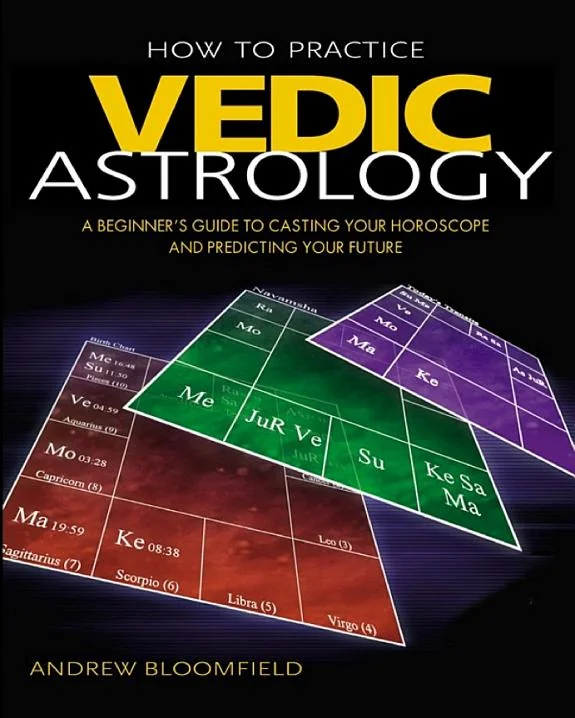
How to Practice Vedic Astrology
 71
71

How to Practice Vedic Astrology
Andrew Bloomfield’s approach in 'How to Practice Vedic Astrology' is commendably methodical, particularly in its handling of natal chart interpretation. The inclusion of 112 case studies, while ambitious, provides a crucial practical anchor for beginners grappling with abstract astrological principles. Bloomfield demonstrates a clear grasp of Jyotish fundamentals, presenting them without the excessive jargon that often bogs down introductory texts. However, the book's ambition to be a comprehensive beginner's guide occasionally leads to a somewhat dry presentation. For instance, the section on planetary periods (Dashas) could benefit from more illustrative examples beyond the initial chart readings. Despite this, the work offers a solid, accessible entry point into the vast field of Vedic astrology, especially for those coming from a Western astrological background seeking comparative knowledge.
📝 Description
71
Andrew Bloomfield's 2003 book provides a practical guide to Vedic astrology.
Published in July 2003, Andrew Bloomfield's 'How to Practice Vedic Astrology' serves as a thorough introduction to Jyotish, the Indian system of celestial interpretation. The book aims to simplify this practice for those unfamiliar with it, explaining its core principles and methods for reading astrological charts. It goes beyond theory by including practical exercises, guiding readers to analyze their own birth charts and those of 112 well-known individuals.
The volume is designed for beginners interested in the Vedic astrological tradition. It is suitable for self-study, helping readers progress from basic concepts to practical chart analysis. Individuals with a general interest in comparative cosmology or ancient divination techniques will also find its structured approach beneficial. Bloomfield's work appeared during a period of increasing global interest in Eastern spiritual and philosophical systems, making complex traditions like Jyotish more accessible to a Western readership.
Bloomfield's book engages with Jyotish, a system rooted in Vedic cosmology and philosophy, which views celestial bodies as influences on earthly events and human lives. Unlike Western astrology, which often focuses on psychological archetypes, Jyotish emphasizes karma, destiny, and specific timing mechanisms through its unique planetary periods (Dashas) and lunar mansions (Nakshatras). This tradition is part of a broader Indic philosophical framework that seeks to understand the underlying order of the universe and its connection to individual existence.
💡 Why Read This Book?
• You will learn to construct and interpret your own Vedic birth chart, understanding the foundational elements of Jyotish, including the Nakshatras, as detailed in the early chapters. • You can gain practical skills in forecasting life events by studying the Dasha system, a key component of Vedic astrological timing, illustrated through multiple case studies. • You will discover how to analyze the birth charts of significant individuals, as Bloomfield provides 112 examples to practice and refine your Jyotish interpretation skills.
⭐ Reader Reviews
Honest opinions from readers who have explored this book.
❓ Frequently Asked Questions
What is the primary difference between Vedic astrology and Western astrology?
Vedic astrology, or Jyotish, uses the sidereal zodiac, which is aligned with the fixed stars, whereas Western astrology typically uses the tropical zodiac, based on the Earth's tilt. This difference in calculation leads to different house and planetary placements for the same birth date.
When was 'How to Practice Vedic Astrology' first published?
'How to Practice Vedic Astrology' by Andrew Bloomfield was first published on July 14, 2003.
Does the book explain how to calculate a Vedic astrology chart?
Yes, the book guides beginners through the process of understanding and interpreting Vedic astrology charts, including how to read the birth chart based on one's own birth details.
What are Nakshatras and why are they important in Jyotish?
Nakshatras are lunar mansions, dividing the ecliptic into 27 equal segments, each with unique characteristics and symbolism. They offer a more nuanced layer of interpretation in Vedic astrology beyond the twelve zodiac signs.
Can this book help predict future events using Vedic astrology?
The book teaches readers how to use Vedic astrology, particularly through systems like Dashas (planetary periods), to anticipate upcoming influences and understand potential future outcomes in one's life.
How many notable birth charts are analyzed in the book?
The book includes analyses of the birth charts of 112 notable individuals, providing practical examples for readers to learn from and apply to their own studies of Jyotish.
🔮 Key Themes & Symbolism
Jyotish Chart Interpretation
The core of Bloomfield's work focuses on clarifying the process of reading a Vedic birth chart. It breaks down the significance of planetary positions within the twelve houses and zodiac signs (Rashis). Readers are guided on how to synthesize these elements, understanding the interplay between planets, signs, and houses to form a coherent interpretation of an individual's astrological blueprint and life potentials.
Planetary Periods (Dashas)
A critical component of Vedic astrology is its system for timing events and understanding life cycles through planetary periods, known as Dashas. The book explains how these sequences unfold throughout a lifetime, offering a framework for anticipating influences and life phases. This allows practitioners to move beyond static chart analysis to a dynamic understanding of personal astrological progression.
Lunar Mansions (Nakshatras)
Bloomfield introduces the 27 Nakshatras, or lunar mansions, which provide a finer division of the ecliptic than the zodiac signs. Each Nakshatra possesses unique energies, ruling deities, and symbolic associations. Understanding these lunar divisions adds a deeper, more nuanced layer to astrological interpretation, revealing subtle influences not always apparent in a standard Rasi chart analysis.
Practical Application Through Case Studies
The book distinguishes itself by offering extensive practical application. By analyzing the birth charts of 112 notable individuals, Bloomfield provides concrete examples that illustrate the principles discussed. This method allows readers to see Jyotish in action, reinforcing theoretical knowledge with real-world astrological data and demonstrating how to apply interpretive techniques effectively.
💬 Memorable Quotes
Direct passages from the work, attributed to the author.
“Teaches beginners how to read and interpret Vedic astrology charts, based on their own birth chart as well as the birth charts of 112 notable people.”
— This statement highlights the book's dual approach: personal exploration through one's own chart and learning through observation of others, emphasizing practical skill-building for novices.
“Shows how to use Vedic astrology to anticipate upcoming events and direct the cosmic energies of one's life toward a positive future outcome.”
— This points to the predictive and proactive potential of Jyotish as presented by Bloomfield, framing it as a tool for conscious life navigation and personal optimization.
“For over 5,000 years the people of India have used jyotish, or Vedic astrology, to anticipate future influences.”
— This emphasizes the ancient lineage and enduring tradition of Vedic astrology, grounding the practice in a long history of cultural application and wisdom.
“A comprehensive guide to understanding and practicing Vedic astrology, the art of jyotish.”
— This description sets the book's objective: to be a thorough resource for both theoretical knowledge and practical application in the field of Jyotish.
💡 Key Ideas
Editorial paraphrase of the work's core concepts — not direct quotes.
Bloomfield guides readers through analyzing their own birth charts.
This paraphrased concept underscores the personalized and experiential learning method the book employs, encouraging direct engagement with astrological principles.
🌙 Esoteric Significance
Tradition
Vedic astrology, or Jyotish, originates from the Vedas, the ancient scriptures of Hinduism. It is deeply embedded within a broader Indic spiritual and philosophical framework that includes concepts like karma, reincarnation, and dharma. While not strictly an esoteric tradition in the Western sense (like Hermeticism or Kabbalah), Jyotish functions as a divinatory and philosophical system aimed at understanding divine will and cosmic order, offering guidance for spiritual evolution and worldly well-being.
Symbolism
Key symbols in Jyotish include the twelve zodiac signs (Rashis), each associated with elements, qualities, and archetypal energies. The seven classical planets (Grahas) and two shadow planets (Rahu and Ketu) represent dynamic forces influencing earthly affairs. The Nakshatras, or lunar mansions, add further layers of symbolic meaning, often associated with specific deities, animals, and inherent characteristics, providing a rich symbolic language for interpreting celestial patterns.
Modern Relevance
In contemporary esoteric circles, Vedic astrology is increasingly studied alongside or as an alternative to Western astrology. Thinkers and practitioners exploring comparative cosmology, karmic astrology, and predictive techniques often turn to Jyotish for its unique perspectives on timing (Dashas) and its intricate Nakshatra system. Modern astrologers may integrate Jyotish concepts into their practice to gain a more comprehensive understanding of astrological influences and their manifestations.
👥 Who Should Read This Book
• Aspiring astrologers seeking to understand the Jyotish system beyond Western astrological frameworks, particularly those interested in its philosophical underpinnings and predictive accuracy. • Individuals curious about their personal karma and life path as illuminated by ancient Indian wisdom, wanting to learn practical chart interpretation skills. • Comparative religion scholars or students of ancient sciences who wish to explore the historical and cultural significance of celestial observation and interpretation in India.
📜 Historical Context
Published in 2003, Andrew Bloomfield's 'How to Practice Vedic Astrology' entered a global landscape where interest in Eastern esoteric traditions was significantly expanding. The late 20th and early 21st centuries witnessed a surge in Western engagement with practices like yoga, meditation, and various forms of divination originating from India. Jyotish, as a sophisticated system of celestial interpretation, began to gain more traction beyond academic circles and specialist communities. Bloomfield's work arrived in a period where resources for learning Jyotish in English were becoming more accessible, though still less prevalent than those for Western astrology. It positioned itself as a practical guide, aiming to bridge the gap for those curious about this ancient Indian science. While not directly engaging with contemporary Western astrologers like Liz Greene or Stephen Arroyo, the book implicitly offered a comparative perspective, providing an alternative framework for understanding cosmic influences.
📔 Journal Prompts
The significance of your Ascendant sign within your birth chart.
Reflecting on the influence of planetary periods (Dashas) in your life.
Interpreting the symbolism of a specific Nakshatra placement.
How the analysis of 112 notable charts informs your understanding of Jyotish.
Connecting planetary aspects (drishti) to life events.
🗂️ Glossary
Jyotish
The Sanskrit term for Vedic astrology, literally meaning 'the science of light'. It is an ancient Indian system of astrology used for understanding celestial influences and predicting future events.
Rasi
The Sanskrit term for the twelve zodiac signs (Aries, Taurus, etc.) used in Vedic astrology. The Rasis are based on the sidereal zodiac.
Graha
Literally 'planet' or 'seizer' in Sanskrit. Refers to the seven classical planets (Sun, Moon, Mars, Mercury, Jupiter, Venus, Saturn) and the two lunar nodes (Rahu and Ketu) that influence astrological readings.
Nakshatra
One of the 27 lunar mansions or divisions of the ecliptic in Vedic astrology. Each Nakshatra has its own ruling deity, symbol, and characteristics, providing a more detailed analysis than the zodiac signs alone.
Dasha
A system of planetary periods or cycles used in Vedic astrology to predict the timing of events and life phases based on the sequence and duration of planetary influences.
Bhava
The Sanskrit term for the twelve houses in an astrological chart. Each house represents a different area of life, such as self, wealth, siblings, and career.
Drishti
Planetary aspect in Vedic astrology. Planets cast aspects onto specific houses and signs, influencing the energies and events associated with those areas of life.
This book appears in 1 collection
🔮 Readers Also Liked
Browse all →


![ERIC ED476541: Animals of the Chinese Zodiac. [Lesson Plan].](/img/thumb/eric-ed476541-animals-of-the-chinese-zodiac-lesson-plan-eric.webp)






From the “Vedic Astrology” Collection
View all →





More Free Astrology & Cosmology Books
View all →