Jyotish
 82
82

Jyotish
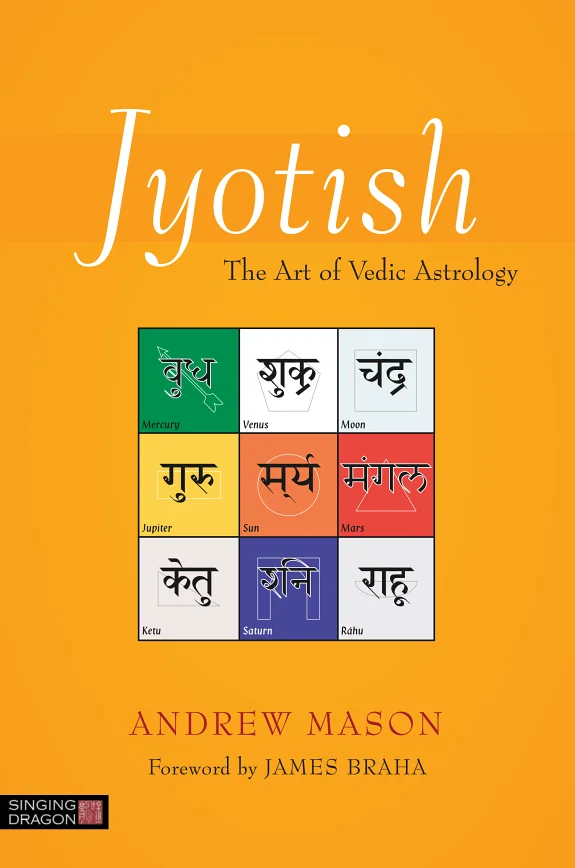
Andrew Mason's "Jyotish" functions as a clear gateway into Vedic astrology, a system often perceived as more intricate than its Western counterpart. The author successfully demystifies complex concepts like the Nakshatras and the Dasha system, presenting them with accessible language and illustrative charts. A notable strength is Mason's inclusion of Ayurveda and Vastu Shastra, demonstrating how these disciplines are not isolated but part of a unified understanding of cosmic and earthly energies. However, the initial publication date of 2017 might mean some of the very latest academic discussions or alternative interpretations of Jyotish are not yet incorporated. The section detailing planetary aspects (Drishti) is particularly well-explained, offering a concrete example of the book's clarity. Mason's "Jyotish" provides a solid, practical introduction for those prepared to engage with this rich astrological tradition.
📝 Description
82
Andrew Mason's "Jyotish" details Vedic astrology's system for mapping cosmic influences on human life.
Andrew Mason's book offers a complete introduction to Jyotish, also known as Vedic astrology. It systematically explains the core principles, planetary influences, house systems, and methods needed to understand this ancient practice. The book is structured for anyone wanting a solid grasp of Jyotish, whether they are starting from scratch or have some background in astrology and wish to learn about a different tradition.
The historical context of Jyotish is also covered. Tracing its origins back thousands of years in the Indian subcontinent, the text shows how it developed alongside Vedic culture and philosophy. Mason places the practice within its historical lineage, presenting it as an established system of celestial interpretation rather than a recent development. The book introduces key concepts like the Nakshatras, Dasha systems, and Rashi, and discusses Jyotish's connections to Ayurveda and Vastu Shastra.
Jyotish is an ancient system of celestial interpretation originating in the Indian subcontinent. It is deeply tied to Vedic culture, Hindu philosophy, and spiritual traditions. Unlike Western astrology, Jyotish often incorporates concepts like lunar mansions (Nakshatras) and planetary periods (Dashas) for predictive and interpretive purposes. This book situates Jyotish within this historical and philosophical lineage, highlighting its integration with related Indian sciences such as Ayurveda and Vastu Shastra, presenting a holistic view of cosmic influence on life.
💡 Why Read This Book?
• Gain a foundational understanding of the Nakshatras, the 27 lunar mansions crucial to Vedic astrology, and their specific energies, a concept distinct from Western zodiacal divisions, as detailed in Mason's "Jyotish". • Learn about the Dasha systems, the unique predictive periods in Jyotish, and how they function to forecast life events, offering a different temporal framework than Western techniques. • Explore the synergistic relationship between Jyotish, Ayurveda, and Vastu Shastra, understanding how these sister sciences offer a holistic view of health, environment, and destiny.
⭐ Reader Reviews
Honest opinions from readers who have explored this book.
❓ Frequently Asked Questions
What is the primary difference between Jyotish and Western astrology?
Jyotish, or Vedic astrology, primarily uses a sidereal zodiac, which aligns with the actual positions of constellations, unlike the tropical zodiac used in Western astrology. It also features unique predictive systems like the Dasha periods and incorporates concepts like the Nakshatras.
Does "Jyotish" by Andrew Mason include example charts?
Yes, Andrew Mason's "Jyotish" includes sample charts within the text. These are provided to illustrate the concepts and interpretive methods discussed, making the complex system of Vedic astrology more accessible to students.
Is "Jyotish" suitable for complete beginners?
Absolutely. The book is designed as a complete introduction, breaking down the fundamentals of Vedic astrology in a clear and understandable manner. It provides all the necessary information for someone starting from scratch.
What are the 'sister sciences' mentioned in relation to Jyotish?
The sister sciences are Ayurveda, the traditional Indian system of medicine and holistic health, and Vastu Shastra, the ancient Indian science of architecture and design. Mason explains how these disciplines are interconnected with Jyotish.
When was Andrew Mason's "Jyotish" first published?
Andrew Mason's "Jyotish" was first published on May 18, 2017. This date is significant for understanding its place within contemporary astrological literature.
Does the book explain planetary periods (Dashas)?
Yes, the book provides explanations of the Dasha systems, which are key to the predictive aspect of Jyotish. These planetary periods offer a unique method for timing life events and understanding their unfolding.
🔮 Key Themes & Symbolism
The Sidereal Zodiac
Unlike the tropical zodiac commonly used in Western astrology, Jyotish relies on the sidereal zodiac. This system is fixed to the actual constellations in the sky, accounting for the precession of the equinoxes. Mason's work meticulously details how this difference impacts chart calculations and interpretations, emphasizing the astronomical precision inherent in the Vedic system. Understanding this distinction is fundamental to grasping the unique perspective of Jyotish on celestial influences.
Planetary Periods (Dashas)
A core part of Jyotish predictive astrology is the Dasha system, which divides a native's life into periods governed by specific planets. These systems, such as the Vimshottari Dasha, offer a sophisticated method for forecasting when particular karmic influences will manifest. Mason's book clarifies the mechanics of these Dashas, providing readers with tools to interpret life's timing and understand the unfolding of destiny.
Nakshatras: Lunar Mansions
Beyond the twelve zodiac signs, Jyotish incorporates the Nakshatras, often translated as lunar mansions. These 27 divisions of the ecliptic offer a more nuanced layer of astrological interpretation, each with its own deity, symbolism, and characteristic energies. Mason's exploration of the Nakshatras reveals their significance in understanding personality traits, relationships, and auspicious timing within the Vedic framework.
The Trika Aligned Sciences
Mason highlights the integral connection between Jyotish, Ayurveda, and Vastu Shastra. This triad represents a holistic worldview where celestial patterns (Jyotish), bodily health (Ayurveda), and environmental harmony (Vastu) are deeply intertwined. The book demonstrates how understanding one science can illuminate the others, offering a unified approach to living in balance with cosmic and terrestrial forces.
💬 Memorable Quotes
Direct passages from the work, attributed to the author.
“Mason provides all the information needed to be able to understand this system of astrology.”
— This statement underscores the book's ambition to serve as a comprehensive self-teaching manual for Jyotish, aiming to equip readers with a complete foundational knowledge of Vedic astrology's principles and interpretive tools.
“He also introduces Jyotish's sister sciences, Ayurveda and Vaatsu, and shows how they interact.”
— This highlights a key feature of the book: its interdisciplinary approach. It doesn't present Jyotish in isolation but within the broader context of traditional Indian wisdom, illustrating the interconnectedness of celestial, physiological, and architectural sciences.
“A complete introduction to Jyotish, or Vedic astrology, with sample charts and clear explanations.”
— This blurb emphasizes the pedagogical nature of the book, promising a thorough grounding in Vedic astrology accompanied by practical examples through charts, designed for clarity and ease of comprehension for the student.
“The book offers a comprehensive introduction to Jyotish.”
— This conveys the author's intent to cover the subject matter thoroughly, ensuring that readers who engage with the text will receive a complete overview of Vedic astrology's core tenets and practices.
“Mason explains the interactions between Jyotish, Ayurveda, and Vastu Shastra.”
— This points to a unique selling proposition of the book, showcasing its ability to bridge different esoteric disciplines and demonstrate their synergistic relationships within a traditional Indian framework.
🌙 Esoteric Significance
Tradition
Jyotish belongs to the vast Indic esoteric tradition, deeply rooted in Vedic philosophy and cosmology. It is considered one of the Vedangas, auxiliary disciplines for understanding the Vedas. Unlike Hermetic or Kabbalistic systems which focus on correspondences between microcosm and macrocosm through a different symbolic language, Jyotish's primary focus is on the karma indicated by celestial configurations at birth and during planetary cycles, seen as divine or cosmic law unfolding.
Symbolism
Key symbols in Jyotish include the Grahas (planets), often personified as deities, representing forces that influence destiny. The Rashis (zodiac signs) and Nakshatras (lunar mansions) are divisions of the ecliptic, each with unique archetypal energies and associated mythologies. The Houses (Bhavas) represent different areas of life, providing a framework for interpreting how planetary influences manifest in a person's experience.
Modern Relevance
Contemporary practitioners of holistic health, mindfulness, and self-development often draw upon Jyotish for personal insight and predictive guidance. Thinkers exploring consciousness, karma, and the interconnectedness of universal forces find resonance in its detailed mapping of cosmic influence. Schools focusing on comparative religion and ancient wisdom traditions also reference Jyotish's unique perspective on time, destiny, and human potential.
👥 Who Should Read This Book
['• Aspiring practitioners of Vedic astrology: Those seeking a comprehensive and clearly explained introduction to Jyotish, including its core principles, predictive techniques, and associated sciences like Ayurveda.', '• Students of comparative esoteric traditions: Individuals interested in understanding astrological systems beyond the Western model, particularly those with roots in Eastern philosophy and cosmology.', '• Seekers of holistic self-understanding: Readers looking for tools to explore personal destiny, karmic patterns, and the interplay between celestial influences and life experiences.']
📜 Historical Context
Andrew Mason's "Jyotish," published in 2017, enters a field with a lineage stretching back millennia in India. Jyotish developed alongside Vedic civilization, influenced by philosophical schools like Vedanta and Samkhya. By the mid-20th century, figures like K.S. Krishnamurti (creator of the KP System) were innovating within Jyotish, while Western astrology was experiencing its own revival. Mason's work, published after the widespread availability of astrological texts in English and the rise of comparative esoteric studies, aims to provide a clear, modern introduction. It situates Jyotish within its traditional context, offering a counterpoint to purely Western astrological frameworks, and engages with the holistic worldview shared with Ayurveda and Vastu Shastra, disciplines also experiencing renewed interest globally.
📔 Journal Prompts
The Nakshatras: Which lunar mansion resonates most with your current life phase?
Dasha periods: How might the current Dasha influence your immediate future actions?
Ayurveda and Jyotish: Reflect on the connection between your birth chart and your dosha.
Vastu and your home: How do the principles of Vastu Shastra align with your living space?
The Sidereal vs. Tropical Zodiac: What are the key conceptual differences you observe?
🗂️ Glossary
Jyotish
The traditional Hindu system of astrology, also known as Vedic astrology. It is considered one of the Vedangas, or limbs of Vedic knowledge, focused on celestial observation and interpretation.
Rashi
The twelve zodiac signs used in Jyotish. They are derived from the constellations but are calculated using the sidereal zodiac, differing from the tropical zodiac of Western astrology.
Nakshatra
Lunar mansions; 27 divisions of the ecliptic, each spanning 13 degrees and 20 minutes. They provide a more detailed layer of astrological interpretation than the zodiac signs.
Dasha
Planetary periods or cycles that govern segments of a person's life, used for predictive purposes in Jyotish. The Vimshottari Dasha is one of the most common systems.
Graha
The planets recognized in Jyotish, typically including the Sun, Moon, Mercury, Venus, Mars, Jupiter, Saturn, and the lunar nodes (Rahu and Ketu). They are seen as agents of karma.
Ayurveda
The traditional Indian system of medicine, focusing on holistic health, balance, and longevity. It is considered a sister science to Jyotish.
Vastu Shastra
The ancient Indian science of architecture and spatial arrangement, aiming to harmonize human habitation with nature and cosmic energies. It is also considered a sister science to Jyotish.
This book appears in 1 collection
🔮 Readers Also Liked
Browse all →








From the “Vedic Astrology” Collection
View all →







More Free Astrology & Cosmology Books
View all →