The guide to Chinese horoscopes

 62
62

The guide to Chinese horoscopes


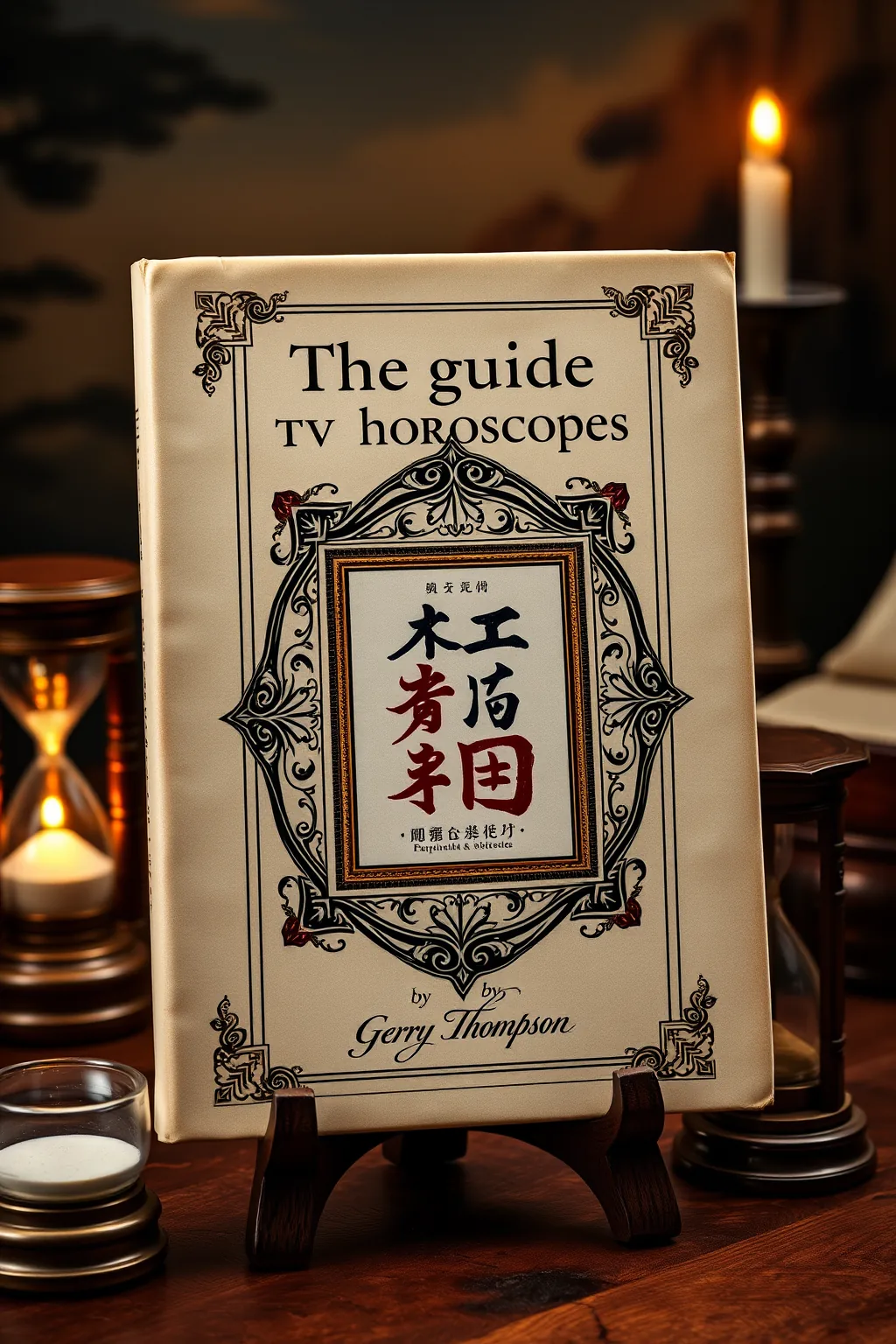
Sophia Crane, Associate Editor - Gerry Thompson's "The Guide to Chinese Horoscopes" is an indispensable treasure for anyone seeking to master the intricacies of this ancient astrological art. Moving beyond the familiar twelve animal signs, Thompson masterfully reveals the deeper layers of elemental interactions and the profound influence of birth hour, presenting a truly comprehensive approach. The author's exposition of the 60-year cycle and the subtle dance of Yin and Yang offers invaluable esoteric insights, empowering readers to conduct their own accurate readings. This guide is a beacon for serious students of astrology and spiritual seekers alike, providing the tools to unlock profound self-knowledge and cosmic understanding. It is a testament to the enduring power of Chinese divination.
📝 Description
62
Gerry Thompson's 1995 book demystifies the 60-year Bazi cycle of Chinese astrology.
Gerry Thompson's "The Guide to Chinese Horoscopes" moves beyond simple animal sign associations. It explains how the twelve zodiac animals interact with the five elemental cycles and the principles of Yin and Yang. The book details the 60-year Bazi cycle, also known as Eight Characters, which serves as an astrological blueprint based on birth year energies.
Thompson also covers the influence of birth hours and how these affect the manifestation of animal signs in a person's chart. He aims to clarify the philosophical basis of this system for those interested in self-understanding. The book is written for both newcomers to astrology and those with some existing knowledge. It presents a method for interpreting birth charts to understand personal potentials and challenges.
This book sits within the tradition of Chinese metaphysics, specifically focusing on astrological divination. It draws from systems like the Bazi, which interpret birth dates and times as a map of energetic influences. Unlike Western astrology, Chinese horoscopes integrate concepts of elemental balance and cosmic cycles, viewing destiny as a dynamic interplay of forces rather than a static prediction. The goal is often self-awareness and alignment with natural patterns.
💡 Why Read This Book?
Unravel the profound mysteries of your destiny by delving into the intricate Chinese astrological system. This guide offers a comprehensive understanding beyond the twelve animal signs, revealing the interplay of elements and birth hours for deeper self-insight. Ideal for seekers of ancient wisdom, aspiring astrologers, and practitioners looking to expand their repertoire with a rich, symbolic language of cosmic influence.
⭐ Reader Reviews
Honest opinions from readers who have explored this book.
❓ Frequently Asked Questions
What is the core difference between Western and Chinese horoscopes?
While Western astrology focuses on planetary positions relative to the Sun's path, Chinese astrology emphasizes the cyclical relationship between the twelve animal signs, the five elements, and the Yin/Yang forces, offering a unique perspective on destiny and character based on birth year, month, day, and hour.
How does the 60-year cycle work in Chinese astrology?
The 60-year cycle is generated by the combination of the 12 animal signs with the 5 elements, creating a unique energetic signature for each year within that sixty-year span. This provides a far more nuanced astrological reading than just the animal sign alone.
What is the significance of birth hour in Chinese horoscopes?
The birth hour, often referred to as the 'child hour' or 'inner animal,' represents the subconscious, hidden aspects of personality, and influences one's daily life and ultimate destiny. It adds a crucial layer of complexity and personal detail to the overall horoscope.
Can this guide help me interpret my own horoscope?
Absolutely. The guide is specifically designed to empower readers to perform their own readings, providing clear explanations of the core components and their interactions, enabling personal astrological analysis and self-discovery.
Are Yin and Yang important in Chinese horoscopes?
Yes, Yin and Yang are fundamental principles that govern the energetic balance within the Chinese zodiac system. Their interplay influences the characteristics of each animal sign and element, adding another layer of interpretation to the horoscope.
🔮 Key Themes & Symbolism
The Interplay of Elements and Animals
This theme explores the profound symbiosis between the twelve animal signs and the five classical elements (Wood, Fire, Earth, Metal, Water). It reveals how these forces dynamically interact, shaping the unique characteristics, strengths, and challenges associated with each year and individual. Understanding this elemental alchemy is crucial for deciphering the deeper energetic currents that influence personality, relationships, and life paths, moving beyond superficial interpretations to a more profound understanding of cosmic influence.
The Esoteric Significance of Birth Hour
Beyond the well-known birth year animal, this theme examines the often-overlooked power of the birth hour. It unveils how the animal sign associated with the specific two-hour window of one's birth acts as an 'inner animal,' influencing subconscious drives, hidden potentials, and the subtle unfolding of one's destiny. This layered approach provides a richer, more personalized astrological portrait, revealing the intricate energetic blueprint that governs daily experiences and long-term life trajectories.
The 60-Year Cycle and Cosmic Rhythms
This theme illuminates the foundational 60-year cycle, a sophisticated framework derived from the combination of the 12 animal signs and the 5 elements. It explains how this grand cycle represents a complete cosmological rhythm, offering a profound understanding of recurring energetic patterns throughout history and within individual lives. Grasping this cyclical nature allows for a more profound appreciation of cosmic timing, generational influences, and the ebb and flow of universal energies that shape human experience.
💬 Memorable Quotes
Direct passages from the work, attributed to the author.
“The true depth of the horoscope lies not in the animal, but in the element it embodies.”
— This highlights the crucial role of the five elements in Chinese astrology, suggesting that understanding their interaction with the animal signs provides a more nuanced and accurate interpretation of one's destiny and character.
“Each hour of the day carries its own celestial whisper.”
— This emphasizes the esoteric significance of birth hour in Chinese horoscopes, suggesting that the time of birth imbues an individual with a unique energetic signature beyond the year sign.
“Destiny is not a fixed star, but a flowing river shaped by elemental currents.”
— This philosophical statement underscores the dynamic nature of Chinese astrology, viewing fate as malleable and influenced by the ever-changing interplay of cosmic forces, particularly the elements.
“The twelve animals are but the keys; the elements unlock the chambers of the soul.”
— This metaphor illustrates the hierarchical importance in understanding Chinese horoscopes, positioning the elements as the more profound interpretive tools that reveal deeper truths about the self.
💡 Key Ideas
Editorial paraphrase of the work's core concepts — not direct quotes.
To read the stars is to read the self, for within the cosmos, we find our own reflection.
This quote emphasizes the introspective and self-discovery aspect of astrology, positing that astrological readings serve as a mirror to one's inner world and potential.
🌙 Esoteric Significance
Tradition
The Chinese horoscope system is a central to traditional Chinese metaphysics, deeply intertwined with Taoism and its principles of Yin and Yang, and the Five Elements (Wu Xing). It represents an esoteric understanding of cosmic order and its influence on human life, viewing the universe as a dynamic interplay of energies that can be deciphered through intricate cyclical patterns. This tradition emphasizes harmony with nature and the universe, using astrological insights for self-cultivation and alignment with Tao.
Symbolism
Fundamentally, the symbolism of Chinese astrology lies in the archetypal representations of the twelve animals, each embodying distinct characteristics and energies. The five elements provide a further layer of symbolic meaning, representing fundamental forces and their dynamic interactions. The cyclical nature of the system itself symbolizes the continuous flux of existence and the interconnectedness of all things, offering a profound visual and conceptual language for understanding life's journey.
Modern Relevance
In the modern era, Chinese horoscopes continue to offer a unique and profound lens for self-discovery and understanding interpersonal dynamics. Beyond mere prediction, the system provides a rich framework for personal growth, offering insights into strengths, challenges, and potential pathways. Its emphasis on balance, adaptability, and understanding cyclical rhythms offers valuable wisdom for reading through the complexities of contemporary life, promoting mindfulness and a deeper connection to universal forces.
👥 Who Should Read This Book
This comprehensive guide is an essential resource for a broad spectrum of readers. Beginners to astrology will find it an accessible yet profound introduction to a complex system, clarifying the core principles. Dedicated astrology practitioners and scholars will appreciate its depth, the nuanced exploration of elemental interactions, and the detailed analysis of birth hour influences, offering new perspectives for their studies. Spiritual seekers and those interested in Eastern philosophies will discover a rich tradition of wisdom that offers clear insights into self-awareness, destiny, and the interconnectedness of the cosmos.
📜 Historical Context
The system of Chinese horoscopes, deeply embedded within ancient Chinese cosmology and philosophy, has evolved over millennia. Its roots can be traced back to the Han Dynasty (206 BCE – 220 CE), a period marked by significant advancements in astronomy, mathematics, and the development of complex calendrical systems. The integration of the twelve Earthly Branches (representing animals) and the five Heavenly Stems (representing elements) into a cohesive astrological framework reflects a sophisticated understanding of cyclical time and cosmic influence. This system was not merely a tool for divination but was intrinsically linked to governance, agriculture, medicine, and personal decision-making, reflecting a worldview where celestial patterns were seen as mirroring and influencing terrestrial events. The enduring popularity of Chinese horoscopes speaks to their profound resonance and adaptability across centuries, serving as a evidence of the wisdom of ancient Chinese thought in understanding human nature and the universe.
📔 Journal Prompts
Reflect on your birth year animal's core traits and how they manifest in your life.
How do the five elements (Wood, Fire, Earth, Metal, Water) intuitively resonate with your personality?
Consider your birth hour animal and its potential influence on your subconscious desires or hidden strengths.
In what ways do you observe cyclical patterns (like seasons or life phases) in your personal journey?
How might understanding the interplay of Yin and Yang offer a new perspective on a current challenge you face?
🗂️ Glossary
Bazi (Eight Characters)
A Chinese astrological system that uses the year, month, day, and hour of birth to create a chart of eight characters (four pairs of Heavenly Stem and Earthly Branch), providing a detailed blueprint of an individual's destiny.
Earthly Branches (Di Zhi)
The twelve cyclical symbols, commonly represented by animals (Rat, Ox, Tiger, Rabbit, Dragon, Snake, Horse, Goat, Monkey, Rooster, Dog, Pig), that form the foundation of the Chinese zodiac.
Heavenly Stems (Tian Gan)
The ten cyclical symbols, corresponding to the five elements in their Yin and Yang aspects, that are paired with the Earthly Branches to create a more detailed astrological reading.
Wu Xing (Five Elements)
The fundamental philosophical concept of five phases or forces: Wood, Fire, Earth, Metal, and Water. These elements are believed to interact in cycles of generation and control, influencing all aspects of the universe and human life.
Yin and Yang
The ancient Chinese philosophical concept of complementary, interconnected, and interdependent forces that represent the dualistic nature of reality. Yin is typically associated with passive, feminine, dark, and cold, while Yang is active, masculine, light, and hot.
This book appears in 3 collections
🔮 Readers Also Liked
Browse all →









More by Gerry Thompson
All books →


From the “Astrology” Collection
View all →


![Bayer, George ( 1936) Do Sunspots Control Business [ 1 P.]](/img/thumb/bayer-george-1936-do-sunspots-control-business-1-p.webp)




More Free Astrology & Cosmology Books
View all →