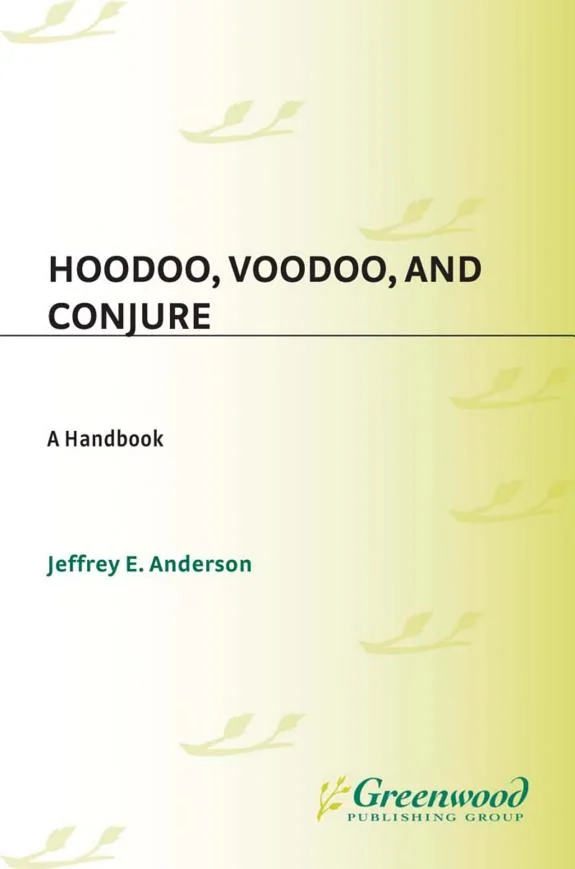
Hoodoo, Voodoo, and Conjure
 71
71

Hoodoo, Voodoo, and Conjure
Jeffrey E. Anderson's "Hoodoo, Voodoo, and Conjure" attempts to untangle a notoriously misrepresented corner of African American spirituality. The book's primary strength lies in its clear, academic categorization of practices often conflated in popular imagination. Anderson effectively distinguishes between the distinct origins and expressions of Hoodoo, Haitian Vodou, and broader Conjure traditions, a crucial service for both students and the curious public. A notable passage details the syncretic nature of Vodou, linking its Lwa to Catholic saints, demonstrating the intellectual rigor applied. However, the volume occasionally feels overly academic, perhaps sacrificing some of the lived, visceral experience of these traditions for structural clarity. While informative, it sometimes struggles to convey the vibrant, personal spirituality at the heart of these practices. Ultimately, Anderson provides a valuable, if somewhat dry, foundational text for understanding these complex spiritual landscapes.
📝 Description
71
Jeffrey E. Anderson's 2018 book clarifies Hoodoo, Vodou, and Conjure.
Hoodoo, Voodoo, and Conjure by Jeffrey E. Anderson distinguishes three often-confused African American spiritual traditions. Anderson defines their practices, beliefs, and histories, moving past common misunderstandings to show them as living spiritual paths with roots in African diasporic religions and Western esoteric thought.
The book traces the development of Hoodoo, Vodou, and Conjure from slavery through the 20th century, noting influences from African spiritual systems, Christian theology, and European folk magic. It highlights how these traditions survived oppression and became central to community identity and spiritual resilience. Anderson breaks down core elements like the role of ancestors, spirits (such as the Lwa in Vodou), symbolic objects, divination, and ritual. He clarifies specific practices like gris-gris bags in Hoodoo, the Haitian Vodou pantheon, and Conjure as a form of folk magic and healing.
This work examines African American spiritual traditions that developed from a mix of African cosmologies, European folk magic, and Christian elements. It addresses how these practices functioned as systems of knowledge and power, often outside mainstream religious or academic recognition. By detailing specific rituals, spiritual hierarchies, and the use of symbolic materials, Anderson places these traditions within the broader study of Western esotericism and its diasporic expressions.
💡 Why Read This Book?
• Gain a clear academic distinction between Hoodoo, Vodou, and Conjure, understanding their unique origins and practices as detailed in the book's initial definitional chapters. • Explore the historical resilience of these traditions, learning how they survived and adapted in the African American diaspora, particularly through the 20th century. • Understand the foundational elements and symbolic language of these spiritual systems, moving beyond sensationalized media portrayals to grasp their authentic cultural and religious significance.
⭐ Reader Reviews
Honest opinions from readers who have explored this book.
❓ Frequently Asked Questions
What is the primary difference between Hoodoo and Voodoo as explained by Jeffrey E. Anderson?
Anderson explains that Hoodoo is a system of folk magic and spiritual practice developed by African Americans, often incorporating elements of Christianity and Native American traditions. Vodou (often sensationalized as Voodoo) is a distinct religion originating in Haiti, with a formalized pantheon of spirits called Lwa and a more structured ritualistic framework.
When was Jeffrey E. Anderson's "Hoodoo, Voodoo, and Conjure" first published?
The book "Hoodoo, Voodoo, and Conjure" by Jeffrey E. Anderson was first published on October 30, 2008.
Does the book discuss the influence of these practices in literature or film?
Yes, the book notes how Hoodoo, Vodou, and Conjure have captured the popular imagination, appearing in literary works by authors such as Toni Morrison and Alice Walker, and featuring in numerous films, indicating their cultural impact.
Is this book suitable for beginners interested in African American spirituality?
Absolutely. The book is written for students and general readers, serving as a convenient and clear introduction. It defines and classifies these spiritual practices, making them accessible to those unfamiliar with the subject matter.
What historical period does the book cover regarding these spiritual traditions?
The work covers a broad historical span, tracing the development of Hoodoo, Vodou, and Conjure from the era of slavery through the 20th century, highlighting their adaptation and persistence in the African American diaspora.
What are some key concepts explored in "Hoodoo, Voodoo, and Conjure"?
Key concepts include the role of ancestors and spirits (like the Lwa in Vodou), the use of symbolic objects (such as gris-gris bags), divination techniques, and the significance of ritual within these distinct spiritual systems.
🔮 Key Themes & Symbolism
Distinguishing Spiritual Systems
The core of Anderson's work is the meticulous differentiation between Hoodoo, Haitian Vodou, and broader Conjure practices. It moves past common misconceptions, highlighting that Vodou is a distinct religion with a formal pantheon (the Lwa) and specific origins in Haiti, while Hoodoo is a system of folk magic and spiritualism developed by African Americans in the US, often incorporating Christian elements. Conjure is presented as a broader category encompassing various folk magic techniques. This clarity is vital for understanding the unique cultural and religious expressions of the African diaspora.
Historical Resilience and Adaptation
Anderson situates these traditions within the challenging historical context of African American life. The book details how Hoodoo, Vodou, and Conjure served as crucial sources of spiritual strength, cultural identity, and resistance during and after slavery. It illustrates their adaptive nature, absorbing influences from Christianity, Native American traditions, and European folk magic while retaining core African spiritual principles. This theme underscores their persistence despite centuries of oppression and attempts at cultural erasure.
Beyond Popular Stereotypes
A significant aim of the book is to counter the sensationalized and often racist portrayals of these spiritual systems in popular culture, particularly in film and literature. Anderson seeks to present an academic yet accessible overview that respects the authentic beliefs and practices of adherents. By defining terms, exploring rituals, and discussing the roles of spirits and ancestors, the work aims to foster a more informed and nuanced understanding, moving away from caricatures toward genuine religious and cultural appreciation.
The Role of Symbolism and Ritual
The book looks at the practical aspects of these traditions, examining the symbolic significance of objects, colors, and natural elements used in rituals. It discusses the function of divination, healing practices, and the invocation of spirits or ancestors. Concepts like the gris-gris bag in Hoodoo or the ceremonial structure in Vodou are explored to illuminate the methodology and spiritual logic underlying these practices, demonstrating their efficacy within their respective cultural frameworks.
💬 Memorable Quotes
Direct passages from the work, attributed to the author.
“Hoodoo, Voodoo, and Conjure are part of a mysterious world of African American spirituality that has long captured the popular imagination.”
— This opening sentiment from the original blurb sets the stage, acknowledging the widespread fascination with these practices while hinting at the book's intent to move beyond mere mystery into informed explanation.
“The volume begins by defining and classifying these distinct practices.”
— This statement highlights the book's foundational approach, emphasizing its commitment to academic rigor and clarity in establishing the separate identities and characteristics of Hoodoo, Vodou, and Conjure before exploring their nuances.
“These magical beliefs and practices have figured in literary works by such authors as Toni Morrison, Alice Walker, and Ishmael Reed.”
— This observation underscores the cultural significance and artistic influence of these spiritual traditions, demonstrating their presence and impact within African American literature and broader American cultural discourse.
“They have been central to numerous films, such as The Skeleton Key.”
— This reference points to the pervasive influence of these spiritual traditions in popular media, implicitly suggesting the need for a more accurate and informed understanding that Anderson's book aims to provide.
💡 Key Ideas
Editorial paraphrase of the work's core concepts — not direct quotes.
Written for students and general readers, this book is a convenient introduction.
This quote directly addresses the intended audience and purpose of the book, signaling its accessibility and its role as a foundational text for those seeking to learn about these complex spiritual systems.
🌙 Esoteric Significance
Tradition
While not strictly aligning with a single Western esoteric lineage like Hermeticism or Kabbalah, "Hoodoo, Voodoo, and Conjure" engages with the broader field of comparative religion and folk magic. It addresses traditions that, while rooted in African spirituality, have incorporated elements that resonate with esoteric concepts such as spiritual hierarchies, sympathetic magic, and the power of intention. The work fits within the esoteric library's scope by exploring systems that operate outside mainstream religious paradigms, focusing on direct spiritual experience and practical application of belief.
Symbolism
Key symbols explored include the gris-gris bag in Hoodoo, often containing personal items and herbs for protection or attraction, functioning as a locus of spiritual power. In Vodou, the Lwa represent complex spiritual forces, each with specific attributes, colors, and offerings, acting as intermediaries between the divine and human realms. The book also touches upon the symbolic language of roots, herbs, and natural elements, which are central to the efficacy of spells and rituals across these traditions, representing interconnectedness and the harnessing of natural energies.
Modern Relevance
Contemporary practitioners and scholars of African diasporic religions, as well as those interested in comparative spirituality and folk magic, continue to draw on works like Anderson's. Thinkers exploring the intersection of spirituality, culture, and identity, particularly within Black communities, find value in its foundational distinctions. Modern movements focusing on ancestral veneration, spiritual healing, and the decolonization of religious thought often reference the historical and cultural contexts illuminated in this book, seeking to understand and practice these traditions with greater accuracy and respect.
👥 Who Should Read This Book
• Beginning students of African American religious history and comparative spirituality seeking to understand the fundamental differences and historical contexts of Hoodoo, Vodou, and Conjure. • Cultural studies researchers and literary scholars interested in the representation of these spiritual practices in American literature and film, as mentioned in the book's examples. • General readers curious about the complexities of African diasporic religions who desire an academic yet accessible introduction that moves beyond sensationalized portrayals.
📜 Historical Context
Published in 2008, Jeffrey E. Anderson's "Hoodoo, Voodoo, and Conjure" emerged during a period of increasing academic and popular interest in African diasporic religions. The work was situated within ongoing scholarship that sought to reclaim and accurately represent these traditions, often challenging earlier, sensationalized ethnographies. Key contemporaries in this field included scholars like Yvonne P. Chireau, author of "Black Popes: African American Sacred Music and Performance," and regarding Vodou specifically, Maya Deren. Anderson's book aimed to provide a clear, accessible distinction between these often-conflated practices, addressing a gap for students and general readers who encountered them through popular culture or fragmented accounts. The reception of such works generally leaned towards academic appreciation for their clarity, though the very act of categorization can be debated within communities of practice.
📔 Journal Prompts
The concept of spiritual resilience as demonstrated through Hoodoo practices.
The distinct role of the Lwa in Haitian Vodou compared to other spiritual intermediaries.
The historical adaptation of African spiritual elements within the American context.
The ethical considerations of studying or practicing folk magic traditions.
The symbolic significance of gris-gris bags in Hoodoo practices.
🗂️ Glossary
Hoodoo
A system of African American folk magic and spiritual practice, often incorporating elements from West African spiritual traditions, Christianity, and European folk magic. It focuses on practical spiritual work, healing, and protection.
Vodou (Voodoo)
A religion originating in Haiti, syncretizing West African Vodun beliefs with Roman Catholicism. It features a complex pantheon of spirits known as Lwa, who are served through ritual and ceremony.
Conjure
A broad term often used to describe folk magic practices, particularly within African American communities. It can encompass various spiritual techniques for healing, protection, or influencing events, often overlapping with Hoodoo.
Lwa
The spirits or deities in Haitian Vodou, representing various forces of nature and aspects of life. They are worshipped and invoked through specific rituals, songs, and offerings.
Gris-gris
A type of charm or amulet, often a small bag containing symbolic items, herbs, or personal effects, used in Hoodoo and other folk magic traditions for protection, luck, or to bring about specific outcomes.
African Diaspora
The global distribution of peoples of African descent, particularly those who were forcibly dispersed through the transatlantic slave trade, and their descendants, along with their cultural traditions and religious practices.
Syncretism
The merging or blending of different, often opposing, religious or philosophical beliefs, practices, and symbols, resulting in a new hybrid system. This is evident in Vodou's combination of African and Christian elements.
This book appears in 1 collection
🔮 Readers Also Liked
Browse all →









From the “Hoodoo” Collection
View all →









More Free Occult Philosophy Books
View all →