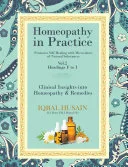
Homeopathy in Practice
 84
84

Homeopathy in Practice
Iqbal Husain’s *Homeopathy in Practice* offers a much-needed update on a healing modality often obscured by outdated terminology in its foundational texts. The strength of this work lies in its direct approach to application, a stark contrast to the dense theoretical tomes published before 1900. Husain clarifies the practical steps, moving beyond the historical symptoms and theory to show how remedies are actually used. A limitation, however, is the occasional lack of depth when discussing the philosophical underpinnings that drive the practice; the text assumes a level of familiarity with concepts like vitalism. The section on 'provings' is particularly illuminating, demonstrating the empirical nature of discovering homeopathic materia medica. For practitioners seeking accessible guidance, this book provides a valuable bridge between historical knowledge and contemporary application. It serves as a practical manual for those already inclined towards homeopathic principles.
📝 Description
84
Iqbal Husain's Homeopathy in Practice details homeopathy not just as a therapy, but as a method for understanding vitality and disease.
This book examines homeopathy as a system for understanding vitality and disease, first codified by Samuel Hahnemann in the late 18th century. It presents homeopathic principles as a safe and cost-effective alternative or complement to conventional medicine. The text focuses on the practical application of remedies, moving beyond purely theoretical discussions.
Homeopathy in Practice is written for a wide audience, including beginners in alternative healing and experienced practitioners. It aims to provide readers with the knowledge to apply homeopathic principles to all age groups, from infants to the elderly. A general interest in health and wellness is assumed, with the book clarifying accessible healing modalities for those seeking them.
The book discusses the historical position of homeopathy, noting its parallel practice with allopathic medicine in the early 20th century. Its adoption in countries like Germany, the UK, India, Bangladesh, and Pakistan is highlighted as evidence of its appeal. This work contextualizes homeopathy's historical prominence, showing its role as a recognized healing system before the widespread use of modern pharmaceuticals.
Homeopathy's emphasis on a vital force and its principle of 'like cures like' places it within a broader esoteric tradition that views health as a dynamic energetic balance rather than a purely material state. This perspective aligns with vitalistic philosophies found in traditions like vitalism and certain branches of traditional medicine, which posit an animating principle in living organisms. The practice of 'provings' to discover medicinal properties also echoes methods of empirical observation and energetic signature identification found in various holistic healing systems. The book positions homeopathy as a distinct methodology rooted in these deeper understandings of life and healing.
💡 Why Read This Book?
• Gain practical insight into the 'like cures like' principle, as explained through the lens of homeopathic 'provings' detailed in the text, offering a tangible method for understanding drug action not found in mainstream pharmacology. • Understand the historical coexistence of homeopathy and allopathy in the early 20th century, providing context for its widespread practice in nations like India and Germany and how it functioned as a parallel system. • Learn the fundamental application methods for homeopathic remedies across different age groups, moving beyond archaic medical terms found in classical texts to grasp accessible healing techniques for infants to the elderly.
⭐ Reader Reviews
Honest opinions from readers who have explored this book.
❓ Frequently Asked Questions
What is the historical significance of homeopathy mentioned in Iqbal Husain's book?
The book notes that homeopathy was widely practiced alongside allopathic medicine in the early 20th century, particularly in countries like Germany, the UK, India, Bangladesh, and Pakistan, highlighting its global acceptance and parallel development.
How does 'Homeopathy in Practice' differ from older homeopathic texts?
Unlike classical books published before the 1900s, which often use obsolete medical terms and focus heavily on theory and symptoms, Husain's work emphasizes practical application methods, making it more accessible for contemporary users.
Who is the target audience for 'Homeopathy in Practice'?
The book is designed for a broad audience, including beginners interested in alternative healing and experienced practitioners. It aims to provide clear guidance for applying homeopathic principles to individuals of all ages.
What does the book explain about 'provings'?
It explains 'provings' as the method of testing drugs on healthy individuals to determine their medicinal properties and symptoms, a core concept in developing the homeopathic materia medica.
Is homeopathy presented as a standalone or complementary system?
The book describes homeopathy as an alternative, complementary, and safe healing system, suggesting it can be used independently or in conjunction with conventional (allopathic) medical approaches.
What specific countries are mentioned as having widespread homeopathic practice?
The text highlights Germany, the UK, India, Bangladesh, and Pakistan as nations where homeopathy has historically seen and continues to experience significant practice.
🔮 Key Themes & Symbolism
Practical Application of Homeopathy
This theme focuses on moving beyond the historical and theoretical aspects of homeopathy, which are often presented in dense, archaic language in older texts. Husain emphasizes the 'how-to' of homeopathic remedy selection and administration. It details the process of identifying symptoms and matching them to specific remedies, offering a clear methodology for practitioners and students. The work aims to explain the practical steps involved in using homeopathy effectively for various ailments and age groups, bridging the gap between classical knowledge and contemporary usage.
The Concept of Provings
Central to homeopathic materia medica is the concept of 'provings.' This theme explores how substances are tested on healthy human volunteers to elicit a symptom picture that mirrors potential disease states. The book explains this process as the foundation for understanding a remedy's therapeutic potential. It highlights how these systematic drug tests, conducted according to principles established by Samuel Hahnemann, provide the empirical data necessary for homeopathic prescribing, differentiating it from purely theoretical or speculative approaches to medicine.
Historical Context and Global Reach
The work situates homeopathy within its historical development, noting its parallel existence with allopathic medicine, particularly in the early 20th century. It underscores the global adoption of homeopathy, citing its widespread practice in countries such as Germany, India, and the UK. This theme provides context for homeopathy's enduring appeal as a safe, cost-effective, and accessible healing system, demonstrating its established presence in diverse medical landscapes and its continued relevance across different cultures.
Safety and Cost-Effectiveness
A recurring motif is homeopathy's characterization as a safe and cost-effective healing system. The book asserts its suitability for all ages, from infants to the elderly, emphasizing its gentle nature and minimal side effects compared to conventional treatments. This theme addresses the practical benefits for individuals and healthcare systems, positioning homeopathy as an accessible and economically viable option for maintaining health and treating illness, particularly in regions where access to expensive medical care is limited.
💬 Memorable Quotes
Direct passages from the work, attributed to the author.
“Homeopathy is an alternative, complementary, cost effective, and very safe Healing System for infants to old-age.”
— This foundational statement expresses the book's thesis, presenting homeopathy as a versatile, accessible, and gentle therapeutic approach suitable for all life stages and adaptable to existing healthcare paradigms.
“Classical books on Homeopathy... are deficient in application methods.”
— This critical observation highlights the book's primary objective: to address a perceived gap in older homeopathic literature by focusing on practical, actionable guidance for remedy use, making the system more approachable.
“During early period of 20th century, it was practiced parallel to the conventional (allopathic) System.”
— This remark situates homeopathy historically, emphasizing its significant role as a recognized and widely used medical system that coexisted with mainstream practices, countering notions of it being a fringe or entirely novel concept.
“The theory, philosophy and symptoms of provings (drug testing).”
— This phrase points to the core epistemological method of homeopathy – 'provings' – which involves testing substances to understand their effects, forming the basis of its materia medica and therapeutic principles.
“It is widely practiced in Germany, UK, India, Bangladesh, and Pakistan.”
— This geographical enumeration serves to validate homeopathy's global reach and enduring acceptance, indicating its established presence and practical utility in diverse cultural and healthcare contexts.
🌙 Esoteric Significance
Tradition
While not strictly Hermetic, homeopathic philosophy shares conceptual ground with vitalist traditions that underpin much esoteric thought. The emphasis on a 'vital force' or animating principle that governs health and disease echoes concepts found in alchemy and early vitalistic philosophies. The principle of 'similia similibus curentur' (like cures like) can be seen as a form of energetic correspondence, aligning with symbolic reasoning prevalent in Hermeticism and Neoplatonism, where the microcosm reflects the macrocosm.
Symbolism
The core concept of 'provings' itself can be viewed symbolically, representing the homeopathic practitioner's endeavor to understand the hidden essence or energetic signature of a substance through controlled observation, akin to an alchemist's careful distillation. The selection of remedies based on symptom totality can be interpreted as a form of sympathetic magic, where the remedy acts as a symbolic representation of the illness, capable of restoring balance through energetic resonance.
Modern Relevance
Contemporary thinkers in integrative medicine and energy healing often draw upon homeopathic principles, particularly its emphasis on individualized treatment and the body's inherent healing capacity. Schools of thought focusing on subtle energies, consciousness in healing, and holistic wellness systems find resonance with homeopathy's approach. Its principles continue to inform practices that seek to stimulate the body's vital force rather than merely suppress symptoms.
👥 Who Should Read This Book
• Individuals new to alternative medicine seeking a safe and cost-effective healing system, who will benefit from the book's clear explanations of practical application and historical context. • Existing homeopathic students and practitioners looking for accessible guidance that bridges classical texts with modern understanding, particularly those who find older literature dense or difficult to navigate. • Healthcare researchers and comparative-medicine enthusiasts interested in understanding the historical trajectory and global prevalence of complementary therapies like homeopathy, especially in regions such as India and Pakistan.
📜 Historical Context
Homeopathy emerged in the late 18th century with Samuel Hahnemann's work, challenging the harsh medical practices of the era like bloodletting. By the early 20th century, it had established itself as a significant parallel system to allopathic medicine. This period saw homeopathy practiced widely in Germany, the UK, and its colonies, including India. The text implicitly addresses the limitations of earlier homeopathic literature, which often presented complex theories and symptom lists in outdated medical language. Husain's work aims to rectify this by focusing on application, a need likely amplified as allopathic medicine, particularly with the rise of pharmaceuticals, began to dominate. While figures like James Tyler Kent were refining homeopathic philosophy in the US, Husain's focus on practical clarity for a modern audience in regions like India and Pakistan suggests a response to the need for accessible homeopathic education distinct from the dense classical texts.
📔 Journal Prompts
The 'provings' methodology as a path to understanding substance effects.
Homeopathy's parallel practice with allopathy in the early 20th century.
The safety and cost-effectiveness of homeopathy for infants to old-age.
Application methods described beyond the classical texts.
The global spread of homeopathy from Germany to South Asia.
🗂️ Glossary
Homeopathy
A system of alternative medicine based on the principle of 'like cures like' (similia similibus curentur), using highly diluted substances to stimulate the body's healing response.
Allopathic Medicine
Conventional Western medicine, which typically treats diseases with remedies that produce effects different from or opposite to those produced by the disease.
Provings
The process of testing substances on healthy human volunteers to determine the symptoms they can produce, thereby establishing their medicinal properties for homeopathic use.
Vital Force
A concept central to homeopathy, referring to the animating principle or life energy that sustains an organism. Health is seen as a state of balance in the vital force, and disease as its disturbance.
Materia Medica
A comprehensive compilation of the known effects of substances used in homeopathy, detailing their symptoms, indications, and modalities, derived primarily from provings.
Remedy
A homeopathic preparation, typically a highly diluted substance, used to treat illness based on the principle of similia similibus curentur.
Complementary Medicine
Used together with conventional medical treatments. Homeopathy is often considered a complementary therapy when used alongside standard medical care.