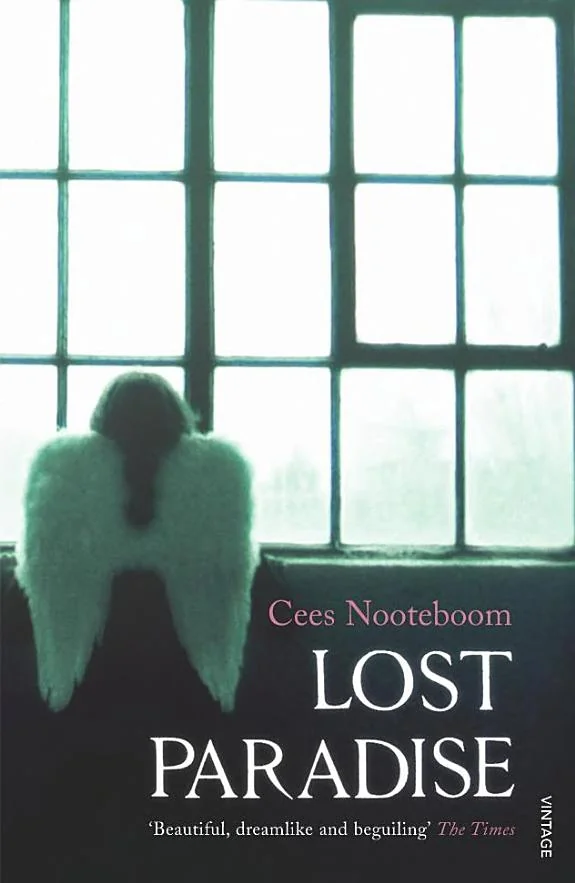
Lost Paradise
 77
77

Lost Paradise
Cees Nooteboom's *Lost Paradise* offers a contemplative exploration of journeys, both geographical and internal. The novel’s strength lies in its atmospheric prose and its ability to evoke a sense of profound, yet fleeting, connection. The initial premise—two women traveling from Brazil to Australia and a brief, intense affair—promises a narrative of dramatic encounters. However, the novel often prioritizes introspection over overt plot progression. A particularly striking element is the Aboriginal artist's forewarning of the affair's one-week limit, a motif that encapsulates the book's preoccupation with transience. While this deliberate pacing can be rewarding, it might leave readers seeking a more conventional narrative arc wanting. The book ultimately serves as a meditation on the nature of experience and the elusive quality of paradise.
Verdict: A subtly rendered narrative for readers who value atmosphere and existential reflection.
📝 Description
77
Cees Nooteboom's 2008 novel, Lost Paradise, follows two women on an odyssey that turns supernatural.
Lost Paradise recounts the journey of Almut and Alma, two young women from Sao Paulo whose travels take an unexpected turn toward the supernatural. Their path leads them to Australia, where an encounter with an Aboriginal artist introduces a prophecy of limited duration, signaling the start of a larger unfolding adventure. The novel examines themes of displacement, the search for meaning, and connection across different settings.
This work appeals to readers who appreciate narrative fiction that moves beyond ordinary storytelling. It is suited for those interested in cross-cultural experiences and the introspective journeys of characters facing existential questions. Readers who enjoy literature that explores the subtle interplay between personal relationships and broader societal or geographical contexts will find substantial material here. It is for those who seek narratives that evoke a sense of place and explore the ephemeral nature of human connection.
Published in 2008, Nooteboom's *Lost Paradise* engages with the idea of a 'lost paradise' not as a geographical location but as an elusive state. The narrative touches on indigenous perspectives and questions Western notions of progress, aligning with literary traditions that explore cultural encounters through elements of magical realism. The work reflects a time when globalization prompted re-evaluations of identity and belonging.
💡 Why Read This Book?
• Gain insight into the concept of "ephemeral encounters" as depicted through Alma's relationship with the Aboriginal artist, understanding how brief connections can profoundly shape identity. • Experience Nooteboom's unique narrative style, which blends geographical displacement with internal quests, offering a literary exploration of finding meaning across diverse landscapes like Sao Paulo and Australia. • Contemplate the idea of a "lost paradise" as an internal state rather than a physical location, prompting personal reflection on elusive moments of belonging and understanding.
⭐ Reader Reviews
Honest opinions from readers who have explored this book.
❓ Frequently Asked Questions
When was Cees Nooteboom's 'Lost Paradise' first published?
Cees Nooteboom's 'Lost Paradise' was first published in 2008, offering a more contemporary perspective on themes of travel and self-discovery.
What is the primary setting for the latter part of the novel 'Lost Paradise'?
While the protagonists begin their journey in Sao Paulo, Brazil, the latter part of 'Lost Paradise' is primarily set in Australia, where significant encounters and reflections occur.
Who are the main characters in Cees Nooteboom's 'Lost Paradise'?
The two central characters in 'Lost Paradise' are Almut and Alma, two young Brazilian women whose journey forms the narrative backbone of the novel.
Does 'Lost Paradise' focus on a literal journey to a mythical place?
No, 'Lost Paradise' uses the concept of a journey metaphorically. The 'lost paradise' explored is more of an internal state or an elusive feeling of connection rather than a physical destination.
What kind of literary style can I expect from 'Lost Paradise'?
Readers can expect a contemplative and atmospheric literary style, characteristic of Cees Nooteboom's work, which often blends introspective themes with evocative descriptions of place.
What is the significance of the Aboriginal artist in 'Lost Paradise'?
The Aboriginal artist in 'Lost Paradise' represents a profound, albeit brief, connection for Alma. His forewarning about the affair's limited duration highlights the novel's exploration of transience and the nature of meaningful, yet ephemeral, encounters.
🔮 Key Themes & Symbolism
The Elusive Nature of Paradise
The novel interrogates the very notion of a 'lost paradise,' presenting it not as a fixed geographical location but as an ephemeral state of being or profound connection. This concept is embodied in Alma's brief but intense affair with an Aboriginal artist in Australia, a moment that offers a glimpse of ideal harmony before its inevitable conclusion. Nooteboom suggests that these moments of perfect, albeit temporary, alignment are what we often seek, and their transient nature makes them all the more significant, shaping our understanding of fulfillment and loss.
Journeys as Metaphor
The physical voyage undertaken by Almut and Alma from Sao Paulo to Australia serves as a potent metaphor for their internal quests. Displacement from familiar surroundings compels introspection, forcing the characters to confront their desires, their pasts, and their evolving identities. The vastness of the Australian landscape mirrors the internal expansiveness and potential for discovery. The journey itself becomes less about reaching a destination and more about the process of transformation that occurs through encountering new places and people, highlighting the transformative power of movement and change.
Ephemeral Connections
Central to the narrative is the exploration of 'ephemeral connections' – relationships and encounters that are brief but deeply impactful. The affair between Alma and the Aboriginal artist, explicitly defined by its limited duration, exemplifies this theme. These fleeting moments, while not permanent, can offer useful insights and shape an individual's perspective on love, belonging, and the human condition. Nooteboom suggests that the intensity and meaning of an experience are not solely dependent on its longevity, but on the quality of presence and understanding within that moment.
Cultural Encounters and Identity
The novel delicately portrays encounters between different cultures, particularly through Alma's relationship with the Aboriginal artist. These interactions highlight the complexities of cross-cultural understanding and the ways in which such encounters can challenge and reshape one's sense of self. The narrative implicitly questions Western paradigms of progress and belonging by introducing indigenous perspectives and experiences. It explores how navigating unfamiliar cultural landscapes can lead to a deeper awareness of one's own identity and the constructed nature of societal norms.
💬 Memorable Quotes
Direct passages from the work, attributed to the author.
“The artist tells Alma their affair can only last a week.”
— This sets the stage for the novel's central theme of transience. It establishes that profound connections can be intensely meaningful precisely because they are limited, prompting reflection on the value of ephemeral experiences.
“Almut and Alma set out from Sao Paulo.”
— This marks the commencement of their physical journey, which serves as a catalyst for their internal transformations and the exploration of their identities beyond familiar horizons.
“The journey winds up in Australia.”
— This geographical shift signifies a move into a new symbolic landscape, one that facilitates profound cultural encounters and a re-evaluation of personal and collective narratives.
“This is only the beginning of their adventure.”
— This statement emphasizes the ongoing nature of personal growth and discovery. It suggests that significant life experiences, even those that are brief, initiate longer processes of change and self-understanding.
“The narrative explores the idea of a 'lost paradise'.”
— This concept frames the characters' quests not as a search for a physical place, but for an elusive state of harmony, connection, or ideal existence that may be found only in fleeting moments.
🌙 Esoteric Significance
Tradition
While not explicitly aligned with a single esoteric lineage, *Lost Paradise* touches upon themes resonant with Gnostic and Hermetic traditions. The concept of a 'lost paradise' can be interpreted through a Gnostic lens as a yearning for a pre-lapsarian state of spiritual wholeness, a return to a primal unity. The journey itself, particularly the encounters that challenge conventional understanding, mirrors the Hermetic principle of "As Above, So Below," where external events reflect internal spiritual states. Nooteboom's work departs from strict adherence to dogma, instead using these symbolic frameworks to explore existential and spiritual questions in a modern context.
Symbolism
The 'lost paradise' itself functions as a primary symbol, representing an elusive state of perfect connection, understanding, or belonging that is often sought but rarely attained in its entirety. The brief, intense affair Alma experiences in Australia symbolizes this transient 'paradise' – a moment of profound resonance that is inherently fleeting. The Australian landscape, vast and ancient, symbolizes a primordial connection to the earth and a different mode of existence, standing in contrast to the urban environments the characters leave behind, representing a potential, albeit temporary, return to a more authentic state.
Modern Relevance
Contemporary thinkers and practitioners in fields like depth psychology and contemplative spirituality can find relevance in Nooteboom's exploration of ephemeral encounters and the search for meaning. The novel's nuanced portrayal of identity formation through travel and cross-cultural experience speaks to modern discussions on globalization and belonging. Furthermore, its focus on the subjective experience of 'paradise' as an internal state aligns with current trends in mindfulness and personal development, which emphasize cultivating inner peace and presence amidst external flux, drawing parallels with existentialist thought and postmodern explorations of subjectivity.
👥 Who Should Read This Book
• Readers interested in existential literature who seek narratives that explore themes of displacement, identity, and the search for meaning beyond conventional plot structures. • Those fascinated by cross-cultural narratives and the subtle ways in which encounters with different traditions, like those hinted at with the Aboriginal artist, can illuminate personal journeys. • Individuals who appreciate atmospheric prose and literary fiction that uses geographical journeys as metaphors for profound internal introspection and the contemplation of transient moments of connection.
📜 Historical Context
Cees Nooteboom's *Lost Paradise*, published in 2008, arrived in an era increasingly defined by digital connectivity and a burgeoning awareness of globalization's impact on cultural identity. The novel can be seen as engaging with contemporary literary trends that explored displacement and the search for authenticity in a rapidly changing world. It shares thematic concerns with postcolonial literature, which critically examines the legacies of empire and the complexities of cultural exchange. Nooteboom's work, while distinct, appeals to authors like J.M. Coetzee, who also probed the intersections of landscape, identity, and history in Southern Africa and Australia. The novel's reception was characterized by appreciation for its lyrical prose and philosophical depth, though some critics noted its deliberate pacing. It emerged at a time when comparative literature was increasingly focusing on narratives that bridged disparate cultural experiences, offering a nuanced perspective on what it means to find belonging.
📔 Journal Prompts
The concept of the 'lost paradise' as an internal state.
Alma's ephemeral encounter with the Aboriginal artist.
The journey from Sao Paulo to Australia as a catalyst for self-discovery.
Reflect on the symbolism of the vast Australian landscape.
The significance of predetermined limitations in relationships.
🗂️ Glossary
Lost Paradise
A central concept in the novel, referring not to a literal place but to an elusive state of ideal connection, harmony, or fulfillment that characters may glimpse but rarely hold onto permanently.
Ephemeral Encounters
Relationships or significant meetings that are brief in duration but possess a wide impact on the individuals involved, shaping their understanding of themselves and the world.
Sao Paulo
A major city in Brazil, serving as the starting point for Almut and Alma's journey, representing their familiar world before beginning a path of displacement and discovery.
Aboriginal Artist
A character Alma encounters in Australia, whose brief relationship with her serves as a key symbol for the novel's exploration of transient beauty and connection.
Journey as Metaphor
The narrative technique where a physical voyage across landscapes (from Brazil to Australia) mirrors and facilitates an internal exploration of identity, desire, and existential questions.
Transience
The quality of being fleeting or impermanent, a recurring theme highlighted by the limited duration of relationships and the elusive nature of idealized states like 'paradise'.
Cultural Encounter
Interactions between characters from different cultural backgrounds, which challenge perspectives and prompt a deeper examination of identity and belonging.
This book appears in 1 collection
🔮 Readers Also Liked
Browse all →







From the “Angels” Collection
View all →





More Free Occult Philosophy Books
View all →