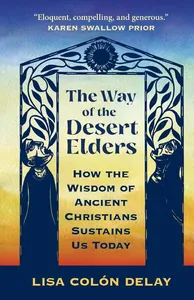
De geheimzinnige vloek

 74
74

De geheimzinnige vloek
Alexandra Penrhyn Lowe's 'De geheimzinnige vloek' offers a surprisingly grounded perspective on the pervasive concept of curses. Rather than sensationalizing, Lowe approaches the subject with an analytical lens, dissecting how fear and belief can coalesce into self-fulfilling prophecies or energetic entanglements. A notable strength is the author's ability to connect ancient lore with modern psychological understanding, particularly in the discussion of 'imprinted intention.' However, the work occasionally falters in its lack of specific case studies beyond general references, leaving the reader wishing for more concrete examples of curses being actively broken. The passage discussing the symbolic weight of broken objects as a metaphor for shattered curses, while evocative, could have benefited from deeper contextualization. Overall, Lowe provides a valuable, if somewhat theoretical, framework for understanding a persistent aspect of the human psyche and its interaction with perceived external forces.
📝 Description
74
Published in 2007, De geheimzinnige vloek examines curses as energetic patterns, not just folklore.
'De geheimzinnige vloek' (The Mysterious Curse) by Alexandra Penrhyn Lowe, published in 2007, addresses curses from an esoteric perspective. Lowe treats them not as simple superstitions but as energetic patterns or psychological constructs capable of producing real-world effects. The book details how these phenomena are thought to originate, persist, and how they might be resolved.
This work is for those with a serious interest in occult studies, comparative mythology, and the psychology of belief. Readers who prefer a scholarly yet accessible approach to subjects on the fringes of mainstream discussion will find it valuable. It specifically suits individuals aiming to grasp the symbolic language and energetic principles behind curses across different cultures and historical periods.
Lowe's 2007 work emerged during a period of renewed interest in esoteric traditions, influenced by New Age thought and increasing academic attention to non-Western knowledge systems. This era saw greater access to translated occult texts and broader public engagement with concepts like energy healing and manifestation, which often intersected with older magical theories. 'De geheimzinnige vloek' fits into this milieu by offering a structured analysis of curses, a specific and often misunderstood occult concept.
💡 Why Read This Book?
• Gain a structured understanding of 'imprinted intention,' a core concept in curse mechanics, and how it differs from mere ill will, allowing for a more nuanced view of energetic influence. • Learn about 'sympathetic resonance' as described in the book, a principle that explains how objects or individuals can become focal points for curses, offering practical insights into energetic connections. • Explore the idea of 'psychic inertia' as presented by Lowe, a concept detailing the persistence of energetic patterns, and understand its implications for breaking cycles within personal or ancestral lines.
⭐ Reader Reviews
Honest opinions from readers who have explored this book.
❓ Frequently Asked Questions
What is the primary focus of 'De geheimzinnige vloek' by Alexandra Penrhyn Lowe?
The book primarily focuses on curses, examining them not just as folklore but as tangible energetic patterns or psychological constructs that can manifest real-world effects and exploring their origin, perpetuation, and dispelling.
When was 'De geheimzinnige vloek' first published?
'De geheimzinnige vloek' was first published in 2007, placing it within the early 21st-century resurgence of interest in esoteric studies.
Does the book offer practical methods for removing curses?
While it explores the principles behind how curses might be dispelled, the book leans more towards analytical understanding rather than providing a step-by-step grimoire of curse removal techniques.
What esoteric traditions does Lowe's work draw upon?
Lowe's work synthesizes elements from various esoteric traditions, implicitly referencing concepts found in Western Hermeticism and folk magic, while grounding them in psychological theory.
Is 'De geheimzinnige vloek' suitable for beginners in occult studies?
Yes, it is suitable for beginners who approach the subject with a serious, analytical mindset, as it explains complex concepts in an accessible, scholarly manner without excessive jargon.
What is the concept of 'psychic inertia' as discussed in the book?
'Psychic inertia' refers to the tendency for imprinted energetic patterns, like those within a curse, to maintain their influence over time and potentially across generations until actively disrupted.
🔮 Key Themes & Symbolism
Imprinted Intention
The work posits that curses are not simply spontaneous acts of malice but rather 'imprinted intentions' – focused psychic energy directed with a specific, often harmful, outcome in mind. Lowe explains how this directed energy can establish a persistent link or pattern. This concept moves beyond superstition by framing curses as a form of energetic programming, accessible through focused will and belief, influencing events and individuals over time. The book examines the conditions under which such intentions are most likely to take root and exert their effect.
Sympathetic Resonance
Central to understanding how curses operate is the principle of 'sympathetic resonance.' Lowe explores how objects, symbols, or even individuals can become carriers or conduits for these imprinted intentions. This involves a connection, however tenuous, that allows the energetic pattern to manifest its effects. The book draws parallels to sympathetic magic, illustrating how a link can be established and maintained, enabling the curse to 'find' its target or influence its intended sphere of operation across distance or time.
Psychic Inertia and Dispelling
Lowe introduces 'psychic inertia' to describe the stubborn persistence of curse patterns, often extending across generations. This inertia makes them difficult to dislodge without conscious intervention. The work discusses how this persistence can be overcome, focusing on the disruption of the energetic pattern rather than a direct confrontation with a 'supernatural' entity. It suggests that understanding the mechanics of psychic inertia is key to developing effective methods for neutralizing or transforming these harmful influences.
The Psychology of Belief
Beyond energetic mechanics, 'De geheimzinnige vloek' critically examines the role of belief in the manifestation and experience of curses. Lowe argues that the psychological framework of the targeted individual, as well as the conviction of the caster, significantly amplifies or mitigates the curse's power. This perspective bridges occult theory with modern psychology, suggesting that curses can function as powerful self-fulfilling prophecies or psychosomatic phenomena, deeply intertwined with an individual's perception and worldview.
💬 Memorable Quotes
Direct passages from the work, attributed to the author.
“A curse is not a ghost, but a meticulously crafted energetic blueprint.”
— This statement reframes curses from supernatural occurrences to intentional, structured energetic designs, highlighting the role of will and precision in their creation.
“The echo of a malevolent thought can linger for decades, shaping reality.”
— This emphasizes the concept of psychic inertia, suggesting that negative mental energy can create lasting, tangible impacts on the environment and individuals.
“Sympathetic resonance turns a distant whisper into a present danger.”
— This highlights how connections, once established, allow energetic influences to bypass physical distance, making seemingly remote threats feel immediate and real.
“Belief is the soil in which the seed of a curse takes root.”
— This underscores the psychological dimension, positing that the recipient's belief is a crucial factor in the curse's ability to manifest and gain power.
“To undo a curse, one must first understand the pattern of its combining.”
— This suggests that effective counter-measures require analytical insight into the structure and origin of the curse, rather than blind reaction.
🌙 Esoteric Significance
Tradition
Lowe's work draws implicitly from Western esoteric traditions, particularly those influenced by Hermeticism and folk magic, which often explore the power of intention and symbolic action. It departs from purely ritualistic approaches by emphasizing the psychological and energetic mechanics behind phenomena like curses. The text can be seen as an attempt to secularize or psychologize these concepts, making them more palatable to a modern audience while retaining their esoteric essence. It fits within a lineage of thinkers who sought to codify and explain occult principles in a systematic manner.
Symbolism
The book frequently engages with the symbolism of energetic pathways and imprints. 'Imprinted intention' itself acts as a symbolic representation of focused will, a core concept in many magical systems. Another key motif is 'sympathetic resonance,' symbolizing the interconnectedness of all things and how energetic links can be forged. The very idea of a 'curse' functions as a potent symbol for the negative consequences of uncontrolled emotional energy or malevolent focus, serving as a cautionary tale within the esoteric framework.
Modern Relevance
Contemporary practitioners of energy healing, shadow work, and psychological astrology often find resonance with Lowe's exploration of 'imprinted intention' and 'psychic inertia.' Her work provides a framework for understanding how negative thought patterns or ancestral traumas can manifest as persistent blocks. Thinkers exploring the placebo and nocebo effects from a metaphysical perspective also draw upon similar underlying principles discussed in the book. The emphasis on conscious dispelling aligns with modern self-help and therapeutic approaches to overcoming psychological burdens.
👥 Who Should Read This Book
• Students of Western esotericism interested in a psychological and energetic analysis of curses beyond simple superstition. • Comparative religion scholars seeking to understand the cross-cultural significance and underlying principles of curse beliefs. • Individuals engaged in personal development work who wish to explore the concept of energetic imprints and their impact on personal well-being.
📜 Historical Context
Alexandra Penrhyn Lowe's 'De geheimzinnige vloek,' published in 2007, emerged during a period of heightened global interest in esoteric subjects, often fueled by the internet's accessibility to diverse spiritual and occult texts. This era saw a blending of New Age philosophies with older magical traditions, creating fertile ground for works that sought to rationalize or systemize concepts like curses. Contemporary thinkers like Doreen Valiente, though associated with earlier Wiccan movements, had paved the way for a more structured approach to modern witchcraft. Lowe's work distinguished itself by offering a more analytical, less overtly ritualistic, examination of curses, bridging the gap between folklore, psychology, and esoteric theory. While not facing overt censorship, such works often existed in a niche market, distinct from mainstream academic discourse, yet contributed to a broader cultural conversation about unseen forces and belief systems.
📔 Journal Prompts
Reflect on the concept of 'imprinted intention' and its potential influence in your life.
Analyze a personal challenge through the lens of 'psychic inertia.'
Consider how 'sympathetic resonance' might explain connections you've observed.
Explore the role of belief in amplifying or mitigating negative experiences.
How can understanding curse mechanics empower proactive energetic management?
🗂️ Glossary
Imprinted Intention
The focused psychic energy or will directed towards a specific outcome, which can create a persistent energetic pattern or signature influencing events or individuals.
Sympathetic Resonance
The principle by which an energetic link is established, allowing an influence (like a curse) to affect a target through connection rather than direct physical proximity.
Psychic Inertia
The tendency for established energetic patterns, such as those within a curse, to maintain their influence over time and resist disruption without conscious intervention.
Energetic Pattern
A structured form of energy, often created by focused thought or emotion, that can persist and exert influence on its environment or target.
Dispelling
The act of neutralizing or removing a negative energetic influence or pattern, such as a curse, through conscious effort and understanding of its mechanics.
Nocebo Effect
A counterpart to the placebo effect, where negative expectations or beliefs lead to adverse physical or psychological outcomes.
Psychic Energy
The subtle energy believed to be generated by consciousness and emotions, which can be directed and imprinted upon the environment.
🔮 Readers Also Liked
Browse all →









More by Alexandra Penrhyn Lowe
All books →




More Free Occult Philosophy Books
View all →