Hermeticism Philosophy Collection (5 Books). Illustrated
 80
80

Hermeticism Philosophy Collection (5 Books). Illustrated
This collection offers a broad overview of Hermetic literature, bringing together disparate but related works under one cover. The inclusion of "The Emerald Tablets" alongside "The Kybalion" provides a valuable juxtaposition of ancient-seeming wisdom and early 20th-century synthesis. Doreal's inclusion, while popular in certain circles, introduces a layer of interpretation that might deviate from strict historical Hermeticism. A limitation is the varied nature of the source material; "The Kybalion" is a concise summary, while the "Corpus Hermeticum" is a series of complex philosophical dialogues. The section on the "Principle of Correspondence" in "The Kybalion," stating 'As above, so below; as below, so above,' serves as a clear example of the interconnectedness central to Hermetic thought. Ultimately, this anthology is a useful, if uneven, gateway to the vast Hermetic landscape.
📝 Description
80
This illustrated collection brings together five key texts on Hermetic philosophy.
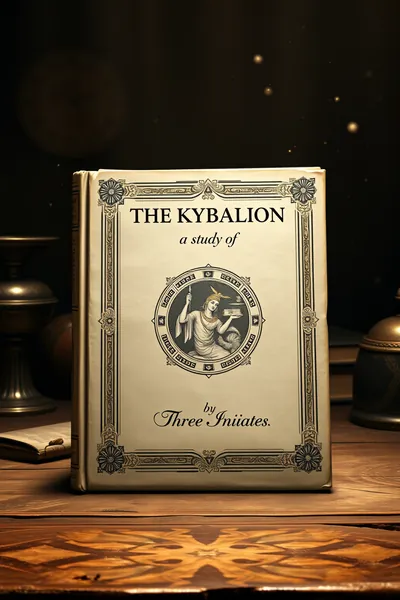
This anthology collects five significant works on Hermetic philosophy, featuring writings attributed to Hermes Trismegistus, M. Doreal, and William Walker Atkinson under the pseudonym The Three Initiates. The included texts are "The Emerald Tablets of Thoth the Atlantean," the "Corpus Hermeticum," "The Kybalion," "The Life and Teachings of Hermes Trismegistus," and "The Land of the Gods." The presentation includes illustrations intended to aid reader comprehension.
The compilation is suitable for students of esoteric philosophy, occult history, and comparative religion. It will appeal to those interested in the roots of Western mystical thought, including practitioners of alchemy, astrology, and ceremonial magic who wish to understand its core principles. Readers seeking primary source material on concepts such as the All, the Mental Universe, and the Principle of Correspondence will find this collection useful. It serves both newcomers to Hermeticism and experienced researchers looking for a consolidated reference work.
The Hermetic tradition originates in Hellenistic Egypt, with its foundational texts attributed to Hermes Trismegistus. The "Corpus Hermeticum," rediscovered during the Renaissance, profoundly influenced later thinkers. "The Kybalion," published in 1908, offers a modern interpretation of these principles. M. Doreal's contributions often frame Hermeticism within an Atlantean context, reflecting esoteric currents of the early 20th century.
💡 Why Read This Book?
• Gain access to the foundational "Corpus Hermeticum," understanding the philosophical dialogues that shaped Renaissance thought and early Western esotericism. • Explore the concise articulations of the Seven Hermetic Principles within "The Kybalion," providing a structured framework for understanding the universe's laws. • Examine "The Emerald Tablets of Thoth the Atlantean," offering a glimpse into legendary wisdom attributed to an ancient, possibly pre-Egyptian, source.
⭐ Reader Reviews
Honest opinions from readers who have explored this book.
❓ Frequently Asked Questions
What is the primary philosophical tradition represented in this collection?
This collection focuses on Hermeticism, a philosophical and religious tradition based primarily upon writings attributed to Hermes Trismegistus, a syncretic Greco-Egyptian deity. It emerged in Hellenistic Egypt and significantly influenced Renaissance thought and later esoteric movements.
Who are the key authors included in the Hermeticism Philosophy Collection?
The collection features works attributed to Hermes Trismegistus (via the "Corpus Hermeticum"), M. Doreal, and the collective known as The Three Initiates (credited with "The Kybalion"). William Walker Atkinson is widely considered the primary author behind The Three Initiates.
What are the 'Emerald Tablets' mentioned in the collection?
The 'Emerald Tablets of Thoth the Atlantean' are presented as a foundational text within Hermetic lore, purportedly containing the history and principles of the universe. Its attribution to Thoth, an Egyptian deity of wisdom, links it to ancient Egyptian mysteries.
Does this collection include the complete 'Corpus Hermeticum'?
The collection typically includes significant portions or key treatises of the "Corpus Hermeticum," the most influential collection of Hermetic philosophical writings. Its rediscovery in the 15th century by Cosimo de' Medici was a pivotal moment for Renaissance humanism.
What is 'The Kybalion' and its relation to Hermeticism?
'The Kybalion' is a 1908 work by The Three Initiates that distills the core teachings of Hermeticism into seven universal principles. It presents a modern, accessible interpretation of these ancient doctrines, emphasizing mentalism and correspondence.
Are these books considered primary sources for ancient Hermeticism?
While texts like the "Corpus Hermeticum" are considered primary sources from the Hellenistic period, works like "The Kybalion" are modern interpretations. "The Emerald Tablets" are legendary, with their actual origins debated by scholars, often seen as later esoteric compositions.
🔮 Key Themes & Symbolism
The Seven Hermetic Principles
Central to the collection, particularly "The Kybalion," are the Seven Principles: Mentalism, Correspondence, Vibration, Polarity, Rhythm, Cause and Effect, and Gender. These principles are presented as immutable laws governing the cosmos and human experience. Mentalism posits that the All is Mind, and the universe is mental. Correspondence, famously stated as 'As above, so below,' highlights the interconnectedness of all planes of existence. Understanding these principles is key to unlocking the Hermetic worldview and its practical applications in spiritual development.
Hermes Trismegistus and Ancient Wisdom
The figure of Hermes Trismegistus serves as the archetypal messenger and mediator between the divine and human realms. Texts attributed to him, such as the "Corpus Hermeticum," explore themes of creation, the nature of God, the human soul's journey, and the path to enlightenment through gnosis. The collection frames these writings as conduits to ancient, primordial wisdom, believed to originate from a lost civilization or divine revelation, influencing subsequent mystical and philosophical traditions across millennia.
The Macrocosm and Microcosm
A pervasive theme is the concept of the universe as a reflection of itself, often summarized by the Hermetic axiom, 'As above, so below.' This principle of Correspondence suggests that the study of the individual human being (microcosm) reveals the workings of the entire universe (macrocosm), and vice versa. The collection implies that by understanding the laws governing one, one gains insight into the other, fostering a holistic view of existence where all things are interconnected and part of a unified whole.
Spiritual Transformation and Gnosis
The Hermetic texts presented aim not merely at intellectual understanding but at spiritual transformation. The pursuit of gnosis—direct, intuitive knowledge of the divine—is a primary objective. The collection suggests that by internalizing Hermetic principles and contemplating the nature of reality, the individual can achieve a higher state of consciousness, liberation from illusion, and a reunion with the divine source. This transformative potential is a core element of the Hermetic path.
💬 Memorable Quotes
Direct passages from the work, attributed to the author.
“The All is Mind; the Universe is Mental.”
— This statement from 'The Kybalion' captures the principle of Mentalism, suggesting that reality is fundamentally consciousness or thought. It implies that our perception and understanding shape our experienced reality, and that the cosmos operates according to mental laws.
“As above, so below; as below, so above.”
— The principle of Correspondence, this famous aphorism highlights the interconnectedness of all things. It suggests that the patterns and laws observable in the greater universe are mirrored in the smaller, individual, and vice versa, linking the macrocosm and microcosm.
“There are not in the world two things simple, but all things are compound.”
— This concept, explored within Hermetic philosophy, points to the underlying unity and interconnectedness of phenomena. It suggests that apparent dualities or separate entities are ultimately expressions of a single, underlying reality, a core tenet of monistic thought.
“The lips of wisdom are closed, except to the ears of Understanding.”
— This sentiment, often found in Hermetic teachings, emphasizes that true wisdom is not merely acquired through rote learning but requires inner receptivity and comprehension. It suggests that knowledge is revealed to those prepared to receive it.
“Know Thyself.”
— A fundamental maxim within Hermetic and ancient Greek philosophy, 'Know Thyself' is presented as the starting point for all wisdom and spiritual advancement. It signifies the importance of self-examination and understanding one's own nature as a path to understanding the universe.
🌙 Esoteric Significance
Tradition
This collection is a core part of the Western Esoteric Tradition, specifically Hermeticism. It draws from ancient Egyptian and Hellenistic sources, as well as later syntheses. Hermeticism posits a unified divine source and a cosmos governed by predictable laws, accessible through reason, intuition, and spiritual practice. This work fits within the lineage that influenced Gnosticism, Alchemy, Kabbalah, and later Theosophy and New Age movements, serving as a foundational text for understanding the interconnectedness of the spiritual and material realms.
Symbolism
Key symbols include the Caduceus of Hermes, representing duality, balance, and the flow of vital energy; the Emerald Tablet, symbolizing the condensation of cosmic wisdom into a tangible form; and the Ouroboros, the serpent eating its tail, signifying eternity, cyclical nature, and the unity of all things. The figure of Hermes Trismegistus himself symbolizes the mediator, the divine messenger who bridges the gap between the divine and human, facilitating gnosis.
Modern Relevance
Contemporary practitioners of Western esotericism, including ceremonial magicians, alchemists, and students of comparative religion, continue to draw heavily from these texts. Modern psychological interpretations of Hermetic principles, particularly from "The Kybalion," are prevalent in self-help and New Thought movements. Thinkers and groups focusing on consciousness studies, quantum physics analogies, and the integration of ancient wisdom traditions with modern life often reference Hermeticism as a precursor or parallel system.
👥 Who Should Read This Book
• Students of Western Esotericism: Those seeking to understand the historical and philosophical roots of traditions like Alchemy, Astrology, and Ceremonial Magic will find indispensable source material. • Comparative Religion Scholars: Researchers exploring the intersections of Greek philosophy, Egyptian religion, and early Christian mysticism will benefit from these foundational Hermetic texts. • Aspiring Practitioners of Hermetic Arts: Individuals interested in applying principles of mentalism, correspondence, and spiritual alchemy to personal growth and understanding the cosmos.
📜 Historical Context
The Hermetic tradition, as represented in this collection, has roots in Hellenistic Egypt (circa 3rd century BCE to 3rd century CE), where Greek philosophy merged with Egyptian religious and magical traditions. The "Corpus Hermeticum," a collection of philosophical dialogues, was rediscovered in 1460 by Cosimo de' Medici in Florence, igniting the Renaissance Hermetic revival. This sparked intense interest among scholars and mystics, including Marsilio Ficino, who translated it, and Giordano Bruno, who was later burned at the stake partly for his Hermetic and cosmological views. In contrast, the early 20th century saw the rise of more synthesized interpretations like "The Kybalion" (1908) by The Three Initiates, which presented Hermeticism in a more structured, psychological format, diverging from the more overtly religious and metaphysical tone of the earlier "Corpus Hermeticum."
📔 Journal Prompts
The Principle of Mentalism: Consider the statement 'The All is Mind.' How might this concept influence your perception of daily events?
The Principle of Correspondence: Reflect on a situation where 'as above, so below' seems to manifest. What parallels do you observe?
The nature of the 'All': Explore the idea of a singular, unified consciousness as presented in the Hermetic texts. What are your initial reactions?
The role of 'Gnosis': How does the pursuit of direct spiritual knowledge differ from intellectual understanding in your experience?
The concept of 'Vibration': Consider how the idea that 'everything vibrates' might apply to your emotional or mental states.
🗂️ Glossary
Hermeticism
A philosophical, religious, and esoteric tradition based on the writings attributed to Hermes Trismegistus. It emphasizes a unified cosmos, divine principles, and the pursuit of gnosis for spiritual enlightenment.
Corpus Hermeticum
A collection of Greek philosophical and religious writings attributed to Hermes Trismegistus, dating from the 2nd and 3rd centuries CE. It explores themes of God, the cosmos, and the human soul.
The Kybalion
A book published in 1908 by The Three Initiates, presenting a distillation of Hermetic philosophy into seven universal principles. It offers a modern interpretation of ancient Hermetic teachings.
Mentalism
The first Hermetic Principle, stating that 'The All is Mind; the Universe is Mental.' It posits that reality is fundamentally consciousness and governed by mental laws.
Correspondence
The second Hermetic Principle, encapsulated by 'As above, so below; as below, so above.' It signifies the interconnectedness and mirroring of different planes of existence.
Gnosis
A Greek term meaning 'knowledge,' often referring to direct, intuitive, or spiritual insight into divine mysteries, as opposed to purely intellectual understanding.
Macrocosm
The greater universe; the totality of existence. In Hermeticism, it is seen as being reflected in the microcosm.