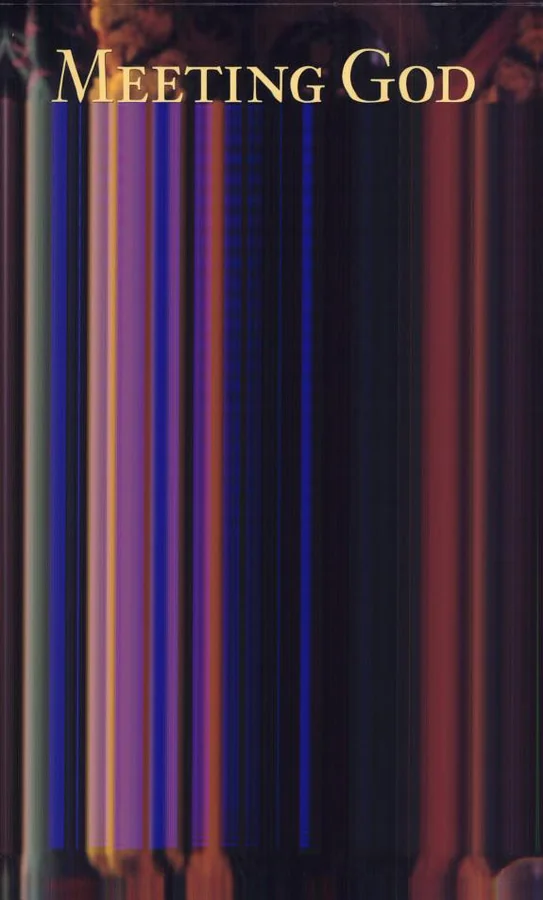
Meeting God
 75
75

Meeting God
Meeting God offers a compelling visual ethnography of Hindu practice, moving beyond textual analysis to present the vibrant reality of faith on the ground. The author’s photographic eye is undeniable, capturing arresting images that convey a palpable sense of devotion. One particular strength is the presentation of the spiritual lives of common men and women, a perspective often overlooked in more academic works. However, the text sometimes feels secondary to the images, lacking the depth needed to fully contextualize the visual narratives for a reader unfamiliar with Hindu philosophy. The section discussing the concept of karma, while visually supported, could benefit from more explicit explanation of its various interpretations within different Hindu schools. Ultimately, Meeting God serves as a valuable, if sometimes superficial, visual primer on Hindu spirituality.
📝 Description
75
Meeting God, published in 1999, offers a visual introduction to Hindu spiritual life.
This volume is an accessible guide to the varied spiritual practices and beliefs within Hinduism. It focuses on faith as it is lived by everyday people in India, rather than presenting a formal theological argument. The book is notable for its significant use of color photography, intended to convey the feeling of Hindu devotion.
It suits individuals new to Hinduism who want a broad overview of its many forms. The work also interests those studying comparative religion, cultural studies, or seeking visual records of spiritual existence. Readers who value photography's capacity to illuminate belief systems will find it particularly rewarding.
Meeting God appeared in 1999, a time when Eastern religions saw growing global attention. As Western interest in Hinduism increased, there was a need for introductory materials that showed actual religious experience, not just abstract theory. This book met that demand by highlighting the viewpoints and practices of common devotees.
While not strictly an esoteric text in the sense of secret knowledge, Meeting God situates itself within the broader tradition of understanding Hinduism as a lived, embodied spiritual path. It emphasizes the devotional aspect (bhakti) and the direct experience of the divine through practices like darshan and puja. The book illustrates how ancient traditions are continuously expressed and renewed through the daily lives and communal rituals of ordinary people in contemporary India, reflecting a holistic approach to spiritual development.
💡 Why Read This Book?
• Gain an understanding of darshan, the concept of divine sight, as illustrated through the photographs of devotees interacting with deities, offering a unique visual insight into Hindu worship. • Appreciate the role of common individuals in sustaining religious traditions, as documented through the book's focus on everyday people in India, providing a grounded perspective absent in purely theoretical texts. • Explore the visual documentation of Hindu practices, learning about specific rituals like puja through the 200 color illustrations, offering a concrete and immediate grasp of devotional acts.
⭐ Reader Reviews
Honest opinions from readers who have explored this book.
❓ Frequently Asked Questions
What is the primary focus of the book 'Meeting God'?
The book focuses on introducing the scope of Hindu beliefs and practices through arresting photographs that document the spirituality of ordinary people in India. It emphasizes lived experience over abstract theology.
Who is the author of 'Meeting God'?
The author of 'Meeting God' is listed as Unknown. It was first published in 1999.
What kind of illustrations does 'Meeting God' contain?
The book contains 200 color illustrations, primarily photographs, intended to visually represent the spiritual life and practices of Hindus in India.
What is the main subject matter covered in 'Meeting God'?
The book covers the subjects of Hindu beliefs and practices, focusing on the spirituality of common men and women in India.
What is the original publication date of 'Meeting God'?
Meeting God was first published on January 1, 1999.
What category does 'Meeting God' fall under?
Meeting God is categorized under Esoteric literature.
🔮 Key Themes & Symbolism
Lived Spirituality
The work emphasizes the 'spirituality of common men and women,' moving beyond scholarly interpretations to showcase how Hindu beliefs and practices are embodied in daily life. This includes rituals, personal devotion, and communal celebrations, all captured through arresting photographs. The focus is on the tangible expression of faith, illustrating how abstract theological concepts manifest in the lives of ordinary individuals across India.
The Visual Narrative of Devotion
With 200 color illustrations, the book uses photography as its primary medium for conveying religious experience. These images are not mere supplements but integral to understanding the scope of Hindu practices. They aim to capture the essence of devotion, the sacredness in everyday settings, and the visual richness of Hindu iconography and temple art, offering a direct, experiential connection for the reader.
Introduction to Hindu Diversity
Meeting God provides an introduction to the broad scope of Hindu beliefs. It acknowledges the vast diversity within Hinduism, presenting various practices and philosophies without prioritizing one over another. The aim is to offer a panoramic view, illustrating that Hinduism is not monolithic but a complex, complex tradition expressed differently across regions and communities in India.
The Concept of Darshan
A central, albeit often implicit, theme is the concept of darshan – the act of seeing and being seen by the divine. The photographs frequently capture moments of intense visual exchange between devotees and deities, sacred objects, or gurus. This visual emphasis underscores the importance of sight and visual presence in Hindu worship and spiritual attainment, making the experience of encountering the sacred immediate and reciprocal.
💬 Memorable Quotes
Direct passages from the work, attributed to the author.
“The spirituality of common men and women in India.”
— This phrase expresses the book's core objective: to document and present the lived religious experiences of everyday people, highlighting that spirituality is not confined to ascetics or scholars but is an integral part of ordinary life.
“An introduction to the scope of Hindu beliefs and practices.”
— This statement defines the book's purpose as providing a broad overview of Hinduism, touching upon its diverse elements rather than offering an in-depth, specialized study. It suggests a foundational exploration for newcomers.
“Accompanied by his arresting photographs.”
— This highlights the significant role of the visual medium in the book. The term 'arresting' suggests the photographs are striking and compelling, intended to capture the viewer's attention and convey the emotional and spiritual intensity of the subjects.
“200 color illustrations.”
— This factual detail emphasizes the visual richness and the scale of the photographic documentation. It signals that the book is heavily reliant on imagery to convey its message about Hindu spirituality.
“Huyler provides an introduction...”
— Though the author is listed as Unknown, this phrasing indicates a guiding hand presenting the material. It suggests a curated selection of information and images designed to educate and inform the reader about Hindu traditions.
🌙 Esoteric Significance
Tradition
While not strictly within a single esoteric lineage like Hermeticism or Gnosticism, Meeting God engages with traditions often studied within esoteric circles, particularly Hinduism's devotional (Bhakti) and yogic paths. It presents these practices as accessible and vital components of everyday life, aligning with esoteric aims to explain profound spiritual concepts and demonstrate their relevance beyond cloistered study.
Symbolism
The book implicitly explores symbols central to Hinduism, such as the divine forms of deities (e.g., Shiva, Vishnu, Devi), the lotus flower representing purity and spiritual awakening, and the act of offering (puja) as a symbolic exchange with the divine. The vibrant colors used in rituals and clothing also function symbolically, representing auspiciousness, energy, and the divine presence.
Modern Relevance
Contemporary practitioners of yoga and mindfulness, many of whom draw inspiration from Hindu philosophy, find value in Meeting God's visual representations of devotion. It also informs modern comparative religion studies and ethnographic approaches seeking to understand spiritual traditions through lived experience, influencing those interested in the intersection of art, culture, and spirituality.
👥 Who Should Read This Book
• Individuals exploring Hinduism for the first time: This book offers a visually rich and accessible entry point, avoiding dense theological jargon and focusing on observable practices. • Students of comparative religion and cultural studies: It provides concrete visual examples of religious expression in India, serving as a valuable resource for understanding diverse spiritual landscapes. • Photography enthusiasts interested in cultural documentation: Readers who appreciate the power of images to convey meaning will find the extensive collection of color illustrations particularly compelling.
📜 Historical Context
Published in 1999, Meeting God emerged at a time when Western academic and popular interest in Hinduism was significant, influenced by figures like Swami Vivekananda who brought Vedanta to the West in the late 19th century. The late 20th century saw a continued influx of spiritual seekers and scholars engaging with Indian traditions. This book positioned itself within this trend, offering a visually driven alternative to more text-heavy introductions. It contrasted with the philosophical focus of Advaita Vedanta scholarship prevalent at the time by centering the devotional practices of ordinary people. While not directly engaging with contemporaries like Diana Eck, whose work also explored Hinduism in America and India, Meeting God contributed to the growing body of literature making Indian religions more accessible to a global audience. Its focus on photographic documentation aligned with a broader movement in visual anthropology and religious studies seeking to represent lived experiences.
📔 Journal Prompts
The visual representation of darshan in the photographs.
The role of everyday individuals in sustaining Hindu traditions.
Personal reflections on the diversity of Hindu practices depicted.
Connecting the book's portrayal of puja with personal devotional acts.
The significance of color and imagery in conveying spiritual experience.
🗂️ Glossary
Hinduism
A diverse set of religious beliefs and practices originating in the Indian subcontinent, characterized by a wide range of philosophies, traditions, and deities, often emphasizing concepts like dharma, karma, and reincarnation.
Darshan
A concept in Hinduism referring to the auspicious sight of a deity, a sacred person, or a sacred object. It involves both seeing and being seen, implying a reciprocal spiritual connection.
Puja
A ritual of worship, devotion, and offering common in Hinduism, Buddhism, and Jainism. It typically involves invoking a deity and making offerings such as flowers, food, or incense.
Deities
Divine beings worshipped in Hinduism, encompassing a vast pantheon including major gods like Brahma, Vishnu, and Shiva, as well as numerous goddesses and local spirits.
Spirituality
A broad term referring to the recognition of a feeling or belief that there is something greater than oneself, often involving a connection to the divine, the sacred, or ultimate reality, as expressed through practices and experiences.
Illustrations
Visual representations, in this context primarily photographs, used to clarify, decorate, or document the subject matter of a book. The 200 color illustrations in this volume are central to its narrative.
Practices
The regular performance of actions or customs, in this context referring to the specific rituals, prayers, and observances that constitute the lived expression of Hindu beliefs.
This book appears in 1 collection
🔮 Readers Also Liked
Browse all →









From the “Hinduism” Collection
View all →






More Free Occult Philosophy Books
View all →