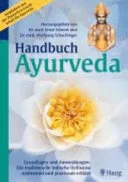
Handbuch Ayurveda
 76
76

Handbuch Ayurveda
Ernst Schrott’s Handbuch Ayurveda presents a remarkably clear and structured entry point into a vast and ancient healing tradition. Unlike many texts that can feel overwhelming, Schrott’s methodical approach, particularly in his explanation of the doshas and their interplay, makes complex concepts digestible. His discussion of Agni, the digestive fire, is especially well-articulated, highlighting its central role in health and illness. While the book excels at laying foundational knowledge, its practical application sections, though present, could benefit from more detailed case studies or extended examples to fully illustrate the nuances of treatment for specific imbalances. Nevertheless, for anyone beginning their exploration of Ayurvedic principles, Handbuch Ayurveda offers a solid, well-organized, and authoritative foundation. It is a dependable guide for understanding one’s own constitution and the path to balance.
📝 Description
76
Ernst Schrott's Handbuch Ayurveda, published in 2005, introduces the ancient Indian system of medicine.
This book breaks down the principles of Ayurveda for a Western readership. It explains the three doshas—Vata, Pitta, and Kapha—and how their balance or imbalance affects physical and mental health. The text is suitable for those new to natural health systems, individuals wanting to know their constitution (Prakriti), and practitioners of complementary therapies. Beginners will find the foundational theories clear, while those with some prior knowledge can deepen their understanding. Students of yoga and meditation will also benefit from its focus on the mind-body connection.
Schrott meticulously details concepts like Agni (digestive fire), Ama (toxins), and Dhatus (tissues) in health maintenance. The book outlines methods for balancing the doshas through diet, lifestyle adjustments, herbal treatments, and daily routines (Dinacharya). It stresses personalized approaches, acknowledging that each person's health needs are distinct. The system's roots trace back thousands of years to the Indian subcontinent, with principles documented in texts like the Charaka Samhita and Sushruta Samhita.
Ayurveda, meaning 'knowledge of life' in Sanskrit, is a traditional Indian system of medicine with roots stretching back thousands of years. It views health as a state of balance between the body, mind, and spirit, deeply connected to the natural world. Its principles, documented in ancient Sanskrit texts, offer a holistic framework for understanding human physiology and consciousness. The system's integration into global wellness practices in recent decades reflects a broader interest in Eastern philosophies and alternative paths to well-being.
💡 Why Read This Book?
• Gain a foundational understanding of the three doshas (Vata, Pitta, Kapha) and how they determine your unique Prakriti, offering personalized insights into health management not found in generalized wellness books. • Learn about Agni, the concept of digestive fire, and its critical role in absorption and toxin formation, providing a specific framework for understanding dietary impacts on well-being. • Discover practical daily routines (Dinacharya) and lifestyle adjustments recommended in Ayurveda, offering actionable steps for self-care that go beyond generic advice and are rooted in ancient Indian practices.
⭐ Reader Reviews
Honest opinions from readers who have explored this book.
❓ Frequently Asked Questions
When was Handbuch Ayurveda first published and who is the author?
Handbuch Ayurveda was first published in 2005, authored by Ernst Schrott, a prominent figure in bringing Ayurvedic knowledge to Western audiences.
What are the core principles of Ayurveda explained in the book?
The book explains core Ayurvedic principles including the three doshas (Vata, Pitta, Kapha), their balance, the concept of Agni (digestive fire), Ama (toxins), and Dhatus (body tissues).
Does the book cover dietary recommendations for different constitutions?
Yes, Handbuch Ayurveda provides dietary guidelines tailored to the different dosha constitutions, emphasizing how specific foods can help pacify or aggravate imbalances.
What is Prakriti according to Handbuch Ayurveda?
Prakriti, as explained in the book, refers to an individual's unique, innate constitution determined at conception, based on the combination of Vata, Pitta, and Kapha doshas.
Are there practical lifestyle tips in Handbuch Ayurveda?
Absolutely. The book offers practical advice on daily routines (Dinacharya), seasonal adjustments, and lifestyle choices aimed at maintaining doshic balance and promoting overall health.
Is Handbuch Ayurveda suitable for beginners in holistic health?
Yes, it is highly suitable for beginners. Ernst Schrott's clear structure and explanations break down complex Ayurvedic concepts into understandable components for those new to the subject.
🔮 Key Themes & Symbolism
The Three Doshas
The foundational concept of Vata, Pitta, and Kapha doshas is explored in depth. Handbuch Ayurveda explains how these bio-energetic forces govern all physiological and psychological functions within the body. It details the characteristics of each dosha, how they manifest in an individual's unique Prakriti (constitution), and the signs of their imbalance, offering a framework for self-diagnosis and understanding personal health tendencies.
Agni and Ama
Central to Ayurvedic health is the concept of Agni, or digestive fire. This book elucidates its a central role in transforming food into nourishment and energy. Conversely, it details Ama, the toxic byproduct of weak digestion, and its detrimental effects on the body's systems. Understanding the interplay between Agni and Ama is presented as key to preventing disease and promoting vitality.
Diet and Lifestyle
Handbuch Ayurveda emphasizes that health is maintained through mindful eating and daily practices. It offers comprehensive dietary recommendations specific to each dosha, considering tastes, qualities, and seasonal influences. The text also outlines the importance of Dinacharya, or daily routines, including waking times, hygiene, exercise, and sleep, as essential components for achieving and sustaining balance.
Holistic Well-being
Beyond mere physical health, the book addresses the interconnectedness of mind, body, and spirit within the Ayurvedic paradigm. It explores how imbalances in the doshas can affect mental clarity, emotional states, and spiritual awareness. The ultimate goal presented is not just the absence of disease, but the attainment of optimal vitality and inner harmony.
💬 Memorable Quotes
Direct passages from the work, attributed to the author.
“The qualities of things are their actions.”
— This concise statement highlights a core Ayurvedic principle: understanding the inherent properties (qualities) of substances, foods, and even emotions is key to predicting their effects on the body and mind.
“Balance is health; imbalance is disease.”
— This aphorism captures the fundamental philosophy of Ayurveda. Health is seen as a dynamic equilibrium of the doshas, while disease arises when this balance is disrupted, emphasizing the importance of maintaining equilibrium.
“The body is a house for the soul.”
— This interpretation reflects the Ayurvedic view of the physical body as a vessel for consciousness. Maintaining the body’s health is therefore essential for the well-being and clarity of the spirit or soul residing within.
“Every individual is unique.”
— This principle directly relates to the concept of Prakriti. It asserts that no two people have the same constitution or health needs, advocating for personalized approaches to diet, lifestyle, and treatment rather than one-size-fits-all solutions.
💡 Key Ideas
Editorial paraphrase of the work's core concepts — not direct quotes.
Digestion is the root of all life.
This paraphrased concept underscores the paramount importance of Agni (digestive fire) in Ayurveda. Strong digestion is presented as the foundation for nutrient absorption, energy production, and overall bodily function, without which life cannot be sustained.
🌙 Esoteric Significance
Tradition
Handbuch Ayurveda operates within the broad lineage of Vedic and Indian esoteric thought, which underpins the practices of Ayurveda. While often presented as a medical science, its roots are deeply entwined with yogic philosophy and the understanding of subtle energies (doshas, prana). It departs from purely materialist medical models by positing that physical health is inseparable from mental and spiritual well-being, aligning with the holistic principles found in many esoteric traditions.
Symbolism
Key symbols include the three doshas (Vata, Pitta, Kapha), often visualized as elemental forces that govern the body. The concept of Agni (fire) symbolizes not just digestion but also transformative energy and consciousness. The Dhatus (tissues) represent the building blocks of the physical form. These symbols are not merely descriptive but are understood as dynamic principles that require careful observation and management for maintaining equilibrium.
Modern Relevance
Contemporary practitioners of yoga, mindfulness, and naturopathy frequently draw upon Ayurvedic principles for personalized health guidance. Wellness coaches and holistic nutritionists often integrate concepts like Prakriti and doshic balance into their client work. Furthermore, the growing field of integrative medicine increasingly acknowledges the value of ancient systems like Ayurveda in complementing conventional treatments, demonstrating its continued relevance in modern health discourse.
👥 Who Should Read This Book
• Beginners interested in Ayurvedic principles: Individuals new to holistic health seeking a clear, structured introduction to the concepts of doshas, diet, and lifestyle for personal well-being. • Yoga and meditation practitioners: Those looking to deepen their understanding of mind-body connection and how to support their spiritual practice through Ayurvedic health management. • Aspiring holistic health practitioners: Students and professionals in complementary medicine fields wanting to incorporate foundational Ayurvedic knowledge into their practice.
📜 Historical Context
Published in 2005, Ernst Schrott's Handbuch Ayurveda emerged during a period of intense global interest in Eastern wellness traditions. The late 20th and early 21st centuries saw a significant rise in the popularity of yoga, meditation, and alternative medicine in the West, with Ayurveda increasingly recognized as a sophisticated system of health. This era was characterized by a growing critique of purely symptomatic Western medicine and a search for holistic approaches. While Ayurveda's foundational texts like the Charaka Samhita date back centuries, its systematic presentation for a modern, Western audience was a key development. Contemporaries like Deepak Chopra had already begun popularizing Ayurvedic concepts, though often with a more philosophical or spiritual emphasis. Schrott's work distinguished itself by offering a more detailed, structured, and practical guide to the system's core principles, making it accessible beyond the already initiated.
📔 Journal Prompts
Your dominant dosha and its primary qualities.
Identify one sign of Ama in your daily experience.
How does your current Dinacharya support or detract from your Vata balance?
Reflect on the qualities of a food that aggravates your Pitta.
Consider the interplay between your mental state and your Kapha constitution.
🗂️ Glossary
Dosha
The three fundamental bio-energetic forces (Vata, Pitta, Kapha) that govern physiological and psychological functions in Ayurveda. Their balance defines health, and their imbalance leads to disease.
Prakriti
An individual's unique, innate constitution, determined by the specific combination of Vata, Pitta, and Kapha present at conception. It represents one's natural state of balance.
Agni
Literally 'fire,' referring to the digestive and metabolic fire in Ayurveda. It is responsible for transforming food into nutrients and energy, and its strength is crucial for health.
Ama
A toxic byproduct of weak or improper digestion. Ama is sticky, heavy, and impairs the function of tissues and channels, contributing to disease.
Dhatu
The seven fundamental tissues of the body in Ayurvedic physiology: Rasa (plasma), Rakta (blood), Mamsa (muscle), Meda (fat), Asthi (bone), Majja (marrow/nerve), and Shukra (reproductive tissue).
Dinacharya
The Ayurvedic practice of establishing a daily routine that aligns with natural rhythms to promote health, balance, and well-being. It includes specific times for waking, eating, exercise, and sleep.
Rasa
In Ayurveda, 'Rasa' can refer to taste (the primary taste of a food) or to the first bodily tissue (plasma/lymph), which nourishes subsequent tissues.