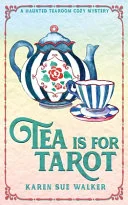
Tea is for Tarot
 82
82

Tea is for Tarot
Karen Sue Walker's "Tea is for Tarot" offers a refreshing twist on the cozy mystery formula by grounding its plot in the tangible, often whimsical, practices of tasseography and tarot. The strength lies in its seamless integration of these esoteric elements; the readings aren't mere window dressing but drive the plot forward, creating genuine suspense. A particularly compelling aspect is how the protagonist, April May, must reconcile the sometimes ambiguous messages from her readings with the stark reality of a murder. However, the pacing occasionally falters, particularly in the middle sections where the mystery’s momentum seems to stall before the final act. The portrayal of the tarot cards warning of 'murder' serves as a potent, if slightly on-the-nose, example of the book's central tension between symbol and reality. Overall, "Tea is for Tarot" succeeds as an engaging read for those who appreciate a sprinkle of the mystical in their crime fiction.
📝 Description
82
Karen Sue Walker's 2022 novel, "Tea is for Tarot," blends a cozy mystery with tasseography and tarot.
"Tea is for Tarot" by Karen Sue Walker is a contemporary mystery set in a tearoom that becomes a hub for psychic readings. The owner, April May, finds herself entangled in a murder investigation that occurs during a psychic fair held at her establishment. As the narrative unfolds, the distinction between casual fortune-telling and actual foresight becomes critical. The protagonist must use her skills in interpreting symbols from tea leaves and tarot cards to solve the crime and ensure her own safety. The story examines how seemingly harmless omens can connect to serious events.
The book appeals to readers who enjoy cozy mysteries with a supernatural element and a specific interest in divination. Those curious about tasseography and tarot, and how these practices can be woven into a story, will find it rewarding. The novel also suits fans of amateur detectives and stories focused on characters and community, particularly within a charming setting like a tearoom. It serves as a gentle introduction to esoteric concepts for newcomers.
While a modern work, "Tea is for Tarot" draws on historical divination practices. Tasseography, the reading of tea leaves, gained popularity in Europe by the 18th century. Tarot, with debated origins, became important in occult circles in the late 19th century, influenced by figures like Eliphas Lévi and groups such as the Hermetic Order of the Golden Dawn. Walker's novel places these traditions within a contemporary fictional setting, reflecting a current interest in adapting older esoteric arts for modern audiences.
💡 Why Read This Book?
• Gain insight into the practical application of tasseography, learning how the shapes and patterns in tea leaves, as depicted in the narrative's tearoom setting, can be interpreted beyond simple fortune-telling. • Understand the symbolic language of tarot cards within a suspenseful narrative, exploring how the deck's archetypes and specific spreads, like those potentially used by April May, can foreshadow danger. • Experience a unique blend of cozy mystery and esoteric practice, feeling the tension as divination tools shift from casual entertainment to critical investigative aids, a dynamic not commonly found in traditional crime fiction.
⭐ Reader Reviews
Honest opinions from readers who have explored this book.
❓ Frequently Asked Questions
What is tasseography and how is it used in 'Tea is for Tarot'?
Tasseography is the practice of reading fortunes from the patterns of tea leaves left in a cup. In the book, April May uses this ancient divination method in her tearoom, with the readings becoming central to solving a murder mystery.
Is 'Tea is for Tarot' a supernatural thriller or a cozy mystery?
It is primarily a cozy mystery with strong supernatural and esoteric undertones. While divination plays a key role, the focus remains on April May solving a crime within her community.
When was 'Tea is for Tarot' first published?
The book 'Tea is for Tarot' by Karen Sue Walker was first published on June 12, 2022.
What role do the tarot cards play in the plot?
The tarot cards act as a significant plot device, initially used for entertainment at April's psychic fair, but they soon provide cryptic warnings and clues that April must decipher to identify the killer.
Does the book explain how to read tea leaves or tarot?
While the book centers on these practices, it focuses more on their narrative function. It offers glimpses into the interpretation process rather than being a comprehensive instructional guide.
Who is the main character in 'Tea is for Tarot'?
The main character is April May, the owner of a tearoom who finds herself embroiled in a murder investigation after hosting a psychic fair.
🔮 Key Themes & Symbolism
Divination as Narrative Driver
The core of "Tea is for Tarot" lies in how tasseography and tarot aren't just atmospheric elements but active forces propelling the plot. April May's readings of tea leaves, detailing symbolic shapes, and the tarot cards' specific warnings about murder, directly influence her investigation. This transforms the esoteric practices from passive observations into crucial tools for uncovering the truth, blurring the lines between perceived futures and present dangers.
Symbolism and Interpretation
Walker explores the ambiguous nature of symbols, particularly within the context of divination. The book questions whether a tarot card depicting danger is a premonition or a threat, forcing characters to interpret meaning. This theme extends to the seemingly mundane details within the tearoom, suggesting that hidden meanings can be found everywhere, especially when one is attuned to esoteric symbolism.
The Mundane Meets the Mystical
"Tea is for Tarot" excels at juxtaposing the ordinary world of a tearoom—scones, shortbread, customer interactions—with the extraordinary area of psychic prediction and murder investigation. This contrast highlights how esoteric practices can emerge and become relevant even in the most unexpected, everyday settings, suggesting that the mystical is not separate from, but interwoven with, our daily lives.
Precognition vs. Agency
A central question the book grapples with is the extent to which one's future is predetermined versus subject to personal choice. When the tarot cards warn of a fatal outcome, April must confront whether this is an unavoidable destiny or a future she can alter through her actions. This exploration of fate versus free will adds a philosophical layer to the mystery's resolution.
💬 Memorable Quotes
Direct passages from the work, attributed to the author.
“The cards warned of murder. Was it a warning? Or a threat?”
— This central line expresses the central conflict of the novel. It highlights the ambiguity inherent in divination and sets the stage for the mystery, forcing the protagonist to question the nature of the omens she receives.
“April had turned her tearoom into a psychic fair for the day.”
— This sets the scene, establishing the book's unique premise where esoteric practices are integrated into an everyday setting, providing the backdrop for the subsequent murder mystery.
“It's said that your future can be foretold in the tea leaves at the bottom of your cup.”
— This classic saying introduces the practice of tasseography, grounding the narrative in a well-known form of divination before introducing the darker, more complex plot elements.
“With the cards stacked against her, April must find the culprit.”
— This phrase emphasizes the protagonist's challenging situation, suggesting that the very tools of divination might be working against her or that the circumstances are overwhelmingly unfavorable.
“Visitors are having their palms read and fortunes told, while April bakes up plenty of flaky scones and buttery shortbread.”
— This vividly contrasts the mystical activities with the comforting, domestic aspects of the tearoom, illustrating the book's blend of the esoteric and the everyday.
🌙 Esoteric Significance
Tradition
The work draws primarily from Western esotericism, specifically cartomancy (tarot) and tasseography. While not strictly adhering to a single lineage like Hermeticism or Theosophy, it reflects the modern popularization and integration of these divination systems into everyday life, a trend accelerated in the late 20th and early 21st centuries.
Symbolism
Key symbols include the teacup and its residual leaves, representing the ephemeral nature of fate and the subconscious. Tarot cards, particularly those hinting at danger or revelation (like the Tower or Death card, though specific cards aren't detailed in the blurb), function as direct omens. The tearoom itself symbolizes a space where the mundane and mystical intersect, offering comfort and foresight.
Modern Relevance
This book speaks to contemporary practitioners and enthusiasts of tarot and other divination arts who seek relatable narratives. It aligns with modern interests in mindfulness, self-discovery through symbolism, and the integration of spiritual practices into secular life, resonating with a generation exploring alternative belief systems outside traditional religious structures.
👥 Who Should Read This Book
• Cozy mystery enthusiasts seeking a unique plot device, who will appreciate how divination becomes integral to solving the crime, moving beyond mere atmosphere. • Individuals curious about tasseography and tarot, who can find an accessible, narrative-driven introduction to these esoteric practices within the context of a compelling story. • Readers who enjoy character-driven narratives set in charming locales, particularly those who like amateur sleuths navigating complex situations with intuition and symbolic interpretation.
📜 Historical Context
Published in 2022, "Tea is for Tarot" emerges within a contemporary cultural landscape where interest in esoteric practices like tarot and astrology has seen a resurgence, often termed the "New Age" movement or "spiritual but not religious" trend. This renewed fascination often looks to historical roots, such as the late 19th-century occult revival in Europe, spearheaded by groups like the Hermetic Order of the Golden Dawn, which heavily influenced modern tarot interpretations. While Walker's work is fiction, it taps into this widespread public engagement with divination, which contrasts with earlier periods. For instance, in the mid-20th century, figures like Gerald Gardner were developing modern Wicca, drawing from older traditions, yet public reception of such practices was often more skeptical or even fearful compared to today's more mainstream acceptance, evident in the proliferation of online tarot readers and astrology apps.
📔 Journal Prompts
April May's tearoom hosted a psychic fair; reflect on the intersection of commerce and divination.
Consider the tarot card's warning of murder: how might interpretation differ from literal understanding?
Analyze the symbolism of tea leaves in predicting outcomes within the narrative's context.
The mystery unfolds amidst scones and shortbread; explore the contrast between the mundane and the mystical.
Reflect on the ambiguity of omens, as April must discern warning from threat.
🗂️ Glossary
Tasseography
The practice of divination by interpreting patterns formed by loose tea leaves, coffee grounds, or wine sediments in a cup or bowl.
Cartomancy
Divination using a deck of cards, most commonly a standard tarot deck, to gain insight into the past, present, or future.
Psychic Fair
An event where various practitioners offer services such as palm reading, tarot readings, astrology, and other forms of fortune-telling to the public.
Omens
Events or phenomena believed to foretell future happenings, often interpreted as signs from the divine or supernatural.
Amateur Sleuth
A fictional character, typically not a professional detective, who becomes involved in solving crimes, often through personal curiosity or circumstance.
Cozy Mystery
A subgenre of crime fiction characterized by a lighter tone, a small-town or community setting, and an amateur detective, often featuring less graphic violence.
Divination
The practice of seeking knowledge of the future or the unknown by supernatural means.
This book appears in 1 collection
🔮 Readers Also Liked
Browse all →








From the “Crystal Ball Gazing” Collection
View all →






More Free Occult Philosophy Books
View all →