Haindl Tarot, Major Arcana, Rev Ed.
 76
76

Haindl Tarot, Major Arcana, Rev Ed.
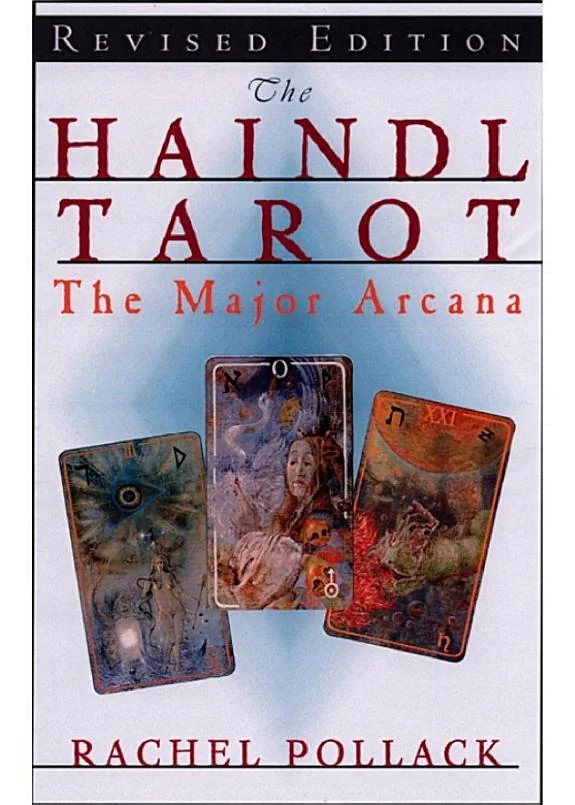
Rachel Pollack’s Haindl Tarot, Major Arcana, Revised Edition, is a compelling, if sometimes dense, re-imagining of the archetypal journey. The deck's strength lies in its ambitious fusion of global mythologies and ecological themes, a departure from more insular esoteric systems. For instance, the integration of Native American symbolism within the Fool's journey offers a fresh perspective on beginnings and untamed spirit. However, the sheer density of cross-cultural references and the unique artistic style, while visionary, can present a steep learning curve for those accustomed to more traditional imagery. The revised edition clarifies some of the original concepts, but the depth of Pollack’s scholarship means engaging with the accompanying text is almost mandatory for a full appreciation. It’s a work that demands significant interpretive effort but rewards it with a richer, more globally-aware understanding of the Major Arcana. The Haindl Tarot offers a powerful, albeit challenging, spiritual toolkit for the modern age.
📝 Description
76
Rachel Pollack's 2002 Haindl Tarot Major Arcana reimagines traditional archetypes with global mythologies and ecological concerns.
The Haindl Tarot, Major Arcana, Revised Edition, by Rachel Pollack, offers a new perspective on the traditional Major Arcana. First published in 2002, this work, alongside its deck created with artist J.F. Piranti, moves beyond solely European archetypes to include global mythologies and ecological themes. The artwork combines modern graphic styles with symbolic imagery, intending to address the spiritual and material challenges of the late 20th and early 21st centuries. This is more than just a set of cards; it functions as a system for understanding oneself and the world through a blend of ancient wisdom and contemporary awareness.
This edition is suited for experienced Tarot readers and students of esoteric traditions who want a deck that questions common interpretations. It will interest those drawn to comparative mythology, Goddess spirituality, and eco-consciousness as reflected in symbolic systems. Readers who value decks with a strong intellectual and artistic basis, and who are comfortable with complex, layered symbolism, will find this revised edition especially valuable. It is for those ready to explore beyond standard Rider-Waite-Smith frameworks.
Published in the early 2000s, the Haindl Tarot arrived as Tarot publishing diversified significantly. Following the New Age movement's influence, decks began incorporating varied cultural elements and modern themes. Pollack, an established author, integrated Native American spirituality, Celtic lore, and Eastern philosophies, departing from earlier decks' European focus. This expansion mirrored a cultural shift toward global awareness and a reconsideration of archetypes in light of ecological issues, distinguishing it from earlier esoteric works.
💡 Why Read This Book?
• Gain a unique perspective on archetypal symbolism by exploring the integration of Native American and Celtic mythologies, challenging the European-centric view prevalent in many tarot systems. • Understand the interconnectedness of ecological concerns with spiritual well-being, a theme woven throughout the Major Arcana, offering a relevant framework for contemporary spiritual practice. • Engage with a deck that explicitly draws from Goddess traditions and shamanic influences, providing a distinct pathway for exploring the divine feminine and primal spiritual energies.
⭐ Reader Reviews
Honest opinions from readers who have explored this book.
❓ Frequently Asked Questions
When was the Haindl Tarot originally published?
The Haindl Tarot, Major Arcana, was first published on May 13, 2002. This revised edition offers updated interpretations and potentially refined artwork based on the original concepts developed by Rachel Pollack and artist J.F. Piranti.
What makes the Haindl Tarot different from other Major Arcana decks?
Unlike many decks rooted solely in European esoteric traditions, the Haindl Tarot integrates global mythologies, ecological themes, and imagery from Native American and Celtic sources, offering a more diverse and contemporary symbolic language.
Who is Rachel Pollack, and what is her background?
Rachel Pollack is a highly respected author and Tarot scholar, known for her extensive work on Tarot, including "Seventy-Eight Degrees of Wisdom." Her background includes deep study of Western esotericism, mythology, and comparative religion, informing the complex layers of the Haindl Tarot.
What is the artistic style of the Haindl Tarot cards?
The artwork, by J.F. Piranti, is characterized by a distinctive blend of modern graphic design and symbolic depth. It often features bold lines and a somewhat abstract representation of figures and concepts, aiming to convey archetypal energies in a contemporary visual language.
Does the Haindl Tarot focus on specific spiritual traditions?
Yes, while drawing broadly, the Haindl Tarot has a notable focus on Goddess traditions, Celtic lore, and various indigenous mythologies, particularly from North America. It seeks to represent a more universal, yet culturally informed, spiritual landscape.
Is this deck suitable for beginners in Tarot?
While potentially accessible, the Haindl Tarot's complex symbolism and integration of diverse mythologies might be more challenging for absolute beginners. It is often recommended for those with some prior experience or a strong interest in comparative mythology and esoteric studies.
🔮 Key Themes & Symbolism
Ecological Spirituality
The Haindl Tarot uniquely frames spiritual growth and understanding within the context of ecological awareness. It posits that the perceived separation between humanity and the natural world is a fundamental imbalance reflected in the archetypal journey. Themes of environmental stewardship and the sacredness of nature are interwoven into the fabric of the Major Arcana, suggesting that true spiritual progress necessitates a harmonious relationship with the Earth. This perspective challenges traditional esoteric systems that may overlook the material world's spiritual significance.
Global Mythology Integration
Departing from purely Western esoteric lineages, Pollack masterfully integrates diverse mythologies. The deck draws significant inspiration from Native American spiritual traditions, Celtic lore, and elements of Eastern philosophy. This approach acknowledges a universal archetypal language that transcends cultural boundaries, offering fresh interpretations of familiar Major Arcana figures. For example, the concept of the Trickster or the Great Mother is explored through various global lenses, enriching the reader's understanding of these potent energies.
The Goddess and Feminine Divine
Central to the Haindl Tarot is a profound reverence for the divine feminine. The deck re-centers archetypes around Goddess imagery drawn from a multiplicity of traditions, including ancient European cults and indigenous belief systems. This emphasis moves beyond patriarchal interpretations, offering a more balanced and holistic view of spiritual power. The exploration of the Goddess reflects a contemporary resurgence of interest in feminine divinity and its role in personal and collective transformation.
Visionary Art and Symbolism
The artwork by J.F. Piranti is a critical component, presenting a visionary aesthetic that complements Pollack's complex text. The style is contemporary, often graphic and symbolic, avoiding literal representations in favor of conveying deeper archetypal currents. This artistic approach encourages active engagement from the reader, inviting them to interpret the visual language and connect it to the deck's complex themes of mythology, ecology, and spiritual evolution.
💬 Memorable Quotes
Direct passages from the work, attributed to the author.
“The cards interweave themes of ecology, mythology and the Goddess, with true visionary power.”
— This blurb highlights the deck's core innovation: blending contemporary ecological concerns with ancient mythological archetypes, particularly those related to the Goddess, all expressed through striking, original artwork.
“The Haindl Tarot is the most comprehensive Tarot ever--a contemporary deck that illustrates traditional archetypes with modern symbols.”
— This statement emphasizes the deck's ambition to expand the Tarot's symbolic vocabulary, presenting established archetypes through symbols and themes relevant to the late 20th and early 21st centuries, making it a modern interpretation.
“The Fool represents not just beginnings, but the untamed spirit connected to the Earth.”
— This interpretation suggests that the Fool card in the Haindl Tarot is imbued with an ecological consciousness, linking the archetype of the innocent wanderer directly to the primal energy and spirit of the natural world.
“The High Priestess embodies ancient wisdom accessible through nature's cycles.”
— This concept frames the High Priestess archetype not just as a keeper of secrets, but as one who accesses profound knowledge through observation of and connection with the rhythms and patterns found in the natural environment.
“The Emperor's authority is re-examined through the lens of responsible stewardship.”
— This suggests a critique of traditional patriarchal power structures, reinterpreting the Emperor archetype to emphasize responsible leadership and care for the Earth, rather than dominance or control.
🌙 Esoteric Significance
Tradition
The Haindl Tarot draws heavily from a syncretic esoteric tradition, moving beyond the strict confines of Western Hermeticism or Theosophy. It incorporates elements of Goddess spirituality, shamanic practices, and indigenous worldviews, particularly from North America and Celtic cultures. This departure from singular lineages suggests a contemporary esoteric current that seeks a more inclusive and earth-connected spiritual path, integrating ancient wisdom with modern ecological and social consciousness.
Symbolism
Key symbols include the integration of animal spirits from various mythologies, such as the raven or the wolf, representing instinctual wisdom and connection to the wild. The recurring motif of the spiral, present in many ancient cultures, signifies cycles of life, death, and rebirth, emphasizing interconnectedness. Furthermore, the deck frequently employs symbols of nature—trees, water, mountains—to ground archetypal energies in the tangible reality of the Earth, highlighting ecological balance as a spiritual imperative.
Modern Relevance
Contemporary practitioners of ecofeminism and earth-centered spirituality find significant resonance in the Haindl Tarot's thematic focus. Thinkers and artists exploring decolonial spirituality and animistic perspectives also draw upon its cross-cultural symbolism. The deck's revised edition continues to inform modern Tarot readers and occultists seeking to bridge esoteric traditions with pressing contemporary issues like environmentalism and a more holistic understanding of the divine feminine.
👥 Who Should Read This Book
['• Advanced Tarot practitioners seeking to expand their interpretive frameworks beyond traditional Western esotericism and engage with ecological and global mythological themes.', '• Students of comparative mythology and world religions interested in how ancient archetypes are re-envisioned through diverse cultural lenses and contemporary concerns.', '• Individuals drawn to Goddess spirituality and earth-centered practices looking for a symbolic system that deeply integrates feminine divine imagery and ecological consciousness.']
📜 Historical Context
The Haindl Tarot, Major Arcana, Revised Edition, emerged in the early 2000s, a period when Tarot publishing saw a significant expansion beyond the confines of traditional Western esoteric systems. Rachel Pollack, already a prominent figure with her important work "Seventy-Eight Degrees of Wisdom" (1980), leveraged this fertile ground to create a deck that was both deeply researched and radically innovative. The deck's embrace of global mythologies, particularly Native American and Celtic traditions, and its explicit incorporation of ecological themes, set it apart from decks still heavily influenced by the Golden Dawn's Qabalistic framework or the Rider-Waite-Smith lineage. This was a time when authors like Angeles Arrien were also exploring archetypes through cross-cultural lenses, but Pollack's approach was notably more integrated and philosophically driven, directly addressing the environmental crises of the era. The Haindl Tarot represented a shift towards a more pluralistic and earth-centered spirituality within the esoteric community, challenging the often-Eurocentric narratives that had previously dominated the field.
📔 Journal Prompts
The Fool's connection to the untamed spirit of the Earth, as depicted in the Haindl Tarot.
Reflect on the High Priestess's wisdom derived from nature's cycles.
Analyze the Emperor's revised authority through responsible stewardship.
Consider the integration of animal spirits and their symbolic meaning.
Explore the significance of the spiral motif within the Major Arcana.
🗂️ Glossary
Goddess Spirituality
A contemporary spiritual movement and practice that centers the divine feminine, often drawing from ancient pre-patriarchal religions, mythology, and nature-based traditions.
Ecological Consciousness
An awareness of the interconnectedness between humanity and the natural environment, recognizing the spiritual and ethical implications of ecological balance and human impact.
Archetype
A fundamental, universal pattern or symbol that recurs across cultures and time, representing fundamental human experiences or cosmic principles, as explored in Tarot.
Syncretism
The blending of different, often seemingly contradictory, religious, cultural, or philosophical beliefs and practices into a new, unified system.
Shamanism
A range of indigenous spiritual practices characterized by the ability to journey into altered states of consciousness to interact with the spirit world for healing and guidance.
Native American Spirituality
A broad term encompassing the diverse spiritual beliefs and practices of Indigenous peoples of North America, often emphasizing connection to the land, animal spirits, and ancestral wisdom.
J.F. Piranti
The artist who collaborated with Rachel Pollack on the Haindl Tarot deck, known for his distinctive graphic and symbolic style that complements the deck's esoteric themes.
This book appears in 1 collection
🔮 Readers Also Liked
Browse all →









From the “Major Arcana” Collection
View all →







More Free Occult Philosophy Books
View all →