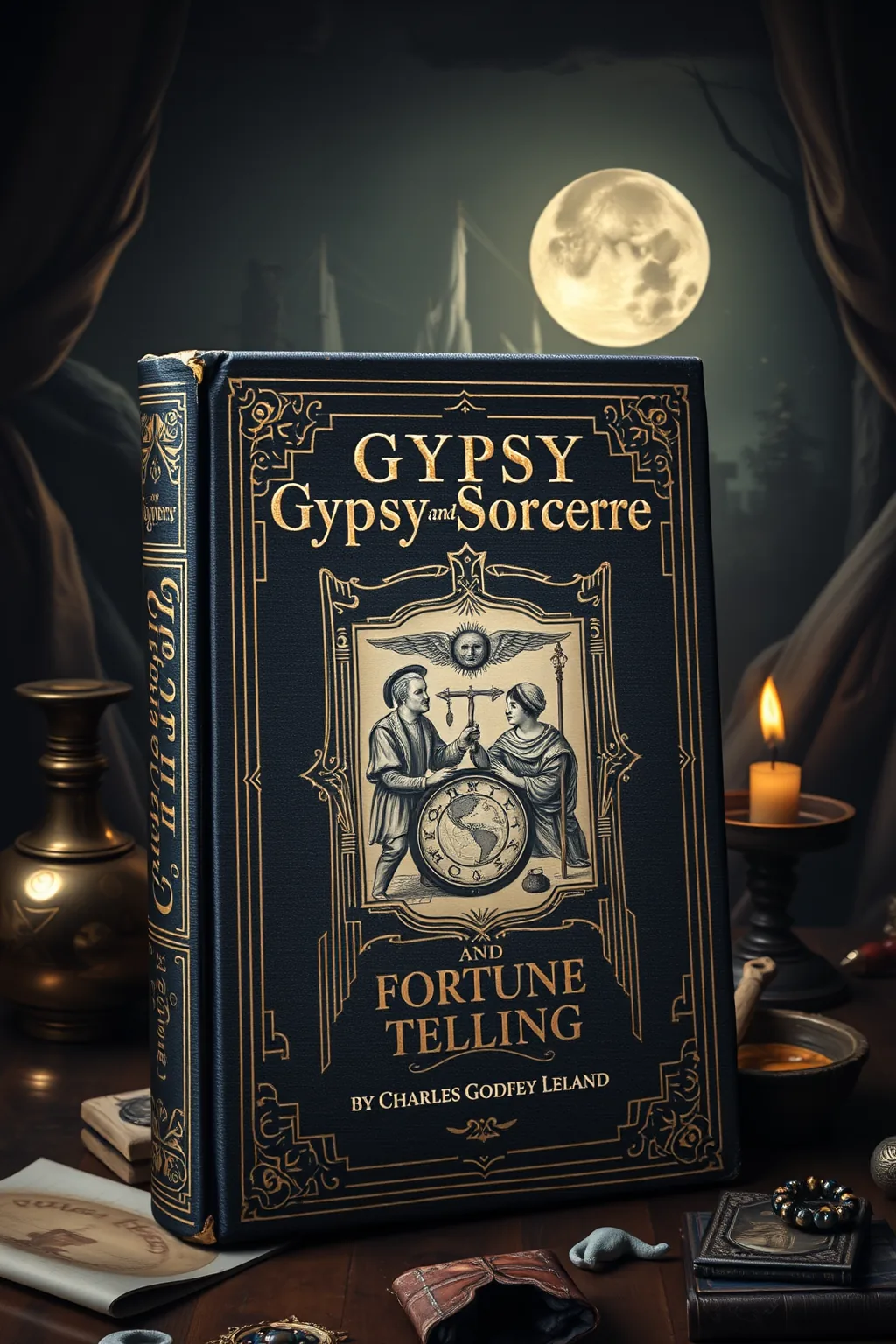
Gypsy Sorcery and Fortune Telling
 73
73

Gypsy Sorcery and Fortune Telling
Charles Godfrey Leland’s "Gypsy Sorcery and Fortune Telling" offers a fascinating, if somewhat dated, compendium of Romani magical traditions. Leland’s dedication to documenting these practices in the late 19th century is commendable, providing a valuable historical snapshot. The strength of the book lies in its detailed descriptions of divination methods, from the intricacies of palmistry to the casting of lots. However, the work is not without its limitations. Leland’s perspective is undeniably that of an outsider, and the text occasionally betrays late Victorian biases and romanticized notions about the Romani people. A particularly striking section details the use of "fortune-telling cards," which, while offering insight into specific divinatory practices, could benefit from a more critical examination of their origins and cultural diffusion. Despite these reservations, the book remains an important resource for understanding historical occultism and the intersection of folklore and magic. It provides a window into a world of esoteric practice that predates much of modern occult literature, offering a raw, ethnographic perspective.
📝 Description
73
Charles Godfrey Leland's 1891 book examines Romani magical practices and divination.
First published in 1891, Charles Godfrey Leland's "Gypsy Sorcery and Fortune Telling" compiles field research and folklore concerning Romani magical traditions. Leland, an American folklorist, documented esoteric practices among the Romani people, often referred to as "Gypsies." The book details various methods of fortune-telling, including crystal gazing, palmistry, and dream interpretation, alongside sorcery beliefs prevalent in Romani culture. It offers insight into a world frequently misunderstood.
This volume is suitable for students of folklore, Romani studies, and historical occultism. It appeals to those interested in the practical applications of divination and folk magic within a specific cultural group. Researchers seeking primary source material on late 19th-century esoteric practices and cultural anthropology will find its ethnographic approach valuable. Readers curious about the origins of widespread fortune-telling methods and their use in Romani communities may also find it illuminating.
Published in 1891, Leland's work emerged during a period of significant European and American interest in spiritualism, occultism, and ethnography. He was active in these circles, contributing to occult journals. This era saw a surge in the collection and publication of folklore and esoteric practices, with a particular focus on marginalized or less understood cultures. The book reflects this scholarly and occult interest in documenting diverse magical systems and beliefs.
💡 Why Read This Book?
• Understand specific Romani divination techniques like crystal gazing and palmistry as detailed in Leland’s 1891 research, offering insights distinct from generalized fortune-telling guides. • Explore the cultural context of Romani sorcery and amuletic practices, providing a grounded look at folk magic tied to a specific community and its beliefs. • Examine the historical intersection of folklore collection and esoteric studies, learning how figures like Leland documented and interpreted occult traditions in the late 19th century.
⭐ Reader Reviews
Honest opinions from readers who have explored this book.
❓ Frequently Asked Questions
What specific methods of fortune-telling are described in Gypsy Sorcery and Fortune Telling?
The book details numerous methods, including crystal gazing (scrying with polished stones and water), palmistry with specific interpretations of lines and mounts, dream analysis, and the reading of omens. It also touches upon the use of divination cards and other folk practices.
Who was Charles Godfrey Leland and what was his connection to Romani culture?
Charles Godfrey Leland (1824–1903) was an American folklorist, antiquarian, and writer. He developed a keen interest in Romani culture and traditions, spending considerable time documenting their folklore, language, and esoteric practices, which formed the basis for this book.
Is this book an academic study or a collection of folklore?
It is primarily a collection of folklore and direct observations of Romani magical practices and divination techniques. While it has ethnographic value, it is written from the perspective of a folklorist and occult enthusiast rather than a strictly academic anthropologist.
What is the significance of the term 'Gypsy' in the context of this book?
In the context of Leland's work from 1891, 'Gypsy' refers to the Romani people. He uses the term as it was commonly understood and applied during his time, documenting their specific cultural and magical traditions.
Does the book discuss Romani sorcery beyond fortune-telling?
Yes, the book explores aspects of Romani sorcery that extend beyond simple fortune-telling. It covers beliefs in protective charms, amulets, curses, and various folk rituals intended for warding off evil or influencing events.
What does the book say about the Romani language and magic?
Leland notes the influence of the Romani language on magical incantations and terminology. He suggests that certain words and phrases used in their sorcery have roots in their linguistic heritage, providing a connection between language and magical practice.
🔮 Key Themes & Symbolism
Romani Divination Methods
The book meticulously details various Romani techniques for foretelling the future. This includes extensive passages on palmistry, with specific interpretations of lines and mounts; scrying, using polished stones, mirrors, or water; and the interpretation of dreams and omens observed in nature and daily life. Leland’s work provides a rich compendium of these practices as he encountered them, offering readers a glimpse into the practical application of divination within Romani communities during the late 19th century.
Folk Magic and Sorcery
Beyond fortune-telling, Leland explores the broader spectrum of Romani folk magic and sorcery. This encompasses the use of charms, amulets, and talismans for protection, healing, or influencing events. The text discusses rituals, incantations, and the belief in spiritual forces that Romani people purportedly invoked. It highlights the practical, often protective, nature of their sorcery, intertwined with their worldview and daily existence.
Cultural Documentation
A significant aspect of the book is its role as an early attempt to document the esoteric traditions of the Romani people. Leland's detailed observations and compilations serve as a historical record of a culture often misunderstood and marginalized. He attempts to present their beliefs and practices with a degree of respect, though filtered through the lens of his era. The work provides valuable ethnographic data for scholars of folklore and Romani studies interested in historical perspectives.
Language and Esotericism
Leland notes the connection between the Romani language and their magical practices. He suggests that specific words and phrases used in incantations and magical formulae derive from the Romani tongue, lending authenticity and power to their rituals. This exploration highlights the intertwined nature of language, culture, and esoteric knowledge, indicating how linguistic heritage is preserved and utilized within magical traditions.
💬 Memorable Quotes
Direct passages from the work, attributed to the author.
“The Romany, or 'Kalo,' know many strange and wonderful things.”
— This statement underscores Leland's fascination with the esoteric knowledge he believed the Romani people possessed. It frames the book as an exploration of these 'strange and wonderful' secrets, positioning the Romani as keepers of ancient wisdom.
“The art of divination by the lines of the hand is one of the oldest in the world.”
— This highlights Leland's perspective on palmistry as a venerable practice. It connects Romani fortune-telling to a broader, ancient tradition, emphasizing its historical depth and universality within human culture.
“Dreams are often regarded as true prophecies.”
— This interpretation of Romani beliefs suggests a high regard for the subconscious and its potential to reveal future events. It points to dream analysis as a significant, perhaps divinely inspired, form of prognostication within their culture.
“Amulets and charms are worn to ward off evil.”
— This concise observation captures the protective function of magic within the Romani tradition as depicted by Leland. It emphasizes the practical application of sorcery for personal safety and well-being.
“The Romany have their own peculiar lore and magic.”
— This assertion emphasizes the distinctiveness of Romani esoteric traditions. It suggests that their magical practices are unique and rooted in their specific cultural identity, differentiating them from other magical systems.
🌙 Esoteric Significance
Tradition
This work falls within the broad category of Western Esotericism, specifically focusing on folk magic and divination as practiced by a distinct cultural group. It is not directly tied to Hermeticism, Gnosticism, or Kabbalah but rather explores a more localized, tradition-bound system of belief and practice. Leland's compilation serves as a bridge, bringing elements of Romani folk practice to the attention of the wider esoteric community, who were often interested in diverse sources of magical knowledge.
Symbolism
The book implicitly engages with symbolism through its descriptions of divination tools and practices. For instance, the interpretation of lines on the palm can be seen as a form of physiognomic symbolism, where physical features are read for their symbolic meaning related to fate and character. Similarly, the use of polished stones or mirrors in scrying taps into ancient symbolism associated with water and reflective surfaces as portals to other realms or insights. The very act of reading omens connects natural phenomena to symbolic messages.
Modern Relevance
Contemporary practitioners of folk magic, divination, and those interested in Romani studies often reference Leland's work as a historical document. While modern scholarship may critique his methodologies and biases, the book remains a foundational text for understanding historical perceptions of Romani magic. Neo-pagan and eclectic magical practitioners may draw inspiration from the specific techniques described, particularly in divination and amuletic magic, seeking to incorporate these older forms into their own evolving practices.
👥 Who Should Read This Book
• Folklore students and researchers interested in late 19th-century ethnographic documentation of esoteric practices. • Practitioners of divination seeking to understand historical methods of palmistry, scrying, and omen interpretation beyond generalized modern guides. • Readers curious about the historical intersection of Romani culture and occult traditions, gaining insight into beliefs and magical applications.
📜 Historical Context
Charles Godfrey Leland’s "Gypsy Sorcery and Fortune Telling" was published in 1891, a period marked by a fervent interest in the occult, spiritualism, and the collection of folklore across the Western world. This era saw figures like Helena Blavatsky and the Theosophical Society popularizing esoteric philosophies, while anthropologists began systematic studies of diverse cultures. Leland, an American folklorist and writer, was deeply embedded in this milieu, contributing to occult journals and engaging with prominent esoteric thinkers. His work on Romani traditions occurred alongside a broader European fascination with marginalized groups, often romanticizing their perceived ancient wisdom. While ethnographic studies were emerging, Leland’s approach was less strictly academic and more focused on the magical and divinatory aspects of Romani life. His work engaged with contemporary occult interests without aligning strictly with established movements like Theosophy, offering a distinct, albeit outsider, perspective on folk magic and sorcery.
📔 Journal Prompts
Romani divination techniques documented by Leland, such as scrying.
The use of amulets and charms for protection in Romani sorcery.
Leland's observations on the Romani language and its connection to magic.
Interpretations of palm lines as described in the text.
The significance of omens in Romani daily life as recorded by Leland.
🗂️ Glossary
Kalo
A Romani term often translated as 'black,' used by Romani people to refer to themselves and their culture, signifying identity and belonging.
Scrying
A form of divination involving gazing into a reflective surface, such as a crystal ball, mirror, or pool of water, to perceive visions or gain insights.
Palmistry
The practice of foretelling a person's future or character by examining the lines and features of their hand.
Omens
Events or phenomena perceived as supernatural signs indicating future occurrences, interpreted by Romani people as described in the book.
Amulets
Objects believed to possess magical properties, typically worn for protection against evil or misfortune.
Charms
Items or words believed to have magical power, used to influence events, protect the wearer, or bring good luck.
Lore
A body of traditions and knowledge on a subject or held by a particular group, passed down through oral communication.