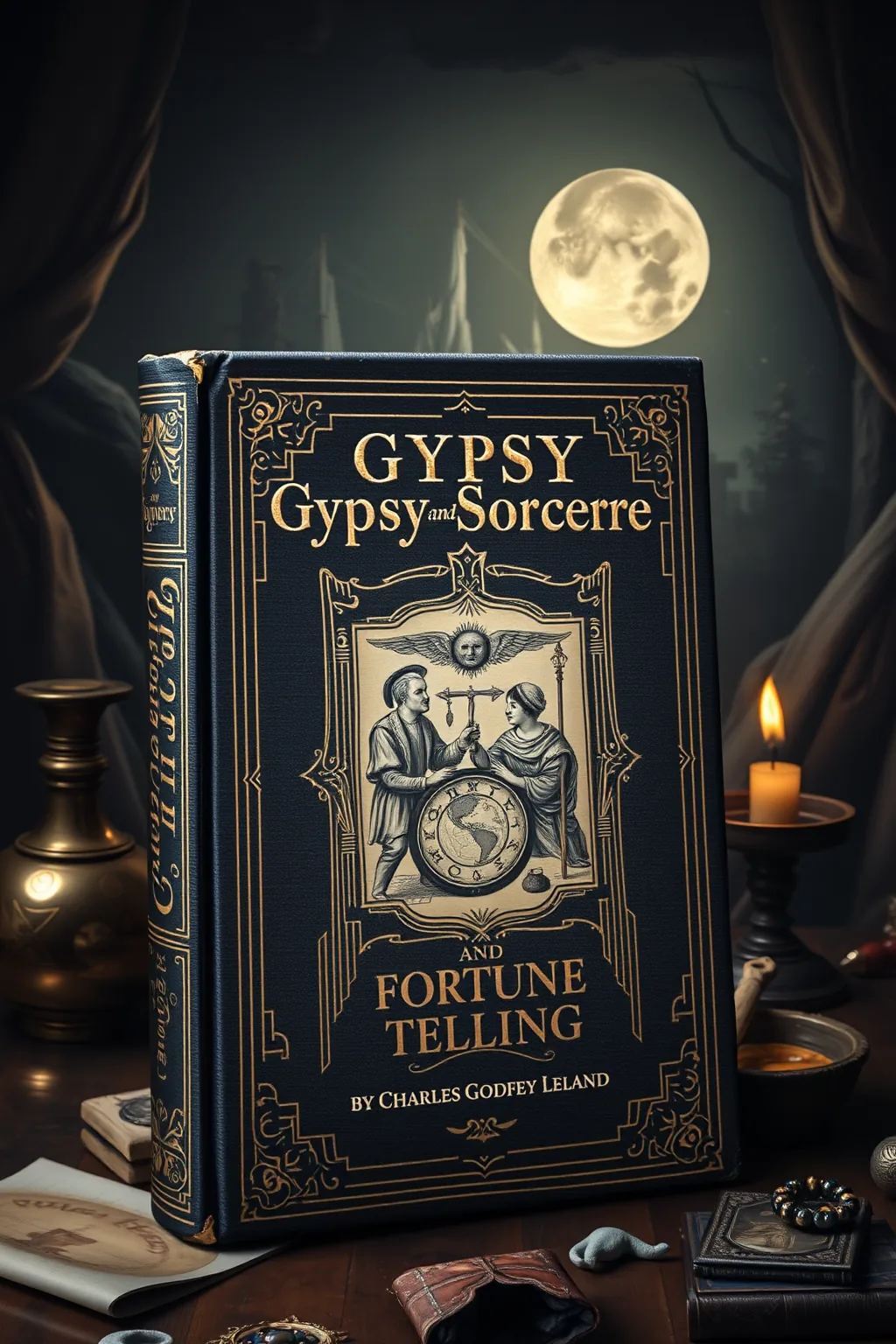
Gypsy Sorcery and Fortune Telling
 78
78

Gypsy Sorcery and Fortune Telling
Leland's extensive compilation of Romani magical practices, particularly his documentation of specific incantations and medical charms, offers a window into a world often shrouded in mystery and prejudice. The sheer volume of collected material, drawn from both obscure texts and personal experience, is impressive. However, the work is not without its limitations; Leland's Victorian perspective occasionally colors his descriptions, framing Romani culture through an ethnographic lens that, while informative for its time, can feel paternalistic to a modern reader. The section detailing various methods of fortune-telling, for instance, is particularly illuminating in its breadth, showcasing a variety of divination techniques. Despite these dated elements, *Gypsy Sorcery and Fortune Telling* remains a valuable, if complex, resource for understanding historical folk magic. It serves as a vital, albeit sometimes flawed, primary source.
📝 Description
78
Charles Godfrey Leland published *Gypsy Sorcery and Fortune Telling* in 1891.
Charles Godfrey Leland's 1891 book provides an ethnographic account of Romani folk magic and divination. He meticulously details customs, incantations, healing charms, and stories collected from Romani communities through observation and research. The work aimed to record sorcery, love philters, and fortune-telling methods as living traditions, not just historical notes. It is a significant source for understanding Romani cultural practices from a Victorian perspective. Leland's research offers a window into how these traditions were perceived and documented by outsiders during his time.
Published in 1891, this work emerged during a period of heightened interest in folklore and occult studies. While figures like Helena Blavatsky explored Eastern mysticism, Leland focused on Western European Romani culture. His research contributes to the broader Victorian fascination with 'hidden knowledge' and marginalized spiritual traditions. The book reflects an early attempt to document and categorize folk magic within an ethnographic framework.
💡 Why Read This Book?
• Understand specific Romani divination techniques documented before 1900, offering a historical contrast to modern methods. • Learn about traditional Romani medical magic and herbalism, providing practical historical applications of folk healing. • Explore authentic incantations and charms for love and protection, directly sourced from the oral traditions Leland recorded in the late 19th century.
⭐ Reader Reviews
Honest opinions from readers who have explored this book.
❓ Frequently Asked Questions
What is the primary focus of Charles Godfrey Leland's *Gypsy Sorcery and Fortune Telling*?
The book primarily focuses on documenting the customs, rituals, and magical practices of Romani people, including fortune-telling, medical charms, love philters, and sorcery, based on Leland's research and observations from the late 19th century.
When was *Gypsy Sorcery and Fortune Telling* first published?
The original publication date for *Gypsy Sorcery and Fortune Telling* by Charles Godfrey Leland was 1891.
What types of fortune-telling methods are discussed in the book?
The book details various Romani fortune-telling practices, such as palmistry, crystal gazing, interpreting dreams, and reading omens, illustrating the diverse ways individuals sought to divine the future.
Does the book contain actual spells or incantations?
Yes, *Gypsy Sorcery and Fortune Telling* includes numerous examples of incantations, spells, and magical formulas used by Romani people for purposes ranging from healing to protection and love.
Is Charles Godfrey Leland considered a reliable source for Romani culture?
Leland was a dedicated folklorist and ethnographer for his time, gathering extensive material. However, his work reflects 19th-century perspectives, and modern scholarship advises critical engagement with his interpretations of Romani culture.
Where can I find *Gypsy Sorcery and Fortune Telling*?
As a work from 1891, *Gypsy Sorcery and Fortune Telling* is in the public domain and is often available through online archives and digital libraries, as well as in print editions.
🔮 Key Themes & Symbolism
Romani Divination
The work meticulously catalogues the diverse methods Romani communities historically employed for fortune-telling. This includes detailed accounts of palmistry, interpreting signs and omens in nature, scrying, and other techniques used to gain insight into the future. Leland presents these not as mere superstition but as integral aspects of Romani cultural practice, reflecting a deep engagement with understanding fate and causality.
Folk Healing and Medical Magic
A significant portion of Leland's research is dedicated to the 'witch-doctoring' and medical magic of the Romani people. He documents specific herbal remedies, healing rituals, and protective charms used to ward off illness or treat ailments. These passages highlight the intersection of spiritual belief and practical health management within the community, showcasing a sophisticated, albeit non-Western, system of folk medicine.
Sorcery and Enchantment
Beyond divination and healing, the book studies broader aspects of sorcery, including spells for love, protection, and even curses. Leland provides examples of incantations and the magical objects or substances believed to be effective in these practices. This theme underscores the Romani understanding of magic as a force that could actively influence personal relationships and social dynamics.
Oral Tradition and Anecdotes
Leland emphasizes the importance of oral transmission in preserving Romani magical knowledge. He intersperses his ethnographic observations with numerous anecdotes and tales, illustrating the stories and beliefs that accompanied these practices. This approach highlights the narrative dimension of magic and its embeddedness within the lived experience of the Romani people.
💬 Memorable Quotes
Direct passages from the work, attributed to the author.
“The work contains a collection of the customs, usages, and ceremonies current among gypsies, as regards fortune-telling, witch-doctoring, love-philtering, and other sorcery.”
— This statement clearly outlines the book's scope, positioning it as a comprehensive ethnographic survey of Romani magical and spiritual practices prevalent in the late 19th century.
“Illustrated by Numerous Incantations, Specimens of Medical Magic, Anecdotes and Tales.”
— This descriptive phrase from the subtitle promises a practical and anecdotal approach, indicating that the reader will find not just theoretical discussion but concrete examples of spells, charms, and stories.
“Taken either from works as yet very little known to the English reader or from personal experiences.”
— Leland asserts the unique value of his research, suggesting he drew upon obscure sources and direct fieldwork to present information not readily available to the English-speaking public of his era.
“Within a very few years, since Ethnology and A...”
— This fragment points to the burgeoning academic field of ethnology during Leland's time, indicating his work was part of a broader scientific and scholarly interest in understanding diverse human cultures.
💡 Key Ideas
Editorial paraphrase of the work's core concepts — not direct quotes.
His work contains a collection of the customs, usages, and ceremonies current among gypsies...
This paraphrased concept emphasizes the book's function as an archive of Romani cultural practices, focusing on the documented rituals and traditions rather than abstract theory.
🌙 Esoteric Significance
Tradition
Leland's work doesn't fit neatly into a single established esoteric lineage like Hermeticism or Kabbalah. Instead, it represents a significant contribution to the study of folk magic and indigenous spiritual practices, often termed 'traditional witchcraft' or 'hedge magic'. It bridges the gap between academic ethnography and occult interest, documenting practices that predate and exist outside formal esoteric orders, drawing on Romani cultural heritage.
Symbolism
The book implicitly engages with symbols of nature, such as herbs used in medical magic and divination, representing life, healing, and connection to the earth. Animal imagery, often present in Romani folklore, likely carries symbolic weight related to intuition, protection, or spirit guides. The very act of 'fortune telling' can be seen as symbolic of humanity's desire to understand and navigate destiny, using various tools as conduits for insight.
Modern Relevance
Contemporary practitioners of traditional witchcraft, folk magic, and Romani-inspired spirituality draw upon Leland's work as a historical reference. His documentation of incantations and charms informs modern spellcraft and ritual design. Scholars of Romani studies and comparative religion continue to consult his research, albeit critically, for insights into historical cultural practices and beliefs.
👥 Who Should Read This Book
• Folklorists and cultural anthropologists seeking primary source material on 19th-century Romani beliefs and practices. • Students of traditional witchcraft and historical magic interested in divination methods and spellcraft outside formal occult orders. • Researchers of comparative religion and mythology looking to understand the intersection of spirituality and daily life in European folk traditions.
📜 Historical Context
Charles Godfrey Leland's *Gypsy Sorcery and Fortune Telling*, published in 1891, emerged from a fertile period of Victorian occultism and anthropological inquiry. The late 19th century witnessed a surge of interest in folklore, esoteric traditions, and the perceived 'hidden wisdom' of marginalized cultures. Leland’s work coincided with the broader academic legitimization of ethnology, though his approach was often more akin to enthusiastic amateur collection than rigorous scientific method. He operated in a milieu where figures like Arthur Conan Doyle were exploring spiritualism, and Helena Blavatsky's Theosophical Society was gaining international traction, though Leland's focus remained distinctly on European Romani traditions. His research sought to document practices that were rapidly changing or disappearing due to industrialization and societal pressures. While not explicitly censored, such works often faced skepticism from mainstream academia, which was still solidifying its disciplinary boundaries.
📔 Journal Prompts
Romani medical magic and its documented remedies.
The diverse methods of Romani fortune-telling presented by Leland.
Personal reflections on the concept of 'witch-doctoring' as depicted.
The role of oral tradition in preserving Romani sorcery.
Analysis of love philter incantations and their historical context.
🗂️ Glossary
Romani
An umbrella term for the diverse ethnic groups who originated in the Indian subcontinent and are traditionally known in English as 'Gypsies'. They have distinct languages, cultures, and traditions across the globe.
Sorcery
The practice of magic, especially black magic; the use of spells, enchantments, and incantations to achieve supernatural effects or influence events.
Fortune Telling
The practice of predicting future or revealing truths by interpreting omens, signs, or through supernatural means, such as palmistry or divination.
Medical Magic
The use of magical beliefs, rituals, and charms, often alongside herbal remedies, to treat illness, promote healing, and protect health.
Love Philter
A potion or charm believed to arouse romantic or sexual desire in the person who consumes or is affected by it.
Incantation
A series of words said in a ritual or spell, believed to have magical power.
Ethnology
The branch of anthropology that deals with the comparative study of ethnic groups, their origins, and their cultures.