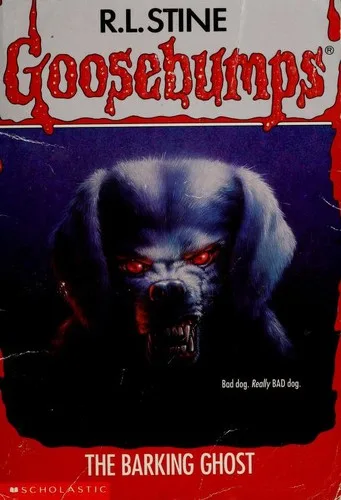
Goosebumps - The Barking Ghost
 80
80

Goosebumps - The Barking Ghost
The Barking Ghost operates within the established parameters of R.L. Stine's "Goosebumps" series, delivering a familiar blend of childhood dread and spectral mischief. The central conceit, involving a spectral canine presence, is effectively unsettling for its target audience. Stine’s strength lies in his ability to imbue everyday settings with a palpable sense of unease, a skill evident when the familiar suburban landscape becomes a stage for the uncanny. However, the narrative’s predictability, a hallmark of the series, might leave older readers yearning for greater narrative complexity. The resolution, while satisfying the genre's conventions, offers little in the way of surprise. Ultimately, The Barking Ghost serves as a competent, if unexceptional, entry in a well-trodden genre, excelling at its intended purpose of mild frights.
📝 Description
80
Robert Lawrence Stine's 1995 novel, The Barking Ghost, centers on adolescent fears and spectral presences.
The Barking Ghost, published in 1995, follows young protagonists as they encounter supernatural events triggered by ordinary circumstances. The narrative builds tension through escalating suspense and surprising plot twists, characteristic of children's horror fiction from that period. Stine utilizes everyday objects and familiar settings as the source of uncanny experiences, blurring the lines between the mundane and the spectral. This approach aims to create unease by making the familiar suddenly strange and threatening.
The book appeals to readers who enjoy suspenseful stories for young adults that emphasize atmosphere over graphic violence. Those familiar with R.L. Stine's previous work will recognize his signature style of blending everyday life with chilling, otherworldly occurrences. The story's structure is designed to keep young readers engaged through a series of unexpected reveals and a focus on the characters' reactions to unsettling phenomena.
While not overtly esoteric, The Barking Ghost taps into a long tradition of folklore and ghost stories that explore the unsettling nature of the familiar. The concept of the uncanny, where everyday items or situations become sources of dread, echoes themes found in cautionary tales and superstitions passed down through generations. This narrative uses common childhood fears, such as pets behaving strangely or household objects seeming to possess a life of their own, to manifest spectral disturbances, reflecting a societal undercurrent of anxieties about hidden dangers within the domestic sphere.
💡 Why Read This Book?
• Experience the specific narrative tension R.L. Stine builds around the concept of a "barking ghost," a spectral entity that taps into primal fears of the unseen. • Understand the appeal of 1990s young adult horror by examining how "The Barking Ghost" utilizes familiar settings and characters to create suspense. • Appreciate the genre conventions of escalating unease, exemplified by the book's pacing and the eventual confrontation with the titular spectral presence.
⭐ Reader Reviews
Honest opinions from readers who have explored this book.
❓ Frequently Asked Questions
What is the main plot of Goosebumps: The Barking Ghost?
The story follows a boy named Cooper who adopts a dog that seems to be a ghost. He and his friend Lizzie investigate the dog's origins and the strange occurrences surrounding it, leading to encounters with spectral figures.
Who is the author of The Barking Ghost?
The author is Robert Lawrence Stine, a prolific writer known for his "Goosebumps" series and other popular children's horror novels.
When was Goosebumps: The Barking Ghost first published?
Goosebumps: The Barking Ghost was first published in 1995, as part of the original "Goosebumps" series.
What are some common themes in The Barking Ghost?
Common themes include the uncanny, the fear of the unknown, the disruption of normalcy, and the confrontation with supernatural entities that blur the lines between reality and illusion.
Is The Barking Ghost suitable for young readers?
Yes, "The Barking Ghost" is written for a young adult audience and features suspenseful rather than graphic horror, making it appropriate for middle-grade and early teen readers.
What makes the "Goosebumps" series popular?
The series' popularity stems from its accessible language, relatable young protagonists, suspenseful plots, and mild scares that engage readers without being overly terrifying.
🔮 Key Themes & Symbolism
The Unsettling Familiar
The narrative thrives on transforming the ordinary into the eerie. A seemingly normal pet, a dog adopted from a shelter, becomes the focal point of supernatural disturbances. This reflects a core tenet of uncanny literature: the intrusion of the strange into the safe, domestic sphere. The book plays on the reader's expectation of comfort associated with pets, subverting it by making the canine companion a conduit for spectral activity. This subversion creates a disquieting atmosphere where even the most familiar relationships and environments can harbor hidden dread.
Spectral Manifestations
The "barking ghost" itself is a manifestation of spectral energy, blurring the lines between life and afterlife. The book explores how the unseen can impinge upon the tangible world, causing inexplicable events and generating fear. This concept aligns with folkloric traditions of hauntings and spectral apparitions, often tied to unresolved issues or specific locations. The narrative presents these manifestations not as abstract forces but as tangible, albeit ethereal, presences that directly interact with the protagonists, demanding their attention and courage.
Adolescent Confrontation
At its heart, the book chronicles an adolescent's journey through fear and uncertainty. The protagonists, Cooper and Lizzie, must confront inexplicable phenomena and make decisions under duress. This mirrors real-world challenges of growing up, where individuals often face situations beyond their immediate understanding and must develop resilience. The narrative emphasizes the protagonist's agency in seeking answers and confronting the spectral threat, portraying a coming-of-age arc through the lens of supernatural horror.
💬 Memorable Quotes
Direct passages from the work, attributed to the author.
“The dog's growl was a low rumble, like thunder far away.”
— This simile effectively builds suspense, comparing the dog's sound to an ominous, distant threat that foreshadows escalating danger and the uncanny nature of the creature.
“It looked like a ghost dog, a shadowy, see-through dog.”
— This direct description establishes the spectral nature of the canine, highlighting its ethereal and unsettling appearance, a key element in the book's supernatural premise.
“Lizzie shrieked. 'It's the ghost dog!'”
— This exclamation confirms the characters' realization and fear of the supernatural presence, marking an important moment of acknowledgment and escalating the narrative tension.
“Cooper felt a chill crawl up his spine.”
— This common idiom conveys a visceral reaction to fear and the supernatural, illustrating the physical manifestation of dread experienced by the protagonist upon encountering the uncanny.
“The house was silent, but the barking continued.”
— This highlights the unnatural auditory phenomenon, suggesting the source of the barking transcends normal physical limitations and exists in a spectral realm.
🌙 Esoteric Significance
Tradition
While not overtly part of a specific esoteric tradition like Hermeticism or Gnosticism, "The Barking Ghost" engages with archetypal themes common in occult folklore and animism. The concept of a spectral animal companion, or a spirit bound to a place or task, echoes across various spiritual traditions, including shamanism and certain Western magical practices involving familiars. The narrative taps into a primal fear of disembodied entities and the uncanny crossing of thresholds, concepts explored in discussions of the 'astral plane' or 'ethereal realms' within esoteric literature.
Symbolism
The spectral canine functions as a potent symbol. In many cultures, dogs represent loyalty, protection, or guidance, but a ghost dog subverts this, symbolizing a corrupted or restless spirit, or a guardian that has transcended the mortal coil and operates on a different plane. Its "barking" can be interpreted as a warning or a cry from beyond the veil, an auditory manifestation of spiritual unrest. The suburban setting, typically a symbol of safety and order, becomes a stage for this spectral disruption, symbolizing the fragility of perceived reality when confronted by the unknown.
Modern Relevance
The enduring appeal of "The Barking Ghost" and similar narratives reflects a continued modern fascination with the supernatural and the uncanny, particularly as explored in contemporary young adult fiction and media. Themes of spectral presences and the blurring of reality resonate with discussions in modern spirituality and paranormal investigation, where the nature of consciousness and post-mortem existence are debated. The book’s straightforward approach to the uncanny can serve as an accessible entry point for younger readers exploring themes of fear, perception, and the possibility of realities beyond the mundane.
👥 Who Should Read This Book
• Young readers aged 8-12 seeking suspenseful, age-appropriate horror stories that introduce themes of the supernatural. • Fans of R.L. Stine's "Goosebumps" series looking to complete their collection or revisit familiar narrative styles. • Educators and parents interested in exploring classic examples of 1990s children's literature that engage with themes of fear and the uncanny.
📜 Historical Context
Published in 1995, "The Barking Ghost" emerged during the zenith of the "Goosebumps" phenomenon, a series that redefined young adult horror in the 1990s. R.L. Stine’s prolific output, often featuring weekly releases, capitalized on a burgeoning market for accessible, chilling fiction for pre-teens and adolescents. This era saw a significant shift in children's literature, with publishers actively seeking titles that offered thrills and suspense. Stine’s work competed with, yet largely dominated, a landscape that also included other horror series and standalone novels. The widespread success of "Goosebumps" was met with critical discussion regarding its literary merit versus its commercial impact, with some educators and parents questioning its influence, while legions of young readers embraced its formula. Its popularity contributed to a broader cultural fascination with the supernatural in media aimed at younger demographics.
📔 Journal Prompts
The spectral canine's persistent barking and Cooper's reaction.
The uncanny transformation of the familiar suburban setting.
Lizzie's role as a skeptical but ultimately involved friend.
The narrative's resolution of the ghost dog's haunting.
Cooper's evolving understanding of the supernatural.
🗂️ Glossary
Uncanny
The quality of being strangely familiar yet unsettling or frightening; the eerie sensation evoked when the familiar becomes strange.
Spectral
Of or like a ghost; relating to or of the nature of a specter or phantom; ethereal or ghostly.
Familiars
In folklore and witchcraft, a supernatural entity, often an animal, believed to assist a witch or other practitioner, sometimes acting as a guardian or messenger.
Haunting
The persistent presence of a ghost or spectral entity in a place, often associated with unresolved issues or a strong emotional imprint.
Archetype
A very typical example of a certain person or thing; a recurring symbol or motif in literature and mythology that represents universal patterns of human nature.
Subversion
Undermining the power and authority of an established system or institution; in narrative, twisting or inverting expected tropes or conventions.
Protagonist
The leading character or one of the major characters in a drama, movie, novel, or other fictional text.
🔮 Readers Also Liked
Browse all →







More by Robert Lawrence Stine
All books →





More Free Occult Philosophy Books
View all →