Giddins E The Anit Masonic Almanac, For The Year Of The Christian Era 1828

 74
74

Giddins E The Anit Masonic Almanac, For The Year Of The Christian Era 1828

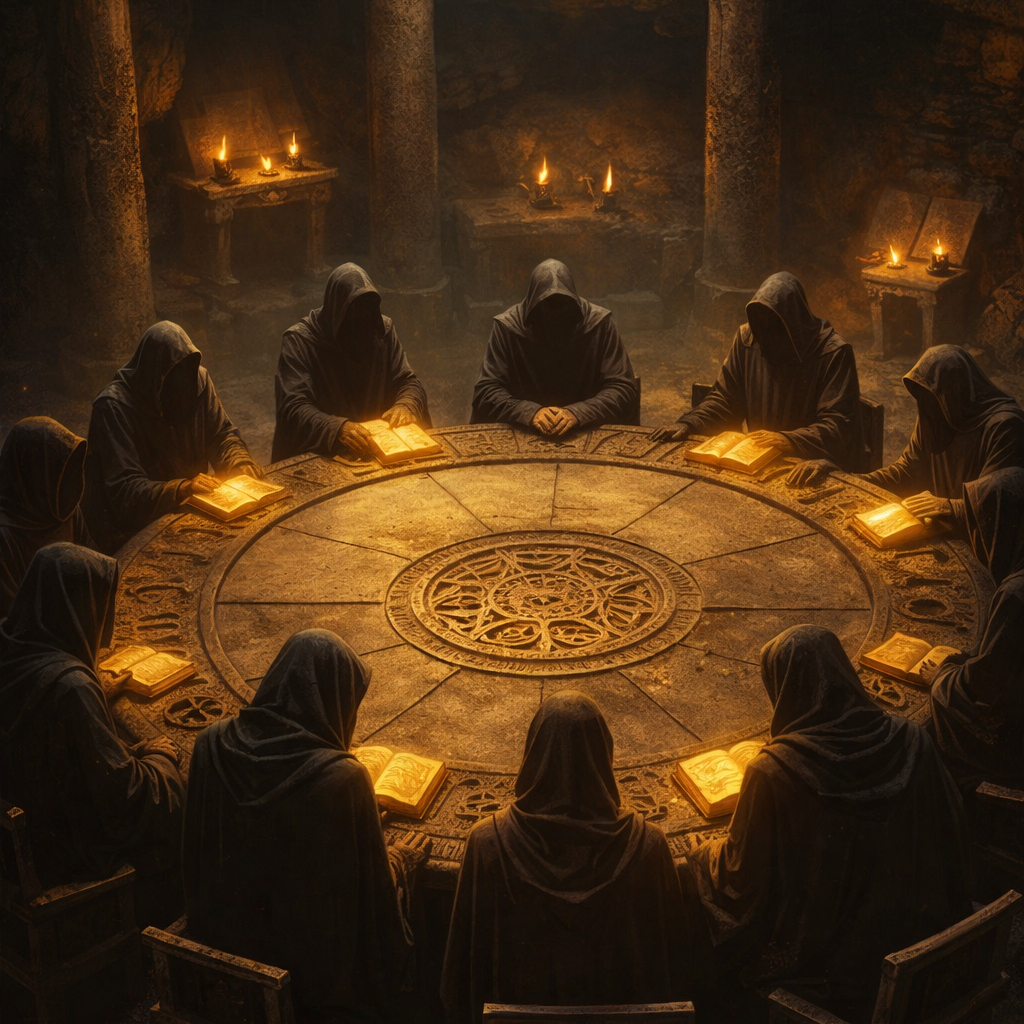

Review by Evander Ashcroft (Alchemy & Hermeticism Editor) — 'The Anti-Masonic Almanac' for 1828 is a fascinating artifact, offering a provocative counter-narrative to the prevailing Masonic influence of its time. While the authorship remains shrouded in mystery, the text itself pulses with an alchemical blend of calendrical utility and esoteric critique. Its strength lies in its subtle yet persistent invocation of hidden meanings, encouraging readers to look beyond the mundane and perceive the symbolic underpinnings of societal structures. This work is ideally suited for the dedicated researcher of anti-Masonic lore, the student of historical occultism, and anyone intrigued by the shadow dialogues of secret societies.
📝 Description
74
Published for the Christian Era 1828, 'The Anti-Masonic Almanac' is an enigmatic collection by E. Giddins.
This almanac from 1828 contains more than simple calendrical information. It includes symbols, allegories, and references to esoteric orders active during that period. The text goes beyond basic astronomical notes and seasonal forecasts.
It is aimed at those interested in hidden knowledge, practitioners of older traditions, and students of secret societies. The almanac provides a view into the cosmology of its time. It seeks to reveal forgotten wisdom and the symbolic language used by certain groups. The work invites reflection on the connection between celestial events and earthly affairs.
This almanac fits within a tradition of popular esoteric publications that flourished in the early 19th century. Such works often blended practical information like calendars and almanacs with occult symbolism, astrological interpretations, and critiques or discussions of secret societies. They served as accessible entry points for individuals curious about hidden knowledge, often framing complex ideas in a format familiar to the general public.
💡 Why Read This Book?
Uncover the esoteric counter-narratives of the early 19th century. This almanac is a vital resource for understanding the hidden dialogues and symbolic critiques surrounding Freemasonry. Ideal for scholars of secret societies, practitioners of esotericism, and curious minds seeking to decipher veiled knowledge and historical occult currents.
⭐ Reader Reviews
Honest opinions from readers who have explored this book.
❓ Frequently Asked Questions
What is the primary purpose of 'The Anti-Masonic Almanac, 1828'?
Beyond its calendrical functions, its primary purpose is to offer a critical, and likely symbolic, perspective on Freemasonry, revealing veiled criticisms and esoteric interpretations of its influence on society.
Who is E. Giddins, the purported author?
The identity of E. Giddins remains unknown. This anonymity likely serves to further the mysterious and clandestine nature of the publication, adding to its esoteric allure.
What kind of esoteric content can be found within?
Readers can expect symbolic interpretations, veiled allegories, critiques of Masonic rituals and symbols, and potentially astrological or numerological insights relevant to the era's occult thought.
Is this book suitable for beginners in esotericism?
While intriguing, it may require some prior knowledge of historical occultism and secret society discourse to fully grasp its nuances and symbolic language.
How does this almanac differ from standard almanacs of the period?
Unlike conventional almanacs focused solely on practical information, this work is imbued with a critical agenda and a rich layer of esoteric symbolism, offering a unique perspective on societal forces.
🔮 Key Themes & Symbolism
The Shadow of the Square and Compass
This theme looks at the almanac's implicit critique of Freemasonry, not as a simple historical exposé, but as an exploration of the perceived esoteric influence and symbolic dominance of Masonic orders. It examines how the almanac attempts to deconstruct or reframe Masonic symbolism, potentially offering alternative interpretations or exposing what it suggests are hidden motives. This provides a lens through which to view the societal anxieties and intellectual debates surrounding secret societies in the early 19th century, highlighting the power of symbolism in shaping public perception and clandestine discourse.
Calendrical Cipher and Celestial Resonance
Beyond mere temporal markers, the almanac imbues its dates and astrological notations with esoteric significance. This theme investigates how the celestial cycles and seasonal rhythms are not just observed but interpreted through an occult framework, potentially revealing hidden patterns or divine order. It explores the belief that earthly events, societal shifts, and even the machinations of secret societies are influenced by cosmic alignments, transforming the almanac into a tool for divinatory insight and a evidence of the interconnectedness of the macrocosm and microcosm.
The Language of Veiled Truths
This theme focuses on the almanac's use of allegory, symbolism, and cryptic language as a means of conveying profound truths while simultaneously obscuring them from the uninitiated. It examines how the author employs a sophisticated semiotic system to communicate ideas about power, hidden knowledge, and spiritual evolution. The almanac becomes a puzzle box, inviting the reader to engage in active interpretation and to cultivate a discerning eye for the subtler meanings embedded within seemingly ordinary observations, fostering a deeper understanding of esoteric communication strategies.
💬 Memorable Quotes
Direct passages from the work, attributed to the author.
“Where shadows lengthen, wisdom may be found.”
— This aphorism suggests that obscurity and hiddenness are not necessarily negative, but can be fertile ground for clear insights and esoteric knowledge.
“The stars whisper secrets the earth forgets.”
— This evocative line implies a connection between celestial bodies and forgotten or suppressed earthly wisdom, highlighting the importance of looking beyond the mundane.
“Each dawn, a veil is drawn anew.”
— This suggests the constant renewal of mystery and the ongoing need for vigilance and perception to uncover deeper truths.
“The compass points beyond the known.”
— This metaphor implies that true guidance or understanding transcends conventional boundaries and established knowledge, urging exploration into the unknown.
💡 Key Ideas
Editorial paraphrase of the work's core concepts — not direct quotes.
A patterned sky, a hidden hand.
This quote links cosmic order (patterned sky) to unseen forces or influences (hidden hand), hinting at a guiding principle behind events, possibly related to secret societies.
🌙 Esoteric Significance
Tradition
While not explicitly tied to a single codified tradition, 'The Anti-Masonic Almanac' draws heavily from Western esoteric currents, particularly those critical of or alternative to mainstream Masonic symbolism. Its veiled language and symbolic critiques echo Hermeticism, Rosicrucianism, and early forms of conspiracy literature, all of which engaged with hidden knowledge and the perceived spiritual architecture of the world.
Symbolism
The almanac is rich in implied symbolism. The 'Anti-Masonic' stance itself acts as a symbolic counterpoint, challenging the established iconography of the Square and Compasses. Expect interpretations of celestial bodies, seasonal shifts, and potentially coded references to alchemical processes or Kabbalistic concepts, all woven into a critique of perceived Masonic influence and a revelation of alternative esoteric pathways.
Modern Relevance
In an age still fascinated by conspiracy theories, secret societies, and the search for hidden meanings, this almanac retains a compelling relevance. It offers a historical perspective on how esoteric ideas and critiques of power structures were disseminated. For contemporary seekers of occult knowledge, it provides a unique window into the symbolic language and intellectual debates of a bygone era, encouraging critical thinking about hidden influences and the nature of esoteric discourse.
👥 Who Should Read This Book
This almanac is a treasure for the dedicated scholar of Western esotericism, particularly those focusing on the history of secret societies and anti-Masonic movements. It will resonate deeply with practitioners of occult arts seeking to understand historical symbolic languages and counter-narratives. The curious seeker of hidden knowledge will find it an intriguing puzzle, while those interested in the cultural and intellectual history of the 19th century will appreciate its unique perspective on societal anxieties and veiled discourse. Beginners might find it challenging but rewarding with dedicated study.
📜 Historical Context
The year 1828 falls within a period of significant societal and intellectual flux in the Western world. The Enlightenment's emphasis on reason coexisted with a burgeoning Romantic movement that often embraced mysticism, the supernatural, and a fascination with the past. Freemasonry was at its zenith of influence, a powerful and pervasive social and political force, which naturally engendered both admiration and suspicion. Anti-Masonic sentiment was a notable undercurrent, fueled by fears of secrecy, alleged conspiracies, and the perceived exclusivity of the fraternity. This almanac emerges from this fertile ground of intellectual ferment and societal unease, serving as a voice within the broader discourse on secret societies, power structures, and the search for hidden truths in an era grappling with both progress and tradition.
📔 Journal Prompts
Reflect on a time you felt knowledge was deliberately hidden from you. How did you attempt to uncover it?
What symbols in your daily life do you suspect hold deeper, unacknowledged meanings?
Consider the concept of 'counter-narratives.' How can understanding opposing viewpoints enrich your comprehension of a subject?
If the stars could whisper secrets, what questions would you ask them about the hidden forces shaping our world?
How does the idea of 'veiled truths' influence your perception of authority and established knowledge?
🗂️ Glossary
Esotericism
The practice of religious or spiritual disciplines in private, often involving secret teachings and practices accessible only to a select group of initiates.
Allegory
A symbolic narrative in which characters and events represent abstract ideas or principles, used to convey a hidden meaning, often moral or political.
Hermeticism
A religious, philosophical, and esoteric tradition based primarily upon writings attributed to Hermes Trismegistus, emphasizing occult sciences and divine knowledge.
Macrocosm
The universe considered as a complex, ordered whole; often contrasted with the microcosm (humanity or the individual).
Cipher
A secret or disguised way of writing; a code. In this context, it implies a text with hidden meanings to be deciphered.
This book appears in 2 collections
🔮 Readers Also Liked
Browse all →






From the “Secret Societies” Collection
View all →



More Free Freemasonry & Secret Societies Books
View all →