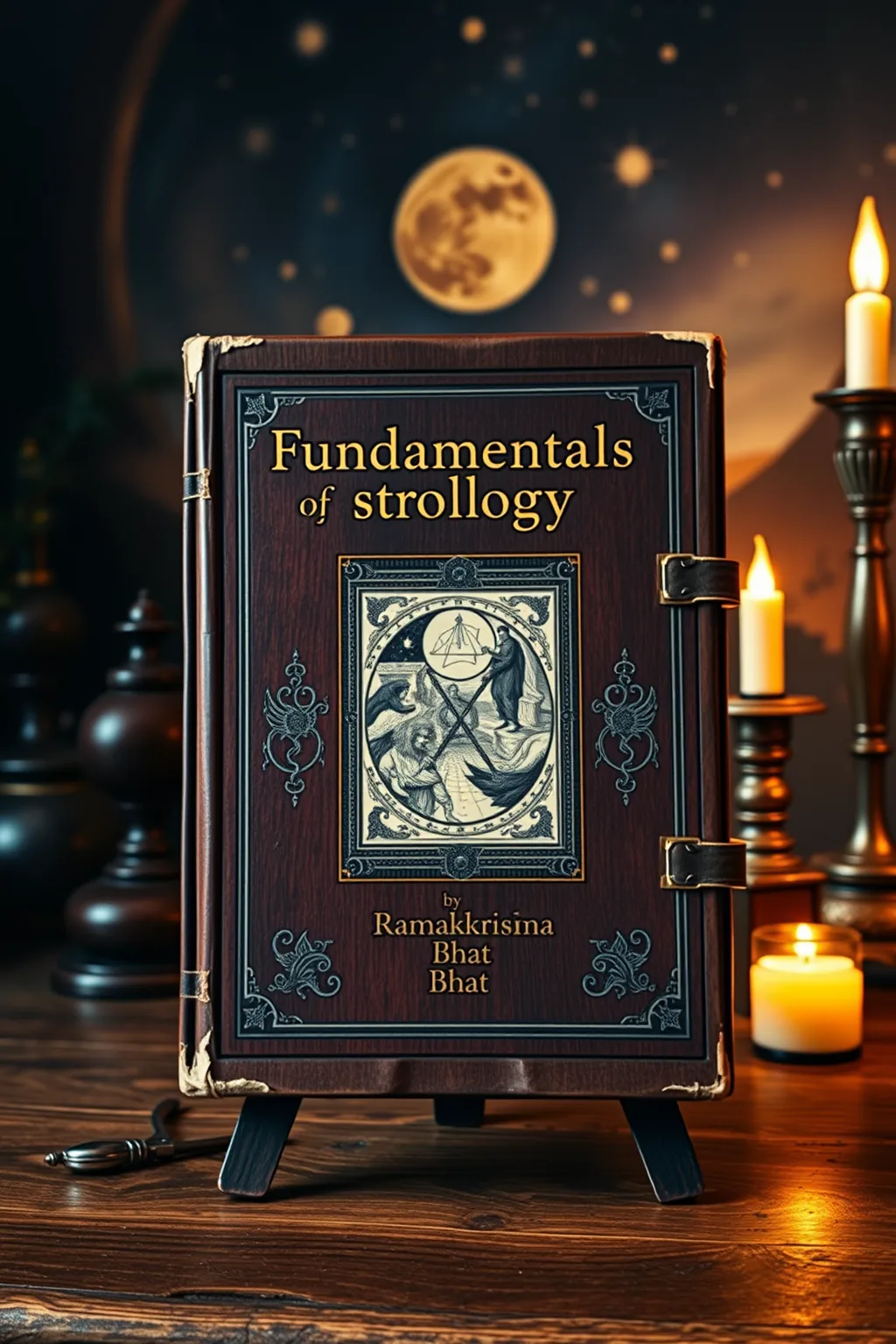
Fundamentals of astrology
 64
64

Fundamentals of astrology


Review by Isolde Whitaker (Sacred Texts Editor) — 'Fundamentals of Astrology' by M. Ramakrishna Bhat is an indispensable resource for those delving into the mystical sciences. Bhat's approach is both comprehensive and accessible, making complex astrological concepts understandable to the uninitiated while providing deep esoteric insights for seasoned practitioners. The book's strength lies in its ability to demystify astrology without diminishing its sacred allure, offering readers a pathway to spiritual growth and self-awareness. This work is particularly suited for spiritual seekers, scholars of the occult, and practitioners of astrology who wish to deepen their understanding of the cosmos and its influence on human life.
📝 Description
64
M. Ramakrishna Bhat's 'Fundamentals of Astrology' was published in 1982.
M. Ramakrishna Bhat's 'Fundamentals of Astrology' presents the core principles of Jyotisha, the Vedic system of astrology. The work details planetary significations, house meanings, and the construction and interpretation of natal charts. Bhat explains the use of various astrological divisions and dasa systems, which are essential for predictive astrology in the Vedic tradition. The book also covers topics such as transits and their effects, the interpretation of yogas (planetary combinations), and remedial measures. It aims to provide a comprehensive understanding of astrological concepts as understood within the Indian philosophical framework.
The text emphasizes the interconnectedness of celestial events and earthly occurrences, grounding astrological practice in a cosmological view. Bhat's approach combines technical instruction with a philosophical perspective on the role of astrology in understanding destiny and karma. The book is structured to build knowledge systematically, starting with basic elements and progressing to more complex interpretive techniques. It is written for students who wish to gain a solid grasp of the astrological science as it has been practiced and studied in India for centuries.
This book is situated within the tradition of Jyotisha, one of the six Vedangas, or auxiliary disciplines, of Vedic learning. Its practice is deeply intertwined with Hindu cosmology and philosophy, particularly the concepts of karma and rebirth. Jyotisha is not merely a system of prediction but a spiritual science understood to reveal the divine order and assist individuals in aligning with cosmic rhythms. Bhat's work upholds this view, presenting astrological knowledge as a means to understand one's destiny and spiritual path within the broader framework of Indian esoteric thought.
💡 Why Read This Book?
Read 'Fundamentals of Astrology' to gain a comprehensive understanding of the celestial arts. This book is ideal for seekers of hidden knowledge, scholars of mystical traditions, and practitioners looking to deepen their astrological practice. Bhat's clear and insightful explanations make this an essential guide for anyone interested in the esoteric sciences.
⭐ Reader Reviews
Honest opinions from readers who have explored this book.
❓ Frequently Asked Questions
Is this book suitable for beginners in astrology?
Absolutely. 'Fundamentals of Astrology' is designed to be accessible to newcomers, offering clear explanations and foundational knowledge.
What makes this book different from other astrology texts?
Bhat's approach combines deep esoteric insights with practical knowledge, making it a unique and comprehensive guide.
Does the book cover modern astrological practices?
While rooted in traditional astrology, the book also discusses modern applications and their relevance.
Is there a focus on any specific astrological tradition?
The book provides a broad overview of astrological principles, drawing from various traditions to offer a holistic understanding.
How does this book help in spiritual growth?
By exploring the deeper symbolism and philosophical significance of astrology, readers can gain insights into their spiritual journey.
🔮 Key Themes & Symbolism
Celestial Influence
Explore how the movements of celestial bodies influence human life and destiny. This theme examines the esoteric belief that the cosmos is a living, interconnected entity, reflecting and affecting our individual journeys.
Symbolism and Mythology
Discover the detailed symbolism and mythology embedded in astrological practices. This theme reveals how ancient myths and symbols are woven into the fabric of astrology, providing a deeper understanding of its mystical origins.
Spiritual Enlightenment
Understand how astrology can serve as a tool for spiritual enlightenment. This theme examines the philosophical and esoteric dimensions of astrology, showing how it can guide individuals on their path to self-discovery and spiritual growth.
💬 Memorable Quotes
Direct passages from the work, attributed to the author.
“Astrology is the language of the cosmos, speaking to those who listen.”
— Bhat emphasizes the mystical connection between the cosmos and human understanding.
“Each planet holds a secret, waiting to be unveiled by the seeker.”
— This highlights the hidden knowledge that astrology reveals to the initiated.
“The zodiac is a map of the soul, guiding us through the labyrinth of existence.”
— The zodiac's symbolic significance is explored as a pathway to spiritual growth.
💡 Key Ideas
Editorial paraphrase of the work's core concepts — not direct quotes.
The stars are not just distant lights; they are the guardians of our destinies.
This quote underscores the esoteric belief in the celestial influence on human life.
In the dance of the planets, we find the rhythm of our own lives.
This quote illustrates the interconnectedness of celestial movements and human experiences.
🌙 Esoteric Significance
Tradition
'Fundamentals of Astrology' belongs to the Hermetic tradition, which emphasizes the interconnectedness of all things and the divine order of the universe. This tradition sees astrology as a sacred science, revealing the hidden wisdom of the cosmos.
Symbolism
Key symbols in the book include the zodiac signs, planets, and celestial bodies, each carrying profound meanings. The zodiac represents the archetypes of human experience, while planets symbolize different aspects of our psyche and destiny.
Modern Relevance
Today, 'Fundamentals of Astrology' remains relevant for modern practitioners who seek to integrate ancient wisdom with contemporary life. It is used by astrologers, spiritual seekers, and scholars to deepen their understanding of the celestial arts and their application in personal growth and spiritual enlightenment.
👥 Who Should Read This Book
Beginners will find 'Fundamentals of Astrology' an invaluable introduction to the celestial arts, with clear explanations and foundational knowledge. Scholars of the occult will appreciate its deep esoteric insights and historical context. Spiritual seekers will benefit from its philosophical significance and guidance on spiritual growth. Practitioners of astrology will find it a comprehensive resource for deepening their practice and understanding of the cosmos.
📜 Historical Context
Written in an era where astrology was both a science and a mystical art, 'Fundamentals of Astrology' by M. Ramakrishna Bhat captures the essence of ancient wisdom blended with modern insights. During its time, the book served as a bridge between traditional astrological practices and contemporary understanding, making it an important work in the field. Its influence can be seen in the way it has inspired both scholarly research and practical applications of astrology, contributing to the ongoing dialogue between esoteric knowledge and scientific inquiry.
📔 Journal Prompts
Reflect on a time when celestial events seemed to align with your personal experiences.
How do the symbols of the zodiac resonate with your understanding of human nature?
Consider the role of astrology in your spiritual journey and how it has influenced your self-discovery.
What insights have you gained from studying the movements of the planets?
Explore the interconnectedness of the cosmos and your own life through the lens of astrology.
🗂️ Glossary
Zodiac
The zodiac is a belt-shaped region of the sky that extends approximately 8 degrees north and south of the ecliptic, the apparent path of the Sun across the celestial sphere over the course of the year.
Ecliptic
The ecliptic is the apparent path of the Sun across the sky, as seen from Earth, over the course of a year.
Astrological Houses
Astrological houses are the twelve divisions of the sky that represent different areas of life, such as relationships, career, and personal growth.
Planetary Aspects
Planetary aspects refer to the angles formed between planets in the sky, which are believed to influence human experiences and destinies.
Celestial Bodies
Celestial bodies include the Sun, Moon, planets, and other objects in the sky that are studied in astrology for their influence on human life.
This book appears in 1 collection
🔮 Readers Also Liked
Browse all →









More by M. Ramakrishna Bhat
All books →


From the “Astrology” Collection
View all →









More Free Astrology & Cosmology Books
View all →