Franny and Zooey

 75
75

Franny and Zooey
Salinger's "Franny and Zooey" presents a concentrated study of spiritual exhaustion and the desperate search for authentic connection. The brilliance lies in its unflinching focus on the internal lives of its protagonists, particularly Zooey's extended, almost priestly, monologue in the latter half. This section, while dense, offers a powerful articulation of a particular brand of intellectual and spiritual discontent. However, the novel's almost hermetic focus on the Glass family, while its strength, can also feel exclusionary; the world outside their privileged, intellectual sphere is often rendered as an unconvincing caricature. The concept of the "Fat Lady" as a symbol of divine presence, while evocative, requires significant reader investment to fully appreciate. It's a demanding, yet rewarding, exploration of faith in crisis.
📝 Description
75
J. D. Salinger's Franny and Zooey collected two New Yorker stories in 1961.
Franny and Zooey, first published as separate stories in The New Yorker before their 1961 collection, centers on the Glass family, particularly the youngest siblings, Franny and Zooey. Through introspective dialogues and monologues, the narrative examines their spiritual disillusionment and existential unease. The stories confront themes of authenticity, religiosity, and the perceived superficiality of contemporary life.
This work appeals to readers drawn to character studies that examine the inner life and spiritual quests. It is especially suited for those who appreciate explorations of family relationships alongside philosophical and religious questioning. Individuals looking for literature that addresses faith, doubt, and the search for meaning in a secular society will find the characters' struggles relatable.
Published in 1961, the book appeared during a time of significant cultural change and intellectual exploration in America. The post-war era saw a growing interest in Eastern philosophies and various spiritual movements, often as a counterpoint to materialism and conformity. Salinger's focus on spiritual awakening and his critique of societal norms fit this broader cultural current, even as the intense focus on one unconventional family distinguished his approach.
The book touches on spiritual searching that resonated with a post-war American interest in Eastern philosophies and alternative spiritualities. This was partly a reaction against perceived materialism and societal conformity. Salinger's characters, particularly Zooey, engage with concepts that reflect this broader cultural shift toward questioning established norms and seeking deeper meaning outside conventional structures. The family's intense internal debates mirror an era when individuals looked to diverse traditions for answers to existential questions.
💡 Why Read This Book?
• You will gain a deeper understanding of the concept of spiritual disillusionment as explored through Franny's crisis, learning how external performance can clash with internal spiritual needs. • You will feel the weight of existential questioning through Zooey's extended dialogues, particularly his reflections on the "Fat Lady" as a representation of ultimate truth, offering a unique perspective on faith. • You will encounter Salinger's distinctive prose and character study in the context of 1961 America, understanding how the book reflected and engaged with contemporary anxieties about authenticity and meaning.
⭐ Reader Reviews
Honest opinions from readers who have explored this book.
❓ Frequently Asked Questions
What is the primary theme explored in J. D. Salinger's Franny and Zooey?
The primary theme is spiritual disillusionment and the search for authenticity, particularly among the Glass family members. The book examines existential angst and the conflict between genuine faith and superficial societal values, as seen in Franny's crisis.
Who are the main characters in Franny and Zooey?
The main characters are Franny and Zooey Glass, siblings from a highly intellectual and artistic family. The stories detail their individual struggles with faith, identity, and the perceived phoniness of the world around them.
When was Franny and Zooey first published?
Franny and Zooey was first published as a collection in 1961. The individual stories, "Franny" and "Zooey," had previously appeared in The New Yorker magazine in 1955 and 1957, respectively.
What is the significance of the 'Fat Lady' in the book?
The 'Fat Lady' is a symbol representing an ultimate, uncorrupted spiritual truth or divine presence. Zooey often refers to her in his discussions with Franny, portraying her as the embodiment of divine love and acceptance that transcends worldly superficiality.
How does Franny and Zooey relate to other works by J. D. Salinger?
Franny and Zooey continues Salinger's exploration of alienation and the search for meaning, themes also prominent in The Catcher in the Rye. It delves deeper into the philosophical and spiritual lives of the interconnected Glass family.
Is Franny and Zooey considered a novel or a collection of short stories?
Franny and Zooey is technically a collection of two related short stories, "Franny" and "Zooey." However, due to their thematic and character connections, they are often discussed and read as a single, cohesive work.
🔮 Key Themes & Symbolism
Spiritual Disillusionment
The stories meticulously dissect the experience of losing faith in conventional spiritual and societal structures. Franny's breakdown after a lecture on Christian metaphysics exemplifies this, where she feels a profound disconnect between her studies and a genuine spiritual reality. This theme explores the struggle to reconcile intellectual understanding with lived spiritual experience, questioning the sincerity of external religious practices when internal truth feels absent. The narrative suggests that disillusionment can be a painful but necessary precursor to authentic spiritual seeking.
Authenticity vs. Phoniness
A central concern is the pervasive 'phoniness' perceived by the Glass siblings in the world around them. This extends from superficial conversations and academic pretenses to the perceived insincerity of religious dogma. Zooey, in particular, grapples with how to live authentically in a world that often rewards pretense. The stories explore the difficulty of maintaining genuine connection and spiritual integrity amidst societal pressures that encourage conformity and superficiality, highlighting the internal conflict of trying to be true to oneself.
The Search for Meaning
Both Franny and Zooey are engaged in an intense quest for meaning and purpose. Their intellectual prowess and privileged upbringing do not insulate them from existential doubt. They explore various philosophical and religious avenues, including Christian theology and esoteric teachings, in their search for ultimate truth. The concept of the "Fat Lady" represents a profound, perhaps divine, understanding that eludes conventional explanation, symbolizing the elusive nature of true meaning and the human drive to find it.
Family and Legacy
The Glass family serves as a microcosm for exploring complex psychological and spiritual legacies. The siblings are deeply influenced by their parents and older siblings, particularly the deceased Buddy Glass, who acted as a spiritual mentor. Their shared history of precocious intellect and artistic talent creates a unique, often burdensome, inheritance. The stories examine how family dynamics shape individual quests for meaning and how shared experiences, both joyful and traumatic, contribute to their collective existential outlook.
💬 Memorable Quotes
Direct passages from the work, attributed to the author.
“Franny felt suddenly, and violently, ill.”
— This stark description captures the physical manifestation of Franny's spiritual and existential crisis. It signifies the moment her internal turmoil breaks through, illustrating how profound psychological distress can manifest physically, underscoring the intensity of her disillusionment.
“I believe in God, and I love Jesus, and I love Buddha, and I love Muhammad...”
— This statement reflects a desire for universal spiritual truth that transcends denominational boundaries. It highlights the characters' yearning for a synthesis of faiths, seeking a common ground in their search for meaning beyond organized religion.
“Well, I'm going to become a Catholic.”
— This declaration by Franny signals a desperate attempt to find structure and solace in a religious institution after experiencing profound spiritual emptiness. It represents a search for external answers when internal ones feel elusive.
“The only thing that makes me feel at all is the Fat Lady.”
— This refers to Zooey's concept of an ultimate, loving divine presence. It suggests that only a connection to this transcendental entity, the 'Fat Lady,' can provide genuine solace and meaning in a world perceived as superficial and cruel.
“Thank you, dear. Thank you.”
— This simple exchange, often repeated, symbolizes a deep, unspoken connection and mutual understanding between the Glass siblings. It represents moments of genuine empathy and spiritual recognition amidst their complex intellectual and emotional struggles.
🌙 Esoteric Significance
Tradition
While not explicitly aligned with a single esoteric tradition, Franny and Zooey engages with themes common in Gnostic and Eastern mystical thought. The disillusionment with the material world and the search for a hidden, transcendental truth echo Gnostic ideas of spiritual awakening from worldly illusion. The characters' intellectual wrestling with love, consciousness, and divine presence also draws parallels with Vedanta and Buddhist concepts of enlightenment and the illusory nature of the ego.
Symbolism
The "Fat Lady" serves as a potent symbol of divine immanence and unconditional love, representing an ultimate reality that is both present and transcendent, often obscured by worldly concerns. The "sacred and killing" dichotomy explored by Zooey refers to the dual nature of existence – the pain and suffering inherent in life versus the potential for divine grace and spiritual transcendence. The Glass family's apartment itself can be seen as a symbolic space, a sanctuary for intellectual and spiritual exploration amidst a perceivedly false external world.
Modern Relevance
Contemporary thinkers and spiritual seekers continue to draw from Salinger's exploration of authenticity and the challenges of maintaining spiritual integrity in a secularized, technologically driven society. The book's portrayal of existential anxiety and the critique of superficiality remains relevant for individuals navigating modern life's pressures. Practices focused on mindfulness, conscious living, and the integration of spiritual values into everyday experience can find a conceptual precursor in the Glass siblings' earnest, albeit often anguished, search for genuine meaning.
👥 Who Should Read This Book
• Aspiring spiritual seekers and philosophers who grapple with doubt and the perceived hypocrisy in religious or societal institutions, offering a literary exploration of faith crises. • Readers interested in existential literature and character-driven narratives that dissect complex psychological states, providing insight into the internal struggles of intellectually gifted individuals. • Students of 20th-century American literature and culture, offering a nuanced look at post-war anxieties concerning authenticity, meaning, and the influence of religious and philosophical ideas.
📜 Historical Context
Published in 1961, Franny and Zooey arrived during a period of intense cultural introspection in America. The post-war era saw a widespread questioning of traditional values and a growing interest in Eastern philosophies and alternative spiritualities, as individuals sought meaning beyond the perceived materialism of the era. Salinger’s focus on the spiritual and intellectual lives of the Glass family resonated with a readership increasingly drawn to themes of alienation and authenticity. This was a time when authors like Alan Watts were popularizing Eastern thought, and figures like Timothy Leary were exploring consciousness expansion, creating a fertile ground for Salinger's exploration of existential angst. The book’s reception was largely positive, though its intense, almost claustrophobic focus on the neurotic Glass family also drew criticism for its perceived insularity, a contrast to the more outward-looking social commentary of some contemporaries.
📔 Journal Prompts
The Glass family's intellectual and spiritual legacy, and its impact on Franny and Zooey.
Zooey's concept of the 'Fat Lady' as a symbol of divine truth.
Franny's crisis of faith and its manifestation in her interactions.
The critique of 'phoniness' in the characters' observations of the world.
The dual nature of the 'sacred and killing' as explored by Zooey.
🗂️ Glossary
Phoniness
A term used by the Glass siblings to describe insincerity, superficiality, and a lack of authenticity in people's behavior, conversations, and societal structures. It represents a profound disconnect between outward appearance and inner truth.
The Fat Lady
A symbolic representation of ultimate divine love, truth, and acceptance, often invoked by Zooey. She embodies a spiritual reality that transcends worldly understanding and superficial judgments, offering solace and meaning.
Sacred and Killing
A philosophical concept explored by Zooey, referring to the dualistic nature of existence. It acknowledges the inherent suffering and pain in life ('killing') alongside the potential for divine grace, spiritual beauty, and transcendence ('sacred').
Existential Angst
A feeling of dread, anxiety, and disorientation stemming from the contemplation of human existence, freedom, and the search for meaning in a seemingly meaningless universe. Franny and Zooey experience this profoundly.
Christian Metaphysics
The philosophical study of the fundamental nature of reality, existence, and the divine within a Christian theological framework. Franny's academic study of this subject triggers her spiritual crisis.
The New Yorker
A prestigious American magazine of literature, commentary, criticism, and culture. Both "Franny" and "Zooey" were originally published in its pages before being collected into a book.
Buddy Glass
An older brother of Franny and Zooey, who is a writer and serves as a significant, though absent, spiritual and intellectual influence on his younger siblings, often communicating through letters.
🔮 Readers Also Liked
Browse all →









More by J. D. Salinger
All books →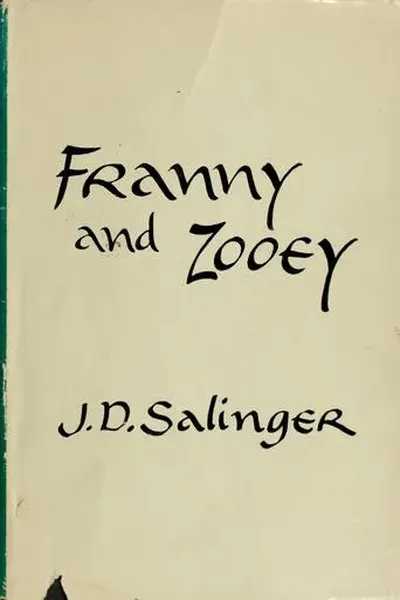
More Free Spiritual Development Books
View all →