Creative visualization
 79
79

Creative visualization
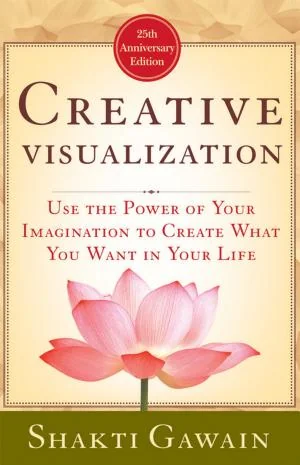
Shakti Gawain's Creative Visualization offers a clear, actionable framework for those interested in directing their mental energies. Its strength lies in its direct, no-nonsense approach, stripping away some of the more esoteric jargon that can sometimes obscure similar concepts. The chapter detailing the "exact" visualization process, with its emphasis on sensory detail and emotional engagement, is particularly effective. However, the book's primary limitation is its straightforwardness, which might feel simplistic to readers already well-versed in advanced manifestation or quantum metaphysics. It doesn't deeply engage with the philosophical underpinnings or potential psychological pitfalls of constant self-focused manifestation, relying instead on a more pragmatic, almost instructional tone. For a reader new to the concept of directed imagination, it serves as an excellent primer. For seasoned practitioners, it may offer a useful refresher on foundational techniques.
📝 Description
79
Shakti Gawain's Creative Visualization, first published in 2016, details how to use mental imagery for personal change.
This book presents a practical method for using the mind to achieve personal goals and transform one's life. It focuses on techniques that help readers understand and guide their thoughts, feelings, and beliefs. The core idea is that by directing mental images and emotions, individuals can actively shape their reality.
The work is for those who want to take an active role in their personal development. It speaks to people interested in how intention works and the connection between mind and body. Readers who are open to exploring how non-physical principles influence outcomes will find useful direction here. It is designed for the active participant in their own growth.
Creative Visualization draws from the New Thought movement, a spiritual tradition that gained prominence in the late 19th and early 20th centuries. Thinkers within this tradition, like Prentice Mulford, emphasized the power of thought and belief to influence material reality. Shakti Gawain's approach builds on these ideas, offering specific practices for cultivating mental clarity and directing inner focus. The book connects with broader esoteric interests in mind-body unity and the potential for individuals to consciously influence their circumstances.
💡 Why Read This Book?
• You will learn a structured method for using mental imagery and emotion, as detailed in Shakti Gawain's specific visualization exercises, to influence personal outcomes. • You will understand the role of subconscious beliefs in manifestation, a concept explored extensively in the book's early chapters, which is crucial for overcoming internal blocks. • You will gain practical techniques for affirming desires, a core element of the 2016 edition, allowing you to actively participate in co-creating your desired reality.
⭐ Reader Reviews
Honest opinions from readers who have explored this book.
❓ Frequently Asked Questions
When was Shakti Gawain's Creative Visualization first published?
The original publication date for Shakti Gawain's Creative Visualization is 2016. This edition brought her established techniques to a new generation of readers interested in self-help and metaphysical practices.
What is the core principle behind Creative Visualization?
The core principle is that by consciously directing one's thoughts, images, and emotions, individuals can influence their reality and manifest desired outcomes. It emphasizes the mind's creative power.
Is Creative Visualization a form of magic or religion?
While it draws on metaphysical principles, Creative Visualization is presented as a psychological and spiritual practice focused on harnessing internal faculties. It is distinct from ritualistic magic or specific religious doctrines.
Who co-authored the 2016 edition of Creative Visualization?
The 2016 edition of Creative Visualization is co-authored by Marci Shimoff, who worked with Shakti Gawain's foundational material to present these concepts.
What kind of goals can be addressed with Creative Visualization?
The book suggests it can be applied to a wide range of goals, including personal growth, career advancement, improved relationships, and enhanced well-being, by focusing the mind's creative power.
Are there specific exercises in Creative Visualization?
Yes, the book provides several specific exercises, including detailed steps for the visualization process itself, affirmations, and identifying and releasing limiting beliefs.
🔮 Key Themes & Symbolism
The Power of Focused Intention
This theme centers on the idea that directed mental energy, when combined with emotional clarity, acts as a potent force for shaping one's experiences. Gawain posits that our thoughts and feelings are not passive occurrences but active agents in the creation of our reality. The book guides readers to understand how to focus intention, moving beyond passive wishing to active, deliberate creation. It explores how consistent, concentrated mental effort can influence circumstances and attract desired outcomes, aligning with principles found in various esoteric traditions that emphasize the mind's role in manifestation.
Subconscious Belief Systems
A crucial concept explored is the wide impact of subconscious beliefs on our conscious experience. Gawain explains that deeply ingrained beliefs, often formed in childhood or through repeated experiences, act as filters through which we perceive the world and unconsciously direct our actions. The work provides methods for identifying these often-hidden beliefs and offers techniques to reprogram them. This aligns with esoteric psychology, which often addresses the subconscious as a primary realm for transformation and healing, suggesting that altering these internal blueprints is key to external change.
Emotional Alignment and Manifestation
The book highlights the critical role of emotions in the manifestation process. It's not enough to simply visualize a goal; one must also cultivate the feelings associated with achieving it. Gawain emphasizes that emotional states act as energetic signals that attract corresponding experiences. This concept appeals to esoteric traditions that view emotions as energetic frequencies. By learning to align one's emotional state with the desired outcome, readers are guided to create a powerful energetic resonance that facilitates the manifestation process, often referred to as 'feeling it real'.
Conscious Creation and Responsibility
Central to Gawain's approach is the principle of conscious creation, which implies that individuals are the primary creators of their lives. This places a significant emphasis on personal responsibility for one's circumstances and experiences. The book encourages readers to move away from victimhood and embrace their power to consciously choose their thoughts, beliefs, and actions. This empowerment is a recurring theme in many esoteric philosophies, advocating for self-mastery and the recognition of the divine spark within each individual as a creative force.
💬 Memorable Quotes
Direct passages from the work, attributed to the author.
“Imagination is the beginning of creation.”
— This statement captures the book's core premise: that all external realities originate from internal imaginative processes. It underscores the creative potential inherent in human thought and the necessity of visualizing desires before they can manifest.
“The more you visualize, the more you impress your subconscious mind.”
— This highlights the repetitive nature of effective visualization. It suggests that consistent mental rehearsal acts like a form of subconscious programming, gradually embedding desired outcomes into the deeper levels of the psyche.
“You have the power to create your own reality.”
— This is a direct assertion of personal agency. It empowers the reader by stating that their current circumstances are largely a product of their own mental and emotional creations, not external forces beyond their control.
“Feel the feelings of your desired outcome now.”
— This emphasizes the crucial role of emotional resonance in manifestation. It's a directive to not just picture the goal, but to embody the emotions of already having achieved it, thereby attracting that reality.
“Beliefs are the assumptions you hold about yourself and the world.”
— This offers a concise definition of beliefs, framing them as fundamental assumptions that shape perception and behavior. The book explores how these assumptions, especially subconscious ones, dictate the results we experience.
🌙 Esoteric Significance
Tradition
Creative Visualization aligns with the Hermetic principle of 'As Above, So Below' and the broader Hermetic and New Thought traditions that emphasize the mind's creative power. It departs from more complex ceremonial magic by focusing on accessible, psychological techniques. While not strictly Kabbalistic or Gnostic, it shares with these traditions an understanding of inner planes and the importance of aligning with higher potentials. Its lineage is primarily within the modern metaphysical and self-help movements that draw eclectically from these older esoteric schools.
Symbolism
The primary symbol is the 'mental image' itself, representing the blueprint or seed of future reality. The 'feeling' associated with the visualization acts as the energetic charge or activation of this seed. The book implicitly uses the symbol of the 'inner screen' of the mind, where these images are projected, akin to a sacred space where creation begins. The process itself symbolizes the magician's art, albeit internalized and democratized for personal use.
Modern Relevance
Gawain's work remains highly relevant today, influencing contemporary fields like positive psychology, manifestation coaching, and mindfulness practices. Modern thinkers and practitioners in areas such as law of attraction, subconscious reprogramming, and intention setting frequently cite or echo her core principles. Its accessible format makes it a foundational text for many who engage with spiritual or self-development practices that seek to consciously influence personal outcomes through mental discipline.
👥 Who Should Read This Book
• Aspiring manifestation practitioners seeking a clear, step-by-step guide to using visualization techniques for goal achievement. • Individuals interested in the practical application of metaphysical principles to everyday life and personal development. • Readers exploring the connection between their thoughts, emotions, and external circumstances who want to take an active role in shaping their experiences.
📜 Historical Context
Shakti Gawain's Creative Visualization, with its 2016 publication, arrived as the self-help and New Age movements were experiencing renewed popular interest, building on trends from the late 20th century. Its direct, practical approach to mental imagery and manifestation echoed principles found in earlier New Thought movements of the late 19th and early 20th centuries, championed by figures like Prentice Mulford and Florence Scovel Shinn. Gawain's work offered a simplified, accessible methodology that resonated with a broad audience seeking personal empowerment. While not as overtly philosophical as some earlier texts, its focus on the mechanics of visualization positioned it as a key text for contemporary practitioners. It gained traction in a cultural landscape where the power of positive thinking and affirmations, popularized by authors like Louise Hay, was already widely accepted, offering a more structured technique for achieving those ends.
📔 Journal Prompts
Your desired outcome for the 'vision board' concept.
The feeling associated with successfully visualizing your goal.
Identifying a subconscious belief that might hinder your visualization practice.
The first concrete step in your creative visualization process.
How to maintain emotional alignment with your visualized future.
🗂️ Glossary
Creative Visualization
The practice of using focused imagination and emotion to consciously create desired outcomes in one's life. It involves impressing desired images and feelings onto the subconscious mind.
Subconscious Mind
The part of the mind that operates below conscious awareness, storing beliefs, habits, and memories. It is seen as the seat of creative power that can be programmed through conscious thought and visualization.
Affirmations
Positive, present-tense statements designed to reprogram the subconscious mind and reinforce desired beliefs and outcomes. They are used to counter negative self-talk.
Manifestation
The process by which thoughts, beliefs, and intentions are brought into physical reality. Creative visualization is presented as a primary tool for intentional manifestation.
Limiting Beliefs
Negative or restrictive assumptions about oneself or the world that prevent individuals from achieving their goals. Identifying and releasing these is a key part of the practice.
Emotional Alignment
The state of experiencing the emotions that would naturally accompany the achievement of a desired outcome. This is considered crucial for attracting that outcome.
Inner Screen
A metaphor for the mind's imaginative space where visualizations are projected and held. It is the mental canvas upon which desired realities are first created.
🔮 Readers Also Liked
Browse all →









More by Shakti Gawain, Marci Shimoff
All books →
More Free Spiritual Development Books
View all →