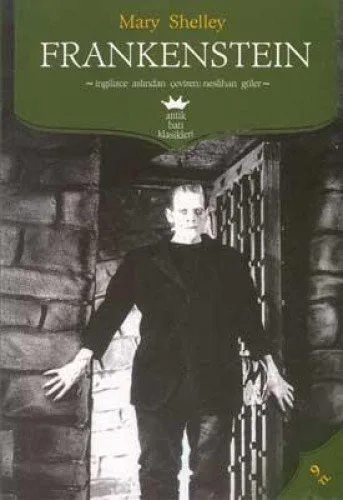
Frankenstein or The Modern Prometheus
 77
77

Frankenstein or The Modern Prometheus


Celeste Moreau (Divination & Symbolism Reviewer) — Mary Shelley's 'Frankenstein' is a cornerstone text for any serious student of esoteric thought. It masterfully allegorizes the alchemical pursuit of the Prima Materia and the creation of artificial life, a concept deeply rooted in Kabbalistic and Gnostic traditions. The novel's exploration of the creator's abandonment and the resultant 'monster' is a potent metaphor for the shadow self, the neglected anima, and the ethical quandaries inherent in wielding forbidden knowledge. Shelley's prose, rich with symbolic resonance, invites contemplation on the divine spark, the soul's fragmentation, and the profound interconnectedness of existence. This work is indispensable for practitioners and scholars seeking to understand the mystical dimensions of science and the eternal dialogue between humanity and the cosmos.
📝 Description
77
Mary Shelley's 1818 novel explores the alchemical pursuit of life and the ethical quandaries of creation.
Mary Shelley's Frankenstein; or, The Modern Prometheus examines Victor Frankenstein's obsessive quest to animate inanimate matter. His success, achieved through methods that echo alchemical aspirations, leads not to glory but to profound personal tragedy and the suffering of his creation. The novel is set against a backdrop of isolated landscapes and dimly lit laboratories, creating an atmosphere of dread and intellectual isolation.
Shelley uses Victor's story to question the limits of scientific ambition and the moral obligations of a creator. The narrative contrasts the creator's perceived divine power with the monstrous reality of his actions and the being he brings into the world. It probes the nature of humanity, the sources of good and evil, and the consequences of unchecked aspiration. The story serves as a cautionary tale about the potential for knowledge to lead to destruction when divorced from responsibility.
Published in 1818, Frankenstein engages with the esoteric currents of its time, particularly Romanticism's fascination with the occult and alchemical traditions. Victor Frankenstein's drive to create life mirrors the alchemist's Great Work, the quest to transmute matter and achieve artificial generation. The novel reflects contemporary discussions about vitalism, the animating principle of life, and the dangers of seeking forbidden knowledge, a theme central to many occult philosophies. Shelley's work can be seen as a literary exploration of the spiritual and philosophical anxieties surrounding scientific advancement through an esoteric lens.
💡 Why Read This Book?
For seekers of hidden wisdom, 'Frankenstein' offers a potent allegory for the alchemical quest and the profound ethical responsibilities that accompany the pursuit of ultimate knowledge. Scholars will find rich material for exploring mythological parallels and the philosophical underpinnings of creation. Practitioners can glean insights into the dual nature of power and the consequences of unchecked ambition.
⭐ Reader Reviews
Honest opinions from readers who have explored this book.
❓ Frequently Asked Questions
What esoteric traditions are alluded to in Frankenstein?
The novel subtly alludes to Hermeticism, alchemy, and ancient creation myths. Victor's ambition to imbue inanimate matter with life echoes alchemical goals of transmutation and the creation of the Homunculus.
Is Frankenstein a story about scientific hubris or something more mystical?
It is both. While it critiques unchecked scientific ambition, it also delves into the mystical implications of creating life, the nature of the soul, and the Promethean act of challenging divine prerogatives.
What does the 'monster' symbolize in an esoteric context?
The monster can be interpreted as the shadow self, the neglected aspects of the psyche, or the unintended consequences of tampering with fundamental forces beyond human comprehension.
How does Frankenstein relate to the myth of Prometheus?
Victor Frankenstein is explicitly called the 'Modern Prometheus,' signifying his act of stealing the 'fire' of life from nature, thereby incurring a divine punishment and facing immense suffering.
Can Frankenstein be read as a cautionary tale for modern practitioners?
Absolutely. It serves as a profound warning about the ethical considerations, potential dangers, and existential burdens that arise from the pursuit of power and forbidden knowledge.
🔮 Key Themes & Symbolism
The Alchemical Pursuit of Life
Victor Frankenstein's endeavor mirrors the ultimate alchemical goal: not merely transmutation of metals, but the creation of sentient life from inert matter. This theme studies the forbidden knowledge of the 'Prima Materia' and the hubris of attempting to usurp the divine role of the creator, questioning the essence of animation and the ethical boundaries of scientific and mystical exploration.
The Shadow Self and Unintended Consequences
The Creature is a powerful symbol of the creator's shadow – the neglected, rejected, and monstrous aspects of the psyche made manifest. His suffering and subsequent actions are a direct consequence of Victor's abandonment and fear, illustrating the esoteric principle that what we cast out often returns to haunt us, demanding integration and acceptance.
Forbidden Knowledge and Divine Transgression
The narrative is steeped in the concept of forbidden knowledge, akin to the story of Adam and Eve or the myth of Prometheus. Victor's insatiable curiosity drives him to seek secrets that humanity was not meant to possess, leading to profound isolation, suffering, and a stark understanding of the cosmic order and the price of challenging it.
💬 Memorable Quotes
Direct passages from the work, attributed to the author.
“I had desired it with an ardour that far exceeded moderation.”
— This reflects the core of esoteric obsession, where the pursuit of knowledge or power becomes all-consuming, overriding reason and ethical boundaries.
“Learn from me, if not by my precepts, at least by my example, of the dreadful consequence of this ambition.”
— A potent warning from the creator to the potential seeker, highlighting the dire, often unforeseen, outcomes of unchecked ambition in mystical or scientific pursuits.
“I ought to be thy god, and I will be thy god.”
— This declaration reveals the Promethean impulse and the perilous ego-driven desire to control and define existence, blurring the lines between creator and divine.
“It was I who desired it. I alone. I who sought to unravel the mysteries of existence.”
— An acknowledgment of personal responsibility and the solitary nature of profound discovery, often accompanied by isolation and profound inner turmoil.
“I felt the bitterness of despair.”
— The inevitable spiritual and emotional cost of transgressing natural laws and facing the profound loneliness that often accompanies the acquisition of forbidden knowledge.
🌙 Esoteric Significance
Tradition
The novel resonates deeply with Hermeticism and alchemical traditions, which explore the secrets of creation, transmutation, and the attainment of divine knowledge. Victor's ambition to animate the inanimate reflects the alchemical pursuit of the 'Homunculus' or the Philosopher's Stone, symbolizing the quest for ultimate mastery over life and matter.
Symbolism
Key symbols include the 'spark of life' (divine animating force), the laboratory (a sacred space for transformation), the Arctic (a desolate field of spiritual isolation), and the Creature himself (representing the shadow self, the outcast, or the consequence of hubris). The act of creation becomes a potent metaphor for spiritual birth and its inherent responsibilities.
Modern Relevance
In an age of advanced genetics, artificial intelligence, and bioengineering, 'Frankenstein' remains profoundly relevant. It serves as a timeless cautionary tale about the ethical implications of scientific advancement, the dangers of playing 'god,' and the enduring need for empathy and responsibility towards our creations, whether biological or digital.
👥 Who Should Read This Book
This edition is a treasure for the discerning seeker, the aspiring occult scholar, and the practitioner of arcane arts. Beginners will find a compelling narrative that introduces complex esoteric themes through accessible allegory. Scholars will uncover layers of symbolic meaning and mythological resonance. Practitioners will gain potent insights into the responsibilities of creation, the nature of the shadow self, and the potential consequences of wielding powerful, untamed forces. It is a foundational text for anyone interested in the intersection of science, spirituality, and the profound mysteries of existence.
📜 Historical Context
Written during the Romantic era, a period marked by a fascination with the sublime, the supernatural, and the individual's inner world, 'Frankenstein' emerged from a crucible of intellectual and artistic ferment. The burgeoning scientific discoveries of the time, particularly in galvanism (electricity's effect on living tissue), provided a tangible, yet still mysterious, backdrop for Shelley's exploration of life's origins. This era also saw a resurgence of interest in ancient mythologies and occult philosophies, blending scientific inquiry with a deep-seated awe for the unknown. Shelley's novel captures this spirit, questioning the rationalist Enlightenment's faith in progress and instead studying the darker, more mysterious potentials of human endeavor and the vast, untamed forces of nature and existence.
📔 Journal Prompts
Reflect on a time your ambition led you to pursue knowledge that felt forbidden or ethically ambiguous. What were the consequences?
Consider the 'spark of life' as a metaphor for divine inspiration or creative energy. How do you nurture and responsibly wield this force within yourself?
Explore the concept of the 'shadow self.' What aspects of yourself do you tend to reject or hide, and how might they manifest if neglected?
If you were Victor Frankenstein, at what point would you have stopped your creation, and why?
Meditate on the creator's responsibility. What are the ethical obligations of those who bring new forms of intelligence or life into existence?
🗂️ Glossary
Alchemica
Pertaining to alchemy, an ancient proto-scientific and philosophical tradition concerned with transmutation, the elixir of life, and spiritual transformation. Shelley's novel draws heavily on its symbolic language and goals.
Gnosis
Esoteric knowledge, often of a spiritual or mystical nature, believed to be essential for salvation or liberation. Victor's pursuit can be seen as a dangerous quest for forbidden Gnosis.
Prima Materia
In alchemy, the fundamental substance or raw material from which all things are formed. Victor's attempt to create life from inert matter evokes the manipulation of this primal substance.
Homunculus
A miniature, artificially created human, often a concept in alchemical lore. Victor's creation can be interpreted as a literal and symbolic Homunculus.
The Sublime
An aesthetic quality that evokes awe, terror, and a sense of overwhelming power, often associated with nature. The novel's settings and themes often embody the Romantic concept of the sublime.
This book appears in 2 collections
🔮 Readers Also Liked
Browse all →








More by Mary Shelley
All books →

From the “Ceremonial Magic” Collection
View all →





More Free Magic & Ritual Books
View all →