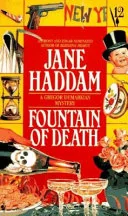
Fountain of Death
 74
74

Fountain of Death
Jane Haddam's Fountain of Death, initially published in 1995, offers a compelling, if sometimes dense, exploration of mortality through the lens of a clandestine order. The novel succeeds particularly in its meticulous construction of atmosphere; the sense of dread and anticipation surrounding the 'Festival of Death' is palpable. Haddam avoids simplistic pronouncements on death, instead presenting it as a complex, transformative force within the narrative's occult framework. However, the sheer density of symbolic language and the labyrinthine plot can, at times, obscure the emotional arc of the characters. A particular strength lies in the portrayal of the society's rituals, which feel both alien and disturbingly familiar. The book’s limitation is its occasional tendency to prioritize arcane exposition over character development, leaving some motivations feeling underdeveloped. Despite this, Fountain of Death provides a rich, unsettling meditation on life's ultimate transition.
📝 Description
74
Jane Haddam's 1995 novel, Fountain of Death, examines a secret society's rituals surrounding mortality.
Fountain of Death presents a complex narrative centered on a secret society and the symbolism of death and rebirth. The novel looks into ritualistic practices and the philosophical ideas that come from seeing death not as an end, but as a change. It details the hidden actions of a group that wants to use esoteric knowledge for transformation, often through difficult and possibly risky methods. The book questions humanity's wish for endless life and the cost of such a goal.
The story is suited for readers interested in occult fiction, secret societies, and philosophical takes on death. Those who enjoy detailed plots with hidden motives and old lore will find much to hold their attention. It appeals to people seeking stories that mix historical puzzles with esoteric ideas, giving a fictional way to look at concepts of initiation, spiritual death, and renewal. The book does not shy away from dark subjects.
Published in 1995, Fountain of Death arrived during a time of growing interest in esoteric subjects, following trends in occult literature. The late 20th century saw a revival in occult studies, influenced by figures like Aleister Crowley and the continuation of Hermetic traditions. The novel reflects a wider cultural fascination with hidden knowledge and alternative spiritual paths that became popular throughout the 1980s and 1990s, moving past more common spiritual inquiries to engage with darker, more primal aspects of ritual.
💡 Why Read This Book?
• Gain insight into the symbolic meaning of the 'Festival of Death' as presented in the novel, understanding its role in ritualistic transformation. • Explore the concept of the 'fountain' as a dual symbol of potential renewal and annihilation, as depicted in Haddam's occult narrative. • Understand the unique portrayal of secret society practices in the context of late 20th-century esoteric fiction, contrasting it with contemporary occult literature.
⭐ Reader Reviews
Honest opinions from readers who have explored this book.
❓ Frequently Asked Questions
What is the main theme of Jane Haddam's Fountain of Death?
The main theme is the exploration of death not as an endpoint, but as a significant, potentially transformative, passage. It delves into ritual, symbolism, and secret societies' pursuit of esoteric knowledge concerning mortality and rebirth.
What historical period does Fountain of Death reflect?
Published in 1995, the book reflects the late 20th-century resurgence of interest in occultism and esoteric studies, drawing on established Hermetic and symbolic traditions.
What does the 'Festival of Death' represent in the book?
The 'Festival of Death' is a central ritual within the novel's secret society, symbolizing a profound test and a catalyst for spiritual transformation or ultimate dissolution for its participants.
Is Fountain of Death part of a series?
Information regarding Fountain of Death being part of a series is not readily available. It stands as a singular exploration of its thematic concerns.
What kind of symbolism is prominent in Fountain of Death?
Prominent symbolism includes the 'fountain' as a representation of life-giving or destructive forces, and death itself as a symbolic gateway rather than a finality, central to the society's doctrines.
Who is the author Jane Haddam?
Jane Haddam is the author of Fountain of Death, a work first published in 1995. Her writing often engages with esoteric themes and mysterious narratives.
🔮 Key Themes & Symbolism
Ritual and Transformation
The narrative heavily emphasizes ritualistic practices as conduits for profound personal change. Within the fictional secret society, these ceremonies are designed to confront participants with the concept of death, not as an end, but as a catalyst for spiritual alchemy. The 'Festival of Death' is the apex of this, a deliberate immersion into symbolic mortality intended to forge a new existence or understanding. The work suggests that true transformation requires a symbolic dying to the old self, echoing ancient mystery traditions that utilized initiatory ordeals.
Symbolism of the Fountain
The titular 'fountain' serves as a many-sided symbol throughout the book. It represents not merely a source of life or renewal, but also a potent, often dangerous, nexus of esoteric energies. This duality mirrors the society's complex relationship with mortality; the same forces that offer transcendence can also lead to annihilation. The fountain can be interpreted as a symbolic womb, a gateway to the underworld, or a reservoir of primal cosmic power, contingent on the seeker's preparedness and the rituals employed.
Secret Societies and Esoteric Knowledge
Fountain of Death situates its narrative within the clandestine world of a secret society dedicated to understanding and wielding esoteric knowledge. This society operates outside conventional societal norms, pursuing forbidden lore concerning life, death, and consciousness. The book explores the allure and peril of such hidden orders, where initiation rites and guarded doctrines are paramount. The pursuit of such knowledge is depicted as a path fraught with danger, requiring absolute commitment and often involving the manipulation of profound existential forces.
Confronting Mortality
Fundamentally, the novel is a profound meditation on confronting mortality. It challenges the common fear of death by presenting it as a fundamental aspect of existence and a potential gateway to higher states of being. Through the society's doctrines and the 'Festival of Death,' Haddam explores the psychological and spiritual implications of facing one's own demise. This confrontation is framed not as an act of despair, but as a necessary step in a process of symbolic rebirth and self-realization within an esoteric context.
💬 Memorable Quotes
Direct passages from the work, attributed to the author.
“Death is but the first threshold.”
— This concise statement captures the novel's central thesis: mortality is not an absolute end but a transitional phase within a larger spiritual or cosmic framework. It suggests that what lies beyond death is a continuation, a new stage of existence or understanding.
“The fountain demands a sacrifice, but offers rebirth.”
— This highlights the dual nature of the symbolic 'fountain.' It signifies that accessing its transformative power requires a relinquishing of the old self or ego, a form of symbolic death, in exchange for a new beginning or spiritual awakening.
“Their rituals are not for the uninitiated.”
— This emphasizes the exclusive and dangerous nature of the secret society's practices. It implies a level of arcane knowledge and spiritual preparation required to safely engage with their ceremonies, lest the individual be consumed by the forces they seek to manipulate.
“To truly live, one must first understand how to die.”
— This aphorism frames the exploration of death as essential for a complete understanding of life. It suggests that a profound engagement with mortality offers unique insights and a deeper appreciation for existence itself.
“The water remembers all.”
— This evocative phrase imbues the symbolic 'fountain' with a profound, almost sentient, quality. It suggests that this source holds the collective memory or essence of all that has passed, linking past, present, and potential future through its waters.
🌙 Esoteric Significance
Tradition
Fountain of Death aligns with the broader currents of Western Esotericism, particularly drawing on themes found within Hermeticism and Gnosticism. It explores concepts of spiritual death and rebirth, initiation, and the pursuit of hidden knowledge, which are hallmarks of these traditions. The work departs from more rigid, codified systems by presenting a fictionalized, almost alchemical, process of transformation through confronting mortality, suggesting that the 'Fountain' is a nexus of forces that can be harnessed via ritual.
Symbolism
The primary symbols are the 'Fountain' and the 'Festival of Death.' The fountain represents a dual source: it can offer renewal and immortality but also oblivion if approached improperly, echoing alchemical symbolism of the prima materia or the chalice. The 'Festival of Death' itself is a potent motif, symbolizing a ritualistic ordeal or a symbolic immolation of the old self, a common theme in mystery religions and initiatory rites aimed at spiritual rebirth.
Modern Relevance
Contemporary practitioners of Western Esotericism and occult fiction enthusiasts continue to find relevance in Haddam's exploration of mortality as a transformative agent. Modern occult movements often emphasize personal gnosis and the integration of shadow aspects, themes echoed in the novel's depiction of confronting death. Thinkers exploring themes of liminality and existential transformation in spiritual contexts can find fertile ground for contemplation within the book's symbolic landscape.
👥 Who Should Read This Book
• Students of comparative religion and esoteric traditions seeking fictional explorations of death rituals and symbolic rebirth narratives. • Fans of occult and mystery fiction who appreciate intricate plots involving secret societies and arcane lore. • Readers interested in philosophical novels that engage with existential themes, particularly the nature of mortality and transformation.
📜 Historical Context
Jane Haddam's Fountain of Death, released in 1995, emerged in a cultural climate receptive to explorations of the occult and esoteric, a trend that had been building since the 1970s and 1980s. The late 20th century witnessed a diversification of spiritual interests, moving beyond established religions towards a wider acceptance of mystical traditions. This period saw authors like Peter J. Carroll and the continued influence of figures from the Hermetic Order of the Golden Dawn inspiring new waves of occult fiction. While not directly engaging with the more overt occultism of Aleister Crowley, Haddam's work tapped into a similar undercurrent of seeking hidden knowledge and transformative experience. The novel’s focus on secret societies and ritualistic practices aligns with a broader fascination with Gnosticism and Western Esoteric Traditions prevalent in academic and popular circles during that era, offering a fictional counterpoint to the burgeoning academic study of Western Esotericism.
📔 Journal Prompts
The 'Festival of Death' as a turning point. Reflect on its symbolic purpose.
The duality of the 'fountain': renewal versus annihilation. Where does this appear in your own life?
Consider the society's claim that 'To truly live, one must first understand how to die.' What does this imply?
Analyze the power dynamics within the secret society. Who holds true authority?
Reflect on the concept of initiation as presented through the characters' trials.
🗂️ Glossary
Festival of Death
A central, ritualistic event within the novel's secret society. It represents a symbolic confrontation with mortality, designed to facilitate profound transformation or dissolution for participants.
The Fountain
A potent, many-sided symbol in the book, representing a source of esoteric power. It can offer renewal and transcendence but also destruction, depending on the seeker's alignment with its forces.
Secret Society
A clandestine organization within the narrative dedicated to the study and application of esoteric knowledge, particularly concerning life, death, and spiritual transformation.
Spiritual Alchemy
The process of transforming the self through symbolic death and rebirth, often achieved through rigorous ritual and esoteric understanding, as depicted in the novel.
Initiation
The process of being formally admitted into a society or a new stage of understanding, typically involving trials, tests, and the acquisition of secret knowledge.
Esoteric Knowledge
Hidden or secret wisdom pertaining to spiritual, mystical, or occult matters, pursued by the characters in Fountain of Death.
Symbolic Mortality
The representation of death not as a physical end, but as a metaphorical process of shedding the old self to embrace a new state of being or consciousness.
This book appears in 1 collection
🔮 Readers Also Liked
Browse all →








From the “Fountain of Youth” Collection
View all →




More Free Occult Philosophy Books
View all →