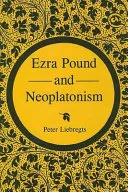
Ezra Pound and Neoplatonism
 84
84

Ezra Pound and Neoplatonism
P. Th. M. G. Liebregts's "Ezra Pound and Neoplatonism" offers a rigorous dissection of the poet's intellectual architecture. The book’s strength lies in its detailed tracing of Pound’s selective engagement with Neoplatonic thinkers, particularly his admiration for Thomas Taylor and his use of Plotinus. Liebregts avoids mere biographical speculation, instead grounding the analysis in Pound's textual output and correspondence. A notable limitation is the dense academic prose, which can occasionally obscure the fascinating connections being drawn. The examination of Pound's interpretation of Plotinus's concept of the 'One' as it informs his economic theories is particularly illuminating, demonstrating the far-reaching implications of his philosophical studies. This is a critical resource for understanding Pound's esoteric leanings, albeit one requiring dedicated scholarly attention.
📝 Description
84
Published in 2004, Liebregts' study details Ezra Pound's deep engagement with Neoplatonism.
P. Th. M. G. Liebregts' 2004 book meticulously examines how Ezra Pound incorporated Neoplatonic philosophy into his poetry and prose. The study traces Pound's integration of concepts and figures from this ancient tradition, showing their influence on his literary output as well as his sociopolitical and economic theories. Liebregts situates Pound's interest in Neoplatonism within the intellectual climate of the early 20th century, a time of renewed attention to classical philosophy and mysticism. The book discusses Pound's direct engagement with thinkers like Plotinus and Thomas Taylor, and his indirect connections through figures such as Dante.
Liebregts illuminates Pound's application of Neoplatonic ideas, including emanation, the concept of the One, and the soul's ascent. The study follows the philosophical lineage from ancient Greek thinkers through medieval mystics and Renaissance figures, highlighting Pound's selective use of these traditions to build his distinctive ideological framework. This work is for scholars of 20th-century literature, modernist studies, and the history of esoteric thought who want to understand the philosophical basis of Pound's complex worldview.
This book examines Ezra Pound's appropriation of Neoplatonic thought, a philosophical and mystical tradition originating in ancient Greece. Neoplatonism, particularly as articulated by Plotinus, emphasizes a hierarchical structure of reality emanating from a supreme, ineffable One. It includes concepts of spiritual ascent and the return of the soul to its divine source. Pound's engagement with this tradition, filtered through various historical interpreters, informed his critiques of modernity and his attempts to construct a new poetic and political order. The study situates Pound's interest within a broader turn towards occult and esoteric philosophies in the early 20th century.
💡 Why Read This Book?
• Understand Ezra Pound's philosophical framework by exploring his direct engagement with Plotinus and his interpretation of "the One" as presented in this study. • Gain insight into the historical transmission of Neoplatonic ideas, specifically through figures like Thomas Taylor, and how Pound revived them in the early 20th century. • Analyze how ancient philosophical concepts, such as emanation, shaped Pound's poetics and his controversial sociopolitical views, as detailed in Liebregts's meticulous research.
⭐ Reader Reviews
Honest opinions from readers who have explored this book.
❓ Frequently Asked Questions
Which specific Neoplatonic figures did Ezra Pound engage with according to this book?
The book highlights Ezra Pound's engagement with key Neoplatonic figures including Plotinus, Dionysus the Areopagite, Eriugena, Dante, Gernisthus Plethon, and Thomas Taylor, examining their influence on his thought.
How did Neoplatonism influence Ezra Pound's poetry?
Liebregts's study demonstrates how Neoplatonic concepts like emanation and the ascent of the soul informed Pound's poetic structures and thematic concerns, moving beyond simple thematic inclusion to structural influence.
What is the significance of Thomas Taylor in Ezra Pound's Neoplatonism?
Thomas Taylor, a prominent translator of Neoplatonic texts into English, is presented as a crucial conduit through whom Pound accessed and interpreted these ancient philosophies, significantly shaping his understanding.
When was Ezra Pound and Neoplatonism first published?
This scholarly work by P. Th. M. G. Liebregts was first published in 2004, offering a comprehensive analysis of Ezra Pound's intellectual debts to Neoplatonism.
Does the book discuss Pound's political views in relation to Neoplatonism?
Yes, the study explicitly explores how Pound's adoption of Neoplatonic principles informed his political and socio-economic perspectives, connecting ancient philosophy to his 20th-century ideologies.
What is 'the One' in Neoplatonism and how did Pound interpret it?
In Neoplatonism, 'the One' is the ultimate, ineffable source of all existence. The book details Pound's unique interpretation of this concept and its application within his poetic and political writings.
🔮 Key Themes & Symbolism
Pound's Appropriation of Plotinus
The study meticulously charts Ezra Pound's engagement with Plotinus, focusing on how the poet interpreted and integrated concepts such as emanation and the nature of the divine intellect into his own creative and intellectual projects. Liebregts shows how Pound selectively drew from Plotinus's philosophy, adapting its principles to articulate his unique poetics and even his controversial economic theories, demonstrating a profound, albeit idiosyncratic, philosophical lineage.
The Role of Thomas Taylor
Central to understanding Pound's Neoplatonic framework is the figure of Thomas Taylor, the 18th-century English translator and philosopher. This work emphasizes Taylor's critical role as the primary conduit through which Pound accessed and understood the core tenets of Neoplatonism. Liebregts details how Pound relied heavily on Taylor's translations and commentaries, making Taylor indispensable to Pound's intellectual development in this area.
Neoplatonic Structure in Poetry
Beyond thematic borrowings, the book investigates how Neoplatonic philosophical structures informed Ezra Pound's poetic composition. Liebregts explores how ideas of hierarchy, ascent, and the divine source influenced the organization and conceptual architecture of Pound's verse. This goes beyond mere philosophical references, suggesting a deeper, structural resonance between Neoplatonic metaphysics and Pound's avant-garde literary experiments.
Ancient Philosophy and Modern Politics
This study reveals the surprising connections Pound drew between ancient Neoplatonic thought and his own 20th-century political and socio-economic views. Liebregts demonstrates how Pound attempted to apply principles derived from figures like Plotinus and Dante to contemporary issues, seeking a philosophical justification for his radical ideologies and economic proposals, highlighting the esoteric underpinnings of his public pronouncements.
💬 Memorable Quotes
Direct passages from the work, attributed to the author.
“Pound considered Plotinus, Dionysius the Areopagite, Eriugena, Dante, Plethon and Taylor as the leading figures in the development of Neoplatonism.”
— This statement identifies the core philosophical figures Pound actively engaged with or recognized as foundational to his understanding of Neoplatonic thought, establishing the primary sources for his philosophical exploration.
“The book shows how Pound used Neoplatonic ideas to inform his poetics as well as his political and social-economic views.”
— This highlights the dual impact of Neoplatonism on Pound's work, demonstrating that his interest extended beyond literary expression to encompass his broader ideological and theoretical constructions.
“Pound's engagement with Neoplatonism was not merely academic but deeply integrated into his worldview.”
— This interpretation suggests that Pound's study of Neoplatonism was not a detached intellectual exercise but a vital component that shaped his fundamental understanding of reality, art, and society.
“The influence of Neoplatonism on Pound can be traced through his selective interpretation of key thinkers.”
— This emphasizes Pound's active and personal approach to philosophy, indicating that he did not passively absorb Neoplatonic ideas but rather filtered them through his own interpretive lens.
“The study examines the explicit and implicit use of Neoplatonic elements in Pound's writings.”
— This points to the comprehensive nature of the research, covering both direct references and subtle, underlying philosophical currents that permeate Pound's diverse body of work.
🌙 Esoteric Significance
Tradition
This work situates Ezra Pound's thought within the Neoplatonic lineage, a philosophical and mystical tradition originating with Plotinus in the 3rd century CE. It traces how Pound engaged with this tradition, which emphasizes emanation from an ultimate divine source ('the One') and the soul's journey back to it. Liebregts shows how Pound synthesized this ancient philosophy with his own modernist sensibilities, departing from strict adherence to explore its potential for shaping modern aesthetics and politics.
Symbolism
Key symbols explored include 'the One,' representing the ineffable, ultimate reality from which all existence emanates, and the concept of 'ascent,' symbolizing the soul's spiritual journey towards this divine source. Pound’s engagement with these Neoplatonic motifs aimed to provide a metaphysical underpinning for his poetic vision and his critiques of contemporary society, imbuing his work with a sense of cosmic order and spiritual striving.
Modern Relevance
Contemporary scholars of comparative literature and Western esotericism continue to draw on Liebregts's analysis to understand the persistent influence of classical philosophy on modern thought. Thinkers exploring the intersection of spirituality and political ideology, or those investigating the roots of literary modernism's engagement with ancient wisdom, find this book crucial for contextualizing Pound's complex legacy.
👥 Who Should Read This Book
• Scholars of Modernist literature: Gain a deeper understanding of Ezra Pound's intellectual influences beyond standard literary history, specifically his engagement with ancient philosophy. • Students of Western Esotericism: Explore a significant case study of how Neoplatonic ideas were reinterpreted and applied by a major 20th-century figure. • Researchers of Comparative Philosophy: Analyze the synthesis of ancient Greek metaphysics with early 20th-century political and economic theories as presented in Pound's work.
📜 Historical Context
Published in 2004, P. Th. M. G. Liebregts's "Ezra Pound and Neoplatonism" emerged during a period of sustained scholarly interest in the intellectual biography of Modernist poets. The early 20th century, when Pound was most active, saw a significant revival of interest in esoteric traditions and classical philosophy, partly as a reaction against perceived materialism and rationalism. Competing schools of thought, such as Symbolism and later Existentialism, also vied for influence. While not a major reception event, Liebregts's work built upon earlier scholarship by figures like Hugh Kenner and James Wilhelm, who had also explored Pound's diverse philosophical influences. The book situated Pound's specific Neoplatonic leanings within this broader intellectual milieu, offering a detailed analysis of how figures like Plotinus and Dante, accessed through intermediaries like Thomas Taylor, shaped Pound's unique, and at times controversial, worldview.
📔 Journal Prompts
Pound's interpretation of Plotinus's 'One' as a foundation for his theories.
The role of Thomas Taylor in transmitting Neoplatonic ideas to Pound.
Analyzing the concept of emanation in Pound's poetry.
Connecting Dante's Neoplatonic framework to Pound's poetics.
The influence of Gernisthus Plethon on Pound's social and economic views.
🗂️ Glossary
Neoplatonism
A philosophical and mystical system originating with Plotinus in the 3rd century CE, positing a hierarchical reality emanating from an ultimate, ineffable 'One,' with a focus on the soul's return to this divine source.
Plotinus
The 3rd-century CE philosopher considered the founder of Neoplatonism, whose work, particularly the 'Enneads,' profoundly influenced subsequent Western philosophy and mysticism.
Emanation
In Neoplatonism, the process by which reality flows or proceeds from the ultimate divine principle ('the One') without diminishing it, creating a hierarchical structure of existence.
Thomas Taylor
An 18th-century English translator and philosopher known as the 'English Plotinus,' who played an important role in introducing Neoplatonic texts to the English-speaking world.
Dionysius the Areopagite
A 5th-6th century CE writer whose works synthesized Neoplatonic philosophy with Christian theology, greatly influencing medieval mystical thought.
The One
The supreme, absolute, and ineffable principle in Neoplatonism, the ultimate source of all reality, beyond being and comprehension.
Gernisthus Plethon
A 15th-century Byzantine scholar and philosopher who revived interest in Plato and Neoplatonism during the Renaissance.