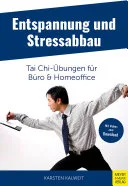
Entspannung und Stressabbau - Tai Chi-Übungen für Büro und Homeoffice
 82
82

Entspannung und Stressabbau - Tai Chi-Übungen für Büro und Homeoffice
Karsten Kalweit’s "Entspannung und Stressabbau" tackles the pervasive issue of work-related stress with a refreshingly grounded approach. By selecting accessible Tai Chi movements specifically for office and home office settings, Kalweit avoids the often-intimidating complexity of traditional forms. The strength lies in its direct applicability; readers can immediately implement techniques like the "Shoulder Rolls" or "Neck Turns" described early on, offering tangible relief. A limitation, however, is the book's brevity; while effective for beginners, those with prior Tai Chi knowledge might seek deeper philosophical exploration or more advanced sequences. The concept of integrating Qi cultivation into short breaks, as Kalweit suggests, is particularly compelling for busy professionals. Ultimately, this is a practical manual for immediate stress reduction, prioritizing function over esoteric depth.
📝 Description
82
Karsten Kalweit's 2022 book adapts Tai Chi for office workers facing stress.
Published in 2022, "Entspannung und Stressabbau - Tai Chi-Übungen für Büro und Homeoffice" by Karsten Kalweit presents a practical method for managing stress using Tai Chi. The book selects and modifies Tai Chi movements suitable for office or home office settings. It offers techniques that can be easily incorporated into daily routines without needing much space or time, addressing the challenges of balancing work and personal life.
This guide is for professionals experiencing high stress and difficulty in disconnecting from work, a situation worsened by the rise of remote work. It targets individuals seeking physical methods to reduce tension and improve their health while seated or in confined spaces. Those new to Tai Chi or interested in desk-friendly exercises will find it especially useful. Kalweit focuses on core Tai Chi principles like mindful movement, breath control, and cultivating internal energy (Qi), adapting them for sedentary work. Concepts such as loosening the body, improving posture, and gentle joint mobility are highlighted. Specific exercises aim to release tension in the neck, shoulders, and back.
While Tai Chi's roots are ancient Chinese, Kalweit's work applies its principles to a specific modern vocational context. The practice has been recognized in the West since the late 20th century, with figures like Dr. Paul Lam adapting forms for health. This book follows that lineage by modifying traditional movements. It centers on cultivating internal energy (Qi) through mindful movement and breath control, adapting these concepts for individuals in sedentary work environments who may not have access to traditional practice spaces or extensive free time.
💡 Why Read This Book?
• Learn specific desk-friendly Tai Chi movements like the "Eight Brocades" adapted by Karsten Kalweit, allowing you to release physical tension directly at your workstation, something not typically found in general relaxation guides. • Understand how to apply the core Tai Chi principle of mindful movement, as introduced in the book's early chapters, to your daily work routine for improved focus and reduced mental fatigue, offering a unique application of ancient philosophy. • Discover practical breathing techniques and posture adjustments, detailed in the sections on "Standing Postures," that can be implemented during short breaks, providing immediate stress relief beyond generic advice found elsewhere.
⭐ Reader Reviews
Honest opinions from readers who have explored this book.
❓ Frequently Asked Questions
What specific Tai Chi exercises does Karsten Kalweit recommend for desk workers?
Karsten Kalweit suggests exercises like "Shoulder Rolls," "Neck Turns," and adapted versions of the "Eight Brocades." These are designed to be performed while seated or standing near a desk, focusing on releasing tension in common problem areas like the neck and shoulders.
How does this book help with the work-life balance issue in home offices?
The book provides practical, short exercises that can be integrated into the workday, helping to create mental and physical breaks. By offering accessible stress-relief techniques, it aims to help individuals detach from work-related pressures, even when working from home.
Is prior Tai Chi experience needed to follow the exercises in this book?
No, the book is designed for beginners. Karsten Kalweit breaks down the movements into simple, easy-to-follow steps, making the practice accessible even for those with no prior experience in Tai Chi or martial arts.
When was "Entspannung und Stressabbau - Tai Chi-Übungen für Büro und Homeoffice" first published?
The book was first published on October 31, 2022, making its approach to stress relief and Tai Chi exercises relevant to contemporary work environments.
What are the main benefits of practicing Tai Chi at work according to the book?
The book highlights benefits such as reduced stress and tension, improved posture, enhanced focus, and increased physical well-being. These are achieved through mindful movement and breath control, adapted for the office setting.
Who is the author, Karsten Kalweit?
Karsten Kalweit is a Tai Chi instructor who developed this book to address the specific stress challenges faced by individuals working in office and home office environments. His expertise lies in adapting traditional practices for modern needs.
🔮 Key Themes & Symbolism
Mindful Movement at Work
The book emphasizes the integration of mindful movement into the typical workday, a concept central to Tai Chi's philosophy. Kalweit adapts traditional forms to promote awareness of the body and breath, even amidst professional tasks. This theme addresses how practitioners can cultivate presence and reduce mental clutter by performing specific, gentle exercises like "Opening the Door" at their desk, transforming mundane work moments into opportunities for internal cultivation and stress reduction.
Bridging Work and Personal Life
A core theme is the struggle to separate professional duties from personal time, particularly prevalent in home office settings. Kalweit presents Tai Chi exercises as a tangible tool to create boundaries and transitions. By incorporating short, restorative movement sequences, individuals can mentally and physically disengage from work pressures, fostering a healthier work-life integration and preventing the chronic stress that arises from constant connectivity.
Accessible Stress Alleviation
This theme focuses on making stress-relief techniques readily available and easy to implement. Kalweit's selection of Tai Chi movements are specifically chosen for their simplicity and minimal space requirements, challenging the notion that effective relaxation requires significant time or specialized environments. The book democratizes well-being practices, offering practical solutions for anyone seeking to alleviate tension and improve their state of mind during the workday.
Cultivating Inner Calm
The book explores how the principles of Tai Chi, such as yielding, balance, and flowing energy (Qi), can be used to cultivate a state of inner calm. Kalweit guides readers through exercises that not only release physical tension but also promote mental serenity and emotional equilibrium. This theme highlights the holistic benefits of the practice, extending beyond mere physical relaxation to foster a more centered and resilient disposition.
💬 Memorable Quotes
Direct passages from the work, attributed to the author.
“Many find it hard to disconnect from work when at home.”
— This statement directly addresses the central problem the book aims to solve: the blurring lines between professional and personal life in remote work scenarios, setting the stage for the proposed Tai Chi solutions.
“Tai Chi exercises can be performed even in limited space.”
— This highlights the book's practical adaptation of Tai Chi, emphasizing that the ancient practice is not confined to large training areas but can be integrated into everyday environments like offices or homes.
“Stress often accumulates in the neck and shoulders.”
— This points to a common physical manifestation of work-related stress, signaling that the book will offer targeted exercises to alleviate tension in these specific areas.
💡 Key Ideas
Editorial paraphrase of the work's core concepts — not direct quotes.
Mindful movement helps to separate work from leisure.
This paraphrased concept suggests that the conscious, deliberate nature of Tai Chi movements provides a mental and physical break, aiding in the crucial separation required for work-life balance.
Breathing exercises are key to relaxation.
This paraphrased concept underscores the importance of breath control within the Tai Chi framework presented, indicating that respiratory techniques are a fundamental component of the stress-reduction methods offered.
🌙 Esoteric Significance
Tradition
While not explicitly affiliating with a specific esoteric lineage, the book draws heavily from Taoist principles embedded within Tai Chi. The cultivation of Qi (vital energy) and the emphasis on balance, yielding, and harmony with natural rhythms are core Taoist concepts. Kalweit's adaptation for the office context can be seen as a modern interpretation of these ancient ideas, making them accessible for stress management in a non-traditional setting, moving beyond purely spiritual pursuits to practical, embodied well-being.
Symbolism
The core symbolism lies in the movements themselves, representing the flow of Qi. Concepts like 'loosening' symbolize releasing stagnation, both physical and mental. The balance inherent in Tai Chi postures mirrors the Taoist ideal of Yin and Yang, suggesting the integration of opposing forces (work/rest, tension/relaxation) for overall harmony. The very act of performing these slow, deliberate movements in a typically rushed environment becomes a symbolic act of reclaiming personal time and centeredness.
Modern Relevance
This work is highly relevant to contemporary mindfulness and somatic practices that seek to integrate ancient wisdom into modern life. Thinkers and practitioners in fields like corporate wellness, occupational therapy, and even secularized mindfulness movements are increasingly looking for accessible, evidence-based techniques derived from traditional practices. Kalweit's approach offers a bridge, demonstrating how embodied practices like Tai Chi can directly address the pervasive issue of digital-age work stress.
👥 Who Should Read This Book
• Professionals working remotely or in traditional offices experiencing high levels of stress and difficulty disconnecting from work, who seek practical, physical methods for relief. • Individuals new to Tai Chi or similar mindful movement practices, looking for an accessible entry point focused on immediate benefits rather than complex theory. • Anyone interested in integrating simple, effective stress-reduction techniques into their daily routine without requiring significant time commitments or specialized equipment.
📜 Historical Context
Published in October 2022, "Entspannung und Stressabbau" arrives at a moment when remote and hybrid work models have become deeply entrenched globally. This context is crucial, as the book directly addresses the unique stressors of the home office environment, a phenomenon that surged dramatically following the COVID-19 pandemic starting in 2020. While Tai Chi's roots are ancient, its popularization in the West gained momentum in the late 20th century, with figures like Dr. Paul Lam developing modified forms for health and wellness, influencing modern adaptations. Kalweit's work can be seen as part of this lineage, focusing on practical application rather than traditional martial arts progression. It stands apart from purely meditative or philosophical texts on stress by offering concrete, physical exercises. Unlike the broader philosophical inquiries into well-being prevalent in esoteric circles, this book is intensely practical, targeting a specific vocational challenge. Its reception is likely within a demographic actively seeking immediate, actionable solutions to contemporary workplace pressures.
📔 Journal Prompts
The challenge of separating work from leisure.
Accumulated tension in the neck and shoulders.
The concept of mindful movement during breaks.
Integrating Qi cultivation into desk-bound work.
Personal experience with desk-friendly Tai Chi exercises.
🗂️ Glossary
Tai Chi
An ancient Chinese martial art practiced for both its defense training and its health benefits. It involves slow, flowing movements, deep breathing, and mental focus, often described as 'meditation in motion'.
Qi (Chi)
A fundamental concept in traditional Chinese culture, referring to the vital life force or energy believed to flow through all living things and the universe.
Homeoffice
A German term referring to a home office or remote work setup, where an individual performs their professional duties from their residence.
Mindful Movement
The practice of paying conscious attention to the body's sensations, movements, and posture during physical activity, fostering a connection between mind and body.
Work-Life Balance
The state of equilibrium in which a person equally prioritizes the demands of their career and the demands of their personal life, often a challenge in modern work environments.
Stressabbau
A German term meaning 'stress reduction' or 'stress relief', indicating the primary goal of the exercises presented in the book.
Eight Brocades (Ba Duan Jin)
A traditional set of Qigong exercises known for their health benefits, involving a sequence of movements designed to improve circulation and strengthen the body.