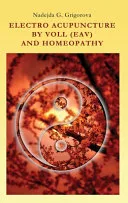
Electro Acupuncture by Voll (Eav) and Homeopathy
 80
80

Electro Acupuncture by Voll (Eav) and Homeopathy
Nadejda G. Grigorova’s "Electro Acupuncture by Voll (EAV) and Homeopathy" offers a rigorous, if specialized, look at combining diagnostic technology with homeopathic prescribing. Grigorova, a scientist by training, brings a chemist’s precision to her eleven years of practice in Africa, detailing how the Voll method was used to test homeopathic remedies against pathogens. The tables presenting her findings are the book's strongest asset, providing concrete data that will be invaluable to homeopaths and EAV practitioners. However, the narrative framing can feel somewhat dry, prioritizing empirical presentation over broader theoretical exploration. A reader unfamiliar with EAV might find the initial concepts challenging to grasp without supplementary material. Despite this, the book's direct approach to correlating remedy efficacy with specific microbial threats makes it a valuable, if niche, contribution to the literature.
📝 Description
80
Nadejda G. Grigorova's 2009 book details her eleven years of clinical work in Africa using EAV and homeopathy.
Nadejda G. Grigorova, a chemist, homeopath, and pharmacist, documented her clinical research in Electro Acupuncture by Voll (EAV) and Homeopathy. The work is based on her eleven years of practice in Africa, where she examined the effects of various homeopathic remedies on pathogenic microorganisms. She used the electro-diagnostic principles of the Voll method to assess these interactions.
This book is intended for practitioners of homeopathy and naturopathy who want to understand remedy actions better. It will also interest those looking into empirical research in alternative medicine, especially concerning how homeopathic preparations combat infectious agents like bacteria and viruses. The text includes detailed tables for direct clinical use, showing comparative effectiveness against microbial challenges.
This book sits within the tradition of bioenergetic medicine, a field that emerged and developed alongside alternative healing systems. Electroacupuncture according to Voll (EAV) is a diagnostic technique that measures the body's energetic responses, aligning with esoteric ideas about vital force and subtle energies. Grigorova's research bridges these concepts with traditional homeopathy, using a scientific approach to investigate the efficacy of remedies against pathogens, a common concern in both conventional and alternative health practices.
💡 Why Read This Book?
• Learn how Nadejda G. Grigorova applied electroacupuncture according to Voll (EAV) to test homeopathic remedies against specific pathogens during her 11 years of practice in Africa, offering empirical data not readily found elsewhere. • Discover the detailed findings presented in the book's tables, which correlate specific homeopathic remedies with their observed effects on bacteria, viruses, and protozoa, aiding in precise prescription. • Gain practical insights into integrating bioenergetic diagnostic methods with classical homeopathy, expanding your therapeutic toolkit beyond theoretical discussions.
⭐ Reader Reviews
Honest opinions from readers who have explored this book.
❓ Frequently Asked Questions
What is Electro Acupuncture by Voll (EAV) as used in this book?
EAV, developed by Reinhold Voll, is a diagnostic technique that uses an electro-galvanic measuring device to assess the energetic state of specific points on the skin, often correlating these readings with organ health and the body's response to various substances, including homeopathic remedies.
What was Nadejda G. Grigorova's primary research focus in Africa?
Grigorova focused on investigating the action of a number of homeopathic remedies on different pathogens, including bacteria, viruses, and protozoa, while utilizing the Voll method for patient testing over an eleven-year period.
Who would most benefit from reading 'Electro Acupuncture by Voll (EAV) and Homeopathy'?
Homeopaths, naturopathic practitioners, and students of alternative medicine interested in empirical data on homeopathic remedy actions against infectious agents would find this book particularly beneficial.
What kind of data does the book provide?
The book provides empirical data in the form of tables that summarize Grigorova's findings on the effects of various homeopathic remedies when tested against different pathogens using the EAV method.
Is this book suitable for beginners in homeopathy?
While it offers valuable insights, the book assumes a foundational understanding of homeopathy and familiarity with diagnostic methods like EAV. Beginners might benefit from consulting introductory texts on these subjects first.
When was this book first published?
The book 'Electro Acupuncture by Voll (EAV) and Homeopathy' by Nadejda G. Grigorova was first published on September 20, 2012.
🔮 Key Themes & Symbolism
EAV as Diagnostic Tool
The work centers on Electro Acupuncture by Voll (EAV) not merely as a treatment modality, but as a precise diagnostic instrument. Grigorova's application of EAV in Africa demonstrates its capacity to measure subtle energetic responses within the body. Specifically, it's used here to quantify the impact of homeopathic remedies on various pathogens, moving beyond subjective symptom analysis to objective energetic readings. This highlights EAV's potential for empirical verification within alternative medicine, allowing practitioners to gauge remedy effectiveness against specific disease agents.
Homeopathic Potency and Pathogens
A central theme is the empirical investigation into how different homeopathic remedies and potencies interact with a range of pathogens, including bacteria, viruses, and protozoa. Grigorova’s research, conducted over eleven years, aims to provide a data-driven understanding of which remedies demonstrate measurable effects against specific infectious agents. This approach seeks to clarify homeopathic action by correlating energetic testing with tangible biological targets, offering practitioners a more informed basis for remedy selection in infectious cases.
Naturopathic Practice in Africa
The book is grounded in the practical realities of naturopathic practice in an African context. This setting presents unique challenges and opportunities for exploring alternative healing methods. Grigorova's experience informs the research, suggesting that these integrated approaches can be effectively applied even in diverse and potentially resource-limited environments. The work implicitly speaks to the adaptability and resilience of both homeopathic principles and EAV diagnostics when confronted with prevalent infectious diseases.
Empirical Data in Esotericism
Grigorova's work attempts to bridge the gap between esoteric healing traditions and empirical scientific inquiry. By systematically applying the Voll method to test homeopathic remedies against pathogens, she generates quantifiable data. This methodological rigor aims to provide objective evidence for the efficacy of these subtle therapies, a pursuit that aligns with a broader trend in esoteric fields to seek validation through observable, measurable outcomes rather than solely relying on anecdotal or philosophical arguments.
💬 Memorable Quotes
Direct passages from the work, attributed to the author.
“The book summarizes 11 years of her work as a naturopathic practitioner in Africa.”
— This statement underscores the extensive practical experience and observational data that form the foundation of Grigorova's research, emphasizing a long-term commitment to empirical investigation in a specific clinical setting.
“explored the action of a number of homeopathic remedies on different pathogens while testing patients with the Voll method.”
— This highlights the core methodology: using the Voll method as a diagnostic tool to observe the energetic interaction between specific homeopathic substances and identified disease-causing microorganisms.
“If you are a homeopath and would like to learn more about the effect of homeopathic remedies on bacteria, viruses, and protozoa, you might be inspired by what you find in the tables included in this book.”
— This directly addresses the intended audience and the practical value of the book's contents, focusing on the specific utility of the empirical data presented for clinical homeopathic practice.
“N. Grigorova, Ph.D., is a chemist, homeopath, and pharmacist.”
— This identifies the author's multidisciplinary background, combining scientific training (chemistry) with practical healing expertise (homeopathy, pharmacy), lending credibility to her research approach.
“The tables included in this book...”
— This refers to the core data presentation, suggesting that the detailed tables are where the primary findings and practical applications of Grigorova's research are most readily accessible to the reader.
🌙 Esoteric Significance
Tradition
This work draws from the vitalist traditions underpinning both homeopathy and electro-acupuncture diagnostics, which posit that disease is a disturbance of the vital force or energetic field. While not directly tied to Hermeticism or Kabbalah, it aligns with the esoteric principle of 'like cures like' and the belief in subtle energetic influences that govern physical health. It represents an empirical, rather than purely philosophical, exploration of these vitalist concepts, seeking measurable correlations.
Symbolism
The primary symbolic element is the measurement itself – the electrical reading on the Voll apparatus, representing the body's energetic state and its response to stimuli. Pathogens (bacteria, viruses, protozoa) act as symbolic representations of external 'invaders' or disruptions to the vital force. The homeopathic remedies, in turn, symbolize specific energetic patterns designed to restore balance and harmony against these disruptions, embodying the principle of energetic correspondence.
Modern Relevance
Contemporary practitioners of bioresonance therapy and other electro-diagnostic modalities echo Grigorova's approach. Researchers exploring the energetic basis of disease and the efficacy of low-energy interventions continue to find value in empirical data linking specific frequencies or substances to biological effects. The book's focus on infectious agents remains relevant given ongoing global health concerns, encouraging further investigation into non-invasive diagnostic and therapeutic methods.
👥 Who Should Read This Book
• Homeopaths and naturopathic practitioners seeking empirical data on the efficacy of specific remedies against common pathogens, particularly those interested in bioenergetic diagnostic tools. • Researchers in complementary and alternative medicine (CAM) looking for case studies that bridge homeopathic pharmacology with electro-diagnostic methods like EAV developed by Reinhold Voll. • Clinicians working in regions where infectious diseases are prevalent and seeking to expand their understanding of integrated therapeutic approaches beyond conventional pharmaceuticals.
📜 Historical Context
Published in 2012, Nadejda G. Grigorova's work emerged during a period where interest in bioenergetic medicine and complementary therapies continued to grow, albeit often facing skepticism from mainstream medical establishments. Reinhold Voll's electro-diagnostic method, developed in the mid-20th century, had established a niche, particularly in Europe, as a tool for assessing organ health and remedy responses. Grigorova's research built upon this foundation, applying EAV principles within the context of homeopathic pharmacology, specifically targeting infectious agents prevalent in Africa. This era saw ongoing debates between vitalist and materialist approaches to medicine. While figures like Fritz-Albert Popp were exploring biophoton emissions, Grigorova focused on EAV's electrical measurements. The reception of such work often remained within specialized circles, with limited integration into conventional medical discourse, reflecting a persistent divide between established scientific paradigms and alternative healing modalities.
📔 Journal Prompts
The application of Electro Acupuncture by Voll (EAV) to measure remedy effects on pathogens.
Nadejda Grigorova's eleven years of naturopathic practice in Africa.
Correlating homeopathic remedies with specific bacteria, viruses, and protozoa.
The role of empirical data in validating homeopathic principles.
Integrating EAV diagnostics with classical homeopathic prescribing.
🗂️ Glossary
Electro Acupuncture by Voll (EAV)
A diagnostic method developed by Reinhold Voll, utilizing an electro-galvanic device to measure electrical conductivity at specific points on the body, often correlating readings with organ health and responses to therapeutic agents.
Homeopathic Remedies
Substances prepared according to homeopathic principles, diluted and succussed to stimulate the body's self-healing mechanisms. In this context, their action against pathogens is empirically tested.
Pathogens
Microorganisms or other agents that cause disease or illness. Grigorova specifically investigated bacteria, viruses, and protozoa.
Naturopathic Practitioner
A healthcare professional who uses natural therapies to support the body's innate ability to heal. Grigorova practiced as one in Africa.
Voll Method
An alternative name for Electro Acupuncture by Voll (EAV), referring to the diagnostic system established by Reinhold Voll.
Potency (Homeopathy)
The strength or dilution level of a homeopathic remedy, indicated by numbers (e.g., 30C, 200CK). The work likely explores different potencies.
Protozoa
Single-celled eukaryotic microorganisms, some of which can be pathogenic and cause diseases like malaria or giardiasis.