Confessions of an Illuminati, Volume I

 81
81

Confessions of an Illuminati, Volume I
Leo Lyon Zagami's *Confessions of an Illuminati, Volume I* offers a granular, almost procedural, account of what he claims are the machinations of a global elite. Unlike more theoretical works, Zagami's writing style is direct, relaying what appear to be personal recollections and documented observations. He references specific individuals and events with a sense of immediacy, which lends a certain credibility to his narrative, even if the claims themselves are extraordinary. A particular strength lies in his detailed descriptions of alleged internal meetings and protocols, which paint a vivid picture of the purported organization. However, the sheer volume of names and interconnected claims can become overwhelming, occasionally blurring the line between exposition and an exhaustive, almost encyclopedic, listing of alleged conspirators. The work's primary limitation is its reliance on the reader's acceptance of its premise without offering external corroboration for its most sensational assertions. Zagami presents a compelling, albeit self-serving, chronicle of perceived hidden power.
📝 Description
81
Leo Lyon Zagami published 'Confessions of an Illuminati, Volume I' in 2016, detailing alleged involvement with a secret society.
This book is a personal account by Leo Lyon Zagami concerning his alleged experiences within a secret society. Published in 2016, the work aims to expose perceived hidden agendas and structures of groups often linked to esoteric and conspiratorial narratives. Zagami presents his perspective as an insider, detailing the inner workings and historical accounts of these organizations. The book is for readers interested in modern esoteric movements, secret societies, and alternative historical views. It appeals to those who question mainstream ideas about power structures and hidden influences, especially individuals familiar with or curious about figures and organizations discussed in conspiracy literature.
The narrative centers on the supposed hierarchy and methods of clandestine organizations. Zagami discusses their alleged infiltration of various institutions, their use of symbolism, and their historical persistence. He traces a specific lineage of influence, connecting supposed historical threads through centuries of European history and into contemporary global politics. The work emerges in a period where interest in secret societies and theories of global control has seen a resurgence, particularly with increased digital sharing of complex belief systems.
Zagami's work fits within the tradition of insider accounts and exposés of secret societies, which have a long history. These narratives often claim to reveal hidden knowledge or the true nature of power structures operating behind the scenes. His contribution in 2016 places it within a contemporary digital age where such theories gain wider traction, intersecting with popular figures and writers in the conspiracy and alternative history fields. The book engages with recurring themes of hidden hierarchies and ancient lineages influencing current events.
💡 Why Read This Book?
• Learn about the alleged operational structures and symbolic lexicon of a secret society, as detailed by Zagami's purported insider account. • Understand the historical threads Zagami connects, particularly his references to specific European aristocratic families and their supposed role since the 18th century. • Gain insight into Zagami's interpretation of contemporary geopolitical events through the lens of clandestine influence, referencing his analysis of events post-2000.
⭐ Reader Reviews
Honest opinions from readers who have explored this book.
❓ Frequently Asked Questions
When was Confessions of an Illuminati, Volume I first published?
Confessions of an Illuminati, Volume I, by Leo Lyon Zagami, was first published in 2016, offering readers a contemporary perspective on alleged secret society operations.
What is the author's claimed background in relation to secret societies?
Leo Lyon Zagami claims to be an insider who has personally experienced and documented the activities of a powerful, clandestine organization, aiming to expose its inner workings.
Does the book discuss specific historical periods?
Yes, the work explores historical periods, tracing alleged influences and lineages back through centuries of European history, connecting them to contemporary structures.
Is this book part of a series?
Yes, Confessions of an Illuminati is presented as Volume I, suggesting subsequent installments that may further elaborate on the author's claims and revelations.
What kind of esoteric traditions does the book touch upon?
While not strictly adhering to a single tradition, the book engages with concepts often found in discussions of Western esotericism, secret societies, and alternative histories.
Can readers expect verifiable evidence within the text?
The book presents itself as a personal testimony and interpretation of events. Readers should approach it critically, understanding that it offers Zagami's perspective rather than independently verified historical documentation.
🔮 Key Themes & Symbolism
Secret Society Hierarchy
The work details what Zagami describes as the intricate hierarchical structure of a pervasive secret society. He outlines various levels of membership, initiation rites, and the distribution of power within this alleged organization. The narrative emphasizes how control is maintained through a complex network of individuals occupying specific roles, often operating behind legitimate institutions. Zagami's account suggests a system designed for absolute secrecy and long-term strategic planning, impacting global events from behind the scenes.
Esoteric Symbolism and Language
A significant aspect of the book involves the interpretation of esoteric symbols and coded language allegedly used by the Illuminati. Zagami claims to decipher hidden meanings embedded in art, architecture, and public communications, revealing the presence and directives of the society. These symbols are presented not merely as decorative elements but as functional tools for communication and control within the group, and as indicators of their influence to those who understand the 'true' meaning.
Historical Continuity of Power
Zagami posits that the Illuminati, or a similar clandestine entity, has maintained a continuous thread of influence throughout history. He traces supposed connections from ancient mystery schools and European aristocratic families to modern political and financial power structures. The book argues for a persistent, evolving force that has shaped major historical turning points, presenting a non-traditional view of historical causality and agency.
Insider Testimony
The core of the book is Zagami's assertion of being an insider with direct knowledge of the society's operations. This first-person perspective is intended to lend authenticity to his revelations. He describes alleged personal experiences, meetings, and observations, framing his account as a confession and exposé. This narrative strategy aims to build trust with the reader by presenting information from a purportedly firsthand source, distinct from external analysis or speculation.
💬 Memorable Quotes
Direct passages from the work, attributed to the author.
“Power is not taken; it is inherited and meticulously cultivated through generations.”
— This interpretation emphasizes Zagami's view on the hereditary nature of elite power structures. It suggests that influence within the alleged Illuminati is passed down through bloodlines and maintained via careful, long-term strategies rather than sudden acquisition.
“The true map of influence lies not in public records, but in the unspoken agreements.”
— This statement reflects Zagami's focus on clandestine networks and secret pacts as the actual drivers of global affairs, contrasting them with visible political or economic systems.
“Initiation is not an end, but the beginning of a deeper understanding and obligation.”
— This interpretation suggests that joining a secret society, as described by Zagami, is not a final step but the start of a continuous process of learning, commitment, and service to the group's agenda.
💡 Key Ideas
Editorial paraphrase of the work's core concepts — not direct quotes.
The symbols are not merely decorations; they are the language of the initiated.
This quote highlights Zagami's belief that esoteric symbols used by secret societies are functional tools for communication and control, rather than just aesthetic elements. It suggests a hidden layer of meaning accessible only to those within the group.
Every major event is a chapter in a longer, unwritten history.
This paraphrased concept points to Zagami's belief that current events are not isolated incidents but are part of a pre-ordained or manipulated historical narrative orchestrated by hidden forces.
🌙 Esoteric Significance
Tradition
Zagami's work draws from and contributes to the modern discourse surrounding Western esoteric traditions, particularly those concerning secret societies and global power structures. While not strictly adhering to a single lineage like Hermeticism or Gnosticism, it synthesizes elements of perceived historical conspiracies, occult hierarchies, and Luciferian philosophy, as he understands them. It departs from traditional esoteric studies by focusing on alleged contemporary operational details and personal testimony rather than purely philosophical or ritualistic exploration.
Symbolism
The book frequently references symbols associated with duality and hidden knowledge, such as the serpent, the all-seeing eye, and inverted crosses, which Zagami interprets as markers of the Illuminati's presence and agenda. He assigns specific meanings to these motifs, linking them to concepts of hidden enlightenment, divine rebellion, and the manipulation of societal structures. The serpent, for instance, is presented not as evil but as a symbol of hidden knowledge and transformative power, central to the society's worldview.
Modern Relevance
Zagami's writings resonate with contemporary online communities interested in QAnon-adjacent theories, sovereign citizen movements, and general anti-establishment narratives that posit hidden forces controlling world events. His work is cited in discussions about global elites, the New World Order, and the esoteric underpinnings of political power. Thinkers and practitioners who explore the intersection of occultism and geopolitics, or those seeking a narrative of hidden control, often reference Zagami's purported revelations.
👥 Who Should Read This Book
• Researchers of modern conspiracy literature and secret society lore who seek primary accounts of alleged clandestine operations. • Students of Western esotericism interested in contemporary interpretations of occult hierarchies and their claimed influence on global events. • Individuals skeptical of mainstream narratives who are exploring alternative explanations for political and social phenomena, particularly those concerning hidden power structures.
📜 Historical Context
Published in 2016, *Confessions of an Illuminati, Volume I* emerged during a period of heightened public interest in conspiracy theories, fueled by digital media and a general distrust of established institutions. The early 21st century saw numerous authors and online communities exploring alleged secret societies, with figures like David Icke gaining significant traction. Zagami's work fits within this milieu, offering a narrative of clandestine control that echoes earlier traditions of Illuminati lore, particularly from the late 18th century when the Bavarian Illuminati was active. However, unlike historical accounts or academic studies of groups like the Bavarian Illuminati, Zagami's book presents itself as a contemporary insider's confession, distinguishing it from purely historical or speculative analyses. Its reception was largely within esoteric and conspiracy-focused circles, bypassing mainstream academic discourse.
📔 Journal Prompts
The concept of the 'unwritten history' as presented by Zagami: how might it reframe your understanding of current events?
Reflect on the claimed role of esoteric symbols in communication; identify one symbol from the book and consider its potential alternative meanings.
Analyze Zagami's description of generational power inheritance; what societal structures does this critique?
Consider the implications of 'unspoken agreements' as a mechanism of control versus publicly documented policies.
How does the idea of initiation as a 'beginning' rather than an 'end' apply to personal growth or societal change?
🗂️ Glossary
Illuminati
Refers to a historical Bavarian secret society founded in 1776, and more broadly in modern conspiracy theories, to a supposed clandestine organization that seeks to control global affairs and establish a New World Order.
Esoteric
Relating to or accessible only by a select group of people possessing special knowledge or interest; often pertains to mystical, occult, or spiritual teachings.
Hierarchy
A system or organization in which people or groups are ranked one above the other according to status or authority.
Symbolism
The use of symbols to represent ideas or qualities; in esoteric contexts, symbols often carry hidden meanings understood by initiates.
Initiation
The process of being formally admitted to membership of a society or group, often involving ritual and the imparting of secret knowledge.
Lodge
In the context of secret societies, a meeting place or the members of a local branch of an organization, such as Freemasonry.
New World Order
A concept referring to a secret, totalitarian world government, often associated with conspiracy theories about the Illuminati and other powerful groups.
🔮 Readers Also Liked
Browse all →








More by Leo Lyon Zagami
All books →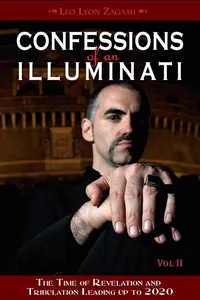



More Free Occult Philosophy Books
View all →