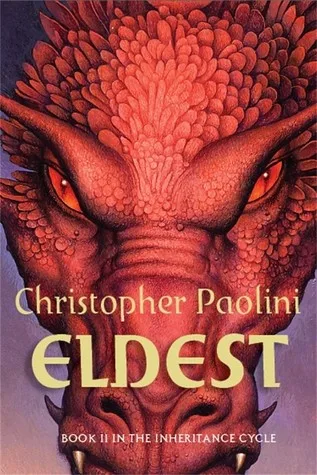
Eldest
 72
72

Eldest
Christopher Paolini's Eldest, a prequel to the Inheritance Cycle, ventures back to the dawn of dragon rider lore. The work excels in its detailed exploration of the ancient language and the symbiotic bond between riders and dragons, particularly through the perspective of Galbatorix. Paolini clearly invested significant effort in constructing the historical framework of Alagaësia, offering a comprehensive look at the magical and political forces at play before Eragon's time. However, the narrative occasionally feels weighed down by its extensive lore dumps, which, while informative, can slow the pacing considerably. A standout element is the examination of Galbatorix's rise to power and the philosophical underpinnings of his actions, which are presented with more nuance than one might expect. While the prose remains accessible, its density in explaining magical mechanics might challenge readers seeking purely action-driven fantasy. Eldest offers a rich, albeit sometimes dense, expansion of the Inheritance universe.
📝 Description
72
Published in 2019, Eldest chronicles the origins of the dragon riders in Alagaësia.
Eldest, the second novel in Christopher Paolini's Inheritance Cycle, takes readers back in time to explore the foundational history of Alagaësia. The narrative centers on the emergence of the dragon riders and the significant connections they forged with their dragon companions. This installment details the ancient history of magic, the political climate of that era, and the core conflicts that defined the world for ages. It examines the complex magical system that influences the land and its inhabitants, outlining the different types of power and their constraints. The book establishes the origins of many key elements found in later novels, offering a basis for understanding the world's lore.
This novel is best suited for dedicated followers of the Inheritance Cycle who wish to gain a deeper appreciation for the universe. Readers who value detailed world construction and the examination of magical systems will find ample content here. Those who enjoy grand fantasy stories with involved histories and character dynamics, especially involving mythical creatures and ancient lore, will likely be drawn to Eldest. It also appeals to younger adult readers interested in immersive fantasy worlds and narratives about destiny, guidance, and the growth of exceptional abilities. The story's structure provides a closer look at specific historical events within the Alagaësia timeline.
While not explicitly esoteric, Eldest engages with themes common in occult and supernatural fiction through its focus on ancient magic, destiny, and the deep, often spiritual, connection between riders and dragons. The narrative explores the power dynamics inherent in magical systems and the historical roots of conflict, mirroring occult traditions that seek to understand the hidden forces shaping reality. The concept of chosen individuals wielding extraordinary power, bound to powerful mythical beings, echoes archetypes found in various mystical traditions.
💡 Why Read This Book?
• Gain a foundational understanding of the "ancient language" and its grammatical structure, crucial for comprehending the magic system's rules and limitations as presented in Paolini's work. • Experience the nuanced depiction of the dragon rider "bond," exploring its spiritual and telepathic dimensions and how it shaped the ancient order's power. • Witness the early machinations and philosophical justifications behind Galbatorix's ascent, providing critical context for his later tyranny in the main saga.
⭐ Reader Reviews
Honest opinions from readers who have explored this book.
❓ Frequently Asked Questions
When was Eldest first published?
Eldest was first published in 2019. It serves as a prequel to the main Inheritance Cycle series, expanding on the lore established in Christopher Paolini's earlier works.
What is the primary focus of Eldest?
The primary focus of Eldest is the history of the Dragon Riders and the rise of Galbatorix. It details the ancient order, their bonds with dragons, and the events leading to the establishment of Galbatorix's tyrannical rule.
Does Eldest introduce new magic systems or concepts?
Yes, Eldest elaborates significantly on the "ancient language" and the "bond" between riders and dragons. It details the mechanics and limitations of these magical elements within the world of Alagaësia.
Is Eldest necessary to understand the Inheritance Cycle?
While not strictly necessary for the main Inheritance Cycle, Eldest provides crucial historical context and deepens the understanding of the world, its magic, and the origins of key conflicts and characters.
Who is the main antagonist explored in Eldest?
The main antagonist explored in Eldest is Galbatorix, detailing his path from a rider to the tyrannical king of Alagaësia, and the philosophical underpinnings of his actions.
What is the significance of the 'ancient language' in Eldest?
The "ancient language" in Eldest is presented as the source of true power, capable of shaping reality when spoken correctly. Its understanding is fundamental to wielding magic effectively within Paolini's world.
🔮 Key Themes & Symbolism
The Dragon Rider Bond
The narrative intensely examines the profound connection between dragon riders and their dragons, termed the "bond." This isn't merely a partnership but a deep, telepathic, and emotional link that allows for shared consciousness and amplified magical abilities. Eldest explores the origins of this symbiotic relationship, presenting it as the foundation of an ancient order tasked with maintaining peace. The strength and nature of these bonds are central to the characters' development and the overarching plot, highlighting themes of loyalty, destiny, and shared responsibility across species.
The Ancient Language
Central to the magic system of Alagaësia is the "ancient language," a powerful tongue whose words hold inherent magical force. Eldest studies its structure, pronunciation, and the wide implications of its use. Mastering this language is depicted as the key to unlocking true magical potential, capable of influencing the physical world and even the minds of others. The book emphasizes the discipline and understanding required to wield it effectively, contrasting those who use it for creation and balance with those who seek to exploit its power for dominion.
Galbatorix's Ascent
This prequel offers a detailed account of Galbatorix's transformation from a Dragon Rider into the tyrannical king of Alagaësia. Eldest explores the events, philosophical shifts, and personal tragedies that led him down a path of power and corruption. It examines his motivations, his complex relationship with his dragon, and his eventual subversion of the ancient order. The narrative aims to provide a nuanced understanding of his rise, portraying him not as a simple villain but as a figure shaped by his experiences and choices.
The Nature of Magic
Eldest explores the fundamental nature of magic within its fantasy setting. It presents magic as an intrinsic force, often tied to the "ancient language" and the "bond" between riders and dragons. The book illustrates that magic requires not only innate talent but also rigorous study, discipline, and an understanding of its ethical implications. Different forms and applications of magic are showcased, differentiating between constructive uses that maintain balance and destructive uses that seek control and dominance, thereby exploring the dual potential of such power.
💬 Memorable Quotes
Direct passages from the work, attributed to the author.
“The Spine of the World is a place where the wind never stops blowing, and the snow never melts.”
— This descriptive line evokes the harsh, untamed environments of Alagaësia, emphasizing the challenging conditions that shape its inhabitants and their history. It highlights the world's formidable geography.
“A dragon is not a pet. It is a companion, a partner, a friend.”
— This statement underscores the central theme of the dragon rider "bond." It clarifies that the relationship is one of equality and deep connection, not ownership, defining the spiritual and telepathic link.
“The greatest power lies not in force, but in understanding.”
— This interpretation of a core message suggests that true strength comes from knowledge and wisdom, particularly regarding magic and the "ancient language," rather than brute power.
“He had tasted power, and it was intoxicating.”
— This phrase captures the corrupting influence of power, particularly as experienced by Galbatorix. It speaks to the allure and danger of unchecked ambition within the narrative's context.
💡 Key Ideas
Editorial paraphrase of the work's core concepts — not direct quotes.
Words have power. They can build, and they can destroy.
This paraphrased concept reflects the significance of the "ancient language." It highlights the inherent force within words and the responsibility that comes with their use in magic and communication.
🌙 Esoteric Significance
Tradition
Eldest does not strictly adhere to a single esoteric tradition but draws broadly from archetypal fantasy elements that often echo Gnostic or Hermetic themes of hidden knowledge and cosmic order. The concept of a "Dragon Rider" order and their sacred duty can be seen as a secularized version of ancient priesthoods or guardians of mystical truths. The "ancient language" functions as a form of divine or primal speech, akin to the Logos in some traditions, suggesting a reality fundamentally shaped by potent, meaningful utterance.
Symbolism
The dragon itself is a potent symbol, representing primal power, ancient wisdom, and often, a bridge between the material and spiritual realms. In Eldest, the "bond" symbolizes a sacred union and the balance of opposing forces (rider and dragon, human and beast). The "ancient language" symbolizes ultimate reality or divine law, where true understanding and power lie in grasping its fundamental principles. The "Scepter of Utterance" represents the direct application of this primal power.
Modern Relevance
Contemporary fantasy authors continue to explore themes of deep interspecies connection and the power of language, echoing concepts found in Eldest. While not directly cited in academic esoteric circles, the book's success in creating a detailed magical world and a profound rider-dragon relationship influences fan fiction and world-building discussions online. Its exploration of the corrupting nature of absolute power also remains a relevant topic in discussions of leadership and morality.
👥 Who Should Read This Book
• Enthusiasts of intricate world-building and magic systems who appreciate detailed explanations of lore and linguistic structures. • Young adult fantasy readers seeking immersive stories with themes of destiny, courage, and the development of extraordinary abilities. • Long-time fans of the Inheritance Cycle looking to deepen their understanding of the series' history, the origins of key characters, and the foundational conflicts of Alagaësia.
📜 Historical Context
Christopher Paolini's Eldest, released in 2019, arrived nearly 16 years after the initial publication of Eragon (2003), a period marked by the maturation of the modern fantasy genre. The Inheritance Cycle, as a whole, emerged during a wave of popularity for epic fantasy, influenced by the enduring legacy of J.R.R. Tolkien and the burgeoning success of series like Harry Potter. Paolini's work tapped into a demand for immersive worlds with detailed magic systems and heroic narratives. While the initial trilogy solidified its fanbase, the release of Eldest as a prequel allowed Paolini to revisit and expand upon the lore he had established. The reception of the series has been largely positive among its target demographic, though critics often discussed its adherence to established fantasy tropes, a common point of contention within the genre. Unlike authors who engaged directly with contemporary philosophical debates through their fantasy, Paolini's focus remained primarily on constructing a coherent and engaging mythos for Alagaësia, differentiating him from more allegorical fantasy writers of the era.
📔 Journal Prompts
The nature of Galbatorix's initial motivations for seeking power.
Reflecting on the "ancient language" and its potential for creation versus destruction.
The specific qualities that define the "bond" between a rider and their dragon.
Consider the ethical implications of wielding magic derived from the "ancient language."
The role of the Spine of the World as a symbolic landscape.
🗂️ Glossary
Ancient Language
The primordial language of Alagaësia, possessing inherent magical power. Its correct use allows individuals to perform extraordinary feats, influencing the physical world and minds.
Bond
The telepathic and spiritual connection shared between a dragon rider and their dragon. This bond is fundamental to the dragon rider order, enabling shared consciousness and amplified magical abilities.
Dragon Rider
An ancient order of individuals bonded to dragons, tasked with maintaining peace and balance in Alagaësia. Their power and influence were significant until their near-eradication.
Galbatorix
The primary antagonist of the Inheritance Cycle, a former Dragon Rider who usurped power and became the tyrannical king of Alagaësia. Eldest explores his rise to power.
Spine of the World
A formidable mountain range in Alagaësia, known for its harsh climate and dangerous terrain, serving as a significant geographical feature in the world's lore.
Scepter of Utterance
An artifact associated with the ancient language, capable of amplifying its magical power, particularly in commanding or influencing others.
Varden
A rebel force opposing Galbatorix's rule. While Eldest focuses on earlier events, the Varden represent the ongoing resistance against tyranny.
🔮 Readers Also Liked
Browse all →







More by Christopher Paolini
All books →


More Free Occult Philosophy Books
View all →