El Tarot y La Interpretacion de Los Suenos (Tarot and Dream Interpretation)
 72
72

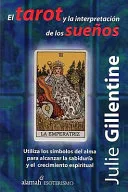
El Tarot y La Interpretacion de Los Suenos (Tarot and Dream Interpretation)
Julie Gillentine's "El Tarot y La Interpretacion de Los Suenos" attempts a fascinating synthesis, presenting the Tarot and dream analysis not as separate disciplines, but as interwoven threads of subconscious communication. The book's strength lies in its clear, two-part structure: historical grounding followed by practical application. However, while the premise is compelling, the execution sometimes feels introductory. The discussion on the history of dreams and Tarot, while informative, treads familiar ground. The core of the work—the interpretation of dreams through Tarot symbolism—is where its unique value resides, though it could benefit from more in-depth case studies. A particularly useful section demonstrates how a recurring dream symbol might be illuminated by consulting specific Tarot cards, offering a tangible method for readers. Gillentine effectively argues that symbols are the lingua franca of the psyche, accessible through both nocturnal visions and the seventy-eight cards. Despite its somewhat brief exploration of complex correspondences, the book serves as a solid primer for those seeking to connect these powerful symbolic systems.
📝 Description
72
Published in April 2003, El Tarot y La Interpretacion de Los Suenos connects Tarot symbolism with dream analysis.
Julie Gillentine's 2003 book, El Tarot y La Interpretacion de Los Suenos, bridges the fields of Tarot and dream interpretation. The author proposes that both Tarot and dreams communicate through the subconscious mind's symbolic language. The book is divided into two main sections. The first part offers a historical background of dreams and the Tarot. It also guides readers on understanding dreams, methods for recording them, and techniques for analyzing their content.
The second part of the book focuses on practical application, likely detailing how to use Tarot cards to interpret dream imagery and vice versa. Individuals interested in the connections between the subconscious, symbolic systems, and divination will find this text useful. It is aimed at those who use or are curious about the Tarot as a divinatory or psychological tool, as well as those practicing dream analysis. The work is suitable for beginners new to combining these practices and for experienced individuals seeking fresh viewpoints on dream symbolism and its Tarot correspondences.
This work, published in the early 2000s, emerges from a period influenced by Jungian psychology and archetypal symbolism. It reflects a growing interest in integrating psychological principles with traditional occult practices. The book contributes to a movement that views the Tarot not merely as a card game, but as a symbolic language mirroring the human psyche. This perspective gained momentum in the late 20th century and continued into the 21st, seeking deeper meaning in esoteric systems.
💡 Why Read This Book?
• Learn a structured method for interpreting your dreams by cross-referencing their symbols with Tarot archetypes, as presented in Part Two of the book. • Understand the shared symbolic language of the subconscious mind, recognizing how dream imagery and Tarot cards function similarly to communicate inner messages. • Gain historical context for both dream analysis and Tarot studies, appreciating their evolution and the intellectual currents, such as Jungian psychology, that informed their early 2000s integration.
⭐ Reader Reviews
Honest opinions from readers who have explored this book.
❓ Frequently Asked Questions
What is the primary focus of "El Tarot y La Interpretacion de Los Suenos"?
The book's primary focus is exploring the connection between Tarot symbols and dream interpretation, arguing that both utilize the subconscious mind's symbolic language to convey messages.
When was "El Tarot y La Interpretacion de Los Suenos" first published?
The book was first published in April 2003.
What does the book offer regarding dream recording?
The book provides guidance on how to record dreams, explaining what a dream is and offering advice on what to do with the recorded dream content.
Does the book offer practical examples of dream interpretation?
Yes, the second part of the book includes examples of dream interpretation using the Tarot, demonstrating how to apply the concepts discussed.
Who is the author of "El Tarot y La Interpretacion de Los Suenos"?
The author is Julie Gillentine.
What historical background is provided in the book?
The book offers a brief history of both dreams and the Tarot, setting the stage for understanding their symbolic connections.
🔮 Key Themes & Symbolism
Symbolic Language of the Psyche
The core of this work rests on the premise that dreams and Tarot cards are not arbitrary but employ a shared symbolic language. This language bypasses the rational mind to speak directly to the subconscious. Gillentine likely explores how recurring motifs in dreams, such as falling or flying, might find echoes in Tarot archetypes like The Tower or The Chariot, offering a framework for decoding these universal messages. The emphasis is on symbols as the fundamental building blocks of psychic communication.
Tarot as a Dream Mirror
This theme examines the Tarot deck as a sophisticated system that mirrors the landscapes and figures encountered in our dreams. By understanding the traditional meanings and archetypal energies of Tarot cards, readers are presented with a tool to analyze and gain insight into their dream experiences. The book likely guides readers on how to select specific cards that correspond to dream elements, thereby clear their hidden meanings and psychological significance.
Practical Dream Analysis Techniques
Beyond theoretical exploration, the book aims to equip readers with practical skills. This includes methods for effectively recording dreams – noting details, emotions, and recurring themes. Crucially, it offers strategies for interpreting these recorded dreams, specifically by applying Tarot symbolism. This practical aspect empowers individuals to actively engage with their subconscious, using the Tarot as a guide to unlock personal understanding and facilitate psychological growth.
Historical and Psychological Foundations
The work situates its approach within a historical context, offering a brief overview of the evolution of dream interpretation and the Tarot. It likely draws upon psychological theories, particularly those emphasizing the role of the subconscious and archetypes, to support its thesis. Understanding these foundational elements helps readers appreciate the depth and potential of integrating these two esoteric disciplines for self-discovery.
💬 Memorable Quotes
Direct passages from the work, attributed to the author.
“Symbols are the language of the subconscious.”
— This statement expresses the book's central thesis: that both dreams and Tarot communicate through a symbolic lexicon understood by our deeper minds, bypassing conscious filters.
“Dream images and Tarot cards communicate through the same symbolic channels.”
— This highlights the core argument that the archetypal figures and scenarios appearing in dreams share a common origin and interpretive framework with the imagery found on Tarot cards.
“Recording dreams is the first step to understanding them.”
— This practical advice emphasizes the importance of actively capturing dream content, suggesting that the act of documentation is essential before any meaningful analysis can occur.
“The Tarot offers a structured system for dream interpretation.”
— This suggests that the established meanings and archetypes within the Tarot can serve as a valuable framework or key to unlock the often-obscure messages found within one's dreams.
“The connection between dreams and Tarot reveals subconscious messages.”
— This points to the ultimate benefit of studying this intersection: gaining direct access to the insights and guidance provided by one's own subconscious mind through these symbolic systems.
🌙 Esoteric Significance
Tradition
This work aligns with a modern esoteric synthesis, particularly drawing from Jungian psychology's emphasis on archetypes and the collective unconscious. It departs from purely divinatory or ceremonial traditions by focusing on the Tarot as a symbolic language that mirrors internal psychological processes, akin to dream imagery. Its lineage can be traced through the resurgence of interest in symbolic systems for self-understanding that gained momentum in the mid-20th century.
Symbolism
The book likely explores universal archetypes present in both dreams and Tarot. For instance, the archetype of the 'Shadow' figure in dreams might be linked to darker cards in the Tarot, such as The Devil, representing suppressed aspects of the self. Similarly, symbols of 'flight' in dreams could correspond to the archetypal energy of The Chariot or The Ace of Air, signifying progress and mental initiation.
Modern Relevance
Contemporary practitioners of Jungian analysis, transpersonal psychology, and modern Tarot readers who focus on psychological growth find value in Gillentine's approach. It appeals to current trends that integrate esoteric tools into therapeutic and self-development practices, moving beyond older, more rigid interpretations of Tarot and dream analysis.
👥 Who Should Read This Book
• Aspiring dream analysts seeking a structured method to interpret their nocturnal visions by cross-referencing with established symbolic systems. • Tarot practitioners interested in expanding their understanding of the cards beyond traditional readings, viewing them as keys to subconscious communication. • Individuals exploring Jungian psychology and archetypal symbolism who wish to see these concepts applied practically to personal insight through dreams and Tarot.
📜 Historical Context
Published in April 2003, Julie Gillentine's "El Tarot y La Interpretacion de Los Suenos" emerged during a period of sustained interest in the integration of psychological theory with esoteric practices. The late 20th and early 21st centuries saw a significant influence from Carl Jung's work on archetypes and the collective unconscious, which provided a fertile ground for studies like this that sought to bridge the symbolic languages of dreams and divination tools. While not directly engaging with contemporary esoteric authors in its blurb, the book aligns with a broader movement that viewed tools like the Tarot not merely as predictive devices but as mirrors of the psyche, a perspective championed by figures such as Joseph Campbell in his explorations of mythology and the hero's journey. The reception of such works often positioned them as practical applications of Jungian concepts, contrasting with more traditional or purely occult interpretations of the Tarot prevalent in earlier eras.
📔 Journal Prompts
Reflect on a recurring dream symbol and its potential Tarot counterpart.
Analyze the emotional tone of a recent dream and consider which Tarot court cards might embody it.
Consider the 'language of the subconscious' as presented in the book; what is your personal experience with it?
Document a dream and then explore its meaning using the symbolic correspondences discussed.
How does the concept of the Tarot as a 'dream mirror' apply to your own dream experiences?
🗂️ Glossary
Subconscious
The part of the mind of which one is not fully aware but which influences one's actions and feelings; the seat of intuition, dreams, and symbolic communication.
Symbol
An image, word, or object that represents a deeper meaning, idea, or concept, often used by the subconscious mind to convey complex information.
Archetype
A universal, inherited pattern of thought or imagery derived from the collective unconscious, often appearing in myths, dreams, and art.
Dream Interpretation
The process of analyzing the meaning and significance of dream content, often involving symbolic understanding and psychological exploration.
Tarot
A deck of seventy-eight cards featuring symbolic imagery, traditionally used for divination and, in modern contexts, for psychological insight and self-exploration.
Symbolic Language
A mode of communication that relies on symbols and imagery rather than literal language to convey meaning, characteristic of the subconscious mind.
Oniric Images
The visual content or imagery experienced during a dream state; the pictures and scenes that populate the dream world.