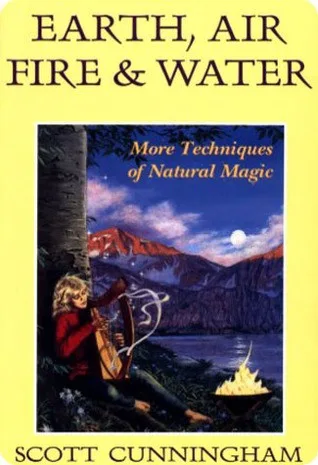
Earth, air, fire & water

 73
73

Earth, air, fire & water
Scott Cunningham’s Earth, Air, Fire & Water offers a lucid, if somewhat generalized, entry point into elemental magic. Its strength lies in its directness; Cunningham avoids the dense jargon that often encumbers esoteric texts, making the concepts accessible to beginners. He effectively presents the four elements as dynamic forces, not static symbols. A notable limitation, however, is the lack of deep engagement with specific historical traditions. While the work touches upon correspondences, it rarely grounds them in the rigorous historical scholarship that informed figures like Eliphas Lévi or the Hermetic Order of the Golden Dawn. The section detailing the practical uses of elemental correspondences in ritual, for instance, while useful, feels somewhat detached from its historical roots. The book serves well as an introductory primer, but those seeking a scholarly or deeply traditional understanding may need to look elsewhere. It is a foundational text for the modern practitioner, prioritizing ease of use over historical depth.
📝 Description
73
Scott Cunningham first published 'Earth, Air, Fire & Water' in 2002.
This 2002 book examines the four classical elements – Earth, Air, Fire, and Water – as they appear in various esoteric traditions. Scott Cunningham details how these elements function not just as physical substances, but as archetypal forces and energetic principles that shape existence. The book provides practical ways to understand and incorporate these elemental energies into personal magical practices and one's view of the world. It is for those who want a clear introduction to elemental magic and its symbolism. Practitioners of Wicca, ceremonial magic, and general occult studies will find it useful for deepening their grasp of universal building blocks. The work also appeals to those interested in comparative religion and the historical spiritual use of elemental symbolism.
Cunningham's approach offers a clear, systematized method for working with elemental forces. This contrasts with more academic or complex theoretical books. It appeared when many sought direct experience and practical application over dense theory. The book focuses on the distinct yet linked qualities of Earth, Air, Fire, and Water. Cunningham maps their traditional associations with directions, seasons, temperaments, and magical correspondences. He stresses their importance in ritual, personal power, and manifesting intent within a magical context, viewing them as essential energies for spiritual development.
Published in 2002, 'Earth, Air, Fire & Water' emerged during a time of renewed interest in practical esotericism. Scott Cunningham's work provided an accessible guide to ancient magical systems, specifically focusing on the four classical elements. His methodical approach offered a distinct way to engage with these elemental forces, appealing to those who preferred direct experience and systematic application over abstract theory. The book fits within a tradition of Western esotericism that seeks to understand the fundamental energies of the universe for personal transformation and magical practice.
💡 Why Read This Book?
• Gain a clear understanding of the four classical elements and their energetic properties, as detailed in Cunningham's practical approach to their use in ritual and personal development. • Learn specific correspondences for Earth, Air, Fire, and Water, enabling you to apply these ancient principles to your own magical or spiritual practices as outlined in the text. • Discover how to integrate elemental forces into your daily life and magical workings, a method Cunningham first systematically presented to a wide audience in this accessible 2002 publication.
⭐ Reader Reviews
Honest opinions from readers who have explored this book.
❓ Frequently Asked Questions
When was Scott Cunningham's Earth, Air, Fire & Water first published?
Scott Cunningham's influential work, Earth, Air, Fire & Water, was first published in 2002, making it a relatively modern guide to these ancient elemental concepts.
What are the main subjects covered in Earth, Air, Fire & Water?
The book primarily covers the four classical elements—Earth, Air, Fire, and Water—exploring their symbolic meanings, traditional associations, and practical applications in esoteric practices.
Is this book suitable for beginners in esoteric studies?
Yes, Earth, Air, Fire & Water is widely considered an excellent starting point for beginners due to its clear language and practical focus on elemental concepts.
Does Scott Cunningham provide practical exercises in the book?
Yes, the book offers numerous practical insights and methods for working with the energies of the four elements in ritual and personal development.
How do the four elements relate to each other in Cunningham's work?
Cunningham presents the elements as interconnected forces, detailing their distinct qualities and how they balance and interact within both the macrocosm and the microcosm.
Where can I find more works by Scott Cunningham?
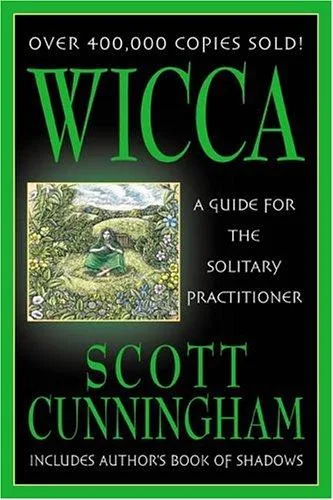
Scott Cunningham authored many books on Wicca and magic, including 'Wicca: A Guide for the Solitary Practitioner' and 'The Complete Book of Incense, Oils and Brews', often focusing on practical, nature-based spirituality.
🔮 Key Themes & Symbolism
Elemental Correspondences
The work meticulously maps out the extensive correspondences associated with each of the four classical elements: Earth, Air, Fire, and Water. This includes their links to cardinal directions, specific tools used in ritual (like the wand for Air or the pentacle for Earth), astrological signs, and even aspects of human personality and temperament. Cunningham presents these not as rigid dogma but as a flexible framework for understanding the energetic qualities each element embodies, crucial for ritual efficacy and personal spiritual alignment.
Practical Ritual Application
A central theme is the direct, practical application of elemental energies in magical and spiritual work. Cunningham emphasizes how understanding and invoking the distinct qualities of each element can enhance ritual effectiveness, facilitate manifestation, and promote personal balance. The book provides guidance on how to consciously work with these forces, whether in circle casting, spellcraft, or meditation, making esoteric concepts accessible for everyday practice.
The Four Worlds
The book explores the concept of the Four Worlds, often understood in esoteric traditions as corresponding to the elements and different planes of existence. Cunningham connects these worlds to the elements, illustrating how they manifest across physical, emotional, mental, and spiritual levels. This framework helps readers perceive the pervasive influence of elemental energies and understand their role in both the external universe and their internal landscape.
Personal Balance and Integration
Beyond ritual, a key theme is the use of elemental understanding for achieving personal balance and spiritual integration. Cunningham suggests that imbalances in one's internal elemental energies can lead to specific psychological or physical states. By recognizing and consciously working with the attributes of Earth, Air, Fire, and Water within oneself, practitioners can cultivate greater harmony, self-awareness, and overall well-being.
💬 Memorable Quotes
Direct passages from the work, attributed to the author.
“The elements are not merely symbolic; they are active forces.”
— This statement underscores Cunningham's practical approach, emphasizing that the elements are not just abstract concepts but dynamic energies that can be consciously engaged with and utilized in magical practice.
“Each element governs a specific direction and set of qualities.”
— This highlights the systematic nature of elemental magic, where each force is assigned specific attributes and directions, forming a foundational structure for ritual and spiritual understanding.
“Working with the elements brings order to chaos.”
— This interpretation suggests the transformative power of elemental work, implying that by understanding and applying their inherent principles, one can bring structure and purpose to formless potential or disarray.
“Fire represents transformation and inspiration.”
— This concise interpretation captures the essence of the Fire element as presented in many esoteric systems, linking it to processes of change, purification, and the spark of creative insight.
💡 Key Ideas
Editorial paraphrase of the work's core concepts — not direct quotes.
The balance of elements within is key to personal harmony.
This paraphrase points to the internal aspect of elemental work, suggesting that achieving equilibrium among these forces within oneself is essential for psychological and spiritual well-being.
🌙 Esoteric Significance
Tradition
This work primarily draws from the Western esoteric tradition, particularly the elemental systems found in Hermeticism and modern Wicca. It synthesizes and simplifies concepts often found in more complex ceremonial magic texts, presenting them in a format accessible to the solitary practitioner. Cunningham’s approach emphasizes the immanent, accessible nature of these forces, departing from some stricter, hierarchical magical orders in favor of a more personal and intuitive engagement.
Symbolism
The core symbolism revolves around the four classical elements: Earth (grounding, stability, physical form), Air (intellect, communication, movement), Fire (passion, transformation, energy), and Water (emotion, intuition, flow). These are represented through traditional associations like directions, seasons, and tools, serving as archetypal keys to understanding both the outer world and the inner psyche. The pentagram, often used to invoke or banish elements, is also a key symbol of elemental balance and control.
Modern Relevance
Cunningham's work remains highly relevant for contemporary practitioners seeking foundational knowledge in elemental magic. It influences many modern Wiccan and neo-pagan covens and solitary practitioners who value its clear, non-dogmatic approach. Thinkers and practitioners in fields like ecopsychology and nature-based spirituality often find resonance in his emphasis on connecting with primal forces, making it a bridge between traditional esotericism and modern ecological awareness.
👥 Who Should Read This Book
• Aspiring practitioners of Wicca or general witchcraft seeking a clear introduction to the foundational concept of elemental magic and correspondences. • Individuals interested in understanding the symbolic language of the four classical elements and their application in ritual, meditation, and personal development. • Students of comparative religion and esoteric history looking for an accessible overview of how Earth, Air, Fire, and Water have been understood and utilized across various spiritual traditions.
📜 Historical Context
Published in 2002, Scott Cunningham’s Earth, Air, Fire & Water arrived during a resurgence of interest in practical, nature-based spirituality and modern witchcraft. It followed a century marked by diverse interpretations of elemental magic, from the ceremonial rites of the Hermetic Order of the Golden Dawn, which meticulously detailed elemental systems, to the more eclectic approaches of early 20th-century occultists like Aleister Crowley. Cunningham’s work distinguished itself by offering a distilled, accessible method, prioritizing direct experience and personal application over the complex theoretical frameworks found in works like Israel Regardie's 'The Golden Dawn'. While not engaging directly with academic debates, its widespread adoption by solitary practitioners implicitly demonstrated a demand for simplified, actionable esoteric knowledge in the digital age.
📔 Journal Prompts
The correspondence of the wand with Air and its role in communication.
Reflecting on personal energetic balance in relation to the four elements.
The transformative power of Fire in personal practice.
Water's connection to intuition and emotional states.
Earth's symbolism of stability and grounding in challenging times.
🗂️ Glossary
Elements
The fundamental substances or forces (Earth, Air, Fire, Water) traditionally believed to compose the universe and influence phenomena, viewed in esoteric traditions as both physical and energetic principles.
Correspondences
A system of symbolic associations linking various elements, colors, directions, times, tools, and concepts within esoteric practices, used to enhance ritual and magical work.
Cardinal Directions
The four main points of the compass (North, East, South, West), each traditionally associated with one of the four classical elements and used for orientation in ritual space.
Ritual
A set of actions performed according to a prescribed order, often for symbolic or spiritual purposes, used in esoteric traditions to invoke energies, effect change, or achieve altered states of consciousness.
Archetype
A primordial, universal pattern or model of an idea or image, such as the elements, that influences human consciousness and behavior across cultures and time.
Magical Tools
Objects used in esoteric practices to focus intent and direct energy, such as wands, swords, pentacles, and cups, each often associated with a specific element.
Elemental Balance
The state of equilibrium among the energies of Earth, Air, Fire, and Water within oneself or within a ritual space, considered essential for harmony and effective magic.
🔮 Readers Also Liked
Browse all →







More by Scott Cunningham
All books →


More Free Magic & Ritual Books
View all →