Dropping Ashes on the Buddha
 71
71

Dropping Ashes on the Buddha
The directness with which Seung Sahn confronts his American students in Dropping Ashes on the Buddha is its signal strength. The famous "lighted cigarette" scenario, posing a direct challenge to conventional reverence for the Buddha image, immediately cuts through polite intellectualization. It forces a confrontation with practice, not mere theory. One limitation, however, is that the sheer volume of dialogue, while authentic, can sometimes feel repetitive, especially for readers less invested in the specific dynamics of these early Zen centers. The work’s persistent questioning of "what is Buddha?" and the student’s struggle to answer without resorting to platitudes is particularly effective. This book is essential for understanding the practical application of Zen in a Western context.
📝 Description
71
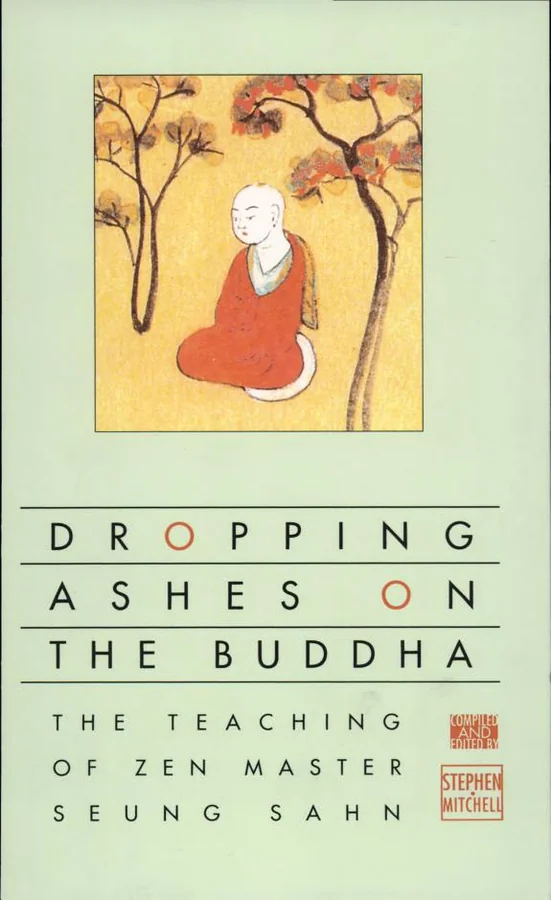
Published in 1976, Dropping Ashes on the Buddha records conversations between Zen Master Seung Sahn and his American students.
This book captures the direct interactions between Korean Zen Master Seung Sahn and his Western students, first published in 1976. It is not a formal text but a collection of dialogues reflecting the confusion, insights, and humor that arose from immediate engagement with Zen practice in the United States.
Seung Sahn's teaching style is evident throughout, characterized by directness and challenging questions. American students, grappling with Buddhist philosophy, are shown in their process of inquiry. The book offers a look into the cross-cultural transmission of spiritual traditions, specifically Zen, during a time of growing Western interest in Eastern religions.
Readers will encounter the core of Zen practice through these exchanges. The work emphasizes direct experience over intellectual understanding, encouraging a questioning of attachment and conceptual frameworks. It is suitable for those who prefer unconventional spiritual teachings.
Dropping Ashes on the Buddha offers a look into the development of Zen Buddhism in the West during the 1970s. Master Seung Sahn was a key figure in establishing Korean Zen in America, bringing a distinct teaching style that differed from established Japanese Zen influences. This work reflects the period's burgeoning interest in Eastern spirituality and the challenges of translating complex philosophical and contemplative traditions across cultural divides. It highlights the practical application of Zen principles in a new context.
⭐ Reader Reviews
Honest opinions from readers who have explored this book.
❓ Frequently Asked Questions
What is the central question posed in Dropping Ashes on the Buddha?
The central question is a hypothetical scenario: A person approaches a Buddha statue, blows smoke on it, and drops ashes on its lap. The reader, standing there, is asked, "What can you do?" This challenges conventional ideas about respect and attachment to religious symbols.
Who is Sungsan Tae Sŏnsa?
Sungsan Tae Sŏnsa, also known as Seung Sahn, was a Korean Seon (Zen) master. He was instrumental in bringing Korean Buddhism to the West, establishing numerous Zen centers, including the Kwan Um School of Zen.
When was Dropping Ashes on the Buddha first published?
The book was first published in 1976, reflecting a period of burgeoning interest in Eastern spiritual practices in Western countries.
What is the teaching style presented in this book?
The teaching style is direct, often confrontational, and infused with humor. Master Seung Sahn uses provocative questions and scenarios to challenge his students' conceptual thinking and encourage direct experience.
Is this book suitable for beginners in Zen?
Yes, it can be beneficial for beginners who appreciate a direct, challenging approach. However, its style is unconventional and might be best approached with an open mind, perhaps alongside more introductory texts.
What does the title 'Dropping Ashes on the Buddha' signify?
The title refers to the hypothetical act of disrespecting a Buddha statue. It signifies challenging fixed ideas about sacredness, attachment, and the nature of enlightenment itself, pushing practitioners towards direct experience.
🔮 Key Themes & Symbolism
Challenging Attachment
The book relentlessly probes the nature of attachment, particularly to religious symbols and conceptual understanding. The "Buddha statue" scenario serves as a potent device to reveal how practitioners cling to forms rather than the essence of practice. Seung Sahn encourages looking beyond the object, questioning the very definition of "Buddha" when confronted with an act of apparent desecration. This theme pushes readers to examine their own fixed ideas and the ways they create mental barriers to direct perception.
Direct Experience vs. Intellect
A core focus is the primacy of direct, unmediated experience over intellectualization or dogma. Master Seung Sahn consistently redirects his students from abstract answers to concrete, immediate responses. The dialogues highlight the frustration and eventual breakthroughs that occur when conceptual frameworks fail. This theme underscores the Zen emphasis on "a special transmission outside the scriptures," valuing personal realization above scholarly knowledge.
Humor in Practice
The book captures the often-hilarious misunderstandings and breakthroughs that arise in spiritual practice. Seung Sahn's sharp wit and the students' earnest, sometimes comical, struggles create a dynamic and engaging narrative. This humor is not mere levity but a tool to disarm ego and reveal the absurdity of rigid adherence to concepts. It suggests that enlightenment is not necessarily a solemn, austere pursuit but can be approached with a playful, open spirit.
Cross-Cultural Transmission
As one of the earliest records of a Korean Zen master teaching directly in the West, the book offers invaluable insight into the challenges and nuances of transmitting a spiritual tradition across cultures. It showcases the specific questions and cultural assumptions that Western students brought to Zen, and how Master Seung Sahn navigated these differences with his unique teaching style. The publication date of 1976 places it within a key period of this transmission.
💬 Memorable Quotes
Direct passages from the work, attributed to the author.
“Somebody comes into the Zen center with a lighted cigarette, walks up to the Buddha statue, blows smoke in its face, and drops ashes on its lap. You are standing there. What can you do?”
— This iconic scenario is the book's launching point, designed to shatter conventional reverence and force a confrontation with the nature of attachment, form, and direct response in Zen practice.
“If you think you understand, you don't. If you think you don't understand, you do.”
— This paradoxical statement highlights the Zen emphasis on moving beyond intellectual grasping. True understanding, in this context, often arises from acknowledging the limits of conceptual thought.
“My teaching is: Don't know mind.”
— This points to the state of 'no-mind' or beginner's mind central to Zen, encouraging practitioners to let go of preconceived notions and habitual thinking patterns.
“What is Buddha? Is it only this statue?”
— This question directly challenges the student's perception of sacredness and identity, pushing them to look beyond the physical form to the underlying reality or experience.
“Your mind is the only Buddha.”
— This statement emphasizes the internal nature of enlightenment, suggesting that the ultimate source of wisdom and awakening resides within one's own consciousness.
🌙 Esoteric Significance
Tradition
While rooted in the Korean Seon (Zen) tradition, which itself is a form of Mahayana Buddhism, Dropping Ashes on the Buddha demonstrates a practical, experiential application of these teachings. It departs from purely doctrinal or philosophical expositions often found in Western interpretations. The emphasis on direct confrontation with the student's mind and the use of provocative scenarios aligns with the Chan/Zen lineage's focus on sudden enlightenment and the transmission of mind-to-mind.
Symbolism
The central symbol is the Buddha statue itself, which becomes a focal point for deconstructing attachment and conceptualization. Dropping ashes or blowing smoke onto it symbolizes the act of challenging fixed ideals and the tendency to reify spiritual concepts. The "lighted cigarette" represents the mundane intruding upon the sacred, forcing a re-evaluation of what constitutes the sacred and how one relates to it.
Modern Relevance
Contemporary mindfulness movements and secularized Buddhist practices often draw implicitly or explicitly on the experiential emphasis found in works like this. Thinkers and practitioners engaged in somatic experiencing or non-dual inquiry find resonance in Seung Sahn's direct, often body-oriented, challenges. The book's approach to teaching continues to influence meditation centers and spiritual inquiry groups seeking to move beyond intellectual understanding towards lived realization.
👥 Who Should Read This Book
['• Practitioners of Zen Buddhism seeking to deepen their understanding of koan practice and direct pointing, especially those familiar with the Kwan Um School of Zen.', '• Students of comparative religion interested in the cross-cultural dynamics of spiritual transmission and the adaptation of Eastern traditions in the West during the late 20th century.', '• Individuals questioning conventional notions of spirituality, sacredness, and the role of intellectual understanding in personal growth, who appreciate direct, challenging, and often humorous instruction.']
📜 Historical Context
First published in 1976, Dropping Ashes on the Buddha emerged during a key era for the westward expansion of Zen Buddhism. Master Seung Sahn, a Korean Seon master, was actively establishing centers like the Providence Zen Center, directly engaging American students in the 1970s. This period saw significant interest in Eastern philosophies, with figures like Shunryu Suzuki already having a strong presence through works like *Zen Mind, Beginner's Mind*. Seung Sahn’s teaching, however, was characterized by its directness, provocative questioning, and humor, offering a distinct approach compared to more staid academic or monastic presentations. The book reflects the cultural milieu of the post-1960s counterculture, where many Americans were seeking alternative spiritual paths. Its reception marked a significant moment in the popularization and adaptation of Korean Zen within a Western context, influencing subsequent generations of practitioners.
📔 Journal Prompts
The "Buddha statue" scenario: What immediate, unconceptualized response arises within you?
Master Seung Sahn's insistence on "Don't know mind": How does this contrast with your usual approach to problems?
The role of humor in spiritual practice: Where do you see its potential and limitations in your own journey?
Attachment to "Buddha": What forms does this attachment take in your daily life beyond religious imagery?
Direct experience versus intellectual understanding: Reflect on a recent situation where one superseded the other.
🗂️ Glossary
Seon
The Korean term for Zen Buddhism, emphasizing meditation and direct experience over scripture.
Koan
A paradoxical anecdote or riddle used in Zen practice to provoke doubt and test a student's progress in Zen practice, challenging rational thought.
Buddha-nature
The inherent potential for enlightenment within all sentient beings, a core concept in Mahayana Buddhism.
Attachment
In Buddhist philosophy, the craving or clinging to objects, sensations, or ideas, seen as a root cause of suffering.
Direct Experience
Perception or knowledge gained through direct encounter, bypassing intellectualization or interpretation.
Don't Know Mind
A state of mind characterized by openness, curiosity, and freedom from preconceptions, often cultivated in Zen practice.
Kwan Um School of Zen
An international association of Zen centers founded by Seung Sahn, emphasizing practice and the integration of Zen into daily life.
This book appears in 1 collection
🔮 Readers Also Liked
Browse all →









From the “Zen Buddhism” Collection
View all →





More Free Occult Philosophy Books
View all →