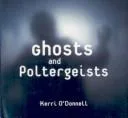
Ghosts and poltergeists
 71
71

Ghosts and poltergeists
Kerri O'Donnell's "Ghosts and Poltergeists" attempts to bring a systematic approach to a subject often mired in folklore and sensationalism. The book's strength lies in its categorization of phenomena, clearly distinguishing between residual hauntings, intelligent hauntings, and poltergeist disturbances. This analytical framework provides a useful structure for understanding the diverse reports within the paranormal field. However, the work occasionally falters by not always providing sufficient evidence for its more speculative claims, particularly when discussing the nature of consciousness as a potential source of these phenomena. The exploration of poltergeist cases, especially those involving a focal 'agent,' is particularly well-handled, presenting a balanced view of psychological and energetic interpretations. While not a definitive exposé, it serves as a competent overview for those seeking to understand the nuances of spectral encounters.
📝 Description
71
Kerri O'Donnell's 2006 book examines spectral phenomena beyond simple anecdotes.
Published in 2006, Kerri O'Donnell's "Ghosts and Poltergeists" offers a structured look at spectral phenomena. The book moves past personal stories to consider the historical, psychological, and potential energetic factors behind hauntings and poltergeist activity. It classifies different manifestations, including residual hauntings, intelligent hauntings, and the more disruptive events linked to poltergeists. This work is suited for those seriously interested in the paranormal who want a clear framework for understanding ghost and poltergeist lore. Researchers, students of esoteric studies, and open minded skeptics will find it valuable. The book supports a balanced view, considering both psychological and possible supernatural explanations.
O'Donnell's study engages with earlier research from periods of heightened interest in spiritualism and psychical research, particularly the late 19th and early 20th centuries. It positions itself within the ongoing attempts by parapsychology to gain recognition as a rigorous field of study. The work addresses the long history of accounts of apparitions and unexplained events, which stretches back centuries.
This book engages with the historical study of apparitions and unexplained phenomena, a tradition that includes spiritualism and psychical research movements of the 19th and early 20th centuries. It draws upon and analyzes theories developed during these periods, which sought to understand consciousness and its potential interaction with the physical world. O'Donnell's work places these historical investigations within a more contemporary context, considering them alongside psychological and potential energetic explanations for reported hauntings and poltergeist events.
💡 Why Read This Book?
• Gain a structured understanding of hauntings by differentiating between residual and intelligent hauntings, as explored in the book's categorization of spectral activity. • Grasp the concept of the 'agent' in poltergeist cases, learning how O'Donnell frames the connection between a specific individual and physical disturbances. • Explore theories on the energetic or psychological basis of paranormal events, moving beyond simple ghost stories to consider the underpinnings discussed from the 2006 publication date.
⭐ Reader Reviews
Honest opinions from readers who have explored this book.
❓ Frequently Asked Questions
What is the primary distinction between ghosts and poltergeists in O'Donnell's book?
O'Donnell distinguishes ghosts primarily as apparitions or residual energies from past events, while poltergeists are characterized by physical disturbances like moving objects, often centered around a specific living person or 'agent'.
Does "Ghosts and Poltergeists" offer scientific explanations for hauntings?
The book examines both psychological and potential energetic explanations. While it doesn't present definitive scientific proof, it explores theories that bridge parapsychology and conventional understanding, referencing concepts discussed around its 2006 publication.
What is a 'residual haunting' according to the book?
A residual haunting is described as a psychic imprint or a non-intelligent replay of a past event or emotion, akin to a recording playing back, rather than an interactive entity.
Who is Kerri O'Donnell and what is her background?
Information on Kerri O'Donnell's specific background is not detailed in the standard descriptions of "Ghosts and Poltergeists," but the work itself suggests an author engaged with parapsychological research and historical accounts.
When was "Ghosts and Poltergeists" first published?
The book "Ghosts and Poltergeists" by Kerri O'Donnell was first published in 2006.
Does the book cover famous ghost stories or specific locations?
While the book uses examples to illustrate concepts, its primary focus is on categorizing and theorizing about phenomena rather than providing an exhaustive list of famous hauntings or locations.
🔮 Key Themes & Symbolism
Categorization of Hauntings
O'Donnell meticulously breaks down spectral encounters into distinct categories, primarily distinguishing between residual hauntings and intelligent hauntings. Residual hauntings are presented as psychic echoes or imprints of past events, lacking consciousness or interaction. Intelligent hauntings, conversely, involve entities that appear to possess awareness and can interact with the living. This distinction is crucial for understanding the varied nature of reported paranormal activity and forms a foundational element of the book's analytical approach, first presented in 2006.
The Poltergeist Phenomenon
A significant portion of the work is dedicated to poltergeist activity, which differs markedly from typical ghost sightings. The book explores the common characteristics of poltergeist events, such as physical disturbances like moving objects, unexplained noises, and electrical interference. Crucially, it introduces and analyzes the concept of the 'agent'—an individual, often an adolescent, around whom the phenomena seem to concentrate. This focus shifts the discussion towards the potential interplay between human consciousness and physical manifestations.
Theories of Consciousness and Energy
Beyond cataloging phenomena, "Ghosts and Poltergeists" explores theoretical frameworks that attempt to explain these occurrences. It touches upon ideas related to psychic energy, the nature of consciousness, and how these might interact with or influence the physical environment. While not strictly adhering to a single esoteric tradition, the book engages with concepts that resonate with broader metaphysical inquiries into the mind-matter relationship, offering interpretations that extend beyond purely psychological explanations.
Historical and Parapsychological Context
O'Donnell situates her examination within the broader history of paranormal investigation. The work implicitly references the legacy of psychical research and parapsychology, fields that gained traction in the late 19th and early 20th centuries. By exploring these phenomena, the book connects contemporary reports to a long-standing human fascination with the afterlife and unexplained experiences, acknowledging the evolution of thought surrounding ghosts and spirits since earlier investigations.
💬 Memorable Quotes
Direct passages from the work, attributed to the author.
“Residual hauntings are akin to psychic imprints or replays of past events.”
— This concept highlights the idea that some paranormal activity isn't a conscious entity but rather an energetic echo of strong emotions or significant occurrences imprinted on a location.
“Poltergeist phenomena often center around a specific individual, termed the 'agent'.”
— This suggests a potential link between the intense psychological or emotional state of a person and the physical disturbances observed, moving the focus from a disembodied spirit to a living human.
“Intelligent hauntings involve entities that appear to possess awareness and can interact with the living.”
— This contrasts with residual hauntings, proposing that some spectral encounters are with conscious beings capable of communication or deliberate action.
“The work explores theories on the nature of consciousness and its potential interaction with physical environments.”
— This points to the book's engagement with metaphysical concepts, considering how the mind or consciousness itself might play a role in manifesting or perceiving paranormal events.
“Distinguishing between different types of paranormal activity is crucial for understanding.”
— This emphasizes the book's methodical approach, suggesting that lumping all supernatural reports together hinders genuine investigation and understanding.
🌙 Esoteric Significance
Tradition
While not strictly adhering to a singular esoteric lineage, "Ghosts and Poltergeists" draws upon broader metaphysical and psychical research traditions. It touches upon concepts related to subtle energies and the nature of consciousness that echo themes found in Theosophy and certain branches of Western esotericism, particularly concerning non-physical planes of existence and mind-matter interaction. The work departs from purely religious or occult dogma by attempting a more analytical, almost pseudo-scientific categorization of phenomena.
Symbolism
The book doesn't heavily rely on overt symbolic language but uses concepts as symbolic representations. For instance, the 'residual haunting' acts as a symbol for imprinted memory or energy, suggesting the persistence of past events. The 'agent' in poltergeist cases symbolizes the human psyche's potential power to influence the physical world, sometimes unconsciously. These concepts function as symbolic frameworks for understanding the interaction between the unseen and the seen.
Modern Relevance
Contemporary interest in ghost hunting, paranormal investigation shows, and discussions around consciousness studies continue to draw from the foundational work of categorizing and theorizing about spectral phenomena. O'Donnell's distinctions between different types of hauntings and the concept of the 'agent' remain relevant for modern investigators and researchers seeking structured frameworks to analyze their findings, bridging the gap between anecdotal evidence and theoretical exploration.
👥 Who Should Read This Book
• Aspiring paranormal investigators seeking a foundational understanding of different types of hauntings and phenomena. • Students of parapsychology and consciousness studies interested in theoretical frameworks for unexplained events. • Skeptics and open-minded individuals looking for a structured analysis of ghost and poltergeist reports beyond sensationalism.
📜 Historical Context
Published in 2006, Kerri O'Donnell's "Ghosts and Poltergeists" emerged during a period where parapsychology continued its efforts to gain academic legitimacy, following decades of intense interest in spiritualism and psychical research in the late 19th and early 20th centuries. The work implicitly engages with the legacy of figures like F.W.H. Myers and the Society for Psychical Research, which meticulously documented apparitions and hauntings. O'Donnell's approach, however, leans towards a more modern categorization, differentiating phenomena in ways that reflect contemporary parapsychological discourse. Unlike purely folkloric accounts, the book seeks to analyze and theorize. While direct engagement with specific contemporary critics or competing schools of thought like radical skepticism isn't the book's primary focus, its structured examination implicitly challenges less analytical approaches to the paranormal.
📔 Journal Prompts
The distinction between residual hauntings and intelligent hauntings.
The role of the 'agent' in poltergeist activity.
Personal reflections on unexplained environmental phenomena.
Theories of consciousness impacting physical reality.
Interpreting a personal experience through the book's categories.
🗂️ Glossary
Residual Haunting
A type of paranormal phenomenon described as an energetic imprint or replay of past events, emotions, or actions, lacking conscious intelligence or interaction with observers.
Intelligent Haunting
A paranormal occurrence involving an entity or presence that appears to possess awareness and can interact with the living, often responding to questions or stimuli.
Poltergeist
A phenomenon characterized by physical disturbances such as moving objects, unexplained noises, and other physical manifestations, often centered around a specific individual.
Agent
In the context of poltergeist activity, the term refers to a person, often an adolescent, around whom the phenomena seem to concentrate or originate.
Psychic Imprint
An energetic residue or trace left behind by strong emotions or significant events, believed to be the cause of residual hauntings.
Parapsychology
The study of alleged psychic phenomena and other paranormal claims, including telepathy, precognition, and psychokinesis, often attempting to apply scientific methods.
Mind-Matter Interaction
Theoretical concepts exploring how consciousness or mental states might influence or interact with the physical world and matter.
🔮 Readers Also Liked
Browse all →









More Free Occult Philosophy Books
View all →