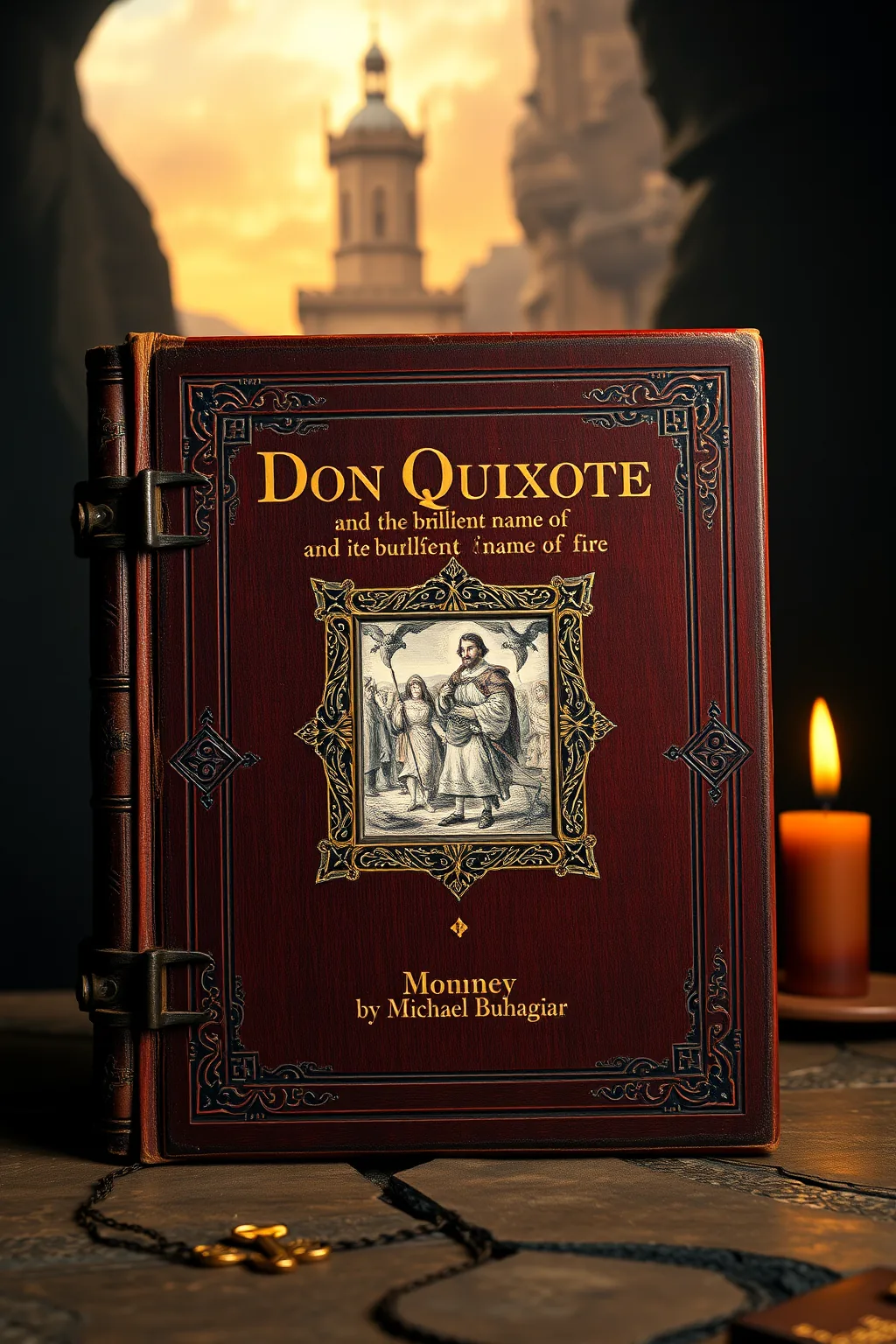
Don Quixote and the Brilliant Name of Fire
 72
72

Don Quixote and the Brilliant Name of Fire
Buhagiar's "Don Quixote and the Brilliant Name of Fire" is a bold, if occasionally dense, attempt to excavate the esoteric underpinnings of Cervantes' magnum opus. The author's assertion that the novel serves as a comprehensive allegory for psychic transformation is ambitious, and the detailed analysis of Tarot references and Qabalistic Hebrew letters offers compelling new perspectives. The strength lies in its meticulous textual exegesis, revealing patterns that elude standard readings. However, the book sometimes strains to connect every narrative thread to its esoteric thesis, leading to moments where the interpretation feels more imposed than inherent. A particular passage detailing the significance of specific Hebrew letters in relation to Quixote's quests provides a striking example of the work's potential. Ultimately, for those seeking a radical re-reading of a literary giant through a mystical prism, this book offers significant, albeit demanding, rewards.
📝 Description
72
Michael Buhagiar’s 2008 book interprets Don Quixote as a framework for spiritual development.
Published in 2008, Michael Buhagiar's "Don Quixote and the Brilliant Name of Fire" proposes that Cervantes' novel is more than satire or adventure. Buhagiar argues it functions as a detailed allegory for spiritual growth. The book examines the text for hidden meanings, connecting it to esoteric traditions and symbolic systems that conventional literary analysis often misses. It is intended for readers interested in the connections between mythology, psychology, and mysticism. Scholars of comparative literature, students of Kabbalah, and practitioners of Western esoteric traditions will find it relevant. The work appeals to those who believe significant art contains encoded wisdom for inner transformation.
The central idea is that "Don Quixote" acts as a guide for psychic evolution. Buhagiar points to the symbolism of Tarot cards as integral parts of an inner journey, not just passing references. He also decodes visual representations of Hebrew letters from the Qabalah, presenting them as active forces within the narrative's allegorical structure. The author seeks to uncover universal spiritual truths embedded within this cultural artifact.
The book emerged in the early 21st century, a period that saw renewed interest in symbolic interpretation. Following the work of figures like Carl Jung, who studied archetypes, and the ongoing study of Hermeticism and Kabbalah, Buhagiar’s work revisits classic texts through a mystical perspective. It builds on prior esoteric scholarship that aimed to find universal spiritual truths within cultural works. The book fits within traditions that seek hidden wisdom in literature and myth.
💡 Why Read This Book?
• Gain a novel understanding of "Don Quixote" as an allegorical map for psychic transformation, moving beyond traditional literary critiques. • Discover how specific Hebrew letters of the Qabalah are visually represented within the narrative, offering a unique interpretive framework. • Explore the integration of Tarot card symbolism as a structured path for inner development, as detailed in the book's analysis.
⭐ Reader Reviews
Honest opinions from readers who have explored this book.
❓ Frequently Asked Questions
What is the primary esoteric interpretation of "Don Quixote" presented in this book?
The book argues that "Don Quixote and the Brilliant Name of Fire" reveals Cervantes' novel as a detailed allegory for psychic transformation and inner spiritual progression.
Which esoteric traditions does Michael Buhagiar draw upon in his analysis?
The analysis primarily draws upon Kabbalah, referencing Hebrew letters, and Tarot card symbolism, framing them as integral to the narrative's esoteric dimension.
When was "Don Quixote and the Brilliant Name of Fire" first published?
The book was first published on April 4, 2008.
Does the book offer visual representations of esoteric concepts?
Yes, the book demonstrates spectacular visual representations of Hebrew letters of the Qabalah as they appear within the allegorical structure of the narrative.
Is this book suitable for readers unfamiliar with "Don Quixote"?
While it deepens understanding for those familiar with Cervantes' work, readers new to "Don Quixote" might benefit from reading the original novel first to fully appreciate Buhagiar's esoteric interpretations.
What is the core argument regarding the Tarot in Cervantes' novel?
The book contends that references to Tarot cards are not coincidental but represent a means of progression on an inner spiritual journey, fully integrated into the narrative's design.
🔮 Key Themes & Symbolism
The Allegory of Psychic Transformation
The central theme posits that Cervantes' "Don Quixote" functions not merely as literature but as a meticulously crafted allegory for the stages of individual spiritual development and psychological evolution. Buhagiar argues that the Knight's adventures, his delusions, and his interactions are symbolic representations of internal struggles and breakthroughs. This interpretation suggests that the narrative provides a blueprint for navigating one's own inner journey toward enlightenment or self-realization, mirroring paths found in mystical traditions.
Kabbalistic Hebrew Letters as Symbolic Structures
This theme focuses on the presence and significance of Hebrew letters from the Qabalah within the text of "Don Quixote." Buhagiar identifies specific instances where these letters, imbued with profound meaning in Jewish mysticism, appear to be visually represented or alluded to. Their inclusion is interpreted as a deliberate layering of esoteric knowledge, where each letter acts as a key to understanding a particular aspect of the knight's path or the underlying spiritual mechanics of the story.
Tarot as a Path of Inner Progression
The book explores the notion that references to Tarot cards within "Don Quixote" are not mere literary embellishments but signify a structured means of advancing on the inner journey. Buhagiar suggests these allusions map out stages of spiritual growth or psychological insight, akin to the archetypal progressions depicted in the Major Arcana. The interpretation emphasizes the Tarot's role as a symbolic guide for self-discovery and transformation embedded within the narrative.
The Esoteric Dimension of Classic Literature
This overarching theme addresses the book's fundamental premise: that canonical literary works often contain hidden layers of esoteric meaning accessible to those trained in symbolic interpretation. "Don Quixote and the Brilliant Name of Fire" serves as a case study, demonstrating how a widely recognized text can be re-read to reveal its function as a vessel for mystical teachings and ancient wisdom traditions. It advocates for a hermeneutic approach that seeks spiritual and psychological truths within cultural artifacts.
💬 Memorable Quotes
Direct passages from the work, attributed to the author.
“The narrative is a strict allegory of psychic transformation.”
— This core assertion frames "Don Quixote" not as fiction, but as a symbolic guide for personal spiritual evolution, detailing stages of inner work through the knight's experiences.
“References to cards of the Tarot deck serve as a means of progression on the inner journey.”
— This highlights the deliberate use of Tarot symbolism within the novel, suggesting they map out specific steps or challenges encountered during spiritual development.
“Spectacular visual representations of Hebrew letters of the Qabalah are present.”
— This points to the author's discovery of encoded Qabalistic elements, where Hebrew letters function as symbolic keys to unlock deeper meanings within the narrative structure.
“The true extent of the esoteric dimension of the classic Spanish work is revealed.”
— This statement emphasizes the book's aim to uncover previously unrecognized layers of mystical and symbolic meaning within Cervantes' renowned novel.
“The book seeks to demonstrate the full extent of these esoteric allusions.”
— This indicates a comprehensive analytical approach, aiming to exhaustively explore and explain the symbolic connections Buhagiar identifies throughout the text.
🌙 Esoteric Significance
Tradition
This work fits squarely within the Western Esoteric Tradition, particularly drawing from Hermeticism and Kabbalah. It interprets a major literary text through the lens of symbolic systems developed over centuries within these lineages. The book seeks to demonstrate that foundational narratives can serve as vehicles for transmitting esoteric knowledge, aligning with the Hermetic principle of "As Above, So Below" by finding cosmic principles reflected in human stories.
Symbolism
Key symbols analyzed include the Tarot cards, interpreted as stages on the path of initiation or psychic development, and Hebrew letters from the Qabalah, such as Aleph or Beth, which are presented as foundational elements of consciousness and creation embedded within the narrative's structure. Don Quixote himself can be seen as an archetype of the aspirant or the soul undertaking a difficult spiritual quest.
Modern Relevance
Contemporary thinkers and practitioners in fields like depth psychology, comparative mythology, and modern occultism continue to explore the symbolic dimensions of classic literature. Buhagiar's approach offers a method for re-interpreting cultural touchstones, making them relevant to individuals seeking personal growth and spiritual understanding in a secularized world. It informs practices that use mythology and symbolism as tools for self-discovery.
👥 Who Should Read This Book
• Students of Comparative Literature and Mythology: Gain a unique hermeneutic toolset for analyzing classic texts through an esoteric and symbolic lens. • Practitioners of Western Esotericism: Discover how core Kabbalistic and Tarot concepts might be encoded within a widely celebrated work of fiction. • Readers interested in Psychology and Symbolism: Explore the potential for literary narratives to function as allegories for psychological transformation and inner development.
📜 Historical Context
Published in 2008, "Don Quixote and the Brilliant Name of Fire" emerged during a period of renewed academic and popular interest in esoteric studies and the symbolic interpretation of literature. Following the psychoanalytic work of Carl Jung in the mid-20th century, which legitimized the study of archetypes and mythology, and the sustained efforts within Western esoteric traditions to decode ancient texts, Buhagiar's work aligns with a broader trend. It participates in the ongoing discourse that seeks to find universal spiritual truths embedded in cultural artifacts, moving beyond purely historical or humanist readings. This approach contrasts with the dominant New Historicism movement of the late 20th century, which emphasized the text's entanglement with specific political and social contexts, often sidelining mystical interpretations. Buhagiar's book contributes to a niche but persistent scholarly tradition that views Cervantes' masterpiece as containing coded wisdom.
📔 Journal Prompts
The allegory of psychic transformation within "Don Quixote": What parallels exist between the knight's quests and your own inner journey?
Reflect on the symbolic meaning of specific Hebrew letters as presented in the book's analysis.
Consider the Tarot cards mentioned: How might their archetypal meanings guide personal progression?
Analyze a scene from "Don Quixote" through the lens of psychic transformation.
How does the concept of the 'Brilliant Name of Fire' illuminate the narrative's esoteric purpose?
🗂️ Glossary
Psychic Transformation
A profound alteration in an individual's consciousness, ego structure, and spiritual awareness, often involving the integration of unconscious elements and the pursuit of higher states of being.
Kabbalah
A complex system of Jewish mysticism that explores the nature of God, the creation of the universe, and the path to spiritual enlightenment, often using the Tree of Life as a symbolic map.
Hebrew Letters
The 22 letters of the Hebrew alphabet, each possessing phonetic, numerical (gematria), and symbolic meanings within Kabbalistic tradition, considered fundamental building blocks of creation.
Tarot Cards
A deck of cards featuring symbolic imagery, traditionally used for divination, but also interpreted in esoteric circles as representing archetypal stages of human experience and spiritual development.
Allegory
A literary work or visual representation in which characters, events, and settings represent abstract ideas or principles, conveying a hidden meaning, typically moral or spiritual.
Esoteric
Intended for or likely to be understood by only a small number of people with a specialized knowledge or interest; relating to hidden or secret knowledge.
Inner Journey
A metaphorical exploration of one's own consciousness, psyche, and spiritual nature, aimed at self-understanding, personal growth, and spiritual realization.