Divine Spark : a Graham Hancock Reader

 81
81

Divine Spark : a Graham Hancock Reader
Graham Hancock's "Divine Spark" Reader is less a singular narrative and more a compilation of intellectual provocations. The strength lies in its consolidation of Hancock's most compelling arguments, particularly his persistent inquiry into the Younger Dryas period and its potential impact on human civilization. The inclusion of Russell Brand and Alex Grey as contributors hints at the book's appeal across different intellectual and artistic spheres, though their specific roles within this reader are not detailed here. However, the book's primary limitation is its nature as a reader; it lacks the cohesive flow of a single authored work, sometimes feeling like a collection of disparate essays. A particularly striking concept explored is the idea that ancient megalithic sites, such as those found at Göbekli Tepe, might represent remnants of a sophisticated global culture that predates the last Ice Age. While compelling, the reader occasionally feels repetitive in its core assertions. Ultimately, "Divine Spark" serves as a potent, if somewhat fragmented, introduction to a worldview that challenges the foundations of our accepted history.
📝 Description
81
Published in 2015, Divine Spark collects Graham Hancock's challenging views on prehistory.
Divine Spark: A Graham Hancock Reader gathers selections from the influential and often debated author Graham Hancock. This 2015 collection offers an accessible introduction to Hancock's considerable body of work, which questions mainstream historical and archaeological accounts. It includes essays, excerpts, and articles that cover his major theories and research findings from various sources.
This reader is for anyone interested in alternative histories, ancient civilizations, and the puzzles of human origins. It suits those who doubt established timelines and look for evidence of advanced prehistoric cultures. Readers concerned with consciousness studies, shamanism, and the links between archaeology and esoteric traditions will find ample material. It also serves Graham Hancock fans seeking a single volume that consolidates his main arguments.
Hancock's theories gained attention amidst a growing public interest in ancient mysteries and a distrust of academic consensus. His work emerged in a climate where figures like Erich von Däniken had already questioned conventional historical accounts. While von Däniken's approach was often speculative, Hancock's research is generally more rooted in archaeological and anthropological data, though his interpretations diverge from the mainstream. This reader reflects that intellectual atmosphere, appealing to those who seek unconventional explanations for humanity's past.
💡 Why Read This Book?
• Gain a consolidated overview of Graham Hancock's primary arguments regarding a lost Ice Age civilization, a perspective challenging conventional archaeology since the late 20th century. • Understand the Younger Dryas impact hypothesis and its implications for human history, a theory Hancock extensively details within the reader's selections. • Explore the connection Hancock draws between ancient shamanism, altered states of consciousness, and the interpretation of megalithic sites, offering a unique lens on prehistoric spirituality.
⭐ Reader Reviews
Honest opinions from readers who have explored this book.
❓ Frequently Asked Questions
What is the primary focus of Graham Hancock's "Divine Spark" Reader?
The reader primarily focuses on Graham Hancock's theories about a lost advanced civilization that existed before the last Ice Age, particularly around the Younger Dryas period, and its potential influence on human development and ancient myths.
Who are the key contributors mentioned in "Divine Spark"?
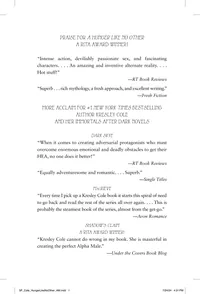
The reader is associated with Graham Hancock, with contributions or introductions noted from Russell Brand and Alex Grey, suggesting a multidisciplinary appeal.
What historical period does "Divine Spark" most prominently discuss?
The book extensively discusses the period surrounding the Younger Dryas, a significant climate event roughly 12,800 to 11,500 years ago, proposing it was a time of advanced human civilization that was catastrophically impacted.
Does "Divine Spark" present scientific consensus or alternative theories?
"Divine Spark" primarily presents alternative theories that challenge mainstream archaeological and historical consensus, proposing a radical reinterpretation of human prehistory.
Is "Divine Spark" suitable for beginners interested in ancient mysteries?
Yes, as a reader, it offers a curated selection of Hancock's work, making it a good starting point for those new to his ideas about lost civilizations and ancient knowledge.
What does the 'Divine Spark' concept refer to in the book?
The 'Divine Spark' concept in Hancock's work generally refers to an innate cosmic intelligence or consciousness that ancient peoples perceived and attempted to reconnect with through spiritual practices and monumental architecture.
🔮 Key Themes & Symbolism
Lost Civilization Hypothesis
This theme centers on the radical proposition that a sophisticated global civilization existed prior to the last Ice Age, potentially around the time of the Younger Dryas period. Hancock argues that evidence for this civilization, though largely erased by cataclysmic events, can be found in ancient myths, megalithic structures like Göbekli Tepe, and recurring patterns in human history. This collection compiles arguments and evidence supporting this theory, suggesting that mainstream archaeology overlooks or dismisses crucial data that points to a forgotten epoch of advanced human achievement.
The Younger Dryas Impact Event
A significant focus is the theory that a cosmic impact event, or series of events, occurred at the onset of the Younger Dryas cooling period (circa 12,800 years ago). Hancock posits that this cataclysm was responsible for widespread destruction, geological changes, and the potential annihilation of a preceding advanced human culture. The reader examines the scientific evidence and interpretations related to this event, linking it to the sudden disappearance of megafauna and the abrupt climate shift, thereby providing a potential mechanism for the loss of ancient knowledge.
Shamanism and Consciousness
The collection looks at the role of shamanism and altered states of consciousness in ancient societies. Hancock suggests that early humans, particularly those from the proposed lost civilization, possessed a profound understanding of consciousness and its connection to the cosmos. He interprets ancient art, rituals, and oral traditions as evidence of a sophisticated spiritual framework aimed at reconnecting with a perceived universal intelligence or 'Divine Spark,' often accessed through entheogenic practices or deep meditative states.
Megalithic Sites as Records
A recurring theme is the interpretation of ancient megalithic sites worldwide—such as Göbekli Tepe, the pyramids of Giza, and Stonehenge—not as isolated achievements, but as remnants of a unified, global culture from the remote past. Hancock proposes these structures served as astronomical observatories, repositories of knowledge, and potentially as markers or warnings related to cosmic cycles and cataclysmic events. The reader explores how these ancient stone monuments might hold keys to understanding a forgotten chapter of human history.
💬 Memorable Quotes
Direct passages from the work, attributed to the author.
“The evidence for a lost civilization predating the Ice Age is suppressed or ignored by mainstream archaeology.”
— This is a core assertion of Hancock's work, suggesting that established academic institutions are resistant to theories that fundamentally alter the accepted timeline of human development, leading to the dismissal of potentially crucial evidence.
“Ancient myths often describe a golden age followed by cataclysm and a subsequent dark age.”
— Hancock frequently points to cross-cultural myths of a primordial paradise lost due to a great flood or other disaster as coded historical accounts of a lost advanced civilization and its catastrophic end.
“Megalithic sites around the world share common architectural and astronomical alignments.”
— This observation forms part of the argument for a globally connected ancient culture, suggesting that similarities in sophisticated construction and celestial mapping across disparate regions point to a shared origin or knowledge base.
“The Younger Dryas impact event may have been the catalyst for the end of a sophisticated prehistoric society.”
— This statement captures the Younger Dryas impact hypothesis as presented by Hancock, linking a specific geological and climatic period to a catastrophic event that potentially wiped out a preceding advanced human civilization.
“Ancient peoples understood and venerated the 'Divine Spark' of universal consciousness.”
— This refers to Hancock's belief that early humans had a more profound spiritual and cosmological awareness, recognizing an intrinsic connection to a higher intelligence or cosmic force, which influenced their worldview and practices.
🌙 Esoteric Significance
Tradition
Hancock's work, while not strictly adhering to a single esoteric lineage, draws heavily from Gnostic and Hermetic undercurrents concerning lost knowledge and a primordial spiritual state. It echoes Theosophical ideas of ancient, highly advanced root races and echoes esoteric interpretations of creation myths. His focus on a forgotten "golden age" and the transmission of wisdom through symbols and sacred sites aligns with archetypal esoteric narratives of cyclical history and hidden truths that must be rediscovered.
Symbolism
Key symbols explored include the serpent, often representing cosmic wisdom, cyclical time, or Kundalini energy; the Tree of Life, symbolizing interconnectedness and the mapping of consciousness or cosmic order; and the Eye, representing divine awareness, illumination, or a portal to higher realms. Megalithic structures themselves function as potent symbols of humanity's ancient connection to celestial cycles and possibly forgotten cosmic events, acting as mnemonic devices for lost knowledge.
Modern Relevance
Hancock's ideas continue to influence contemporary fringe archaeology, alternative history forums, and certain spiritual circles. Thinkers exploring consciousness, ancient technologies, and non-mainstream interpretations of human origins often cite his work. His influence can be seen in podcasts, documentaries, and online communities dedicated to uncovering hidden aspects of human history and spirituality, keeping alive the quest for understanding humanity's deeper past and its potential connection to cosmic awareness.
👥 Who Should Read This Book
• Aspiring researchers of ancient mysteries: Those seeking to question conventional timelines and explore evidence for advanced prehistoric civilizations will find a comprehensive overview of Hancock's core arguments. • Students of comparative mythology: Individuals interested in how global myths might encode historical memories of cataclysmic events and lost golden ages will discover new interpretative frameworks. • Explorers of consciousness and spirituality: Readers curious about the connection between ancient peoples, altered states of consciousness, and a universal 'Divine Spark' will find Hancock's synthesis compelling.
📜 Historical Context
Graham Hancock's "Divine Spark" Reader emerged in the early 21st century, a period marked by significant public interest in ancient mysteries and alternative histories. His work built upon earlier speculative theories, like those of Erich von Däniken, but often with a greater emphasis on archaeological and geological data, albeit interpreted unconventionally. This era saw a growing counter-narrative to established academic thought, fueled by internet dissemination of ideas. Hancock's theories, particularly concerning a lost Ice Age civilization and the Younger Dryas impact hypothesis, gained traction during a time when books like Charles Hapgood's "Earth's Shifting Crust" (1958) were being revisited. The academic establishment, however, largely dismissed Hancock's work, viewing it as pseudoscientific. Despite criticism from figures within archaeology and geology, Hancock's writings continued to find a large audience, contributing to a broader intellectual current that questioned conventional timelines of human progress and consciousness.
📔 Journal Prompts
The concept of the "Divine Spark" in ancient cultures.
Evidence for a lost civilization predating the Younger Dryas.
Interpretations of megalithic sites as cosmic calendars.
Connections between shamanic practices and ancient astronomical knowledge.
The potential impact of cosmic events on early human societies.
🗂️ Glossary
Younger Dryas
A period of significant cold and arid conditions that occurred approximately 12,800 to 11,500 years ago, marking an abrupt reversal of the warming trend after the last glacial period. Hancock theorizes a cosmic impact event initiated this period.
Megalithic Sites
Large prehistoric structures built from massive stones, such as Stonehenge, Göbekli Tepe, and the pyramids. Hancock interprets these sites as evidence of advanced ancient cultures and astronomical knowledge.
Göbekli Tepe
An archaeological site in southeastern Turkey, featuring monumental stone pillars dating back to the Pre-Pottery Neolithic period (around 9600-8200 BCE). It predates Stonehenge and the Egyptian pyramids by millennia and is considered by some to be evidence of early complex society.
Lost Civilization
A hypothetical advanced human society that existed in the remote past, particularly during or before the last Ice Age, which was destroyed or disappeared, leaving behind fragmented evidence interpreted by proponents like Hancock.
Shamanism
A practice that involves a practitioner reaching altered states of consciousness to interact with a spirit world and then conveying the information from the spirit world to the human world. Hancock connects ancient spiritual practices to shamanic traditions.
Cosmic Consciousness
A concept suggesting a universal awareness or intelligence that permeates existence. Hancock posits that ancient peoples recognized and sought connection with this 'Divine Spark'.
Entheogens
Psychoactive substances used in a religious, spiritual, or ritual context. Hancock explores their potential role in ancient shamanic practices and the transmission of spiritual knowledge.
🔮 Readers Also Liked
Browse all →








More Free Occult Philosophy Books
View all →