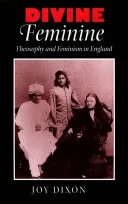
Divine Feminine
 77
77

Divine Feminine
Joy Dixon's "Divine Feminine" offers a meticulously researched account of Helena Blavatsky's ambitious project to reintroduce Eastern esoteric thought to the West. The book excels in situating Blavatsky within her historical moment, highlighting the intellectual currents that both fueled and challenged her Theosophical endeavors. Dixon skillfully unpacks Blavatsky's claims regarding the "ancient wisdom" and the "Mahatmas" without succumbing to hagiography or outright dismissal. A particular strength lies in the detailed exploration of Blavatsky's relationship with the press and academic circles, demonstrating the very real impact, both positive and negative, her work had. However, the focus remains tightly on Blavatsky's public persona and the Society's institutional development, occasionally at the expense of a deeper engagement with the philosophical nuances of the doctrines she promulgated. The work's scholarly rigor is undeniable, making it a valuable resource. Dixon provides a balanced, critical examination of a figure who profoundly shaped modern occultism.
📝 Description
77
Joy Dixon's Divine Feminine examines Helena Blavatsky's role in shaping late 19th-century spiritual thought.
This book investigates the life and impact of Helena Petrovna Blavatsky, a central figure in the spiritual movements of the late 1800s. Dixon traces Blavatsky's origins in Russia and her significant part in establishing the Theosophical Society. The analysis covers her assertions of receiving esoteric knowledge from hidden "Mahatmas," positioning her as a conduit for transmitting Eastern spiritual traditions to the West during a time of heightened interest in spiritualism and unconventional beliefs.
The late Victorian era, a period of rapid industrial and scientific change, created a spiritual void that Blavatsky's work addressed. Founded in 1875, the Theosophical Society synthesized Eastern and Western mystical ideas, standing apart from the dominant materialistic worldview. The book details this historical setting, showing how it allowed for the growth of new religious and esoteric movements.
Key concepts discussed include the notion of "ancient wisdom," which Blavatsky described as a universal spiritual truth underlying all religions. The book also scrutinizes the role of the "Mahatmas," presented as Eastern spiritual masters who allegedly guided Blavatsky. Dixon further examines Theosophy's syncretic character, its fusion of Hindu, Buddhist, and Western occult elements into a system intended to foster human development.
This work situates Helena Blavatsky and the Theosophical Society within the surge of esoteric thought that characterized the late 19th century. It examines their attempt to synthesize Eastern spiritual traditions, such as Hinduism and Buddhism, with Western occultism. The book details how this movement responded to a perceived spiritual vacuum accompanying rapid industrialization and scientific advancement, offering an alternative to prevailing materialistic philosophies. It highlights Theosophy's aim to present a universal esoteric doctrine, often referred to as the "ancient wisdom."
💡 Why Read This Book?
• Understand the specific historical circumstances surrounding the founding of the Theosophical Society in 1875, a pivotal year for modern Western esotericism, and how it responded to Victorian spiritualism. • Grasp the concept of the "ancient wisdom" as presented by H.P. Blavatsky, exploring its synthesis of Eastern and Western traditions distinct from contemporary New Thought movements. • Analyze the public reception of Blavatsky's work, including its recognition as an Outstanding Academic Title of 2003, illustrating its scholarly merit and enduring influence.
⭐ Reader Reviews
Honest opinions from readers who have explored this book.
❓ Frequently Asked Questions
What is the "ancient wisdom" Blavatsky claimed to bring to the West?
The "ancient wisdom" refers to a purported universal spiritual truth, believed by Blavatsky to be the source of all religions and philosophies. She claimed this knowledge was transmitted to her by "Mahatmas" from the East.
Who were the "Mahatmas" in Blavatsky's teachings?
The "Mahatmas" were described by Blavatsky as highly evolved spiritual beings or masters from the East, who served as her teachers and guided her mission to bring esoteric knowledge to the West.
When was H.P. Blavatsky's Theosophical Society founded?
Helena Petrovna Blavatsky co-founded the Theosophical Society in New York City in 1875, aiming to promote the study of comparative religion, philosophy, and science.
What kind of recognition did this book receive?
The book received an Honorable Mention for the Wallace K. Ferguson Prize from the Canadian Historical Association and was chosen by Choice Magazine as an Outstanding Academic Title of 2003.
What historical period does this book primarily cover?
The book primarily covers the late 19th century, focusing on the life and work of Helena Petrovna Blavatsky and the early development of the Theosophical Society, up to the time of her death in 1891.
What is the author's approach to Blavatsky's claims?
Joy Dixon presents a scholarly and critical examination of Blavatsky's claims, analyzing their historical context and impact without necessarily endorsing their supernatural aspects.
🔮 Key Themes & Symbolism
Theosophy's Eastern Synthesis
This work meticulously details how Helena Blavatsky synthesized disparate Eastern philosophies, particularly Hinduism and Buddhism, with Western occult traditions. The book illustrates her intent to present a unified "ancient wisdom" that transcended sectarian religious boundaries. It highlights the Theosophical Society's role in introducing concepts like karma and reincarnation to Western audiences, influencing subsequent spiritual movements and esoteric thought beyond its immediate followers. The era's intellectual climate, marked by a fascination with the Orient, provided fertile ground for this syncretic endeavor.
Blavatsky's Role and Reception
The book centers on Helena Petrovna Blavatsky as a controversial yet undeniably influential figure. It examines her self-portrayal as a messenger of hidden spiritual masters, the "Mahatmas," and analyzes the public and academic reception of her work, including the journalistic reports surrounding her death in 1891. Dixon contextualizes Blavatsky's activities within the broader spiritualist and occult revival of the late 19th century, demonstrating how she navigated and shaped contemporary discourse.
The Concept of 'Ancient Wisdom'
Central to the book is the exploration of Blavatsky's "ancient wisdom," a notion of primordial spiritual knowledge predating recorded history. The work investigates how this concept served as the philosophical bedrock of Theosophy, aiming to provide a rational and spiritual framework for understanding existence. It contrasts this ideal with the materialistic philosophies prevalent during the period, positioning Blavatsky's teachings as a counter-current seeking to restore a lost spiritual heritage to humanity.
💬 Memorable Quotes
Direct passages from the work, attributed to the author.
“Blavatsky claimed to have brought the "ancient wisdom of the East" to the rescue of a materializing West.”
— This statement expresses Blavatsky's perceived mission: to offer spiritual and philosophical antidotes from Eastern traditions to a Western society increasingly dominated by scientific materialism and a perceived spiritual decline.
“The newspapers all over the world carried reports of the death of H. P. Blavatsky in 1891.”
— This highlights the significant international attention and public awareness surrounding Blavatsky and her Theosophical movement at the time of her passing, underscoring her global impact.
“With the help of the equally mysterious Mahatmas who were her teachers...”
— This phrase points to the core of Blavatsky's authority and the esoteric foundation of her teachings, emphasizing the belief in hidden spiritual guides and their role in transmitting profound knowledge.
“Chosen by Choice Magazine as an Outstanding Academic Title of 2003.”
— This citation indicates the book's scholarly merit and its recognition within academic circles, suggesting a rigorous and well-researched approach to its subject matter.
“Honorable Mention for the Wallace K. Ferguson Prize from the Canadian Historical Association.”
— This award signifies the book's significant contribution to historical scholarship, particularly in its examination of a complex historical figure and movement.
🌙 Esoteric Significance
Tradition
This work situates itself within the lineage of modern Theosophy, a movement founded by Helena Blavatsky. Theosophy aimed to be a synthesis of Eastern and Western esoteric traditions, drawing heavily from Hinduism, Buddhism, and Hermeticism. Dixon's analysis explores how Blavatsky presented herself as a conduit for a universal "ancient wisdom," distinct from both established religions and contemporary occult orders. The book examines Theosophy's departure from purely Western occult frameworks by incorporating concepts like karma and reincarnation, and its ambition to provide a spiritual science for the modern age.
Symbolism
Key symbols explored include the "Mahatmas," who represent hidden spiritual masters and guides, embodying esoteric knowledge transmitted from the East. The concept of "ancient wisdom" itself functions as a potent symbol of primordial truth, a universal spiritual heritage that Blavatsky sought to reawaken. The book implicitly engages with the symbolism of the "East" as a source of spiritual authority and revelation, contrasting it with the perceived materialism of the "West" during the late 19th century.
Modern Relevance
Contemporary thinkers and practitioners in New Age spirituality, modern occultism, and comparative religious studies continue to draw upon the foundational concepts introduced by Blavatsky and Theosophy. Her syncretic approach to spirituality and her emphasis on universal truths paved the way for many later movements that seek to integrate diverse spiritual traditions. The ongoing academic interest, as evidenced by the book's accolades, demonstrates the enduring significance of understanding Theosophy's role in shaping esoteric discourse and alternative spiritual landscapes.
👥 Who Should Read This Book
• Students of religious history and comparative spirituality seeking to understand the origins of modern Theosophy and its global impact. • Researchers of late 19th-century intellectual and social movements interested in figures who challenged prevailing scientific and religious orthodoxies. • Individuals curious about the biographies of influential spiritual leaders and the development of esoteric traditions in the West, particularly those interested in Helena Blavatsky's controversial legacy.
📜 Historical Context
Published in 2001, Joy Dixon's "Divine Feminine" arrives decades after the initial explosion of interest in Helena Blavatsky and the Theosophical Society. The late 19th century, the period under examination, was a fertile ground for spiritual seeking, with burgeoning spiritualism, occult revivals, and a fascination with Eastern religions. Blavatsky, who co-founded the Theosophical Society in 1875, directly engaged with this milieu. Her work offered a complex synthesis of Buddhism, Hinduism, and Western esotericism, positioning itself against the prevailing scientific materialism of the era. Competing schools of thought included earlier forms of Theosophy and various spiritualist mediums. The book's own reception, acknowledged with an Honorable Mention for the Wallace K. Ferguson Prize and recognition as an Outstanding Academic Title of 2003, attests to its scholarly engagement with a central, often contentious, figure in modern religious history.
📔 Journal Prompts
Blavatsky's claim of bringing "ancient wisdom" from the East.
The role and nature of the "Mahatmas" in her teachings.
The societal context of the late 19th century and its spiritual needs.
The Theosophical Society's founding principles.
The international reception of Blavatsky's work around 1891.
🗂️ Glossary
Theosophical Society
An organization founded in 1875 by Helena Petrovna Blavatsky, William Quan Judge, and others. It aimed to promote the study of comparative religion, philosophy, and science, and to foster universal brotherhood, often drawing on Eastern esoteric traditions.
Mahatmas
In Theosophy, these are described as highly evolved spiritual beings or masters, primarily from the East, who allegedly communicated with and guided Helena Blavatsky in her mission to disseminate the "ancient wisdom."
Ancient Wisdom
A concept central to Theosophy, referring to a universal, primordial spiritual truth believed to be the source of all religions and philosophies, which Blavatsky claimed to have rediscovered and transmitted.
Spiritualism
A religious movement believing that the spirits of the dead can communicate with the living. It was prominent in the 19th century and formed part of the broader spiritual milieu in which Blavatsky operated.
Materialism
A philosophical stance that matter is the fundamental substance in nature, and that all phenomena, including mental states and consciousness, are results of material interactions. It was a dominant worldview that Blavatsky's teachings sought to counter.
Esotericism
Belief systems and practices that focus on inner, spiritual knowledge and transformation, often involving hidden doctrines or teachings accessible only to initiates or those with special understanding.
H. P. Blavatsky
Helena Petrovna Blavatsky (1831–1891), a Russian occultist, spiritualist, and author who co-founded the Theosophical Society and became a highly influential figure in modern Western esotericism.