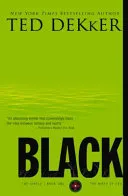
Black
 80
80

Black
Dekker's "Black" presents a high-octane premise: a protagonist violently thrust between two realities, one a desperate flight for survival, the other a love-filled existence. The strength lies in its relentless pacing and the immediate, visceral impact of the world-switching. The concept of the "Black" as a distinct plane, a nexus of sorts, is compelling, especially as Hunter grapples with its implications. However, the narrative occasionally strains under the weight of its own ambition. The rapid shifts, while thrilling, can sometimes leave the thematic exploration feeling underdeveloped. The portrayal of evil, while central, sometimes leans into archetypes that feel less nuanced than the existential questions raised. The passage detailing Hunter's disorientation upon realizing his existence in the "Black" world is particularly effective, capturing the disquieting nature of the transition. Ultimately, "Black" is a propulsive thriller that offers a unique, if sometimes uneven, exploration of consciousness and alternate realities.
📝 Description
80
Ted Dekker's 2009 novel Black imagines a protagonist's violent shift between worlds after a headshot.
Thomas Hunter's life fractures after a near-fatal injury, sending him into an alternate reality. This new existence appears more ordered, offering a sense of profound love. The narrative follows Hunter as he grapples with this jarring transition and the nature of his new circumstances.
This edition includes bonus graphic novels that extend the story's scope. The novel engages with suspenseful plotting and metaphysical ideas. Readers interested in parallel universes, consciousness, and the conflict between opposing forces will find familiar ground here. It aligns with themes present in Dekker's prior fiction that mixes action with spiritual contemplation.
Published in 2009, Black engages with speculative fiction's interest in philosophical and existential questions. Dekker's work here intersects with authors like Philip K. Dick, who also examined altered realities and consciousness. However, Dekker's narrative often incorporates Christian theological concepts, distinguishing its approach. The novel's themes of virtual and simulated worlds also resonate with the growing prevalence of these ideas in popular culture during the late 2000s.
💡 Why Read This Book?
• You will experience the visceral impact of a protagonist navigating a sudden shift between desperate survival and profound love, a feeling unique to Dekker's signature blend of action and metaphysical inquiry, as seen in Thomas Hunter's transition. • You will explore the concept of "Blackness" as a tangible alternate reality, gaining insight into how trauma can be a gateway to different planes of existence, a core tenet of the novel's unique cosmology. • You will engage with the stark dichotomy of good and evil as presented in the novel's opposing worlds, offering a specific lens through which to examine spiritual conflict, distinct from more abstract philosophical treatments.
⭐ Reader Reviews
Honest opinions from readers who have explored this book.
❓ Frequently Asked Questions
What is the original publication year of Ted Dekker's "Black"?
Ted Dekker's novel "Black" was originally published on July 28, 2009. This 5th Anniversary Edition includes bonus graphic novels, expanding the original narrative experience.
What is the central premise of Ted Dekker's "Black"?
The book follows Thomas Hunter, who, after a near-fatal head injury, finds himself transported to an alternate reality. This new world offers love and order, starkly contrasting his previous life of danger.
What is the significance of "Blackness" in the novel?
In "Black," the 'Blackness' represents a liminal state or an alternate reality accessible through extreme trauma. It's a plane where different rules apply and where the protagonist must confront new challenges and truths.
Are there any special features in the 5th Anniversary Edition of "Black"?
Yes, the 5th Anniversary Edition of "Black" includes bonus graphic novels. These additions aim to further flesh out the narrative world and characters for dedicated readers.
What themes does Ted Dekker explore in "Black"?
Dekker explores themes of dual realities, the nature of consciousness, the battle between good and evil, and how profound experiences can alter one's perception of existence and reality.
Who is Thomas Hunter in "Black"?
Thomas Hunter is the protagonist of "Black." He is an ordinary man whose life is irrevocably changed when he experiences a violent transition into an alternate dimension after suffering a severe head wound.
🔮 Key Themes & Symbolism
Dual Realities and Consciousness
The novel posits that consciousness is not confined to a single linear existence. Thomas Hunter's transition into the 'Black' reality suggests that profound trauma can act as a catalyst, opening portals to parallel dimensions. This concept challenges a purely materialistic view of consciousness, implying that our perceived reality is just one layer of a more complex, multi-layered existence. The book explores how experiences and emotional states in one reality can bleed into or directly influence another, creating a feedback loop of existence.
The Nature of Evil and Order
"Black" presents a stark duality between the chaotic, dangerous world Hunter initially inhabits and the seemingly ordered, love-filled 'Black' reality. This is not merely a psychological contrast but an exploration of good and evil as fundamental forces that shape different planes of existence. The narrative suggests that these forces are not abstract concepts but active principles that define the very fabric of reality, influencing individual destinies and the overarching cosmic order.
Trauma as a Transformative Gateway
The near-fatal headshot serves as the inciting incident, a violent rupture that propels Thomas Hunter from one existence to another. This framing suggests that extreme physical or psychological trauma can function as a 'key' or 'gateway' to deeper, hidden layers of reality. The book implies that such experiences, while devastating, can also be profoundly transformative, forcing an individual to confront fundamental truths about themselves and the universe they inhabit.
💬 Memorable Quotes
Direct passages from the work, attributed to the author.
“Then a silent bullet from the night clips his head . . . and his world goes black.”
— This vividly portrays the abrupt transition. It signifies not just physical death or incapacitation but the immediate cessation of his known reality, marking the precise moment of his shift into the unknown 'Black' dimension.
“An Adrenaline-Laced Epic Where Dreams and Reality Collide.”
— This phrase highlights the book's genre blend. It promises a high-energy narrative where the boundaries between subjective experience (dreams) and objective existence (reality) blur, creating a sense of thrilling uncertainty.
“Fleeing assailants through deserted alleyways, Thomas Hunter narrowly escapes to the roof of a building.”
— This sets the immediate tone of peril and desperation. It establishes Thomas Hunter as a character under threat, grounding the extraordinary events that are about to unfold in a moment of intense, earthly danger.
“But then he remembers the dream of being...”
— This fragmented thought suggests the lingering influence of his previous reality or perhaps a premonition. It implies that even in the new world, traces of his past life persist, creating a disorienting psychological landscape.
💡 Key Ideas
Editorial paraphrase of the work's core concepts — not direct quotes.
From the blackness comes an amazing reality of another world where evil is contained.
This line captures the core premise: the void or trauma ('blackness') isn't just an end, but a beginning, revealing an alternate existence characterized by a structured opposition to evil, hinting at a more ordered or divinely managed plane.
🌙 Esoteric Significance
Tradition
While not strictly adhering to a single esoteric lineage, "Black" draws heavily from Gnostic and Christian mystical traditions. The concept of a fallen or corrupted material world contrasted with a higher, more perfect realm echoes Gnostic dualism. The idea of spiritual awakening through suffering or disruption aligns with mystical paths that emphasize the soul's journey through trials. Dekker’s narrative can be seen as a modern, accessible interpretation of the soul’s descent and potential ascent, framed within a thriller narrative.
Symbolism
The central symbol is "Blackness" itself, representing not just void or death, but a liminal space—a gateway between worlds. This can be interpreted through alchemical symbolism of the prima materia or the nigredo stage, a necessary period of dissolution before transformation. The 'silent bullet' symbolizes the abrupt, almost arbitrary nature of fate or divine intervention that can shatter one's known reality, forcing a confrontation with deeper truths. The juxtaposition of violent chaos and ordered love represents the fundamental cosmic struggle between opposing forces.
Modern Relevance
Dekker's work speaks to contemporary discussions surrounding consciousness, simulation theory, and the potential for non-dualistic experiences. Thinkers and practitioners interested in how traditional mystical concepts can be translated into modern narratives find value in his approach. It speaks to a broader cultural interest in exploring the boundaries of reality, particularly within self-help and spiritual growth communities seeking accessible frameworks for understanding existence beyond the material plane.
👥 Who Should Read This Book
• Readers interested in contemporary Christian speculative fiction who seek narratives exploring spiritual themes through action-packed plots. • Students of comparative religion and mythology who want to examine how classic dualistic and mystical concepts are reinterpreted in modern popular literature. • Fans of psychological thrillers that incorporate metaphysical elements and explore the nature of consciousness and alternate realities.
📜 Historical Context
Ted Dekker’s “Black,” published in 2009, arrived amidst a burgeoning range of spiritual thrillers and speculative fiction that interrogated the nature of reality. While authors like Philip K. Dick had long explored altered states and parallel worlds, Dekker’s work often infuses these concepts with a more explicit Christian theological framework, distinguishing it from purely philosophical or science-fiction explorations. The year 2009 saw continued popular engagement with themes of simulation theory and consciousness, partly influenced by films like “The Matrix” (1999) and its sequels. Dekker’s novel taps into this cultural fascination, offering a narrative that blends visceral action with metaphysical questioning. It sits alongside contemporary works that sought to make esoteric or theological ideas accessible through fast-paced, accessible storytelling, aiming for a broad audience rather than niche esoteric circles. Unlike more academic explorations, Dekker's approach prioritizes narrative propulsion and emotional impact.
📔 Journal Prompts
Thomas Hunter's transition into the "Black" reality.
The symbolic meaning of the 'silent bullet' in disrupting existence.
The contrasting order and chaos between the two worlds presented.
The concept of "Blackness" as a gateway, not an end.
The role of love and evil as distinct forces shaping reality.
🗂️ Glossary
Blackness
In the context of the novel, 'Blackness' refers to an alternate reality or a liminal state accessed through extreme trauma, distinct from the protagonist's original world.
Thomas Hunter
The protagonist of the novel, whose violent transition between realities forms the central narrative arc of the story.
Dual Realities
The concept that existence is not confined to a single plane, but comprises multiple, potentially overlapping or accessible, dimensions of experience.
Silent Bullet
A metaphorical or literal projectile that causes the protagonist's abrupt shift from his known reality into the 'Blackness,' symbolizing a catalyst for profound change.
Assailants
Characters representing immediate physical danger in the protagonist's original world, serving to establish the high-stakes environment before the reality shift.
Fifth Anniversary Edition
A special re-release of the book commemorating five years since its original publication, often including bonus content like graphic novels.
Graphic Novels
Illustrated comic books often featuring sequential art, included as supplementary material in the special edition of 'Black' to expand its narrative universe.