Divination and Human Nature
 78
78

Divination and Human Nature
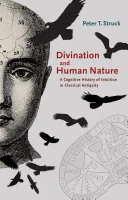
Peter Struck’s "Divination and Human Nature" offers a compelling re-evaluation of how ancient philosophers approached divination. Rather than dismissing practices like oracles and dream interpretation as mere superstition, Struck demonstrates their role in prompting sophisticated philosophical discussions on knowledge, belief, and the human condition. A particular strength lies in his detailed analysis of how figures like Plato, in dialogues such as the *Phaedrus*, grappled with the nature of inspired speech and divine signs. However, the book occasionally becomes dense, requiring significant background knowledge of classical philosophy to fully appreciate its nuances. The exploration of divination as a philosophical problem, rather than a religious one, is its most significant contribution. "Divination and Human Nature" successfully reorients our understanding of ancient intellectual history concerning these practices.
📝 Description
78
Peter Struck's 2018 book argues ancient philosophers treated divination as serious philosophical inquiry.
Peter Struck's "Divination and Human Nature" challenges the common view that ancient Greek and Roman philosophers dismissed divination as mere superstition. Instead, Struck contends that figures like Plato and Aristotle engaged deeply with oracles, dreams, and omens, seeing them as prompts for sophisticated thought about the human mind and its connection to the divine.
The book examines how ancient thinkers developed intellectual frameworks to analyze divination. They did not necessarily believe in direct divine communication through these practices, but rather saw them as complex psychological and epistemological phenomena. Struck highlights the rigor with which these philosophers approached subjects often relegated to the margins by modern scholarship, revealing a more intellectual engagement with belief systems than is often assumed.
This work situates the study of divination within classical philosophy, moving it from a marginalized topic of superstition to a subject of serious intellectual consideration. It connects ancient practices of seeking knowledge through signs and portents to broader philosophical questions about human understanding, divine will, and agency. By treating divination as a subject for reasoned analysis, the book aligns with traditions that seek meaning and order within seemingly chaotic or supernatural phenomena, exploring the human impulse to interpret the world and one's place within it.
💡 Why Read This Book?
• Understand how ancient philosophers like Plato engaged with divination not as superstition, but as a subject for rigorous philosophical inquiry, offering a new lens on classical epistemology. • Discover the sophisticated analytical frameworks developed in antiquity to interpret omens and dreams, challenging modern dismissals of these practices as irrational. • Gain a deeper appreciation for the philosophical debates surrounding human nature, knowledge, and divine influence that were sparked by divination in the classical world.
⭐ Reader Reviews
Honest opinions from readers who have explored this book.
❓ Frequently Asked Questions
What is the central argument of Peter Struck's "Divination and Human Nature"?
The book argues that ancient Greek and Roman philosophers, contrary to popular belief and some scholarly views, did not simply dismiss divination as superstition. Instead, they developed complex philosophical analyses of oracles, omens, and dreams as phenomena worthy of intellectual investigation.
Which ancient philosophers are discussed in "Divination and Human Nature"?
The book engages with a range of classical thinkers. It specifically discusses how philosophers like Plato, particularly in dialogues such as the *Phaedrus*, and Aristotle, considered the implications and mechanisms of divination within their broader philosophical systems.
How does Struck's interpretation of divination differ from traditional scholarly views?
Traditional views often categorize ancient divination as primitive superstition. Struck’s work counters this by revealing how philosophers treated it as a complex epistemological and psychological problem, prompting inquiries into human perception, belief, and the nature of knowledge.
What is the significance of dreams and omens in the philosophical context presented?
In this philosophical context, dreams and omens are not viewed as direct divine messages but as phenomena that reveal something about the human mind's capacity to perceive, interpret, and relate to the world, including notions of fate or divine will.
When was "Divination and Human Nature" first published?
Peter Struck's "Divination and Human Nature" was first published on October 23, 2018.
What kind of insights does the book offer into human nature?
The book suggests that the ancient philosophical engagement with divination offers insights into enduring questions about human nature: our desire for knowledge, our relationship with the unknown, and our attempts to find meaning and order in perceived signs.
🔮 Key Themes & Symbolism
Philosophical Analysis of Signs
The core of Struck's argument lies in demonstrating that ancient philosophers viewed divination not merely as superstitious practice, but as a fertile ground for intellectual exploration. The work meticulously unpacks how thinkers like Plato, in his dialogues, analyzed the mechanics and implications of receiving divine signs. It moves beyond viewing oracles, omens, and dreams as simple faith-based phenomena, instead highlighting their role in prompting sophisticated discussions about epistemology, the nature of human perception, and the limits of knowledge in the ancient world.
Epistemology and Divine Knowledge
This book recontextualizes divination within the broader discourse on how humans acquire knowledge. Struck illustrates how ancient philosophers grappled with the idea of knowledge derived from non-rational sources, such as inspired utterances or prophetic dreams. This raises critical questions about the validity of different forms of knowing, the role of intuition versus reason, and the very definition of what constitutes genuine understanding, particularly when engaging with perceived divine influence or destiny.
The Human Condition and Fate
By examining how ancient philosophers interpreted divination, Struck sheds light on their understanding of the human condition. The practice of seeking divine signs reflects a fundamental human drive to comprehend one's place in the cosmos and to understand the forces shaping one's destiny. The book explores how philosophical frameworks sought to integrate these concerns, offering perspectives on human agency, the acceptance of fate, and the search for meaning in a world perceived to be influenced by divine will.
Beyond Superstition
A central project of "Divination and Human Nature" is to elevate the study of divination from the field of mere superstition. Struck argues for a more nuanced understanding, showing how these practices were integral to the intellectual life of antiquity. By analyzing the philosophical treatises and dialogues that engaged with divination, the book reveals a rich intellectual tradition that sought rational explanations and philosophical meaning in phenomena that modern scholarship often overlooks or dismisses.
💬 Memorable Quotes
Direct passages from the work, attributed to the author.
“Ancient philosophers produced subtle studies into how human beings could perceive divine signs.”
— This interpretation highlights Struck's central thesis: that figures like Plato and Aristotle engaged deeply with divination, developing sophisticated intellectual frameworks to understand it as a form of human perception and interaction with the divine.
“Dreams and omens were treated as complex psychological and epistemological phenomena.”
— This signifies that the book argues against viewing ancient divination as simple superstition, instead positioning it as a subject of serious philosophical inquiry into the workings of the mind and the acquisition of knowledge.
“Classical antiquity saw divine signs as prompts for philosophical inquiry, not just religious belief.”
— This interpretation emphasizes Struck's argument that the intellectual tradition of classical Greece and Rome found philosophical value and complexity in practices like oracles and dream interpretation, integrating them into broader systems of thought.
💡 Key Ideas
Editorial paraphrase of the work's core concepts — not direct quotes.
The philosophical engagement with divination questioned the very nature of human knowledge and belief.
This paraphrased concept underscores how the study of ancient divination, as presented in the book, serves as a lens through which to examine fundamental questions about how humans know what they know, and the role of faith or intuition.
The work explores how philosophers sought to understand the human capacity to perceive divine will.
This paraphrased concept points to the book's focus on the philosophical investigation into human perception and consciousness, specifically how ancient thinkers attempted to rationalize or understand the process of receiving and interpreting signs believed to originate from the divine.
🌙 Esoteric Significance
Tradition
While not explicitly aligning with a single esoteric lineage like Hermeticism or Theosophy, "Divination and Human Nature" deeply informs esoteric studies by providing a scholarly foundation for understanding the intellectual roots of divination. It bridges the gap between classical philosophy and esoteric practices, showing how ancient systems of interpreting signs laid groundwork for later occult traditions that emphasize symbolic language and divine communication.
Symbolism
The book focuses on the philosophical interpretation of signs, which are inherently symbolic. Concepts like 'omens' (portents, often natural phenomena interpreted as divine messages) and 'dreams' (visions during sleep, believed to convey knowledge or prophecy) serve as key motifs. Struck analyzes how philosophers attempted to systematize the interpretation of these symbols, moving beyond mere superstition to a reasoned understanding of their perceived meaning and origin.
Modern Relevance
Contemporary esoteric practitioners and scholars of comparative religion find immense value in Struck’s work. It validates the study of divination as a legitimate field of inquiry, providing historical and philosophical context for modern practices such as tarot, astrology, and dream analysis. Thinkers and practitioners interested in Jungian psychology, archetypal symbolism, and the philosophy of consciousness often draw upon such historical analyses to understand the enduring human fascination with signs and hidden meanings.
👥 Who Should Read This Book
• Scholars of ancient philosophy and religious studies seeking to understand the intellectual history of divination beyond simplistic categorizations. • Esoteric practitioners interested in the philosophical underpinnings of divination, oracles, and dream interpretation, tracing their lineage to classical thought. • Students of comparative mythology and the history of ideas who want to explore how different cultures have interpreted signs and sought knowledge beyond empirical observation.
📜 Historical Context
Published in 2018, Peter Struck’s "Divination and Human Nature" intervenes in ongoing scholarly debates about the rationality and intellectual significance of ancient Greek and Roman beliefs. It directly challenges earlier scholarship that often relegated divination to the field of primitive superstition, a view prevalent in much of the 20th century. Struck engages with the philosophical traditions of Plato and Aristotle, demonstrating how they, and others, developed intricate arguments concerning prophecy, dreams, and omens. His work is contemporary with a broader resurgence of interest in ancient philosophy of mind and religion, seeking to understand pre-modern worldviews on their own terms. By positing that these phenomena prompted sophisticated philosophical inquiry, Struck offers a counterpoint to purely materialist or reductionist interpretations that dominated some academic circles.
📔 Journal Prompts
The philosophical analysis of divination as presented by Struck.
How ancient philosophers grappled with the perception of divine signs.
The epistemological challenges posed by oracles and dreams.
Interpreting omens as philosophical phenomena.
The human need to understand fate through signs.
🗂️ Glossary
Divination
The practice of seeking knowledge of the future or the unknown by supernatural means, such as interpreting omens, dreams, or oracles. In this context, it's examined as a philosophical problem.
Omens
Events or signs believed to foretell future occurrences. The book discusses how ancient philosophers analyzed these not just as religious signs, but as phenomena revealing aspects of human perception and the cosmos.
Oracles
Places or persons believed to be a source of wise counsel or prophetic predictions inspired by a deity. The book explores the philosophical debates surrounding their pronouncements.
Epistemology
The theory of knowledge, especially with regard to its methods, validity, and scope. The book examines how divination challenged and informed ancient epistemological frameworks.
Classical Antiquity
The period of history covering the ancient Greek and Roman civilizations, roughly from the beginning of Homeric poetry (c. 8th century BCE) to the fall of the Western Roman Empire (c. 5th century CE).
Superstition
Excessively credulous belief in and reverence for supernatural beings. The book argues against viewing ancient divination solely through this lens.
Human Nature
The fundamental dispositions and characteristics, including ways of thinking, feeling, and acting, that are considered to be common to all humans. The book connects divination to these aspects.
This book appears in 1 collection
🔮 Readers Also Liked
Browse all →







From the “Divination” Collection
View all →







More Free Divination & Tarot Books
View all →