Discovering Your Self Through the Tarot

 73
73

Discovering Your Self Through the Tarot
Rose Gwain's 'Discovering Your Self Through the Tarot' presents a commendable, albeit familiar, psychological lens on the cards. The strength lies in its consistent focus on the Tarot as an internal compass, eschewing common divinatory pitfalls. A particular passage discussing the Hanged Man not as a victim but as a deliberate choice for perspective, offers a compelling re-framing. However, the book occasionally feels constrained by its 1993 publication date; some discussions of archetypes lack the nuanced, intersectional understanding that contemporary psychology offers. It provides a solid foundation but might leave those seeking cutting-edge psychological tarot theory wanting more. Ultimately, it serves as a reliable, introspective guide for personal reflection through the Tarot.
📝 Description
73
Rose Gwain's 1993 book reframes the 78-card Tarot as a mirror for psychological exploration.
Published in 1993, Rose Gwain's "Discovering Your Self Through the Tarot" approaches the 78-card deck not as a predictive tool, but as a map of the human psyche. Gwain argues that the Tarot's archetypes represent inner states and stages of personal development. This perspective is aimed at readers interested in a more introspective engagement with the cards.
The book is suitable for those curious about Jungian psychology, archetypal symbolism, and personal growth. Whether you are new to the Tarot or have practiced for years, Gwain's work offers a framework for interpretation that moves beyond simple fortune-telling. The emphasis is on how the cards can illuminate one's internal world and foster self-awareness.
Gwain's book emerged in the early 1990s, a time when interest in Jungian psychology and esoteric studies was growing. It contributed to a shift in Tarot interpretation, moving away from purely occult or divinatory approaches common in the early 20th century. Instead, it aligned with a psychological and self-developmental paradigm that gained momentum after the New Age movement. The work emphasizes internal exploration, positioning the Tarot as a psychological atlas rather than a system for predicting external events.
💡 Why Read This Book?
• Gain a psychological framework for interpreting the Tarot, moving beyond prediction by understanding the archetypes as maps of inner states, as presented in Gwain's 1993 exploration. • Develop a more introspective practice by using specific cards, like The Fool or The High Priestess, as symbolic representations of personal journeys and subconscious wisdom. • Refine your card-reading skills by focusing on how the Rider-Waite deck's imagery reflects your own internal world, fostering self-awareness through detailed symbolic analysis.
⭐ Reader Reviews
Honest opinions from readers who have explored this book.
❓ Frequently Asked Questions
What is the primary focus of Rose Gwain's 'Discovering Your Self Through the Tarot'?
The book's primary focus is to present the Tarot as a psychological tool for self-discovery and introspection, rather than a system for fortune-telling. It explores the archetypal symbolism of the cards as mirrors to the human psyche and personal development.
When was 'Discovering Your Self Through the Tarot' first published?
The book was first published in 1993, positioning it within a wave of psychological and self-help literature that re-examined esoteric tools.
Does the book rely on a specific Tarot deck?
While not exclusively limited, the work frequently references and uses the imagery and structure of the Rider-Waite deck, which is a common touchstone for psychological Tarot interpretation.
Who is Rose Gwain?
Rose Gwain is an author known for her work on the Tarot, particularly focusing on its psychological and symbolic dimensions for personal growth and self-understanding.
Is this book suitable for absolute beginners to Tarot?
Yes, it is suitable for beginners who are interested in a psychological approach rather than traditional divination. It provides a solid foundation for understanding the cards' deeper meanings.
What makes this book different from other Tarot guides?
Its distinction lies in its consistent emphasis on the Tarot as a 'psychological atlas,' mapping internal states and developmental journeys, diverging from purely predictive or historical occult interpretations.
🔮 Key Themes & Symbolism
The Tarot as Psychological Mirror
Gwain posits the Tarot deck as an externalized representation of the human psyche. Each card, from the Majors like The Hermit to the court cards of the minors, is framed as an archetype or a developmental stage. This perspective encourages readers to see the cards not as external forces dictating fate, but as symbols reflecting their own internal states, challenges, and potentials for growth. The act of drawing cards becomes a form of self-reflection, akin to dream analysis or active imagination.
Archetypal Journeys and Life Lessons
The Major Arcana are presented as significant life lessons or archetypal encounters that individuals may face. The journey of The Fool, for instance, is interpreted as the initiation into a new phase of life, marked by faith and the unknown. Gwain's approach invites readers to identify where they are on this archetypal path, using the cards to understand the nature of their current challenges and the wisdom available to them. This reframes the Majors as guides rather than omens.
The Minor Arcana as Emotional and Experiential Maps
Beyond the grand narratives of the Major Arcana, the Minor Arcana are discussed as mapping the more mundane, yet crucial, aspects of human experience: emotions (Cups), material concerns and actions (Wands), intellect and communication (Swords), and the physical world or stability (Pentacles). Gwain guides readers to see these suits and numbers as symbolic languages for understanding daily fluctuations, relational dynamics, and practical undertakings, providing a nuanced view of life's everyday unfolding.
Self-Discovery Through Symbolic Language
The core thesis is that by engaging with the rich symbolic language of the Tarot, particularly the Rider-Waite imagery, individuals can unlock deeper self-awareness. The book provides methods for personal inquiry, encouraging readers to meditate on card meanings and their personal associations. This process facilitates an understanding of unconscious patterns, motivations, and untapped potential, thereby fostering a path toward greater psychological integration and personal empowerment.
💬 Memorable Quotes
Direct passages from the work, attributed to the author.
“The Tarot is a psychological atlas, mapping the terrain of the human psyche.”
— This central metaphor frames the deck as a guide to internal landscapes. It suggests that by studying the cards and their interrelations, one can understand the various regions and challenges within their own mind and spirit.
“The Hanged Man signifies a deliberate pause, a shift in perspective rather than a forced predicament.”
— This interpretation reframes a potentially negative card as an active choice for introspection. It highlights the value of suspended action and altered viewpoints for gaining deeper insight and understanding.
“Court cards represent not just people, but also facets of our own personality.”
— This expands the common interpretation of court cards (Page, Knight, Queen, King) beyond external individuals. It suggests these figures embody different modes of being, energy, and maturity within the reader's own psyche.
“Understanding the suits of the Minor Arcana reveals the flow of energy in our lives.”
— This highlights the function of the four suits (Wands, Cups, Swords, Pentacles) as symbolic representations of different life energies and domains. It suggests that tracking these suits in a reading can illuminate where one's energy is directed or blocked.
💡 Key Ideas
Editorial paraphrase of the work's core concepts — not direct quotes.
The journey of The Fool is the initiation into the unknown, guided by intuition.
This paraphrased concept emphasizes the archetypal beginning represented by The Fool. It positions the card as a symbol of courage, faith, and the willingness to step into new experiences without full knowledge.
🌙 Esoteric Significance
Tradition
This work fits within the broader tradition of Western Esotericism, specifically drawing from psychological interpretations influenced by Carl Jung. While Jung himself only briefly touched upon the Tarot, his concepts of archetypes, the collective unconscious, and individuation became foundational for later esoteric scholars. Gwain's approach departs from earlier Hermetic or Kabbalistic Tarot systems by prioritizing psychological insight over magical or divinatory applications, focusing on the Tarot as a tool for inner work and self-understanding.
Symbolism
The book places significant emphasis on the symbolism of the Major Arcana, viewing them as archetypal stages of the 'hero's journey' or the process of individuation. For example, The Hermit is explored as a symbol of introspection and withdrawal for wisdom, while The Lovers represent crucial choices and the integration of dualities. The four suits of the Minor Arcana (Wands, Cups, Swords, Pentacles) are also analyzed for their elemental symbolism, representing will/spirit, emotion/soul, intellect/mind, and the material world/body respectively.
Modern Relevance
Gwain's psychological approach to the Tarot remains highly relevant today, resonating with contemporary practices in mindfulness, personal coaching, and therapeutic applications of symbolic systems. Modern practitioners of Jungian Tarot, archetypal psychology, and even some forms of expressive arts therapy continue to draw upon the principles she outlined. Her emphasis on the Tarot as a tool for self-awareness and personal growth aligns with the current demand for introspective tools in an increasingly complex world.
👥 Who Should Read This Book
• Individuals new to the Tarot interested in a psychological and self-exploratory approach, rather than fortune-telling. • Students of Jungian psychology seeking practical applications of archetypal theory through symbolic imagery. • Experienced Tarot readers looking to deepen their interpretive framework by focusing on the cards as mirrors for personal development and inner dialogue.
📜 Historical Context
Rose Gwain's 'Discovering Your Self Through the Tarot,' published in 1993, emerged during a period of significant interest in psychological and Jungian interpretations of esoteric systems. The early 1990s saw a continued influence of the New Age movement, which often championed self-help and personal transformation through tools like the Tarot. Gwain's work aligned with a broader trend that sought to move the Tarot away from its more overtly occult or divinatory roots, which had been prominent in the early 20th century with figures like Aleister Crowley and the Hermetic Order of the Golden Dawn. Instead, Gwain positioned the cards as a psychological mirror. This approach was contemporary with other authors like Sallie Nichols, whose 'Jung and Tarot' (1980) had already established a strong link between Tarot symbolism and Jungian psychology. Gwain's book contributed to this academic and popular discourse, offering a practical application for those interested in archetypal psychology and personal development, differentiating itself from purely predictive methods.
📔 Journal Prompts
The Fool's journey: Where does your current path begin?
Reflect on The High Priestess's symbolism of hidden knowledge in your life.
Consider the Wands suit: How does your inner fire manifest in action?
Analyze the Cups suit: What emotions are most prominent in your current experience?
Explore The Tower's symbolism: What sudden insights have disrupted your equilibrium?
🗂️ Glossary
Archetype
Universal, archaic patterns and images that derive from the collective unconscious and are the psychic counterpart of instinct. In Tarot, these are embodied by the figures and scenes of the Major Arcana.
Individuation
The psychological process by which a person becomes an individual, a whole, integrated self. The Tarot is seen as a map of this developmental journey.
Major Arcana
The 22 trump cards of the Tarot deck, representing significant life events, spiritual lessons, and archetypal forces in the human psyche.
Minor Arcana
The 56 cards of the Tarot deck, divided into four suits (Wands, Cups, Swords, Pentacles), which represent everyday occurrences, challenges, and emotional states.
Rider-Waite Deck
A highly influential Tarot deck first published in 1909, known for its detailed imagery and psychological symbolism, frequently referenced in psychological Tarot studies.
Psychological Atlas
A metaphor used by Gwain to describe the Tarot's function as a map or guide to the internal field of the human mind and spirit.
Querent
The person for whom a Tarot reading is performed. In Gwain's framework, the querent's own psyche is the primary focus of interpretation.
🔮 Readers Also Liked
Browse all →







More by Rose Gwain
All books →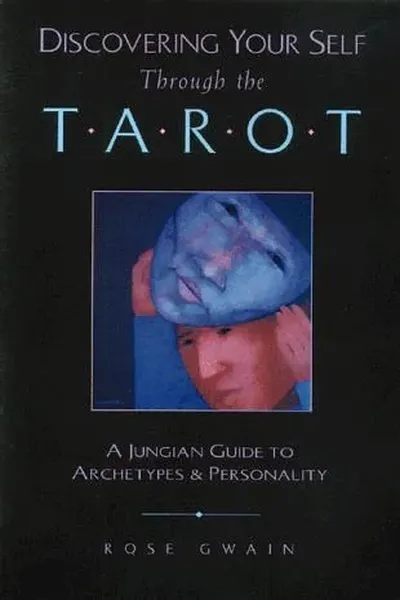
More Free Divination & Tarot Books
View all →